

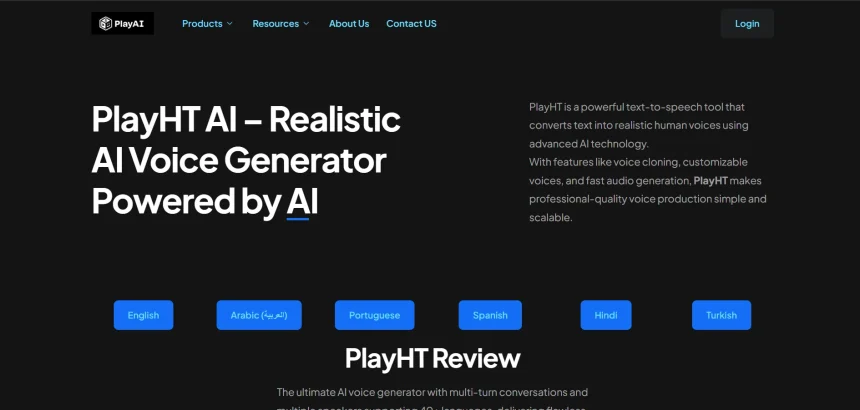
PlayHT has long been a popular choice for text-to-speech and voice cloning, but it is far from the only option on the market. Whether you need ultra-realistic narration, real-time voice agents, multilingual dubbing, or affordable voice cloning, dozens of platforms now compete for creators’ attention. Below, we break down 12 of the best PlayHT Alternatives, covering their free trials, pricing plans, and standout pros and cons, so you can pick the right voice AI tool for your workflow.
1. Lovo.ai
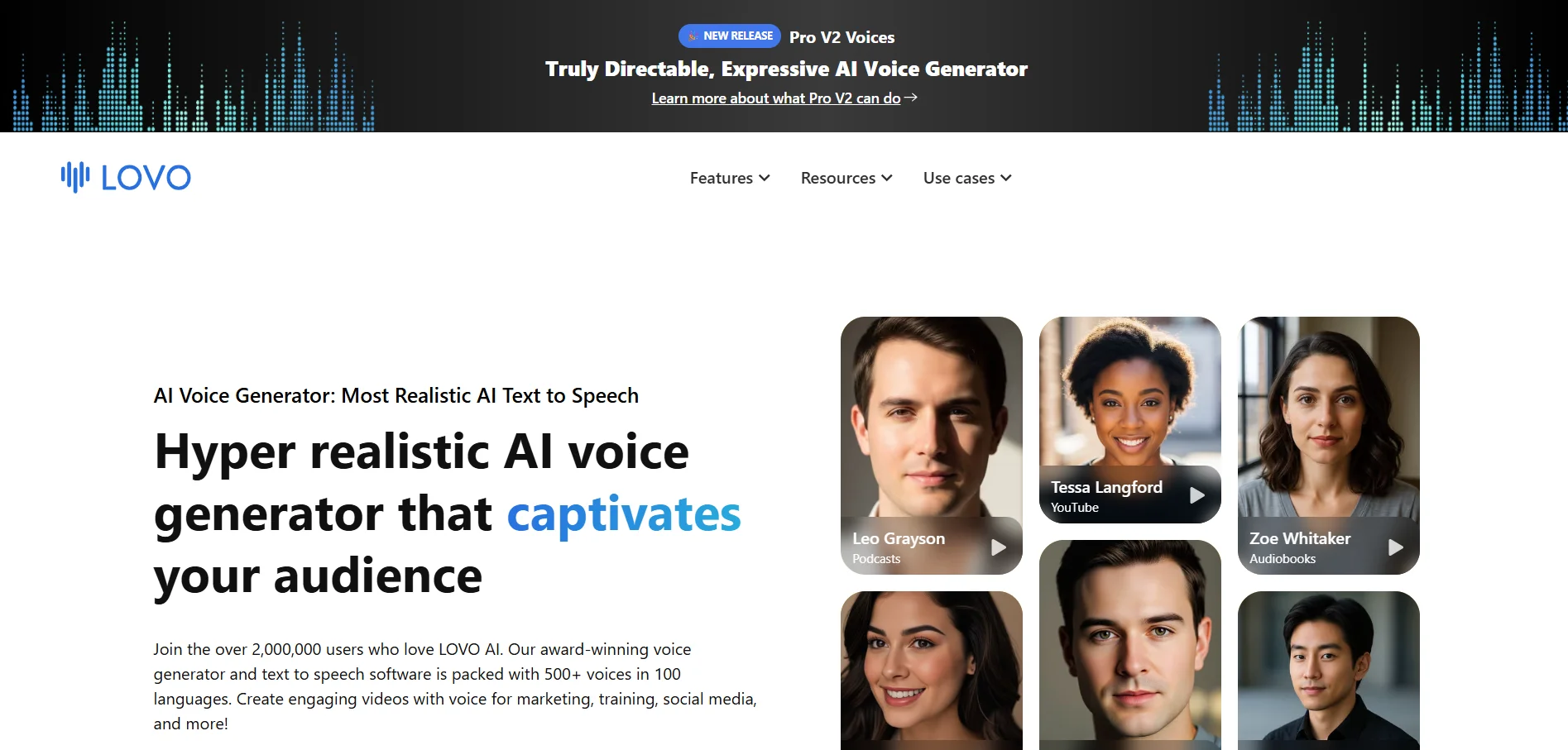
Lovo.ai offers a free plan so new users can test its 500+ voice library before committing to a subscription, though the free tier limits access to premium Pro V2 directable voices and commercial usage rights. A 14-day free trial is also available on certain paid tiers, giving creators hands-on time with voice cloning and the built-in video editor before paying anything.
Free Plan
Basic $24/mo
Pro $48/mo
Pro+ $149/mo
Enterprise Custom
Beyond pricing, Lovo.ai stands out as an all-in-one content studio rather than a pure TTS tool, bundling AI script writing, subtitle generation, and a full video editor alongside its voice engine. This makes it appealing for YouTube creators and e-learning teams who want to replace multiple subscriptions with one platform, though the standard voice library quality can vary compared to its flagship Pro V2 tier.
Pros
- 500+ voices in 100+ languages
- Built-in video editor and AI script writer
- Voice cloning available on all paid plans
Cons
- Free plan outputs carry a watermark
- Pro+ tier is a steep price jump
- Mixed reviews on customer support responsiveness
2. Uberduck
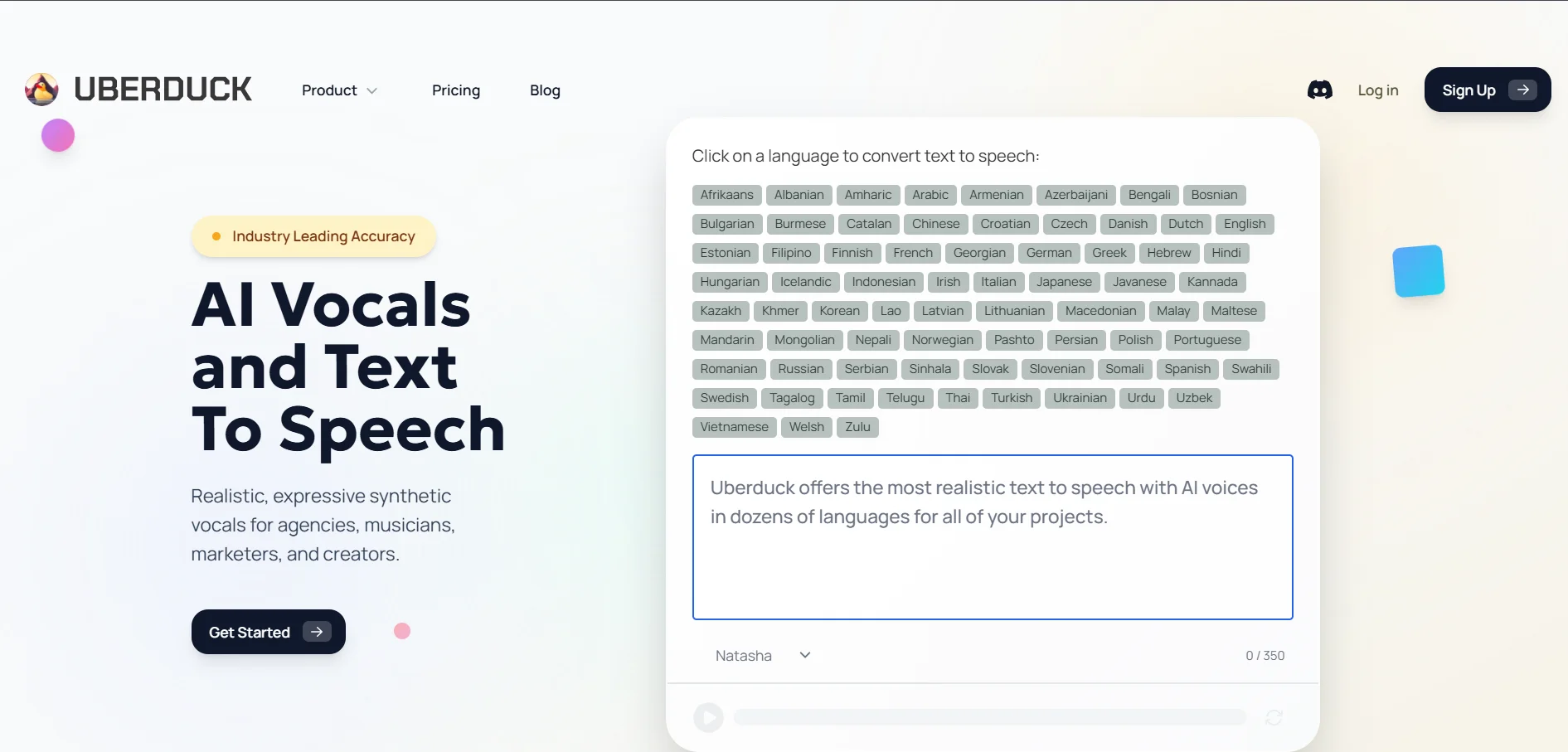
Uberduck provides a genuinely usable free tier, letting users generate hundreds of voice clips monthly with access to its library of 4,000+ voices before needing to upgrade. There is no traditional “trial” period beyond this free plan, but it is generous enough to evaluate character voices, singing, and rap generation without paying upfront.
Free Plan
Starter $4/mo
Creator $9.99/mo
Pro $30/mo
Enterprise Custom
Uberduck’s biggest differentiator is its creative angle: text-to-rap, singing voice clones, and meme-style character voices that most professional TTS tools ignore entirely. It also includes AI image generation and a developer API, making it a fun, budget-friendly pick for musicians and content creators rather than corporate narration teams.
Pros
- Extremely affordable entry-level pricing
- Unique rap and singing voice generation
- Supports 70+ languages
Cons
- Voice cloning quality is inconsistent
- UI can feel gimmicky for professional use
- Limited free-tier credits for heavy users
3. Supertone Play
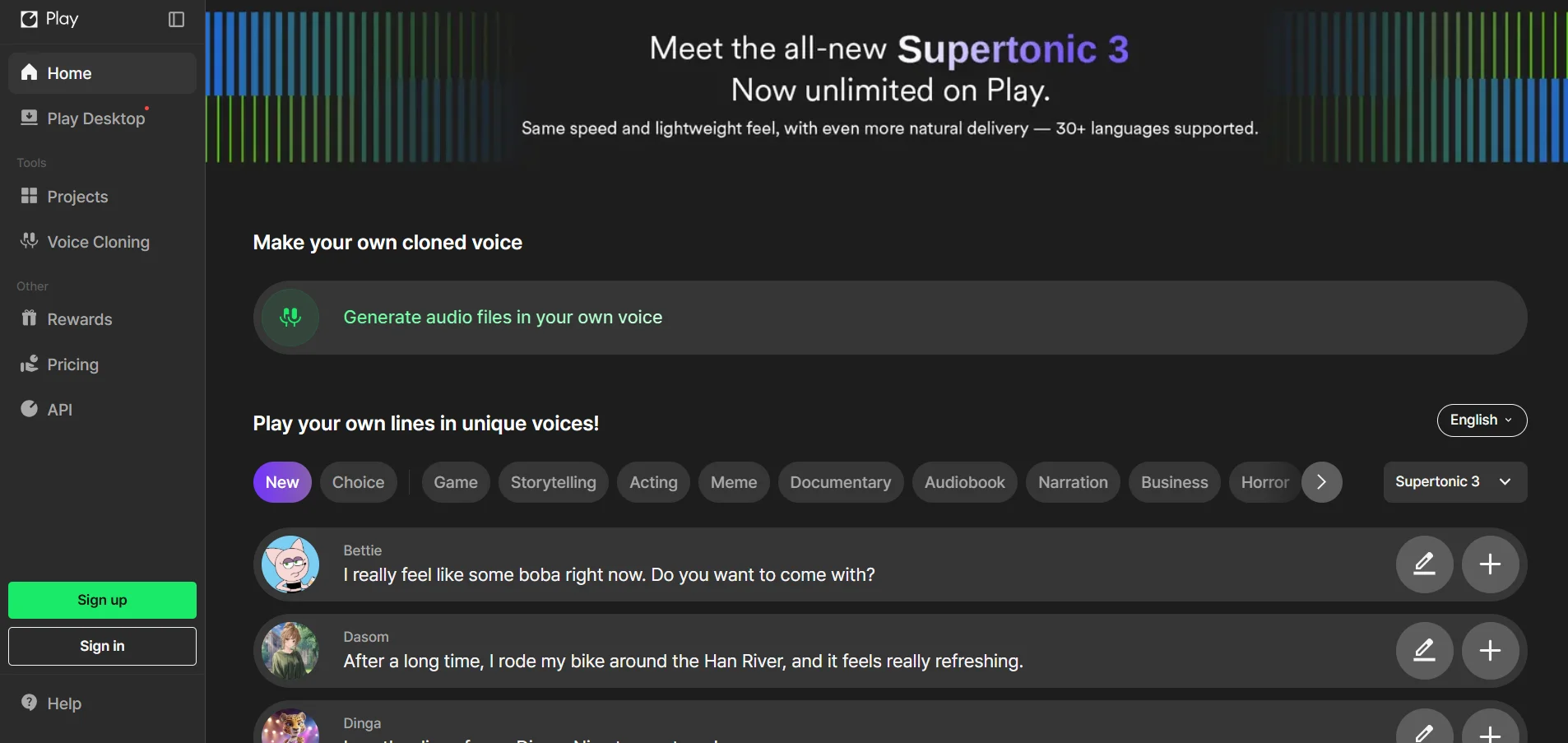
Supertone Play has periodically run limited-time free promotions, including a two-week unlimited trial during its open beta, giving users full access to over 150 premium voices before subscribing. Outside of promotional periods, new users typically start with the lowest credit-based Starter tier to test voice quality and emotional expressiveness.
Starter $2.99/mo
Creator $14.99/mo
Pro $79.99/mo
Enterprise Custom
Backed by HYBE, Supertone Play focuses on hyperrealistic, emotionally rich voices with strong performance in Korean, Japanese, and English. Its credit-based system scales cleanly from casual creators to studios needing dozens of cloned voices, though language support outside its core three markets remains limited.
Pros
- Highly expressive, emotionally nuanced voices
- Flexible credit-based tiers
- Strong performance in KR/JP/EN markets
Cons
- Weak support for languages beyond KR/JP/EN
- Reported compatibility issues with some DAWs
- No refunds on beta pricing purchases
4. Resemble.ai
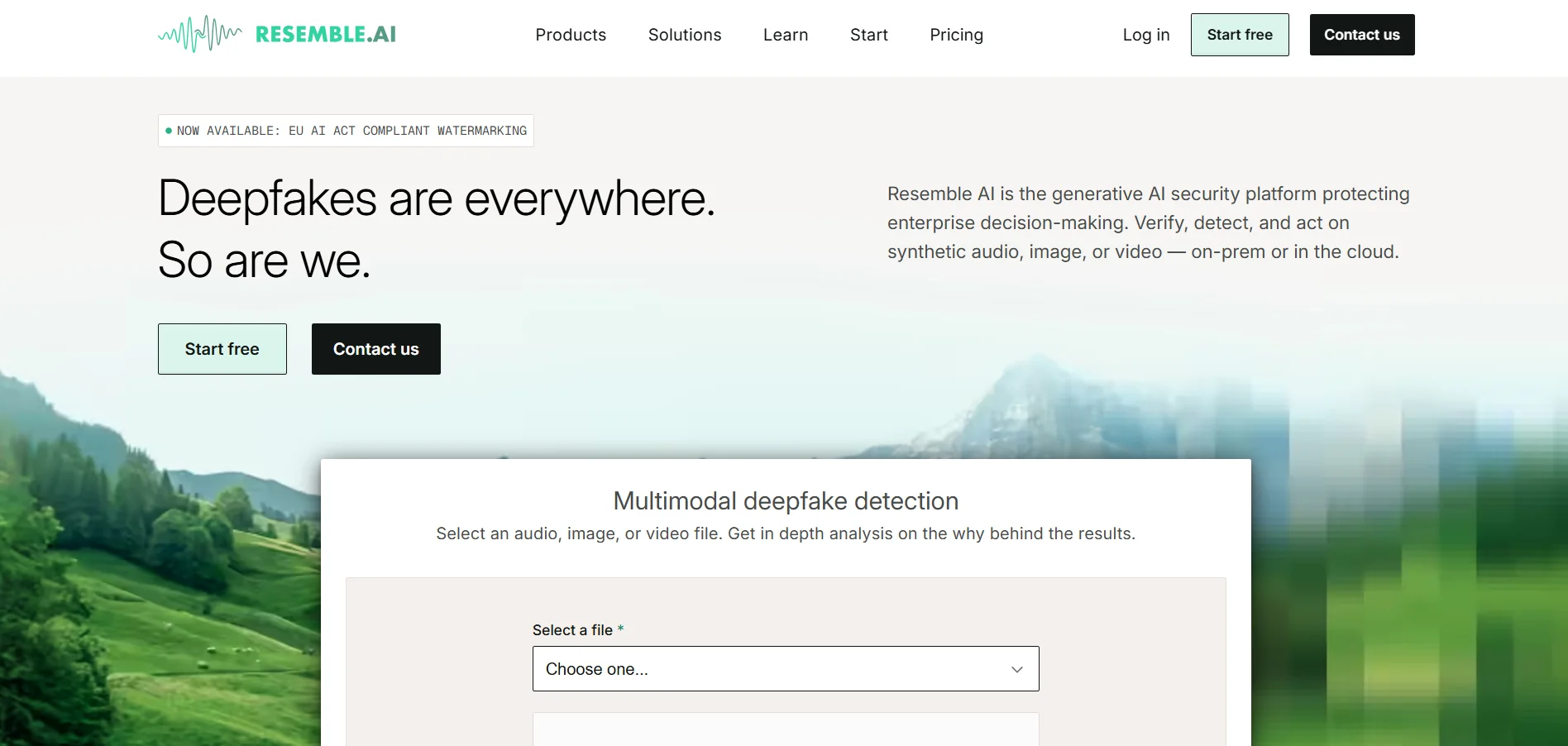
Resemble.ai does not offer a traditional free trial or free plan, but its Flex tier lets new users start at $0 upfront with pay-as-you-go credits that never expire, effectively functioning as a low-risk entry point. Full API access, including voice cloning and deepfake detection, is available from day one on this consumption-based model.
Flex: $0.0005/synthesis second
Voice Clones $2–$5/mo each
Team Seats $20/mo
Enterprise Custom
Resemble.ai leans heavily into enterprise and security-first use cases, offering integrated deepfake detection and PerTh audio watermarking that most competitors lack entirely. This makes it a strong choice for game studios, IVR systems, and brands that need authenticated, traceable synthetic audio rather than just narration.
Pros
- Pay-as-you-go pricing with no monthly minimum
- Built-in deepfake detection and watermarking
- Broad SDK and third-party integrations
Cons
- No flat free plan for casual users
- Consumption billing can be hard to predict
- Enterprise deals require a high committed spend
5. Cartesia
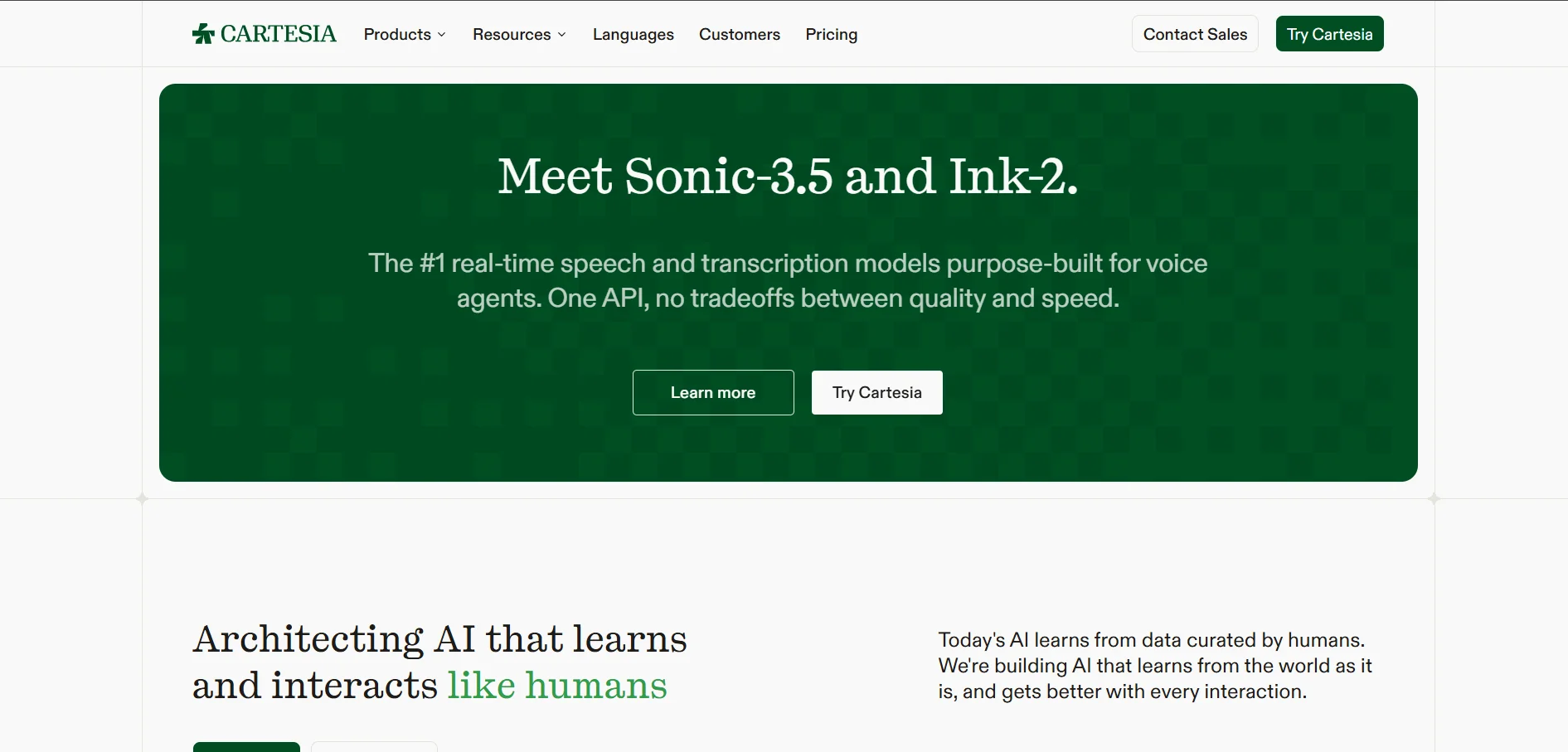
Cartesia’s Free plan is a permanent tier rather than a time-limited trial, offering 20,000 model credits per month and no credit card requirement, so developers can prototype real-time voice agents indefinitely at no cost. This makes it one of the more generous long-term free options among API-first voice platforms.
Free $0/mo
Pro $4/mo
Startup $39/mo
Scale $239/mo
Enterprise Custom
Built around ultra-low latency, Cartesia’s Sonic model is designed specifically for conversational AI and voice agents rather than batch narration, delivering sub-80ms streaming speech. Its Scale plan significantly lowers telephony rates, making it attractive for businesses running high-volume, real-time voice applications at scale.
Pros
- Sub-80ms real-time latency
- Generous permanent free tier
- Includes TTS, STT, and voice agent tools in one platform
Cons
- Credit system can be confusing for beginners
- SSO and HIPAA compliance locked behind Enterprise
- Higher tiers can get expensive at scale
6. Fliki
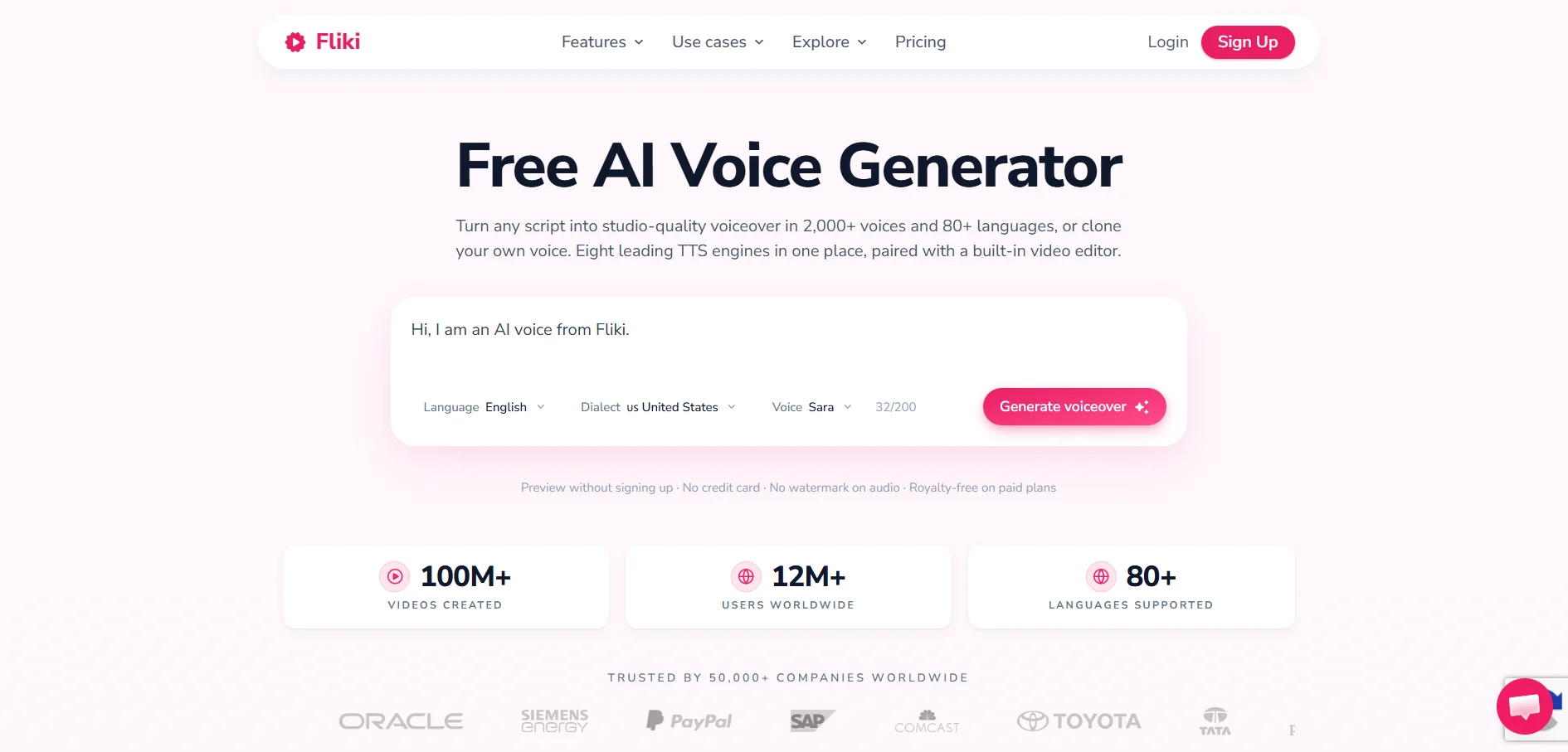
Fliki offers a free plan providing around 5 minutes of video generation per month with access to a limited voice selection, letting users test its script-to-video workflow before upgrading. Free exports include a watermark and lack commercial usage rights, so it functions more as a hands-on demo than a production trial.
Free (5 min/mo)
Standard ~$28/mo
Premium ~$88/mo
Teams from $160/mo
Fliki is best understood as a text-to-video platform with a strong voice engine underneath, pairing 1,000+ AI voices with stock footage and captions to turn scripts into finished videos. It suits YouTube creators and marketers who want narrated video content quickly, though the credit-based minute system can be confusing to budget around.
Pros
- Combines TTS with automatic video creation
- 1,000+ voices across 80+ languages
- Voice cloning available on paid tiers
Cons
- Free plan minutes are very limited
- Credit system makes cost estimation tricky
- Standard plan can feel pricey for solo creators
7. ElevenLabs
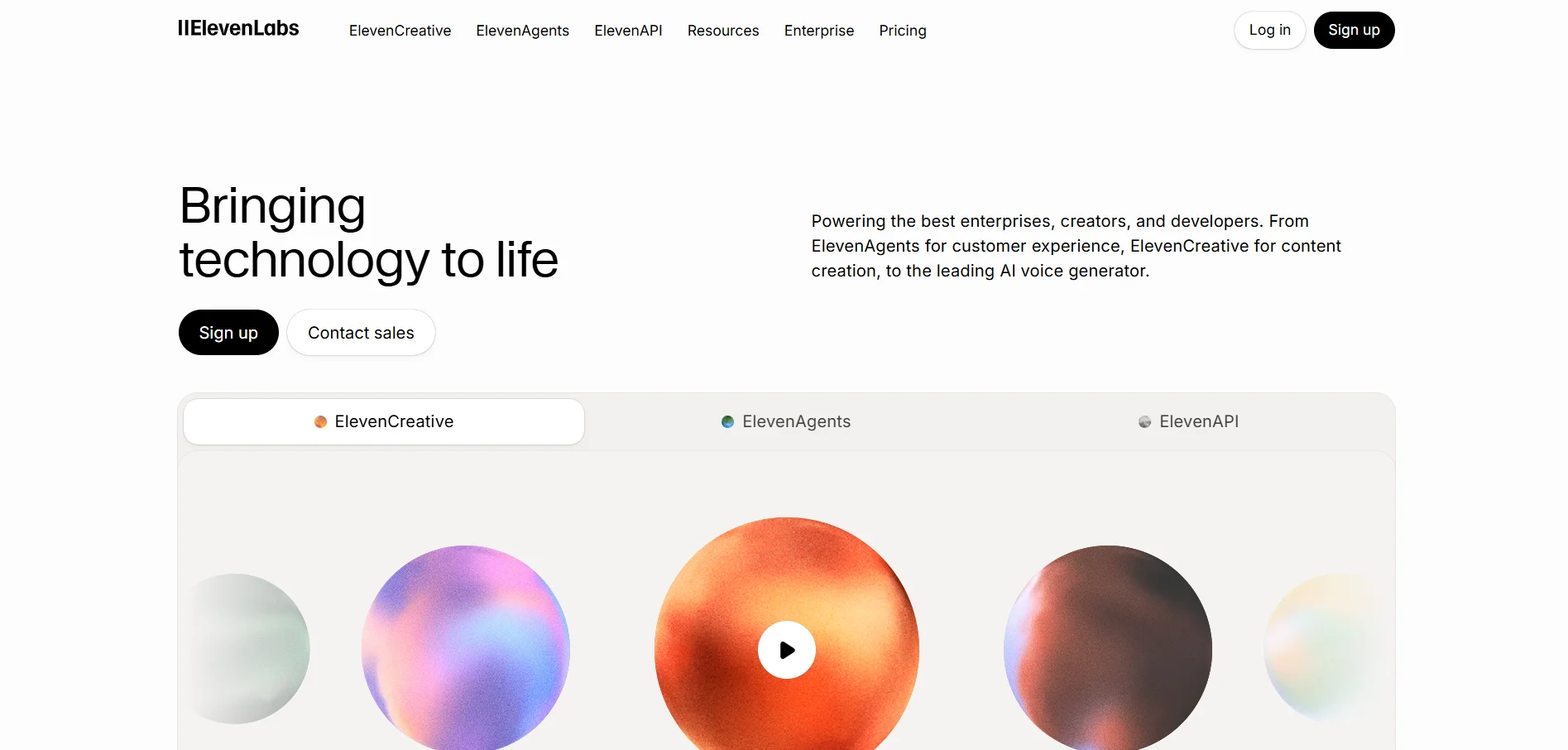
ElevenLabs provides a free plan with 10,000 credits monthly, roughly 10 minutes of audio, allowing users to test its Multilingual v2 and Flash models before subscribing. However, the free tier lacks commercial usage rights and professional voice cloning, both of which require moving to a paid plan.
Free $0/mo
Starter $6/mo
Creator $22/mo
Pro $99/mo
Scale $299/mo
Business $990/mo
Widely regarded as the industry leader in voice realism, ElevenLabs pairs top-tier narration quality with professional voice cloning, dubbing, and conversational AI agents. Its credit-based system tied to character counts can get pricey at scale, but for teams prioritizing the most natural-sounding output, it remains the benchmark competitors are measured against.
Pros
- Industry-leading voice realism
- Professional voice cloning and dubbing tools
- Strong developer API and integrations
Cons
- Premium pricing compared to most competitors
- Credit system can be confusing to estimate
- Free plan has no commercial license
8. Podcastle
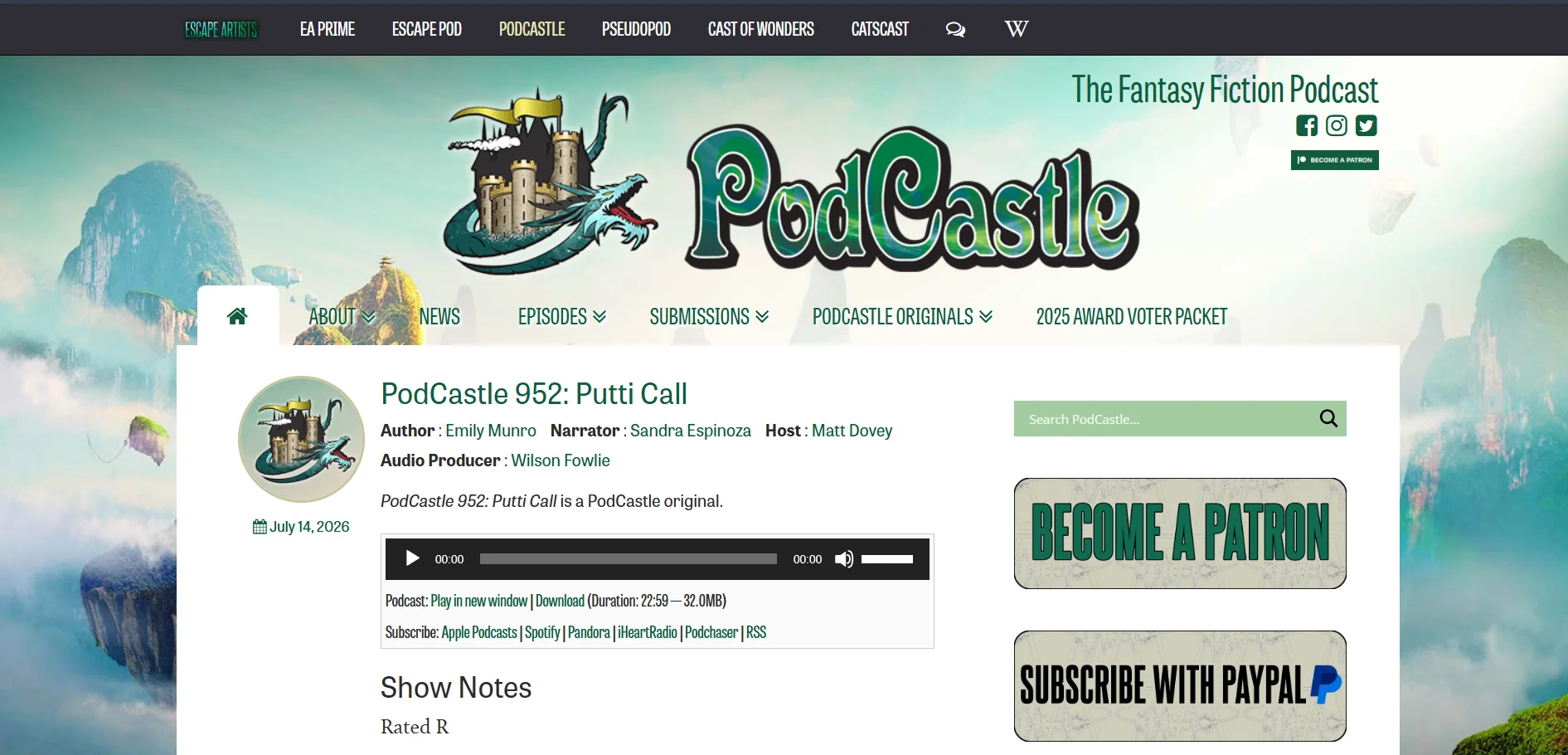
Podcastle’s Free plan offers unlimited audio recording along with a limited lifetime allotment of video minutes, giving new users a genuine hands-on trial of its recording and AI voice tools without a time limit. This makes it easy to evaluate the platform’s Magic Dust noise removal and AI voiceover quality before paying.
Free $0/mo
Storyteller $11.99/mo
Pro $23.99/mo
Business Custom
Podcastle positions itself as an all-in-one podcast and video creation suite, combining remote recording, AI-based editing, and multilingual text-to-speech voices in a single browser-based tool. It is particularly strong for podcasters who want recording, cleanup, and AI voiceover without juggling separate apps, though video features are more limited than dedicated video platforms.
Pros
- All-in-one recording, editing, and TTS platform
- 1,000+ AI voices across 15+ languages
- Generous unlimited audio on the free plan
Cons
- Video minutes are capped even on paid tiers
- Some users report billing and cancellation issues
- AI voice quality can lag behind specialist TTS tools
9. KikiVoice
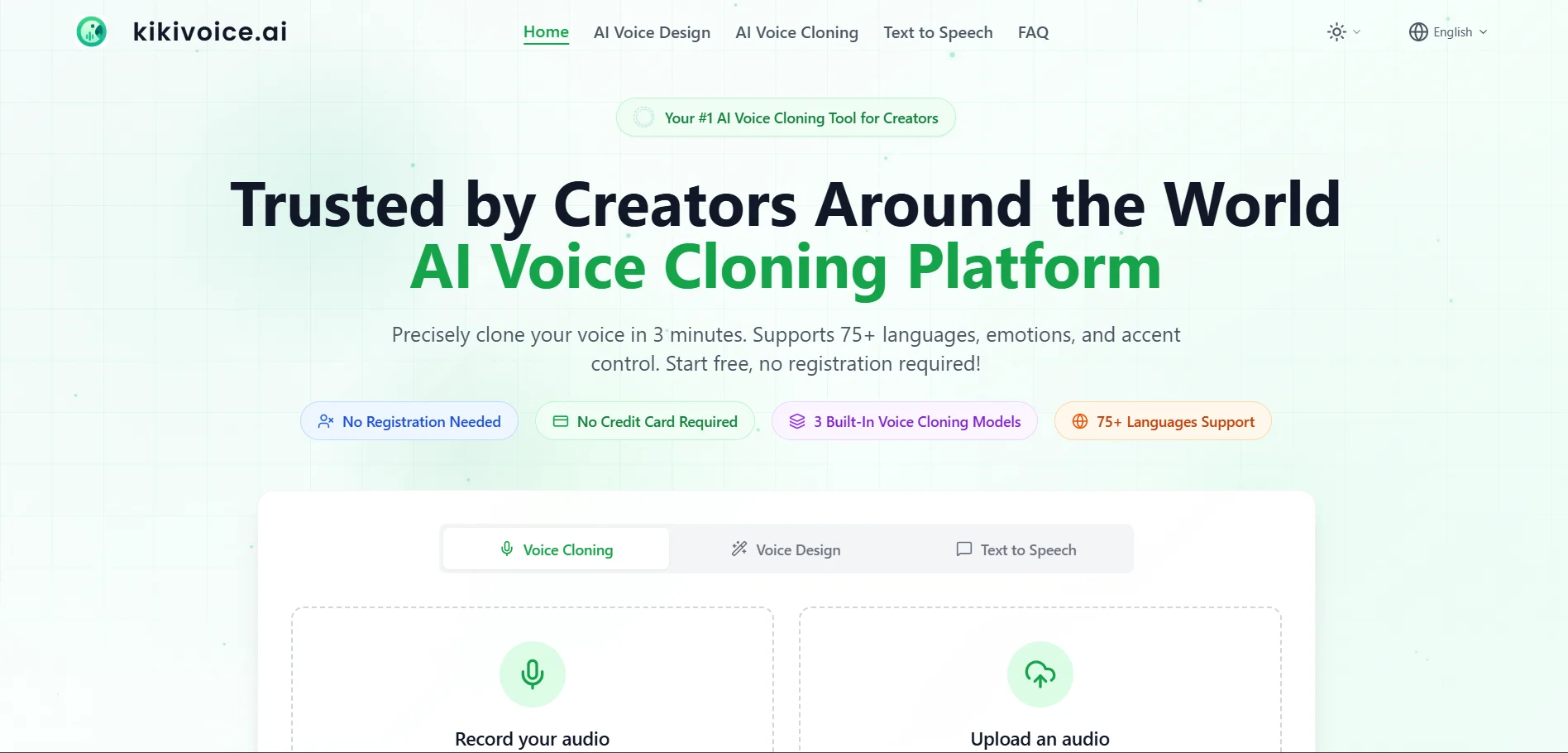
KikiVoice offers a genuinely free, no-signup entry point, letting anyone clone or generate voices instantly using weekly-resetting credits without ever entering payment details. This no-friction model makes it one of the easiest platforms on this list to test before deciding whether to upgrade.
Free Tier (weekly credits)
Premium from $10/mo
Enterprise Custom
Built around speed and simplicity, KikiVoice lets users clone a voice from as little as 3 to 15 seconds of audio using one of three specialized models covering fast output, professional emotion control, and multilingual generation across 75+ languages. It is best suited to creators who want quick voiceovers without a steep learning curve rather than teams needing deep customization.
Pros
- No sign-up required for basic use
- Fast voice cloning from short audio samples
- 75+ supported languages
Cons
- Free credits reset weekly and can run out fast
- Fewer advanced editing controls than premium rivals
- Newer platform with a smaller track record
10. MiniMax
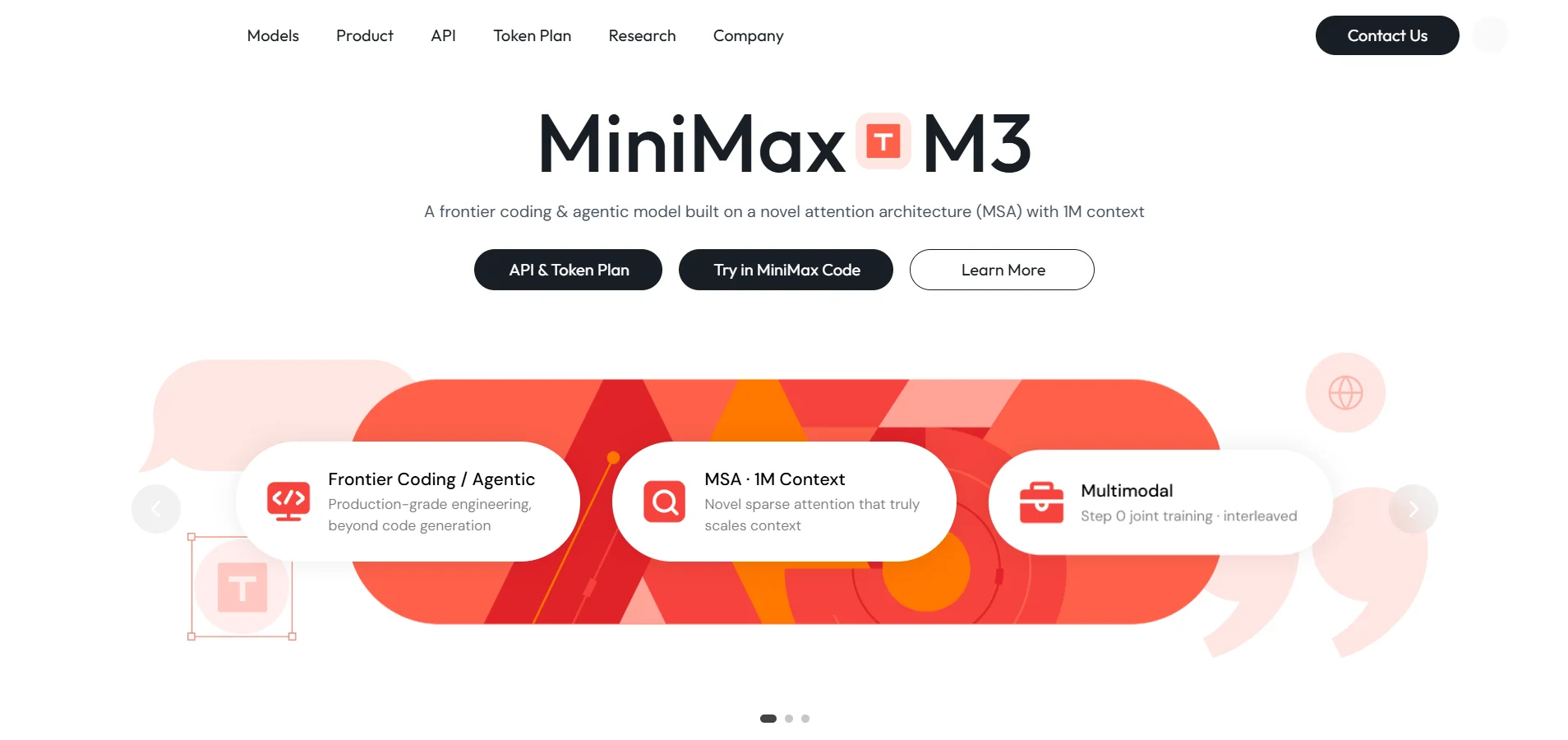
MiniMax Audio gives new users 4,000 free daily credits upon login, making it accessible for small-scale podcasting or prototyping before committing to its usage-based pricing. There is no traditional subscription-based free trial, but the daily credit refresh effectively functions as an ongoing test tier.
Turbo $60/1M characters
HD $100/1M characters
Voice Cloning $1.50/voice
Voice Design $3.00/voice
MiniMax Speech ranked highly on independent speech-arena benchmarks at launch, competing directly with ElevenLabs on voice quality while undercutting it significantly on per-character API pricing. This makes it especially attractive for high-volume producers such as audiobook and podcast studios processing large scripts every month, though its ecosystem of add-on tools is less mature than more established competitors.
Pros
- Very competitive per-character API pricing
- Strong benchmark performance vs. ElevenLabs
- Fast, high-similarity voice cloning
Cons
- No persistent free subscription tier
- Data may be processed outside the EU/US
- Smaller ecosystem of creator-focused tools
11. BookFab
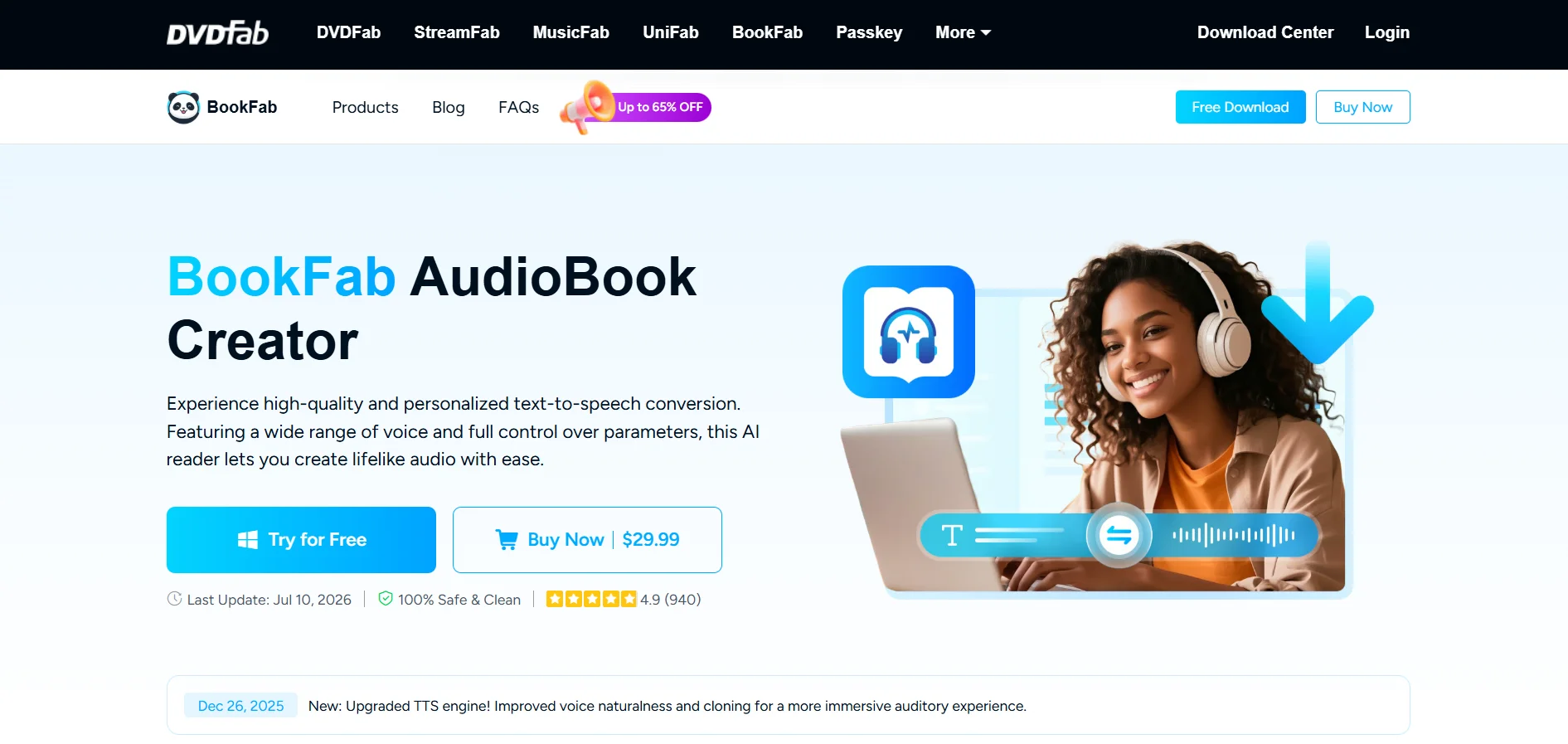
BookFab offers a free trial through a shared word quota when you create a DVDFab account, letting users test its AI audiobook creation and text-to-speech features on a limited number of words before purchasing. Any unused trial words carry over as credit if you upgrade before the quota runs out.
1-Month License $39.99
Lifetime License $129.99
Kindle + Kobo Bundle up to $159
Unlike most cloud-based tools on this list, BookFab is a downloadable Windows application from DVDFab focused specifically on converting eBooks and text into narrated audiobooks. It includes 20+ voice presets in English and Japanese plus adjustable prosody and voice cloning, making it a solid fit for authors who want a one-time purchase rather than an ongoing subscription.
Pros
- One-time lifetime license option available
- Purpose-built for eBook-to-audiobook conversion
- Includes voice cloning and adjustable prosody
Cons
- Windows-only, no native macOS app
- Only supports English and Japanese voices
- Character input limit per generation
12. Gradium
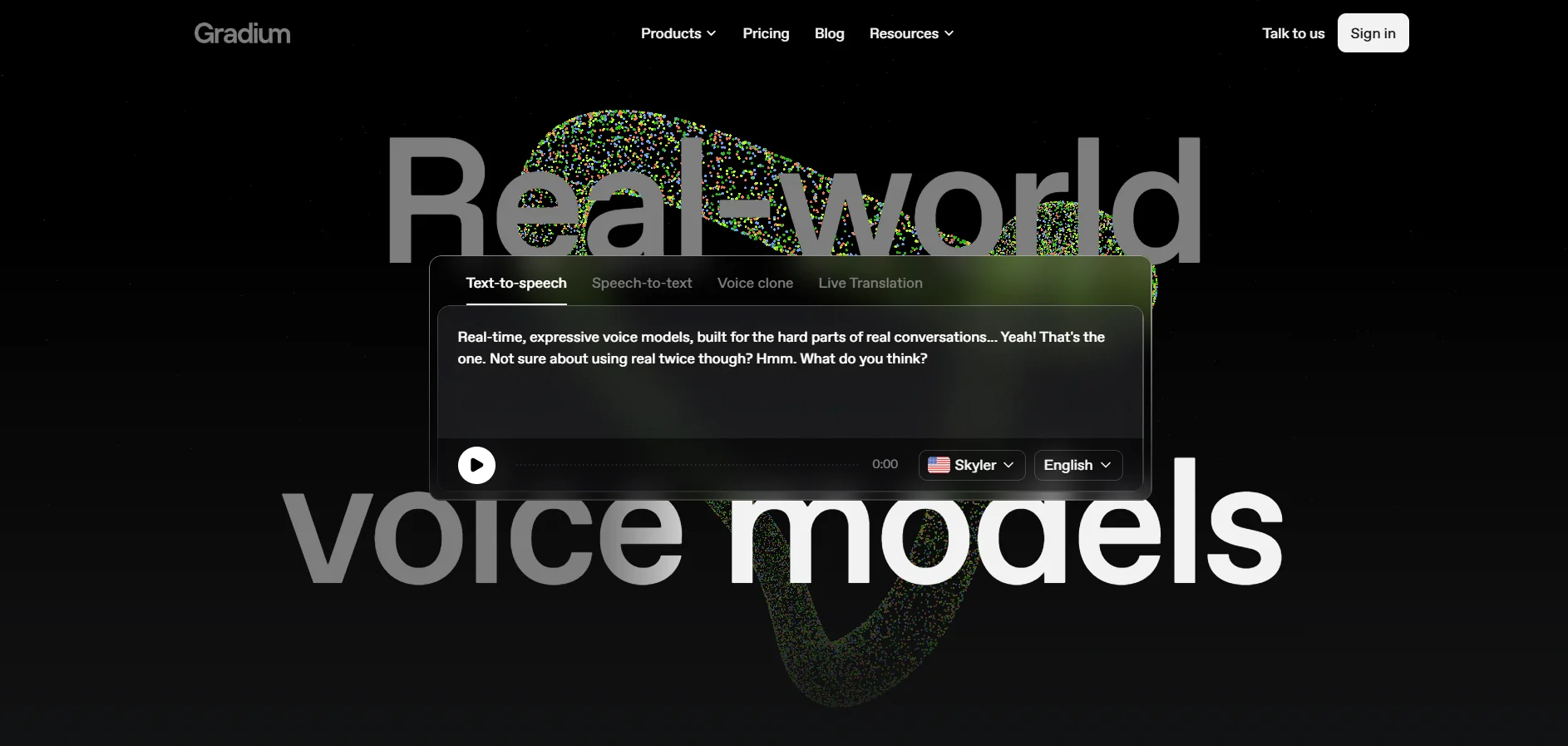
Gradium provides a free tier with 45,000 credits per month, giving developers real hands-on access to its text-to-speech, speech-to-text, and voice cloning APIs before any payment is required. Startup grant programs also offer up to $2,000 in free credits and six months of higher-tier access for early-stage voice companies.
Free $0/mo
XS $13/mo
S $43/mo
M $340/mo
L $1,615/mo
Founded by former DeepMind and Meta FAIR researchers, Gradium focuses on real-time, low-latency voice AI with Instant Voice Cloning from as little as 10 seconds of audio and strong benchmark scores against ElevenLabs and Cartesia. It currently supports five languages and offers on-device deployment, making it a strong pick for developers building latency-sensitive voice agents rather than casual content creators.
Pros
- Top-ranked instant voice cloning quality
- On-device and on-premise deployment options
- Backed by well-funded, experienced research team
Cons
- Only 5 languages currently supported
- Higher tiers (M, L) are expensive for small teams
- Newer platform with less third-party review coverage
| Alternative | Description |
|---|---|
| Lovo.ai | All-in-one AI voice and video studio with 500+ voices, script writing, and subtitles. |
| Uberduck | Fun, affordable voice platform known for text-to-rap and character voice generation. |
| Supertone Play | HYBE-backed TTS tool focused on emotionally expressive KR/JP/EN voices. |
| Resemble.ai | Enterprise voice cloning platform with deepfake detection and watermarking. |
| Cartesia | Ultra-low latency real-time TTS API built for voice agents and conversational AI. |
| Fliki | Script-to-video platform pairing AI voiceover with automatic stock footage. |
| ElevenLabs | Industry-leading voice realism with professional cloning, dubbing, and agents. |
| Podcastle | All-in-one podcast and video recording suite with built-in AI voiceover tools. |
| KikiVoice | No-signup, instant voice cloning platform supporting 75+ languages. |
| Minimax | High-quality, budget-friendly TTS API with strong benchmark performance. |
| BookFab | Windows desktop app converting eBooks and text directly into audiobooks. |
| Gradium | Research-driven, low-latency voice AI API with top-tier instant voice cloning. |
Conclusion
Choosing the right PlayHT alternative ultimately depends on your use case: ElevenLabs and Gradium excel at raw voice realism and real-time performance, Lovo.ai and Fliki suit creators who want an all-in-one video and voiceover workflow, while Resemble.ai and Cartesia are built for developers and enterprises needing API-first, scalable voice infrastructure. Budget-conscious creators may prefer Uberduck or KikiVoice, and those focused specifically on audiobooks will find BookFab and Podcastle particularly useful. Testing a few free plans or trials from this list is the best way to find the voice AI tool that truly fits your workflow.


