

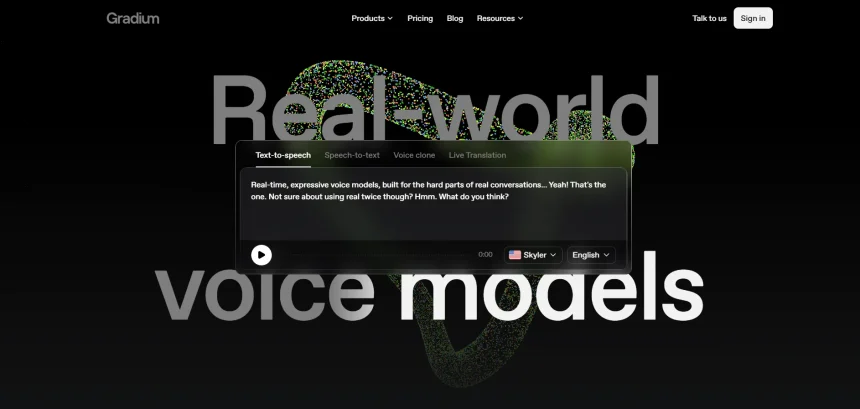
Gradium has carved out a strong position among developers building real-time voice agents, offering ultra-low latency text-to-speech, speech-to-text, and instant voice cloning through a single API. This article have 12 Gradium alternatives, covering everything from enterprise-grade narration tools to fun real-time voice changers. For each one, we look at what it does best, whether it offers a free trial, current pricing plans pulled from official sources, and the honest pros and cons you should weigh before signing up.
1. MiniMax Audio
Overview and Pricing
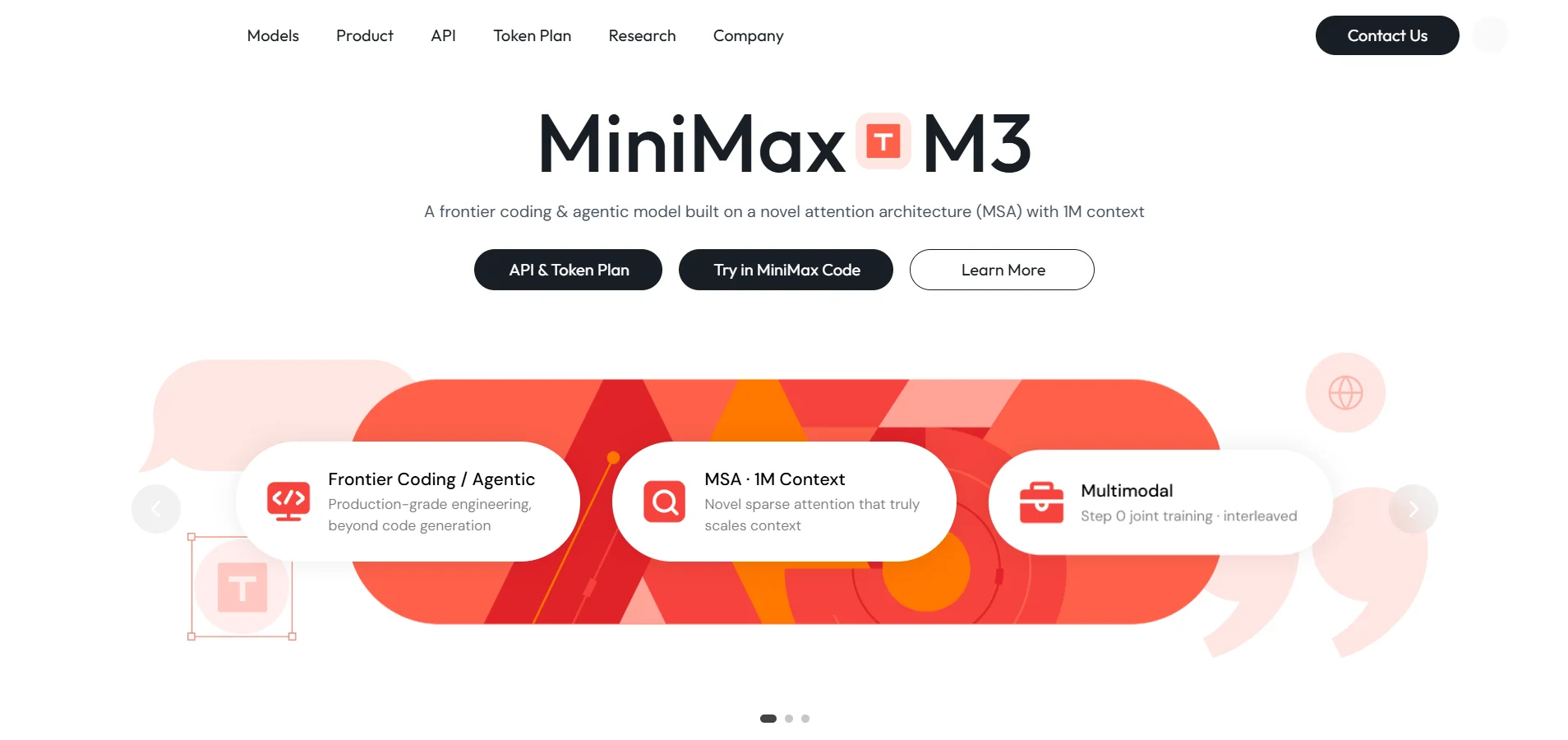
Free daily credits available MiniMax Audio gives new users 4,000 free daily credits to test its speech-2.8 model family before committing to a paid plan, making it easy to sample voice cloning and multilingual synthesis without upfront cost. It is positioned as a lower-cost rival to ElevenLabs and Gradium for production-grade voice work.
MiniMax supports over 40 languages with consistent pronunciation and seven emotional tones, making it attractive for global apps and podcast-style narration. Its pay-as-you-go structure suits teams that want granular control over spend rather than committing to a flat monthly seat price, though the character-based billing takes some getting used to.
Pros
- Very competitive per-character pricing
- Strong multilingual coverage
- Cheap voice cloning at $1.50/voice
Cons
- No persistent free tier, only daily credits
- Billing model can be confusing for beginners
2. KikiVoice
Overview and Pricing
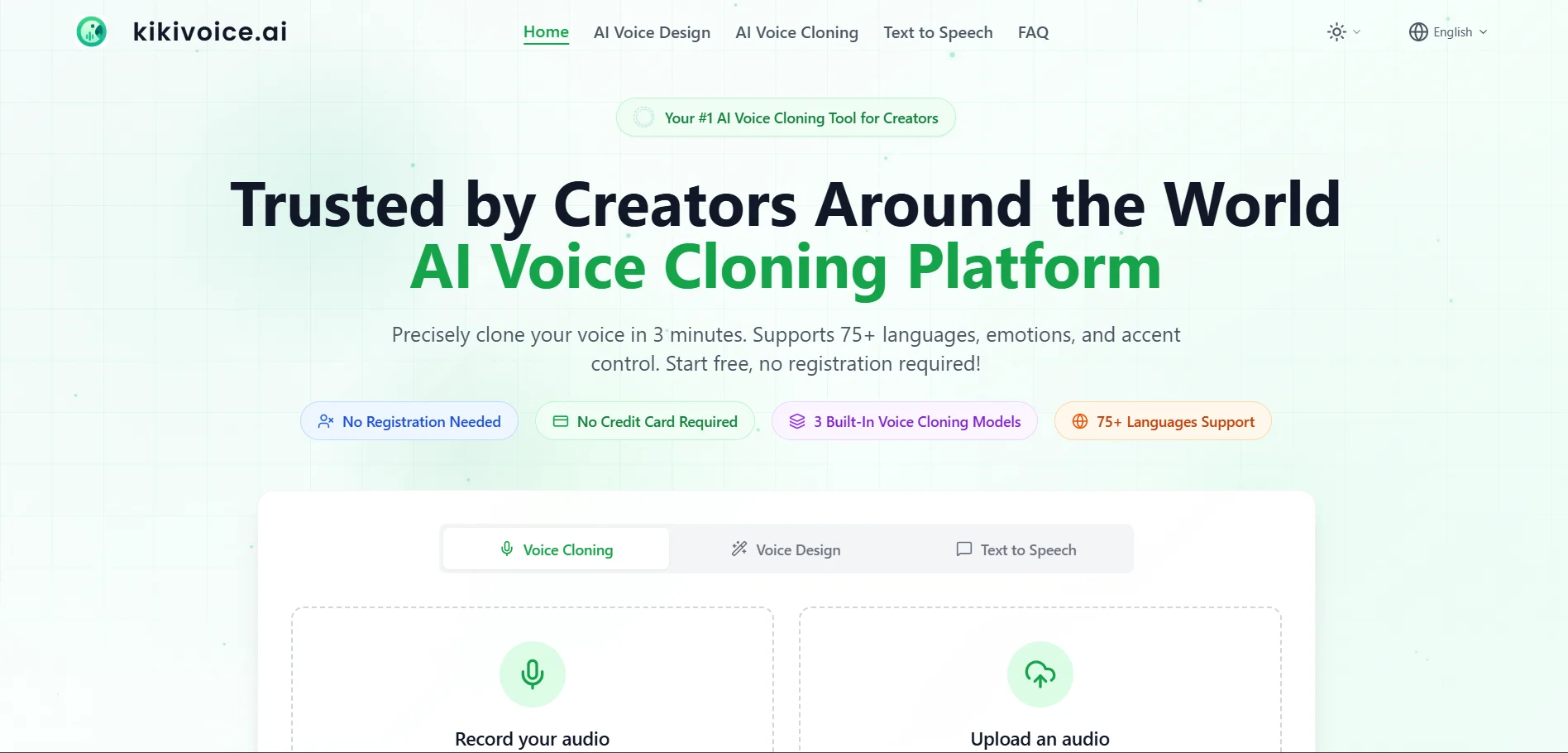
Free trial typically offered KikiVoice is a smaller, emerging text-to-speech platform aimed at creators who want quick, character-driven voiceovers for short-form video and social content. It emphasizes an easy onboarding flow with a handful of expressive preset voices rather than deep customization tools.
Because it targets casual and semi-professional creators rather than enterprise buyers, KikiVoice keeps its interface simple and its plans affordable compared to studio-grade competitors. It won’t replace a full production pipeline, but for quick turnarounds on reels, shorts, or narration snippets it gets the job done without a steep learning curve.
Pros
- Beginner-friendly interface
- Affordable entry pricing
- Fast turnaround for short clips
Cons
- Smaller voice library than major competitors
- Limited enterprise features
3. LOVO.ai
Overview and Pricing
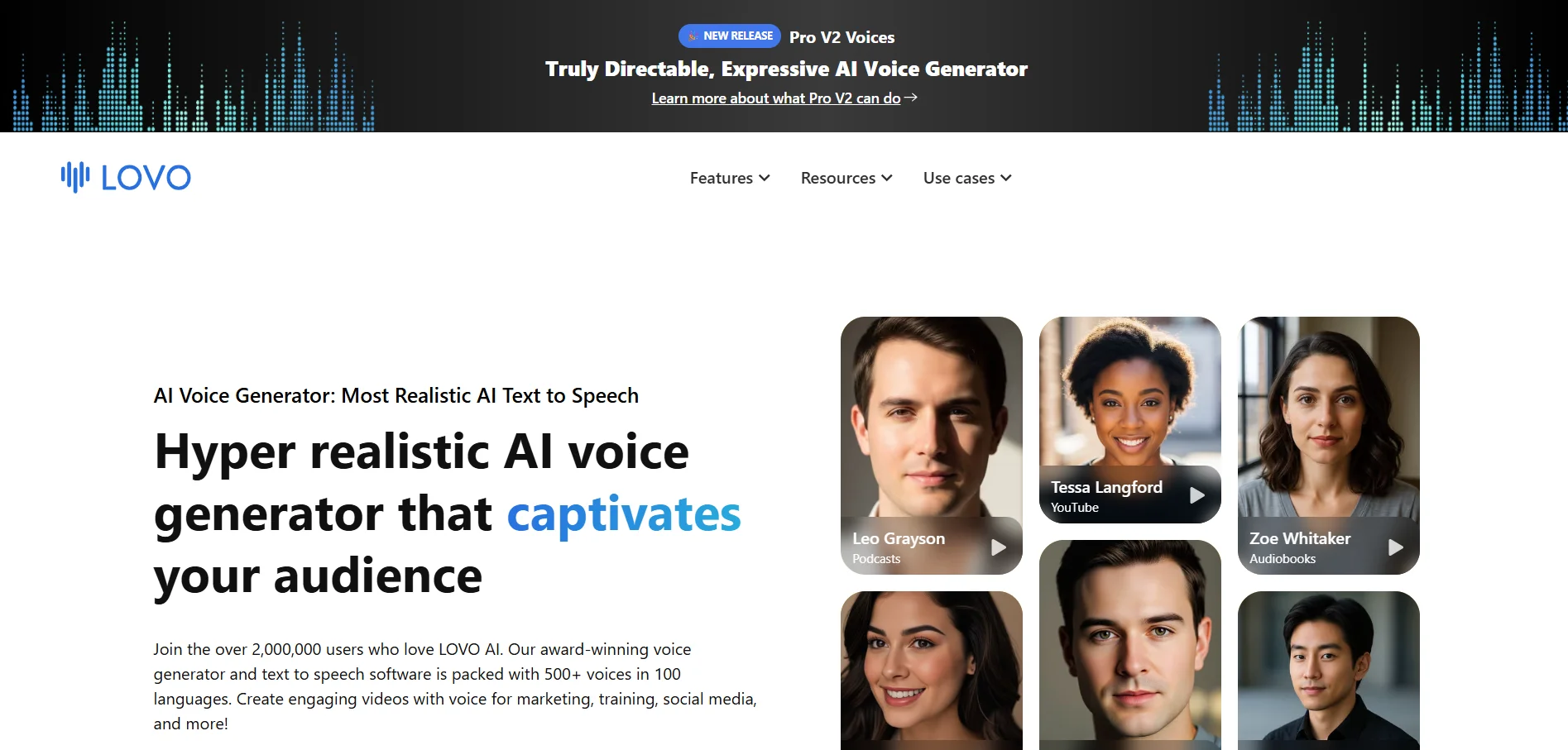
14-day free trial on Pro plan LOVO bundles a text-to-speech engine, video editor, subtitle generator, and AI script writer into one platform, making it popular with marketing teams and course creators who need more than just voice output. Its Genny studio interface is designed for non-technical users.
All paid LOVO tiers include commercial usage rights and voice cloning, which is a meaningful advantage over platforms that gate cloning behind top-tier plans. The trade-off is that some users report occasionally robotic-sounding output on certain voices, and billing support has drawn mixed reviews on cancellation handling.
Pros
- All-in-one video and voice suite
- Commercial rights on all paid tiers
- 500+ voices in 100+ languages
Cons
- Occasional robotic voice quality
- Reported billing/cancellation issues
4. Speechify
Overview and Pricing
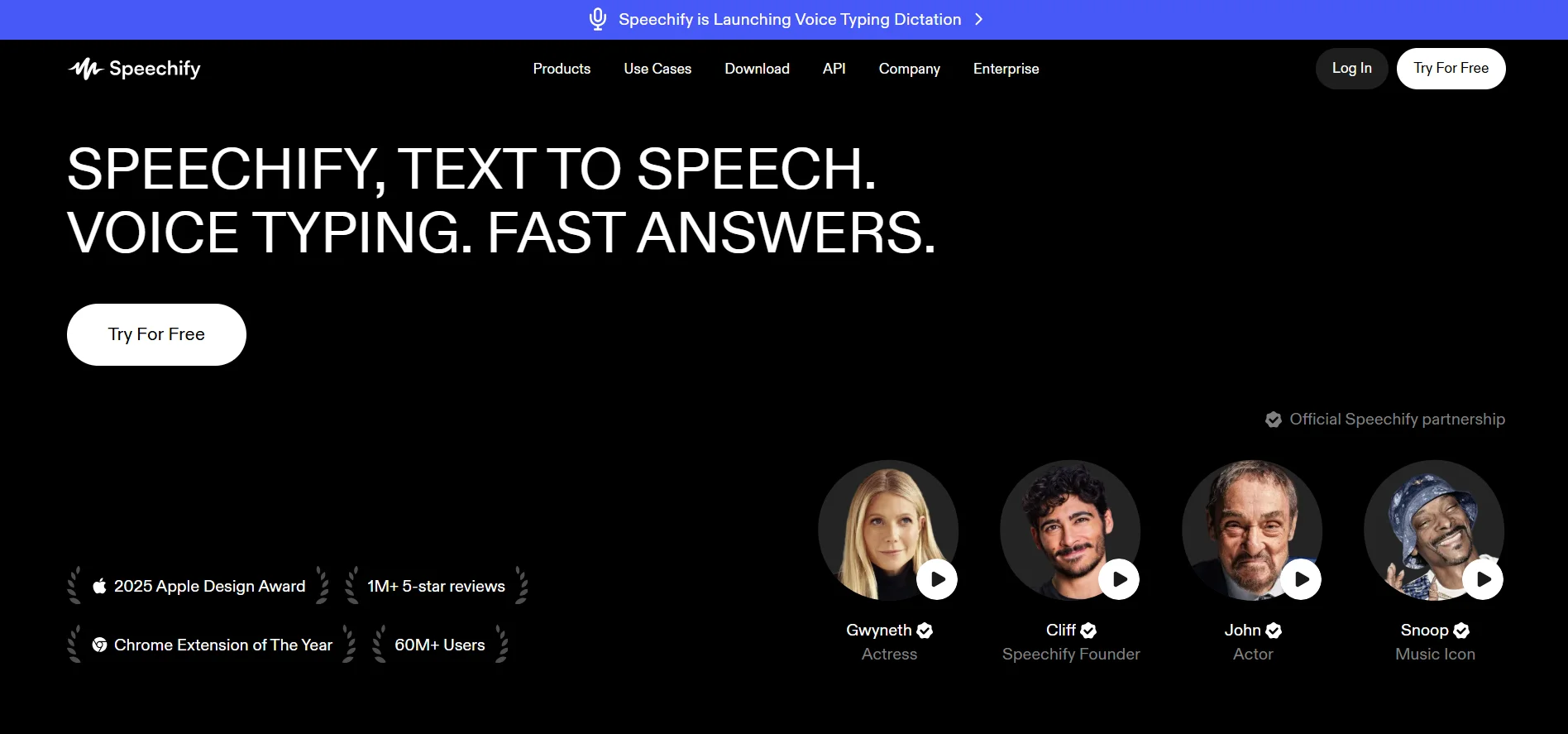
Free plan and free trial available Speechify is built primarily for listening to existing content: articles, PDFs, ebooks, and documents read aloud at speeds up to 4.5x. Its separate Studio product adds voice cloning and content-creation tools for podcasters and YouTubers.
Speechify’s core strength is accessibility and productivity reading rather than professional voice production, so it’s a better fit for students, researchers, and people with visual or reading challenges than for developers needing an API. Studio narrows the gap with ElevenLabs-style tools but at a smaller scale.
Pros
- Excellent for reading/accessibility use cases
- Generous free tier
- Strong mobile and browser extension support
Cons
- Not built for professional voiceover production
- Studio and Premium are billed as separate products
5. WellSaid Labs
Overview and Pricing
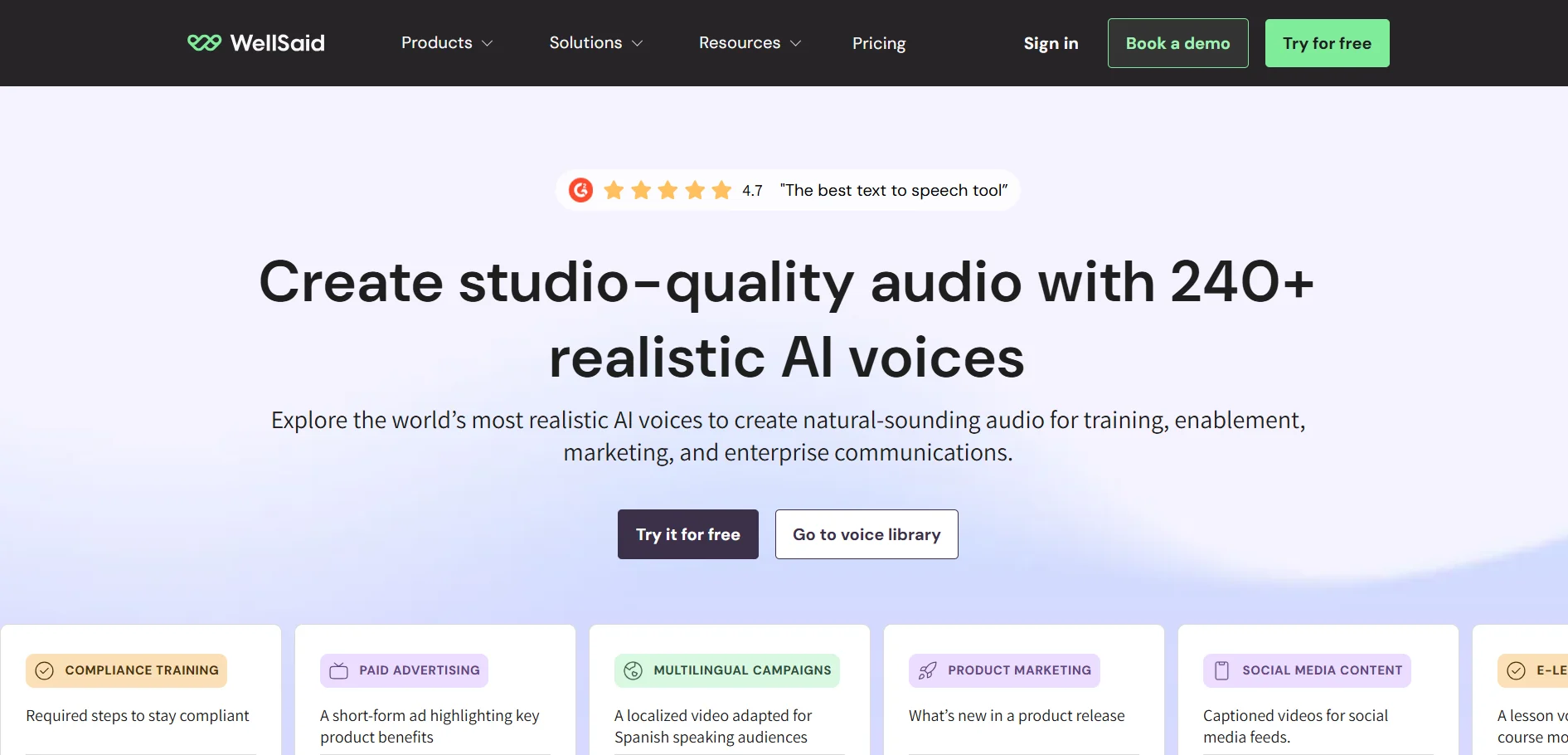
7-day free trial (no downloads) WellSaid Labs is an enterprise-focused voice platform built from research spun out of the Allen Institute for AI, offering studio-quality voice avatars modeled from consenting human voice actors rather than open-ended cloning.
WellSaid’s ethical-sourcing approach to voice talent makes it appealing to enterprises worried about likeness rights, and its audio quality is consistently rated highly for corporate training and marketing videos. The downside is a premium price point relative to competitors and a trial that doesn’t let you download finished audio to evaluate output quality firsthand.
Pros
- Ethically sourced, consenting voice actors
- SOC 2 compliant, enterprise-ready
- Consistently high audio quality
Cons
- Premium pricing versus competitors
- Trial doesn’t allow audio downloads
6. Uberduck
Overview and Pricing
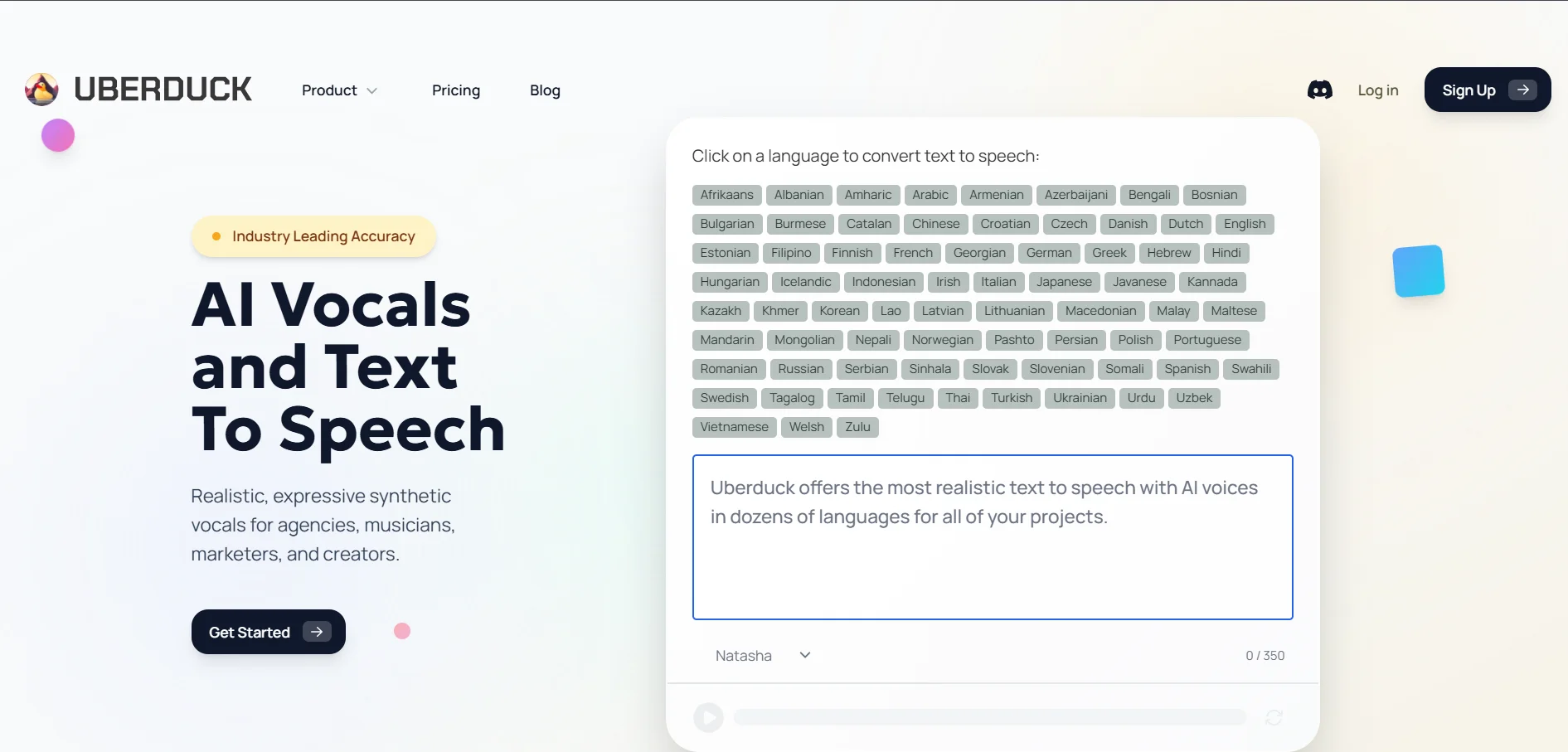
Free forever tier with 300 render credits/month Uberduck built its reputation on meme culture and celebrity-style voices, offering over 5,000 expressive voices along with rap-song generation and Discord integration, popular among TikTok and YouTube creators.
Its voice library has shrunk somewhat due to legal pressure around celebrity likeness rights, and voice quality trails premium competitors like ElevenLabs or Murf, but Uberduck remains a fun, low-cost option for casual content and community-driven projects rather than polished commercial narration.
Pros
- Very low entry price
- Huge, quirky voice library
- Fun rap/singing generation features
Cons
- Voice quality lags premium competitors
- Library reduced due to likeness-rights disputes
7. Noiz.ai
Overview and Pricing
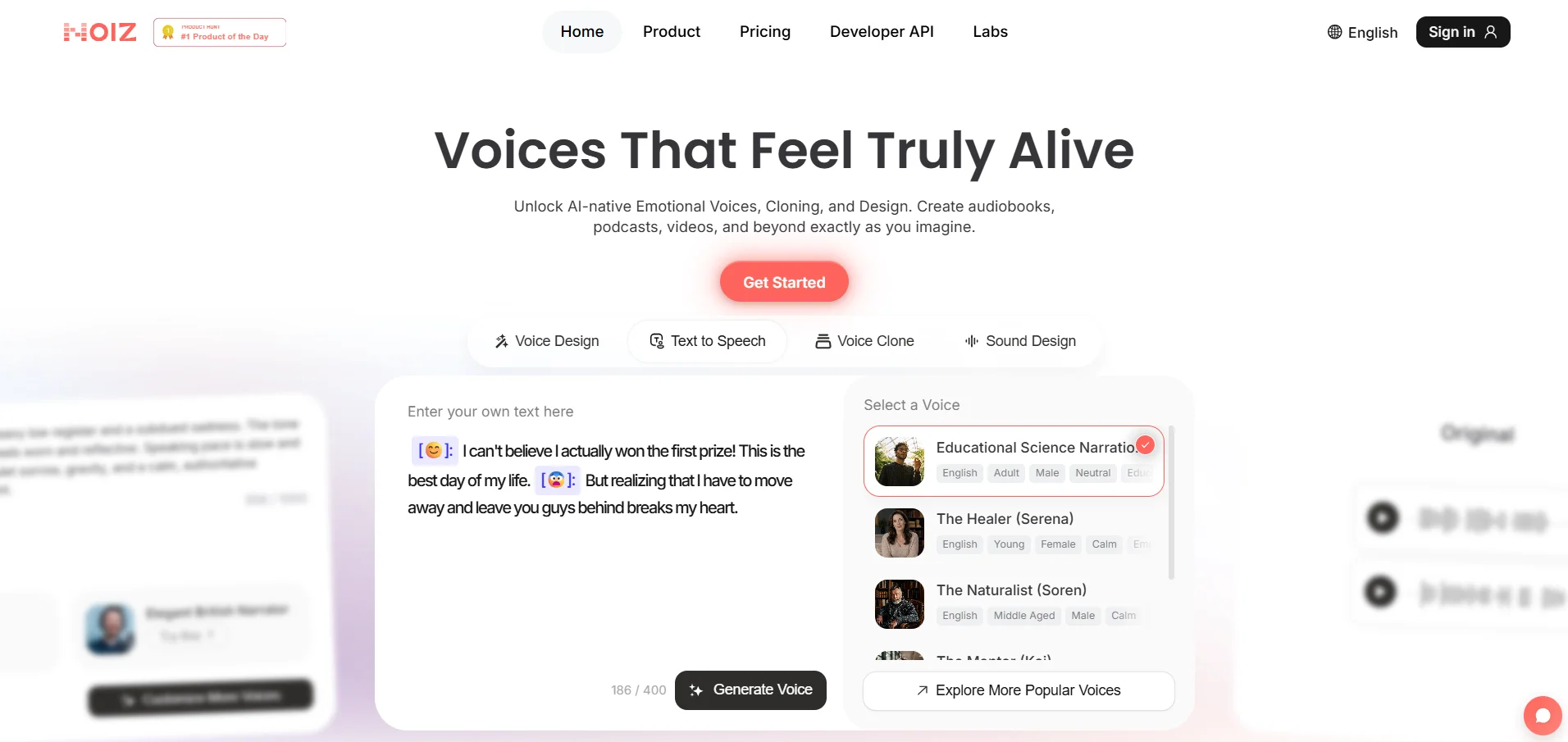
Free trial typically offered Noiz.ai positions itself as a lightweight AI voice and sound-effects generator aimed at indie game developers and short-form content creators who need quick audio assets without a steep learning curve.
Because it leans into game-audio and indie workflows, Noiz.ai often bundles sound-effect generation alongside voice synthesis, which sets it apart from pure TTS competitors. It’s not designed to compete with enterprise voice platforms on scale, but for solo developers on a budget it offers a reasonable middle ground.
Pros
- Combines voice and sound-effect generation
- Budget-friendly for solo developers
Cons
- Smaller community and fewer resources
- Less suited to enterprise-scale needs
8. ElevenLabs
Overview and Pricing
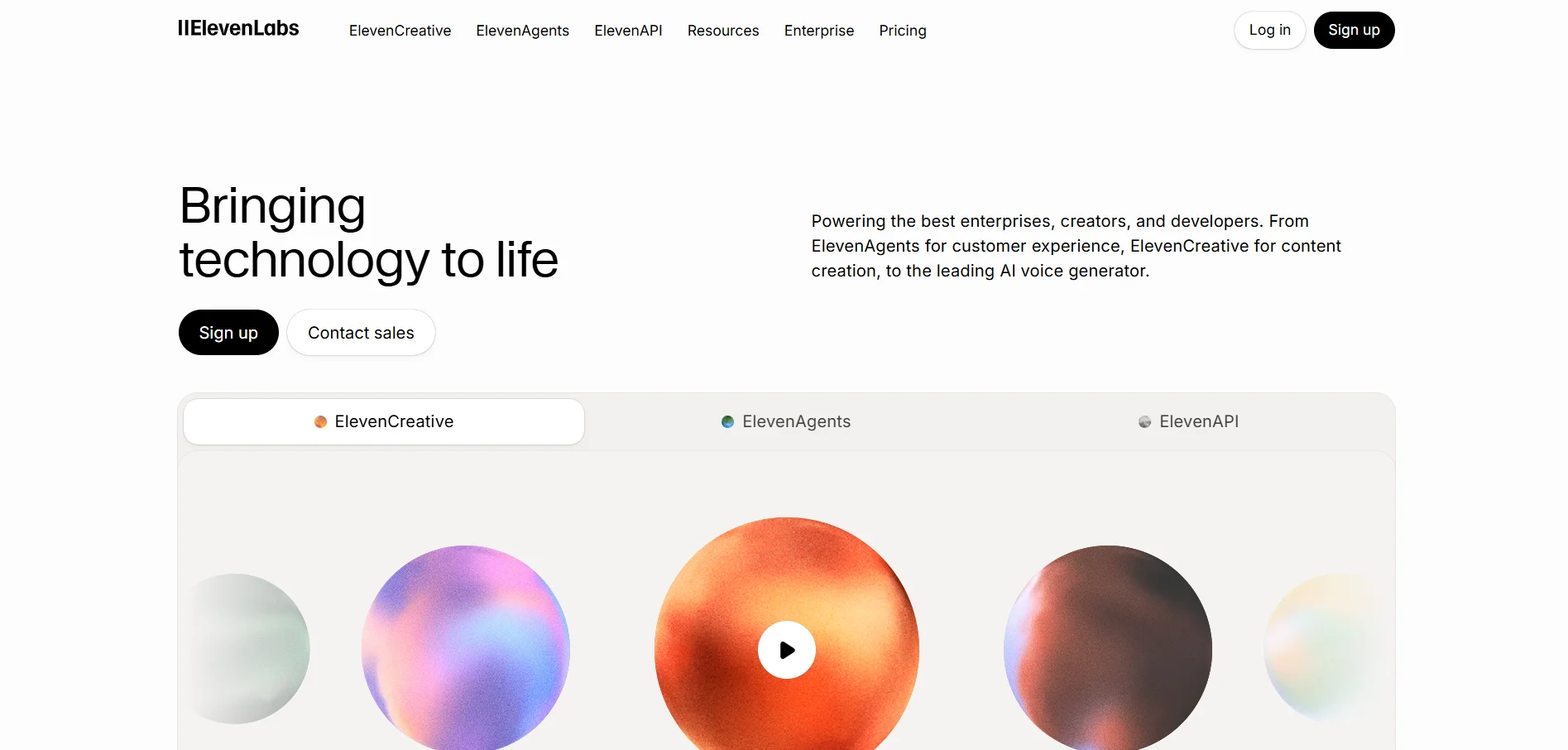
Free plan with 10,000 credits/month ElevenLabs is widely regarded as the quality leader in AI voice synthesis, known for expressive multilingual speech, professional voice cloning, and low-latency conversational agents used across podcasting, dubbing, and app development.
ElevenLabs’ credit-based billing tracks characters rather than raw minutes, which rewards users of its faster Flash and Turbo models with roughly double the output per credit. The trade-off for its top-tier voice realism is a pricing structure that can escalate quickly for high-volume users who exceed their plan’s monthly allowance.
Pros
- Industry-leading voice naturalness
- Strong developer API and documentation
- Generous free tier to start
Cons
- Costs escalate fast at scale
- Credit system takes time to understand
9. Voice.ai
Overview and Pricing
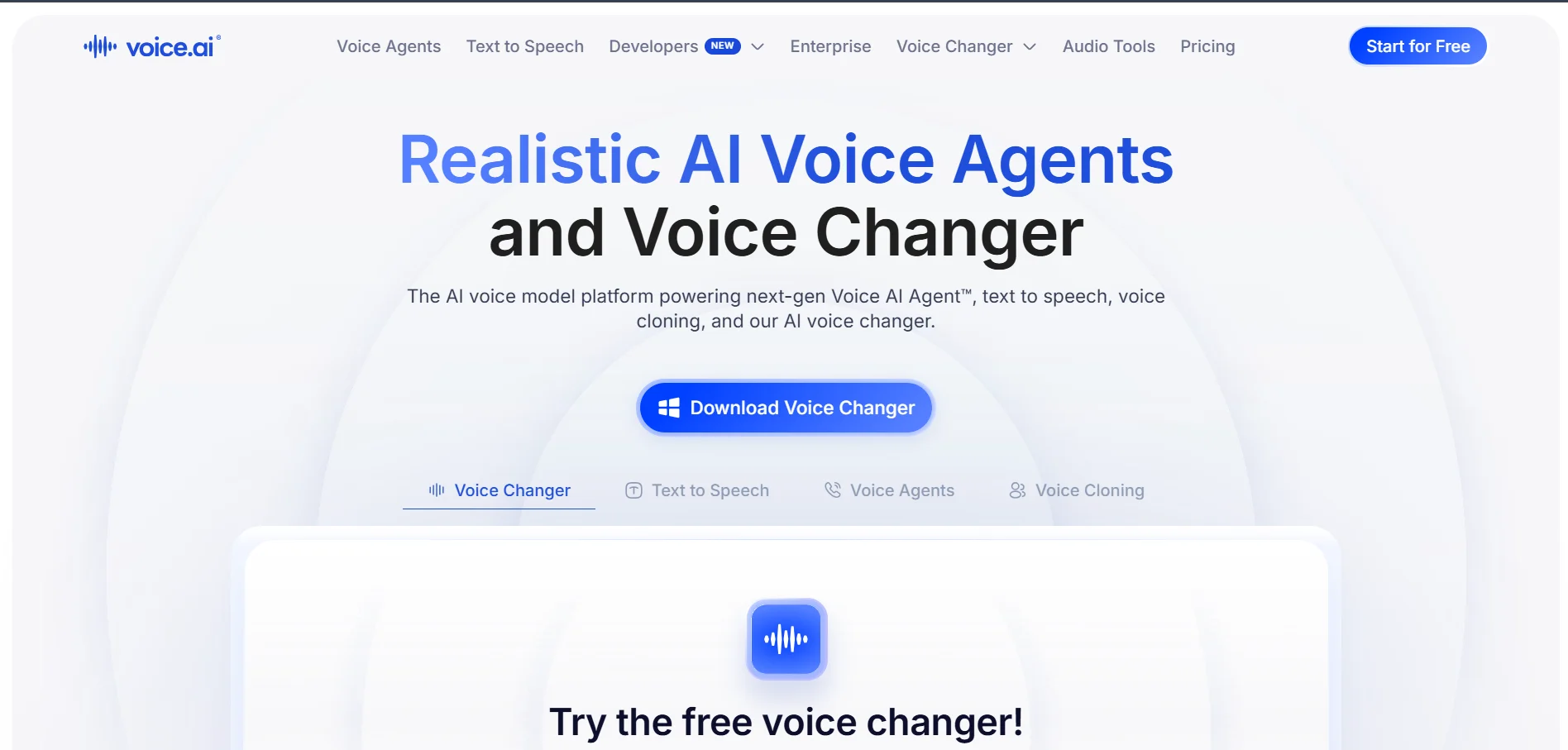
Free plan available (limited) Voice.ai is best known as a real-time voice changer for gamers and streamers, letting users alter or clone their voice live in Discord, Zoom, Twitch, and popular games, alongside a growing text-to-speech and voice-agent product line.
Its credit system converts unevenly across features, meaning text-to-speech and voice-agent calls burn credits faster than its audio tools, which can be efficient up to 15x by comparison. It’s a strong pick for real-time voice fun, but professional creators may find the credit math harder to predict than flat per-minute pricing.
Pros
- Best-in-class real-time voice changing
- Cheap entry-level plan at $5/month
- Works across major apps and games
Cons
- Credit system is inconsistent across features
- Free tier requires payment details upfront
10. BookFab
Overview and Pricing
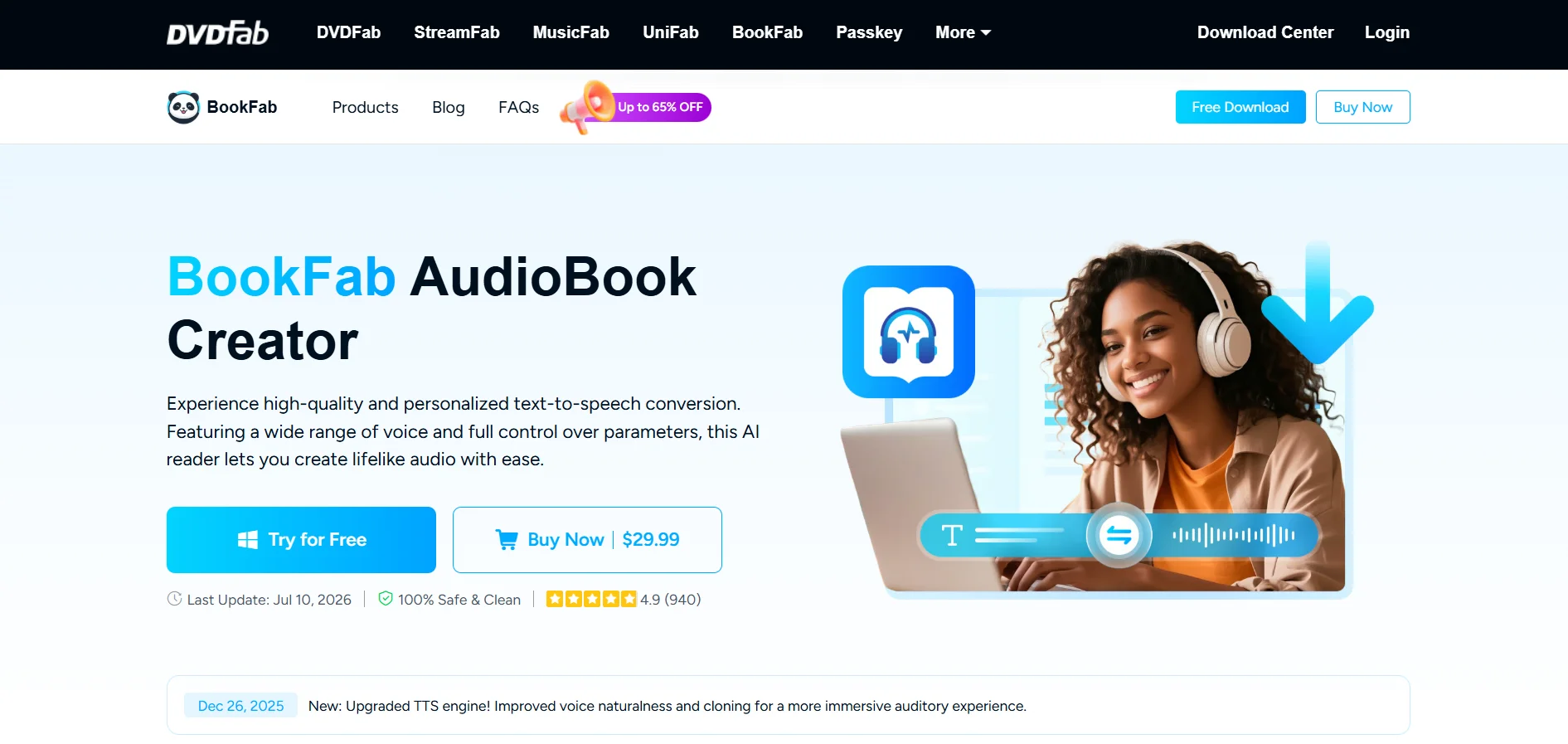
Free download version available BookFab AudioBook Creator is a Windows-based tool built specifically for turning written text into narrated audiobooks, targeting writers, educators, and independent publishers who want unlimited local audio exports.
Unlike most cloud-based competitors on this list, BookFab runs as desktop software, which appeals to users who prefer offline workflows or want to avoid recurring credit-based billing. It supports voice cloning for maintaining a consistent narrator style across long-form audiobook projects.
Pros
- Desktop app with offline workflow
- Unlimited audio downloads on paid tiers
- Good fit for long-form audiobook projects
Cons
- Windows-only availability
- Less polished than cloud-native competitors
11. Supertone Play
Overview and Pricing
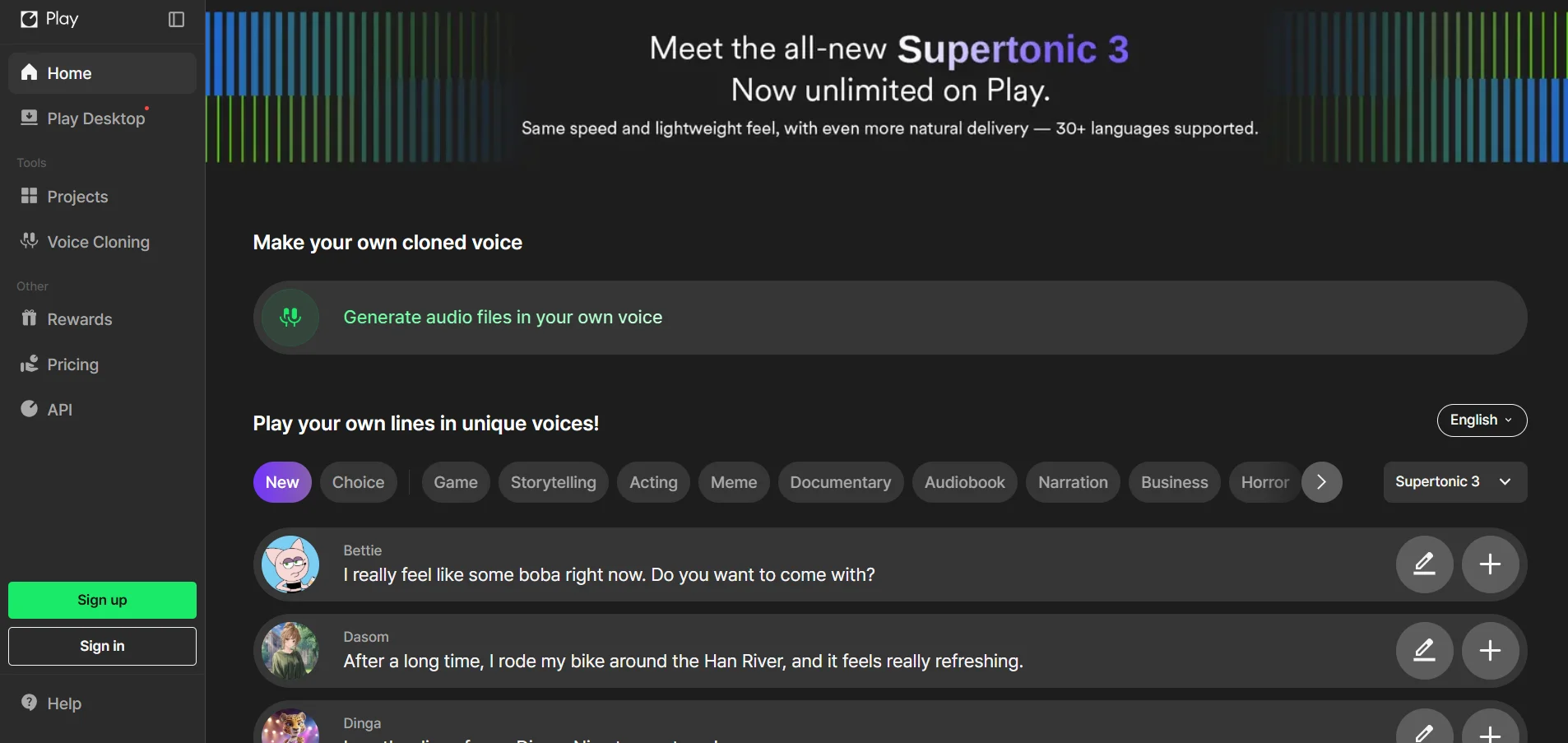
Free trial typically offered Supertone Play, from the Korean voice-AI company Supertone, focuses on highly expressive, emotionally nuanced voice synthesis often used in gaming, animation dubbing, and character-driven media production.
Supertone’s technology is particularly strong at capturing emotional range and character personality in voice output, which sets it apart from more neutral, narration-focused competitors. It’s a good fit for game studios and animation teams, though its brand recognition and documentation are less mature than larger Western competitors.
Pros
- Strong emotional expressiveness
- Well-suited to gaming and animation
Cons
- Smaller community and fewer tutorials
- Regional pricing variability
12. PlayHT
Overview and Pricing
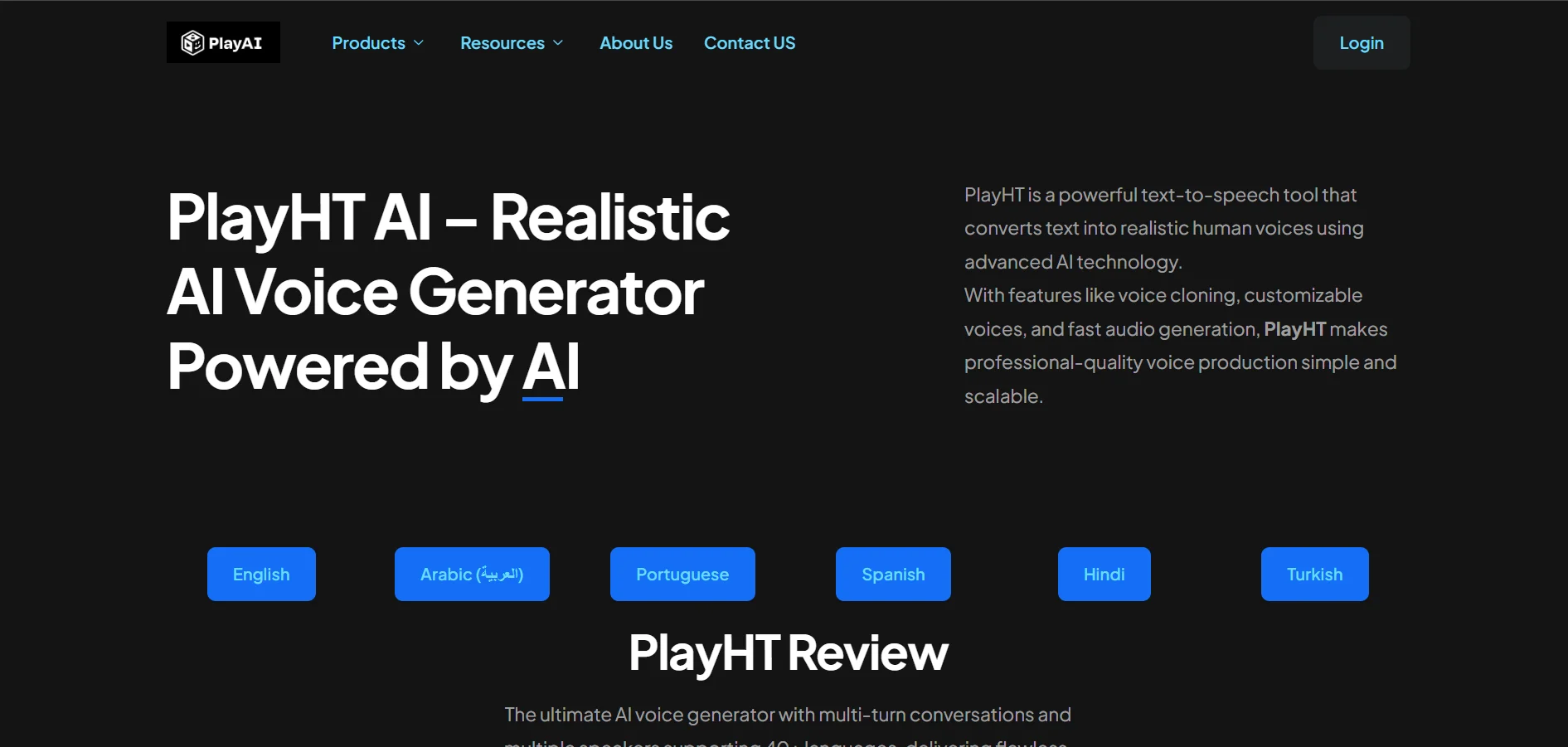
Free plan available, no separate trial PlayHT offers over 800 natural-sounding voices across 142 languages, with instant voice cloning, a real-time streaming API, and a character voice generator aimed at game and animation developers.
PlayHT’s free tier is unusually generous for testing voice cloning before paying, though commercial rights only unlock on paid plans and require attribution on the free tier. Its pronunciation and phonetics library using IPA notation is a standout feature for fine-tuning tricky words, making it popular among podcasters and e-learning teams.
Pros
- Huge language and voice coverage
- IPA-based pronunciation control
- Generous free tier for testing cloning
Cons
- Commercial use gated behind paid plans
- Pricing tiers vary confusingly across sources
Comparison Table
| Alternative | Description |
|---|---|
| MiniMax Audio | Low-cost, multilingual TTS and voice cloning API rivaling ElevenLabs on price per character. |
| KikiVoice | Simple, affordable TTS tool for creators making short-form video and social content. |
| LOVO.ai | All-in-one voice, video, and subtitle studio with commercial rights on every paid plan. |
| Speechify | Accessibility-focused text-to-speech reader with a separate Studio product for voice creation. |
| WellSaid Labs | Enterprise voice platform using ethically sourced, consenting human voice avatars. |
| Uberduck | Meme-friendly voice generator with celebrity-style voices and rap/song creation tools. |
| Noiz.ai | Lightweight voice and sound-effect generator aimed at indie game developers. |
| ElevenLabs | Industry-leading voice realism, professional cloning, and low-latency conversational agents. |
| Voice.ai | Real-time voice changer for gaming and streaming, plus growing TTS and voice-agent tools. |
| BookFab | Desktop audiobook creation software with offline narration and unlimited exports. |
| Supertone Play | Emotionally expressive voice synthesis geared toward gaming and animation dubbing. |
| PlayHT | Broad language coverage with IPA pronunciation control and a generous free cloning tier. |
Conclusion
Creators on a tighter budget, or those who just want to have fun with real-time voice changing, will find better value in Voice.ai, Uberduck, or Noiz.ai, while writers and educators producing long-form audio should look closely at BookFab or Speechify Studio. Whichever platform you choose, always test the free trial or free tier first, since voice quality and emotional expressiveness vary enough between tools that a quick hands-on comparison is worth more than any spec sheet.


