

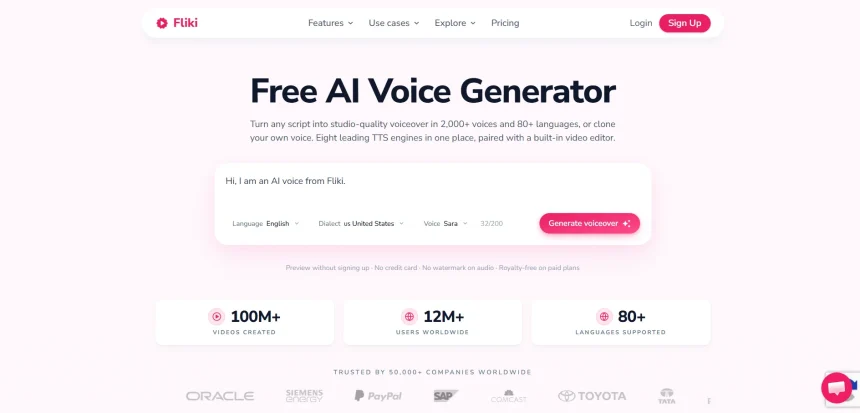
Fliki has earned a strong reputation as a text-to-video and text-to-speech platform, but it is far from the only option available to creators, developers, and businesses. Depending on your needs, whether that is ultra-realistic voice cloning, audiobook narration, eBook conversion, or emotionally expressive speech, other platforms may serve you better in terms of pricing, voice quality, or specialized features. This article rounds up 11 solid Fliki Alternatives, covering their trial offers, pricing plans, and the pros and cons of each so you can pick the right tool for your workflow.
1. Supertone Play
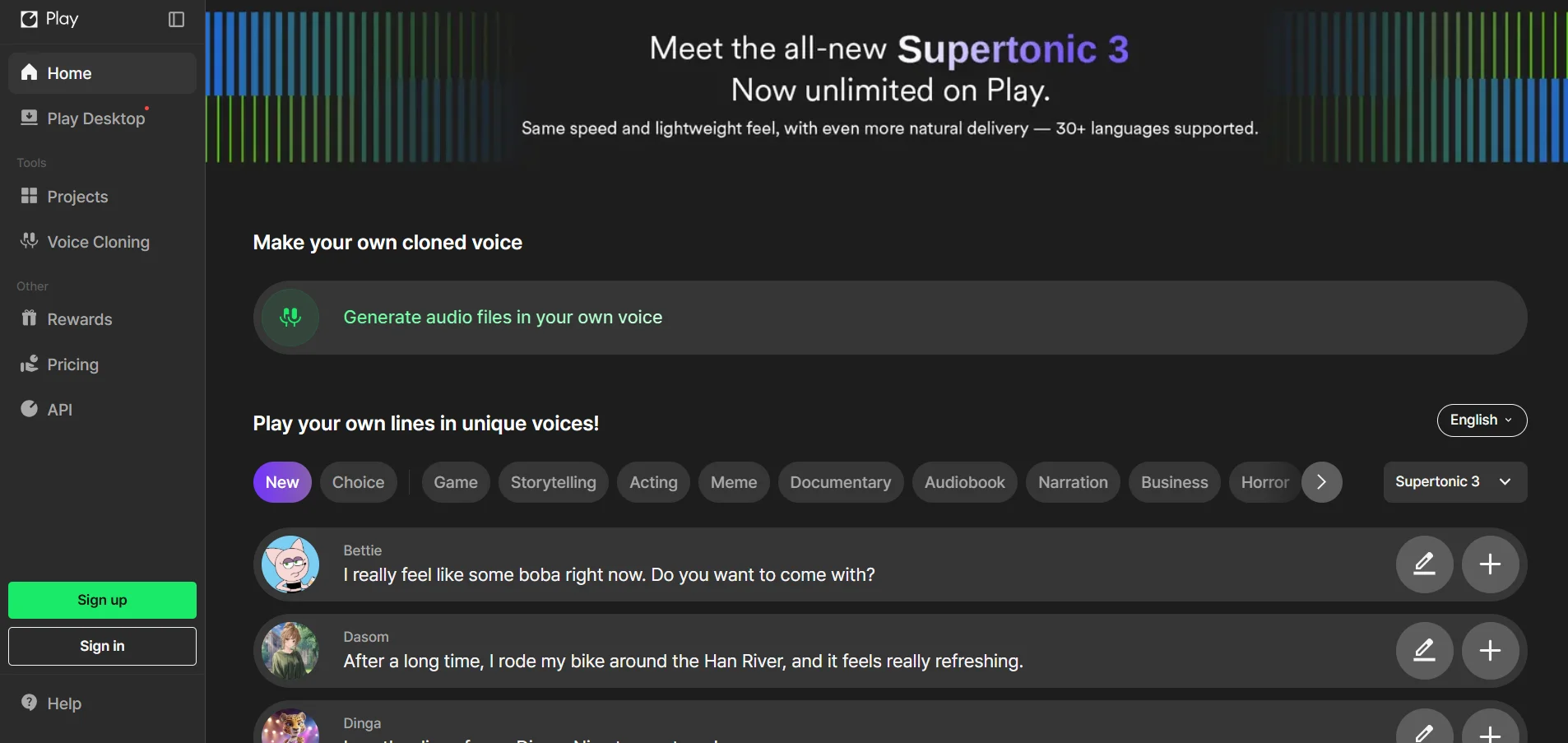
Supertone Play is a multilingual text-to-speech and voice cloning platform known for expressive, emotionally rich voice output. New users get a two-week free trial with no credit card required, offering unlimited voice cloning and full access to over 150 premium voices during the trial period before standard fees apply.
Beyond pricing, Supertone Play stands out for its voice cloning technology that requires only ten seconds of sample audio. It currently supports Korean, Japanese, and English with strong quality, though other languages lag behind. Credits reset monthly and unused ones do not roll over, which is worth factoring into your budget planning.
Pros
- Highly expressive, emotionally nuanced voices
- Fast ten-second voice cloning
- Generous two-week unlimited free trial
- Affordable entry-level pricing tiers
Cons
- Only three languages perform reliably well
- Credit-based system can be confusing
- No refunds on purchases
- Requires high-end hardware for desktop app
2. Pixbim
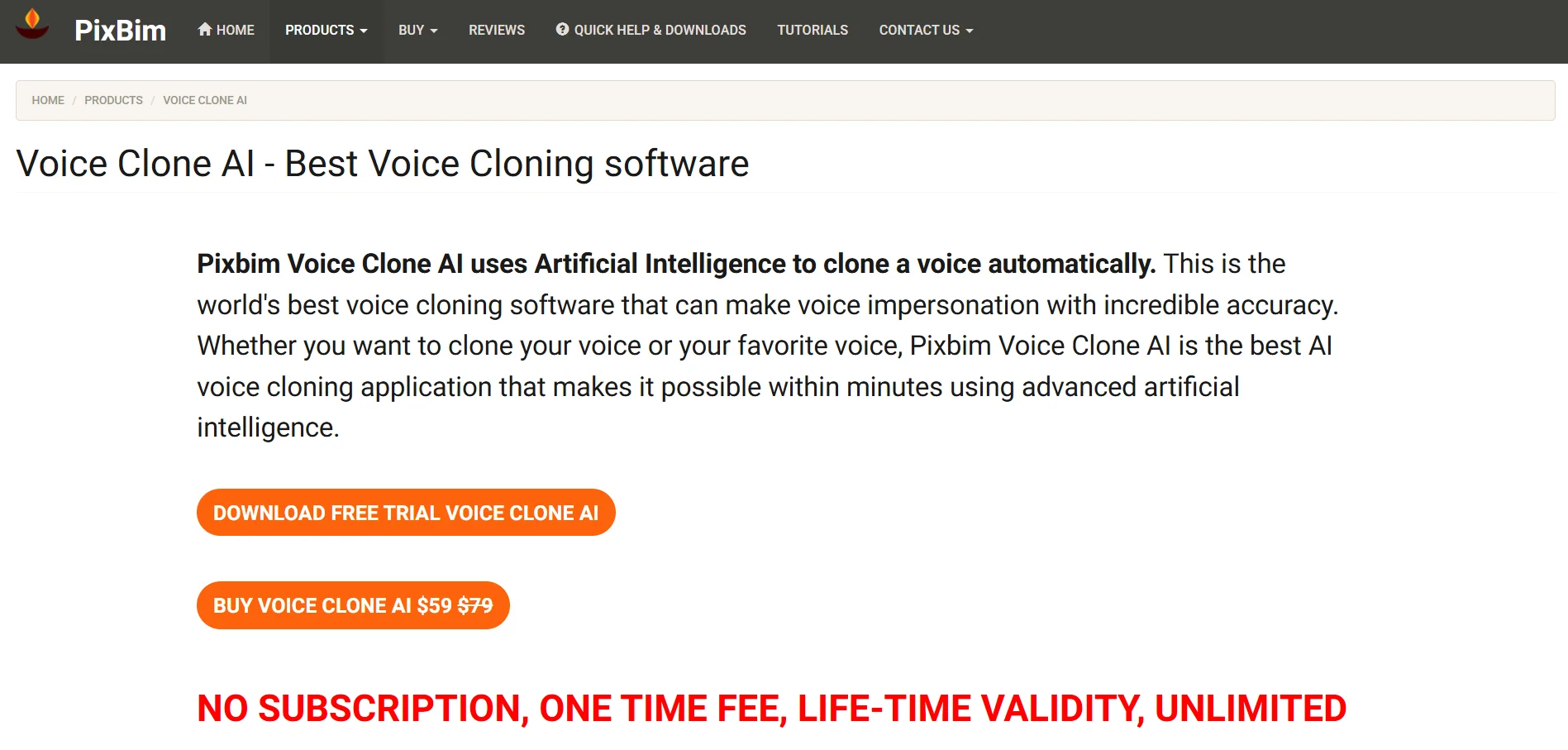
Pixbim is a suite of offline AI desktop tools covering voice cloning, lip syncing, video upscaling, and photo colorization. Every application in the Pixbim lineup offers a seven-day free trial that does not require a credit card, letting users test the software fully on their own machine before committing to a purchase.
Because Pixbim runs entirely offline, it appeals strongly to users concerned about privacy since nothing is uploaded to the cloud. The trade-off is that its tools are modular and Windows-focused, so users needing cross-platform or online accessibility may find the ecosystem restrictive compared to cloud-based alternatives.
Pros
- 100% offline processing for privacy
- One-time purchase, no subscription
- Seven-day trial with no card required
- Wide range of specialized AI tools
Cons
- Primarily built for Windows
- Requires decent local hardware
- Each tool sold separately
- Dynamic content handling can be inconsistent
3. iSpeech
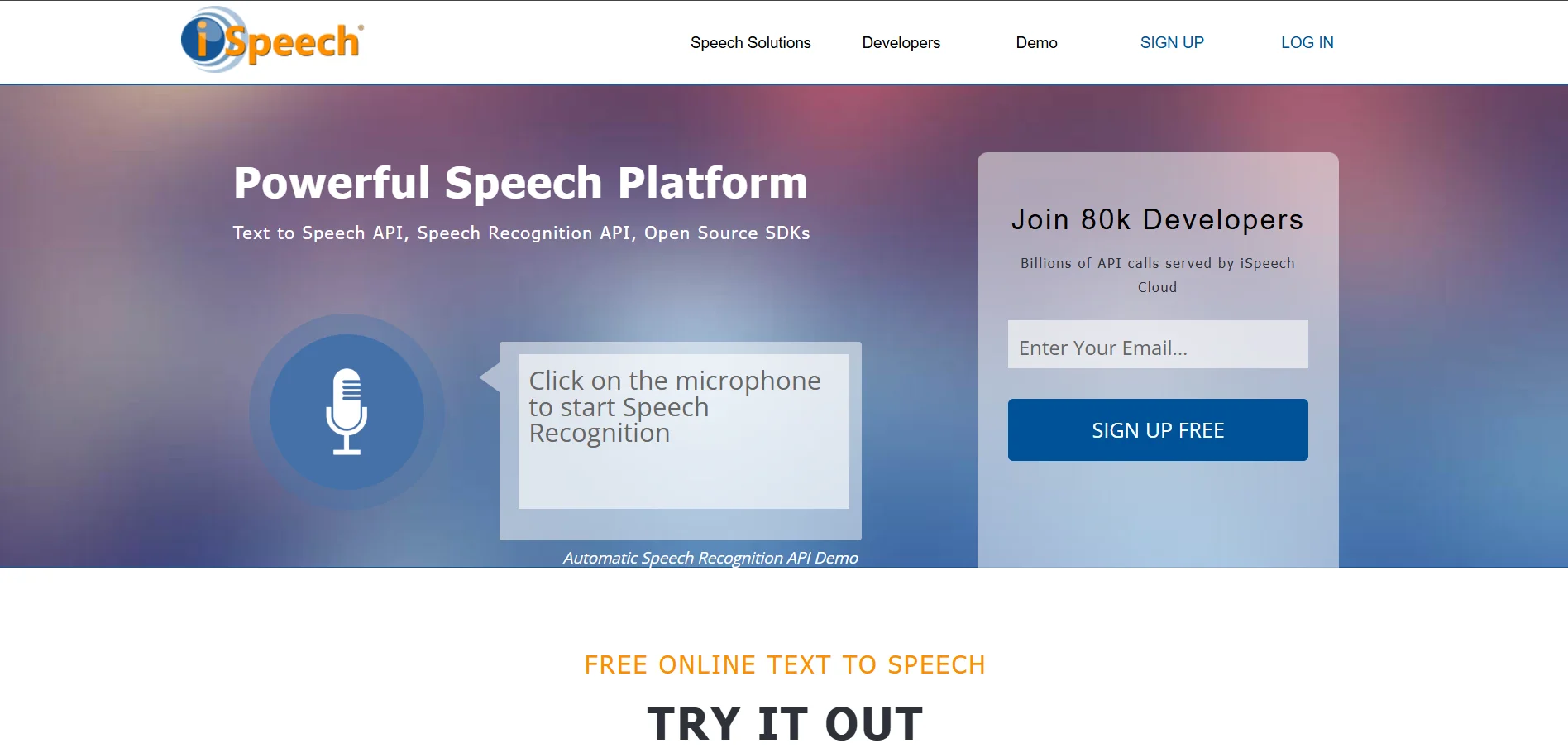
iSpeech is a long-standing text-to-speech and speech recognition platform aimed at accessibility, e-learning, and content creation. The Basic plan is free to use, functioning as an ongoing trial that lets new users explore core text-to-speech conversion before deciding whether to upgrade to a paid tier.
iSpeech’s biggest strength is affordability, with paid plans costing a fraction of many competitors. However, its voice quality and language support are noticeably more dated compared to newer neural TTS engines, making it better suited for basic accessibility use cases than professional voiceover or narration projects.
Pros
- Extremely budget-friendly pricing
- Free Basic plan available indefinitely
- Simple, no-frills interface
- Browser toolbar integrations available
Cons
- Voice quality trails modern neural TTS tools
- Limited advanced customization
- Dated user interface
- Fewer expressive voice options
4. BookFab
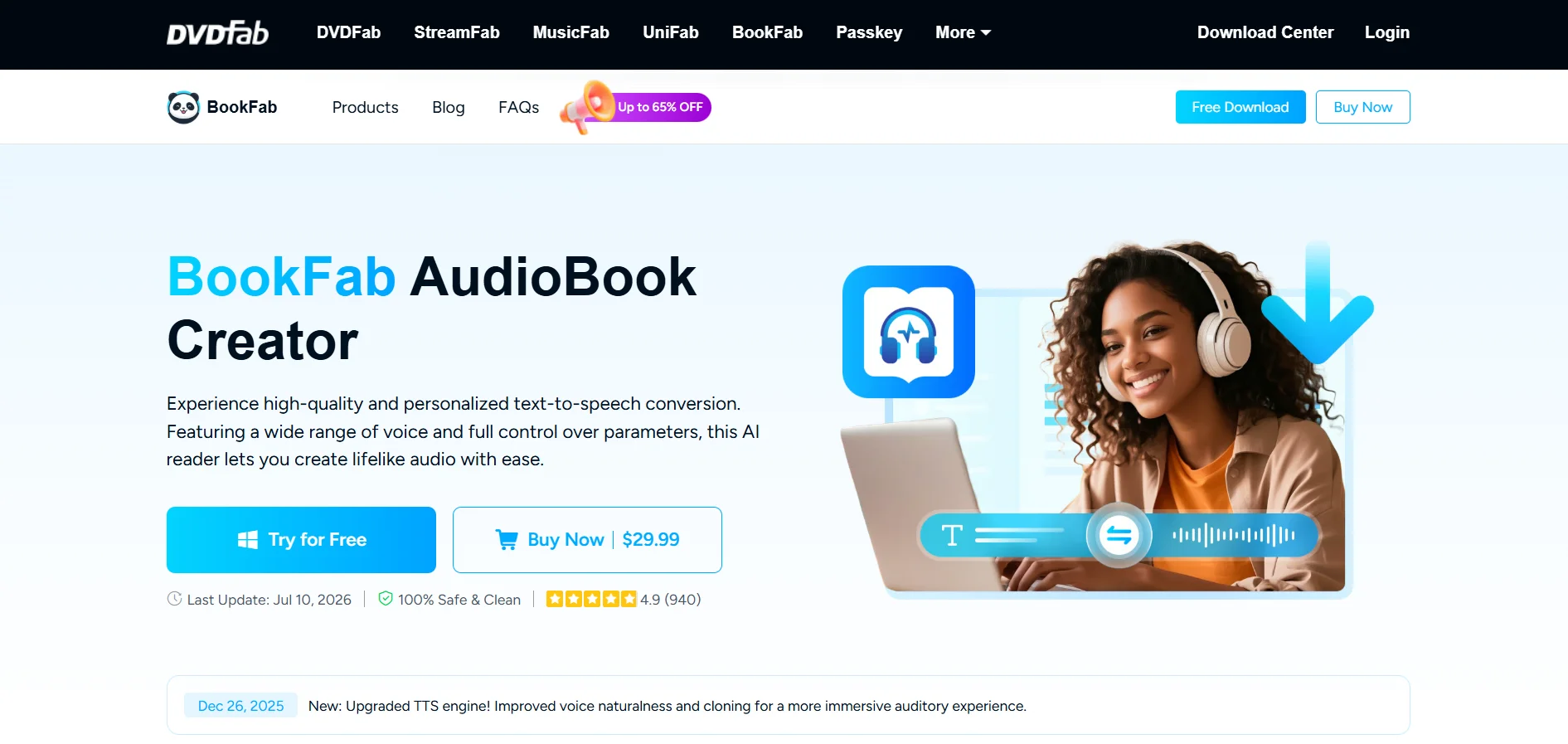
BookFab is an all-in-one eBook and audiobook converter that also includes AI text-to-speech audiobook creation. It offers a free trial across its tools, letting users test Kindle and Kobo conversion along with audiobook narration features, though the free trial for the Kindle Converter caps output at three converted eBooks.
BookFab’s audiobook creator supports around 20 voices in English and Japanese, with adjustable volume, speed, and prosody settings. While it is versatile for readers converting personal libraries, its modular pricing structure can become expensive if you need both Kindle and Kobo conversion alongside audiobook narration tools.
Pros
- Combines eBook conversion and TTS narration
- Preserves original formatting well
- Free trial with no card required
- Calibre plugin integration available
Cons
- Modular pricing gets expensive quickly
- DRM removal performance can be inconsistent
- Limited voice count compared to rivals
- Mac version reportedly less stable
5. ElevenLabs
ElevenLabs is widely regarded as the industry leader in AI voice synthesis, offering ultra-realistic text-to-speech, voice cloning, and multilingual dubbing. The Free plan itself functions as a trial, providing 10,000 credits monthly, roughly ten minutes of speech generation, with no credit card required to start.
ElevenLabs excels in voice realism and expressive control, including whispers, laughter, and emotional nuance, making it a favorite among podcasters and video creators. The downside is a genuinely complex credit system where overage charges and character-to-credit ratios vary by model, which can make budgeting unpredictable for high-volume users.
Pros
- Industry-leading voice realism
- Extensive language and voice library
- Free tier requires no credit card
- Strong developer API support
Cons
- Premium pricing at higher tiers
- Confusing credit-based billing
- Overage charges can add up fast
- Commercial rights limited on free tier
6. PlayHT
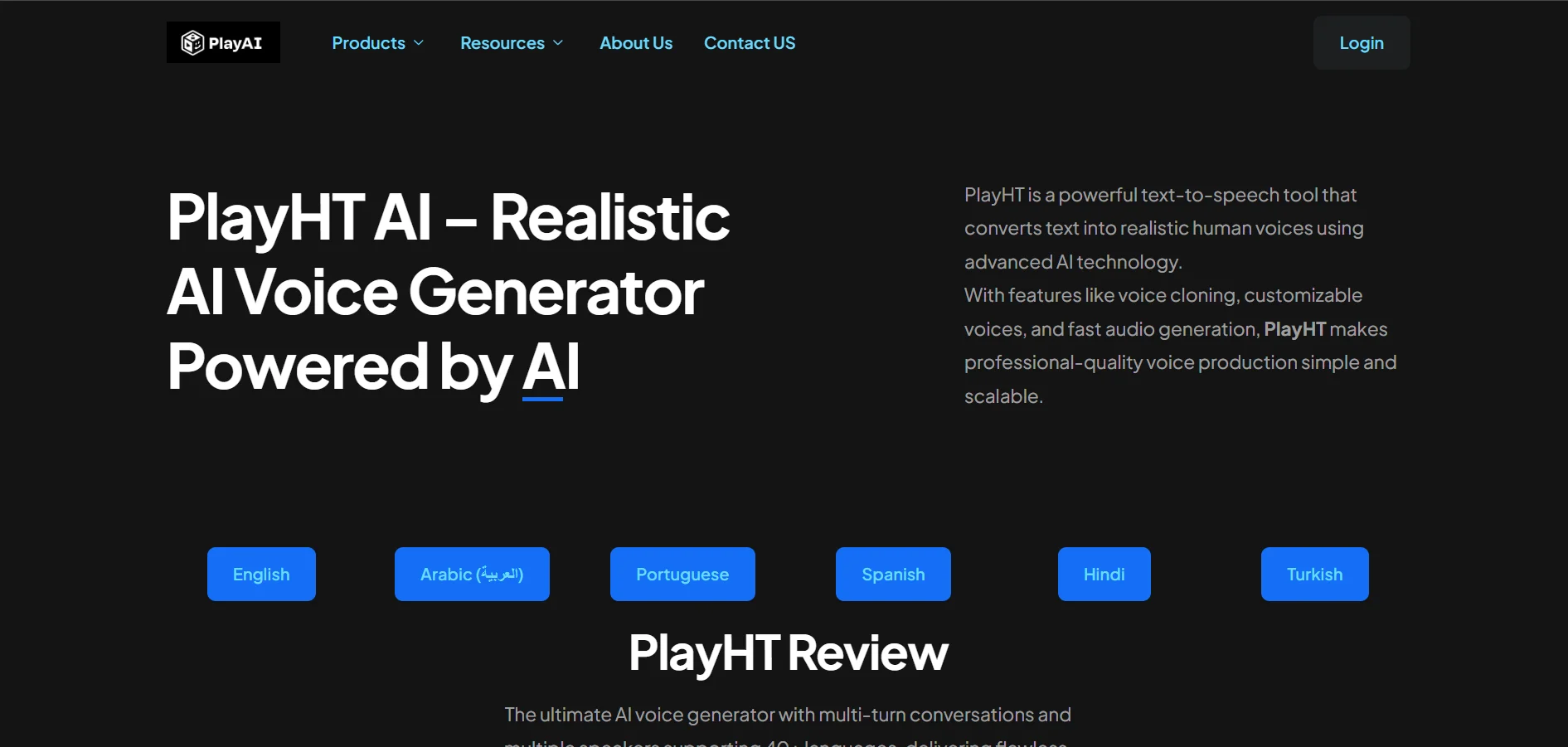
PlayHT is an AI voice generator offering over 800 natural-sounding voices across more than 140 languages, alongside voice cloning and a real-time API. The Free plan serves as a functional trial, giving new users around 12,500 characters a month and access to all voices and languages before committing to a paid tier.
PlayHT’s biggest draw is its enormous voice and language library alongside a pronunciation and phonetics tool using IPA notation, giving fine control over how words sound. However, the free plan lacks commercial usage rights, and PlayHT requires attribution unless you’re on a paid plan, which can be limiting for monetized content.
Pros
- Huge voice and language selection
- IPA-based pronunciation control
- Video dubbing feature included
- Flexible plans for different budgets
Cons
- Free plan lacks commercial rights
- Attribution required on lower tiers
- Character limits can feel restrictive
- Pricing structure varies across sources
7. KikiVoice
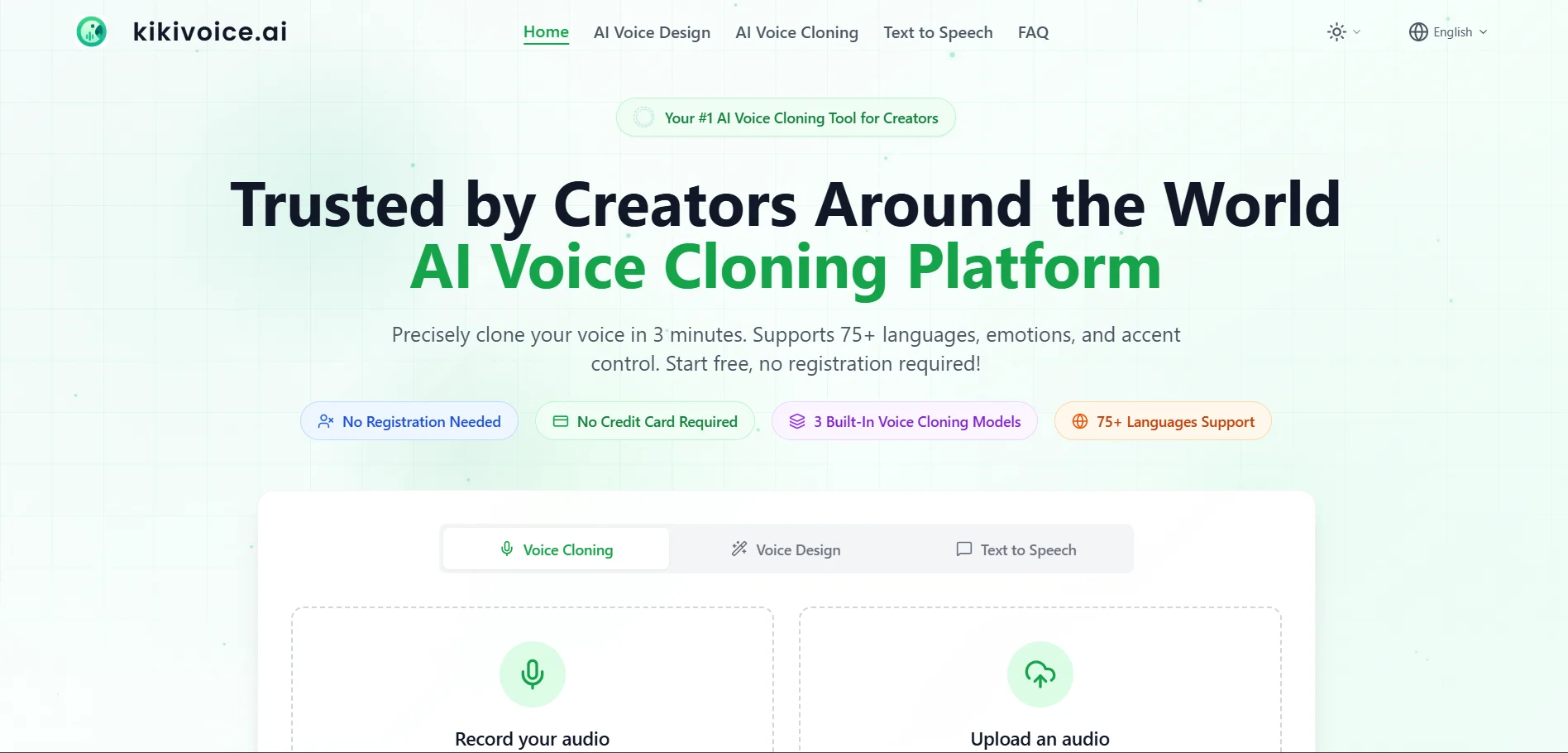
KikiVoice is a text-to-speech and voice generation tool positioned as a simpler, more affordable alternative for creators who need quick voiceovers without a steep learning curve. Many users can begin with a free or limited trial tier to test voice quality and basic generation features before subscribing to a paid plan.
KikiVoice targets creators who want a straightforward, budget-conscious tool rather than an enterprise-grade platform. It works well for short-form content, social clips, and casual voiceover needs, though it does not yet match the voice realism or language depth offered by larger established players in the TTS space.
Pros
- Simple, beginner-friendly interface
- Budget-friendly entry pricing
- Quick turnaround for short content
- Low learning curve
Cons
- Smaller voice and language library
- Less brand recognition and reviews
- Fewer advanced customization options
- Pricing details less standardized publicly
8. Speechify
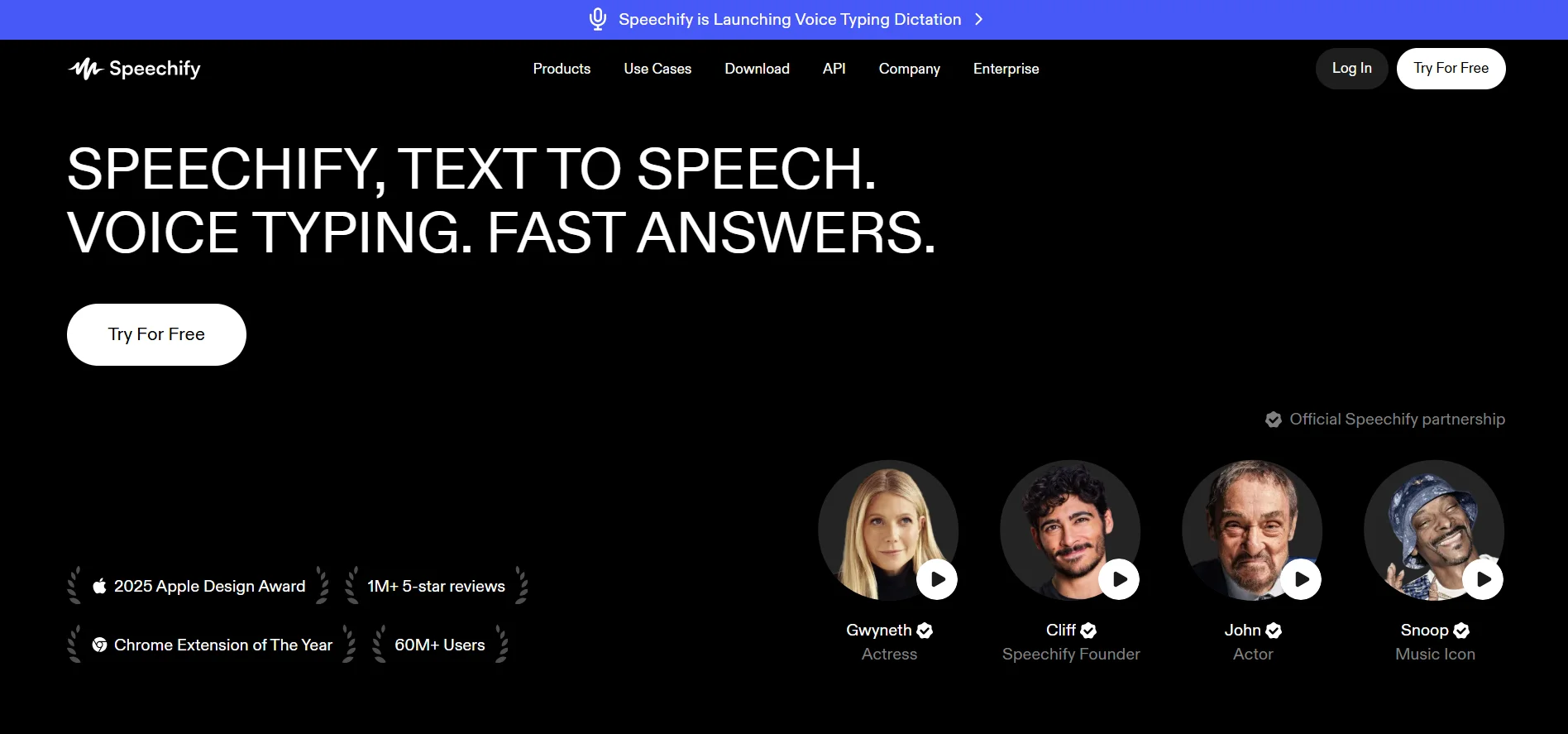
Speechify is a popular text-to-speech reading app designed for students, professionals, and accessibility needs, converting articles, PDFs, and eBooks into audio. It offers a free plan with basic voices and a separate short free trial on premium plans, though the trial typically requires entering payment details upfront.
Speechify shines for reading-aloud use cases like studying, articles, and documents, supported by browser extensions and mobile apps. Its weakness lies in the studio and voiceover side, where realism and customization fall short of specialized platforms, and users should watch for billing after the trial period ends.
Pros
- Excellent for reading and accessibility
- Browser extension and mobile apps
- OCR scanning for physical text
- Free tier available for light use
Cons
- Trial requires credit card upfront
- Voiceover quality weaker than rivals
- Per-seat pricing adds up for teams
- Reports of cancellation billing issues
9. Uberduck
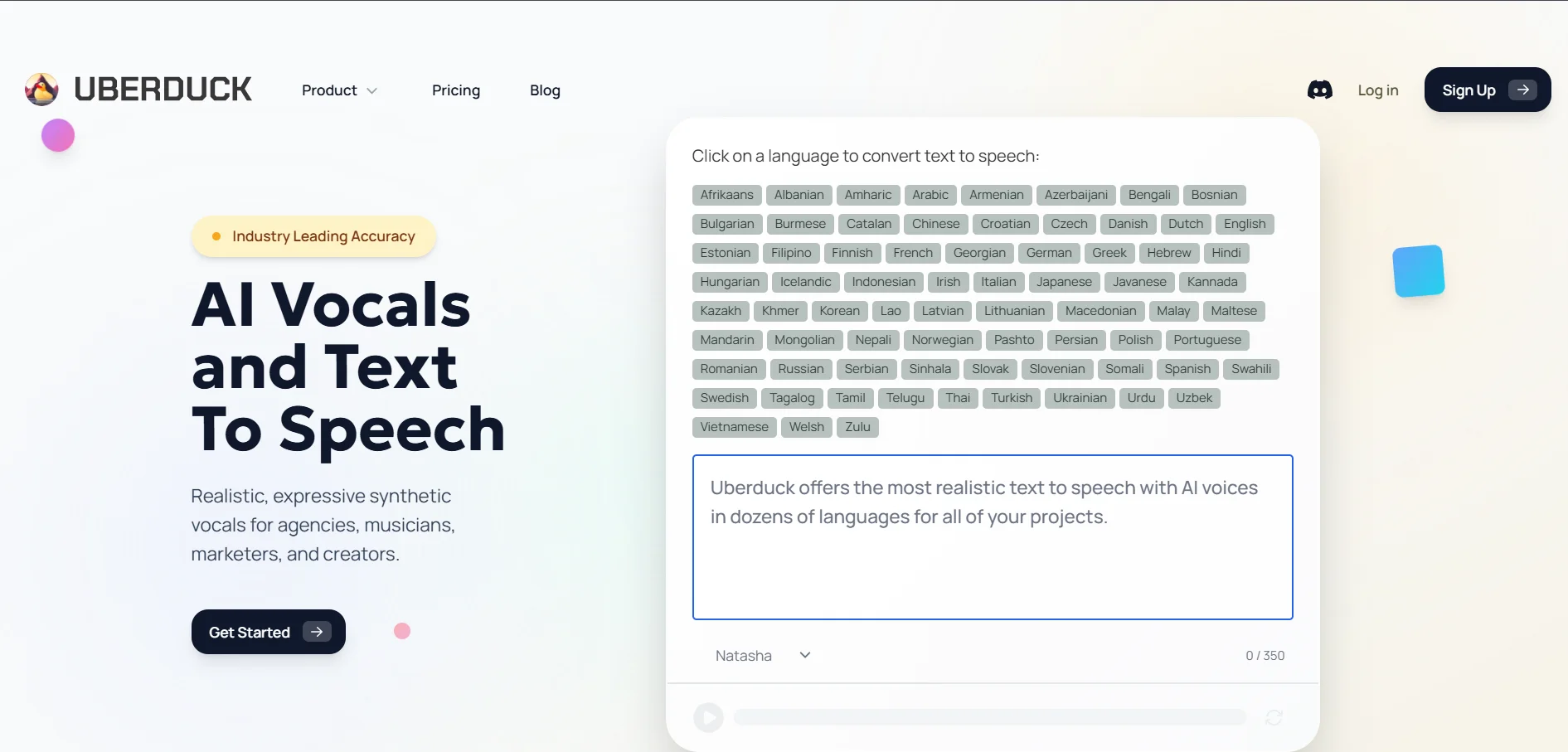
Uberduck is a quirky text-to-speech and voice cloning platform known for its library of over 5,000 voices, including celebrity-style and character voices, plus AI rap generation. New users start on a free plan with limited monthly credits, effectively serving as a trial before upgrading to unlock commercial licensing and more credits.
Uberduck’s novelty voice library is its main differentiator, appealing to musicians and meme creators wanting character or celebrity-style voices unavailable elsewhere. That said, reviewers consistently note that output quality and reliability lag behind ElevenLabs, making it less suited for polished, professional-grade narration work.
Pros
- Huge library of novelty and character voices
- Very affordable Creator plan
- AI rap and singing generation
- Commercial license on low-cost tier
Cons
- Voice realism inconsistent across models
- Free and Starter tiers are non-commercial
- Less suited for professional narration
- Licensing around celebrity voices is murky
10. Noiz.ai
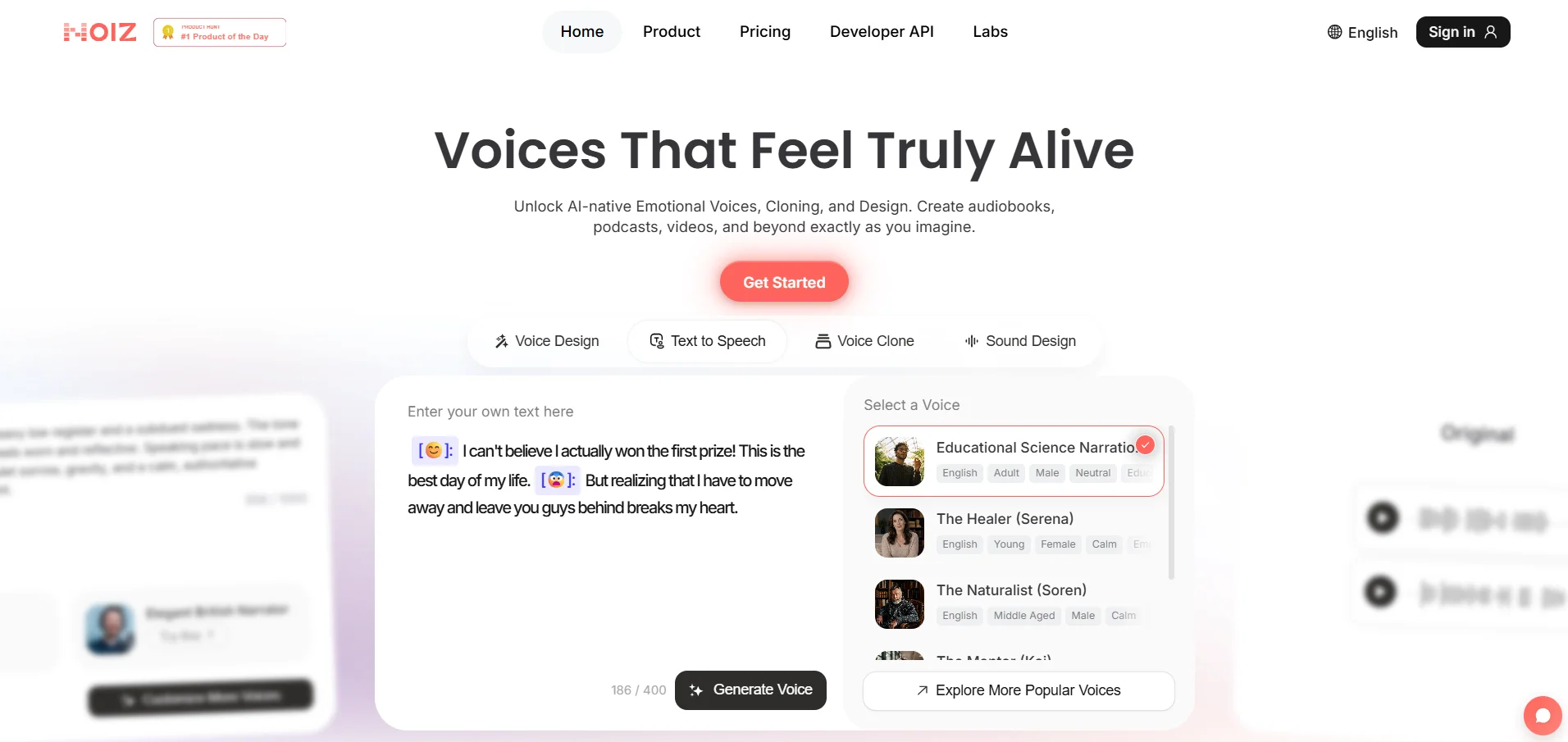
Noiz.ai focuses on emotionally adaptive voice technology controlled through simple emoji-based inputs, alongside video summarization and multilingual dubbing. The platform offers a full-function free trial that lets users test voice cloning and emotional text-to-speech features before deciding on a paid plan.
Noiz.ai’s standout feature is letting a single cloned voice express a wide emotional range through intuitive emoji controls, which is unusual among TTS tools. Its dubbing currently supports only English, Chinese, and Japanese, and being a newer platform, long-term pricing transparency and public track record are still developing.
Pros
- Unique emoji-based emotion control
- Fast three-second voice cloning
- Very low-cost entry pricing
- Full-feature free trial available
Cons
- Limited dubbing language support
- Newer platform with less track record
- Long-term pricing not fully documented
- Smaller community and review base
11. Lovo.ai
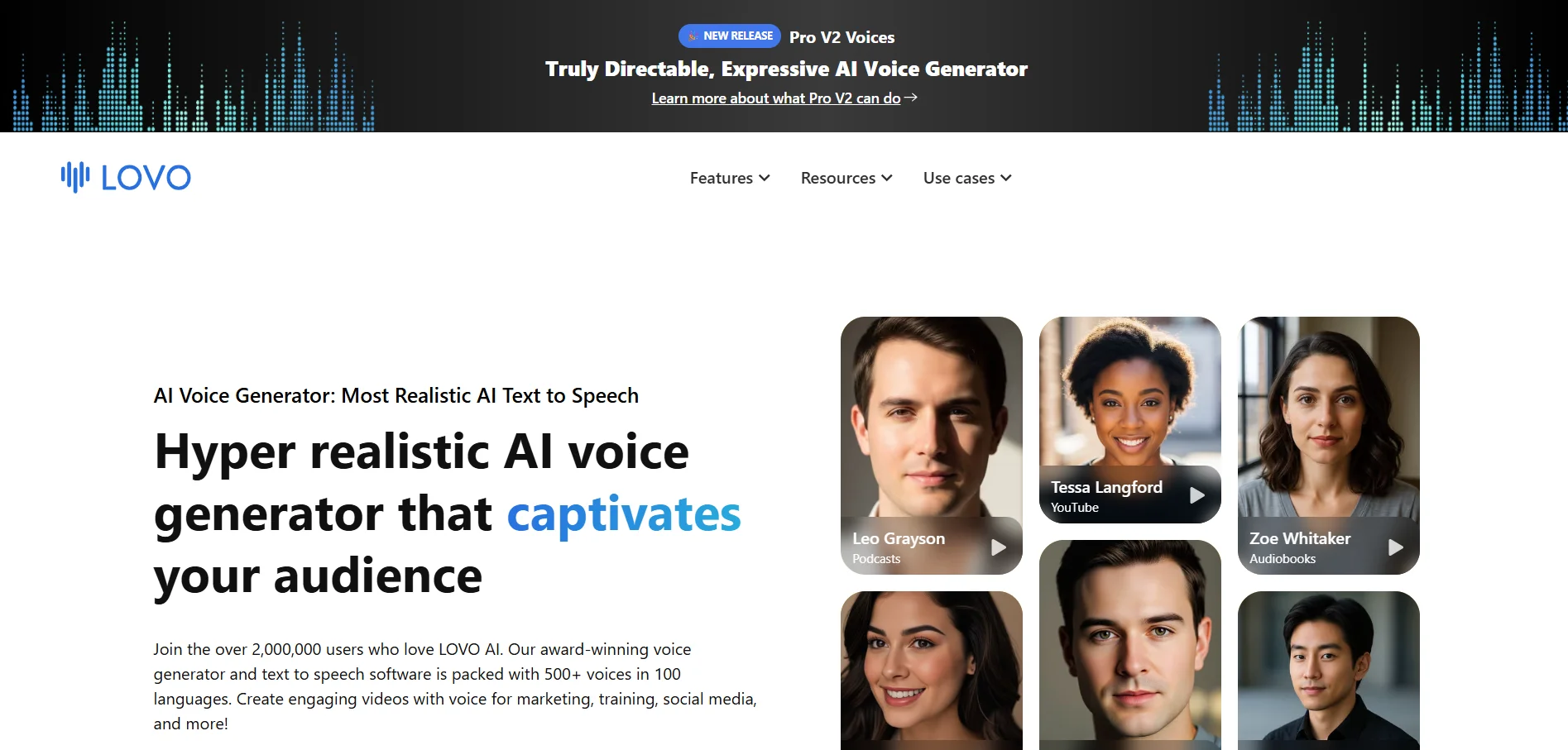
Lovo.ai, built around its Genny platform, is an AI voice generator with over 500 voices, 100+ languages, and a built-in video editor and AI script writer. It offers a 14-day free trial including about 20 minutes of voice generation and voice cloning, though exports carry a watermark until you upgrade to a paid plan.
Lovo’s combination of TTS, video editing, and AI writing in a single workspace makes it attractive for creators building full video content rather than audio alone. However, it carries a notably low Trustpilot rating, with recurring user complaints about billing after cancellation and slow customer support response times.
Pros
- All-in-one voice, video, and writing tool
- Voice cloning with just one minute of audio
- Directable voices with emotion tags
- Wide language and voice selection
Cons
- Low Trustpilot rating (2.3 stars)
- Reported billing and cancellation issues
- No permanent free plan, trial only
- Slow customer support reported
Cartesia
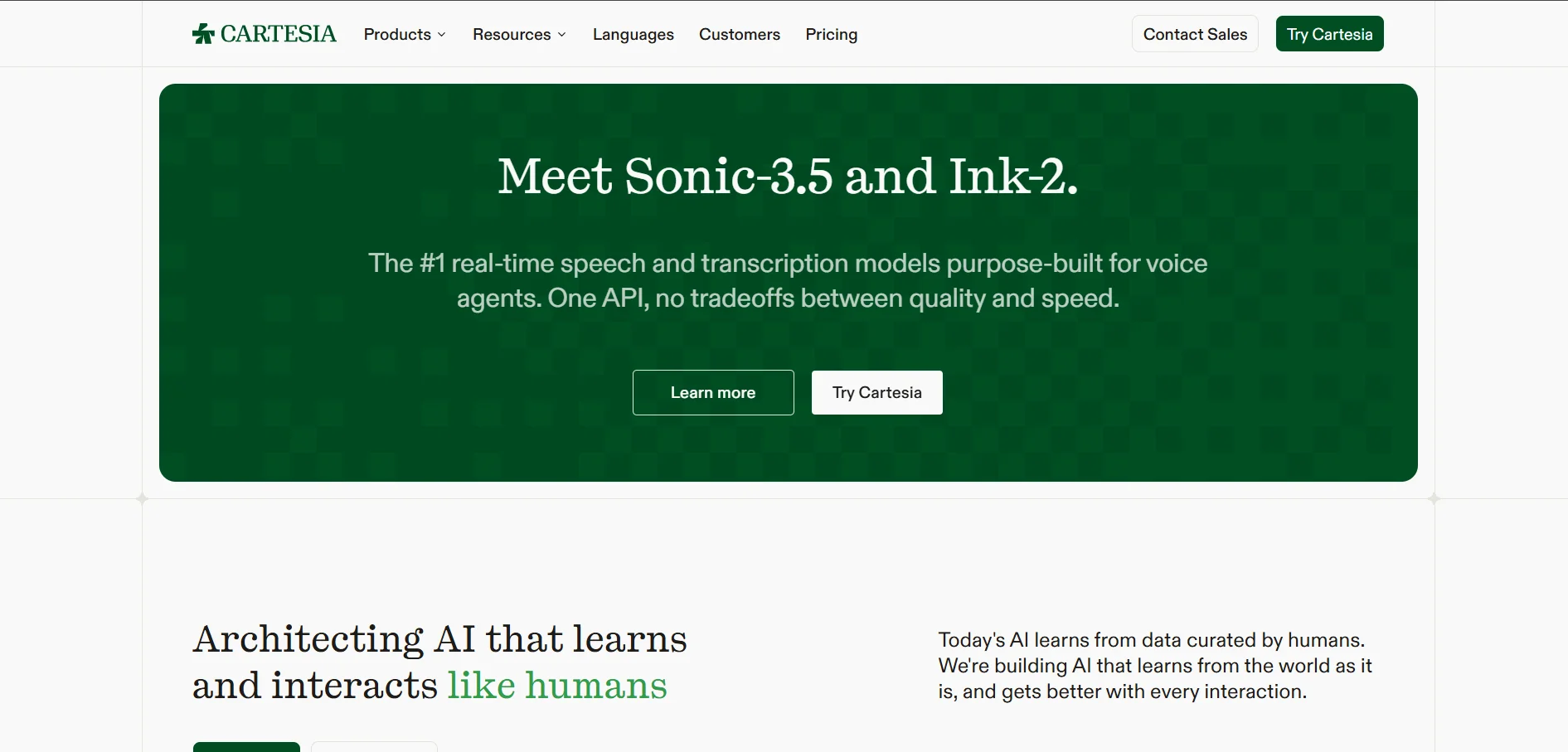
Cartesia provides ultra-low latency voice synthesis and real-time generative speech APIs designed for conversational AI agents and interactive applications.
Visit WebsiteGradium
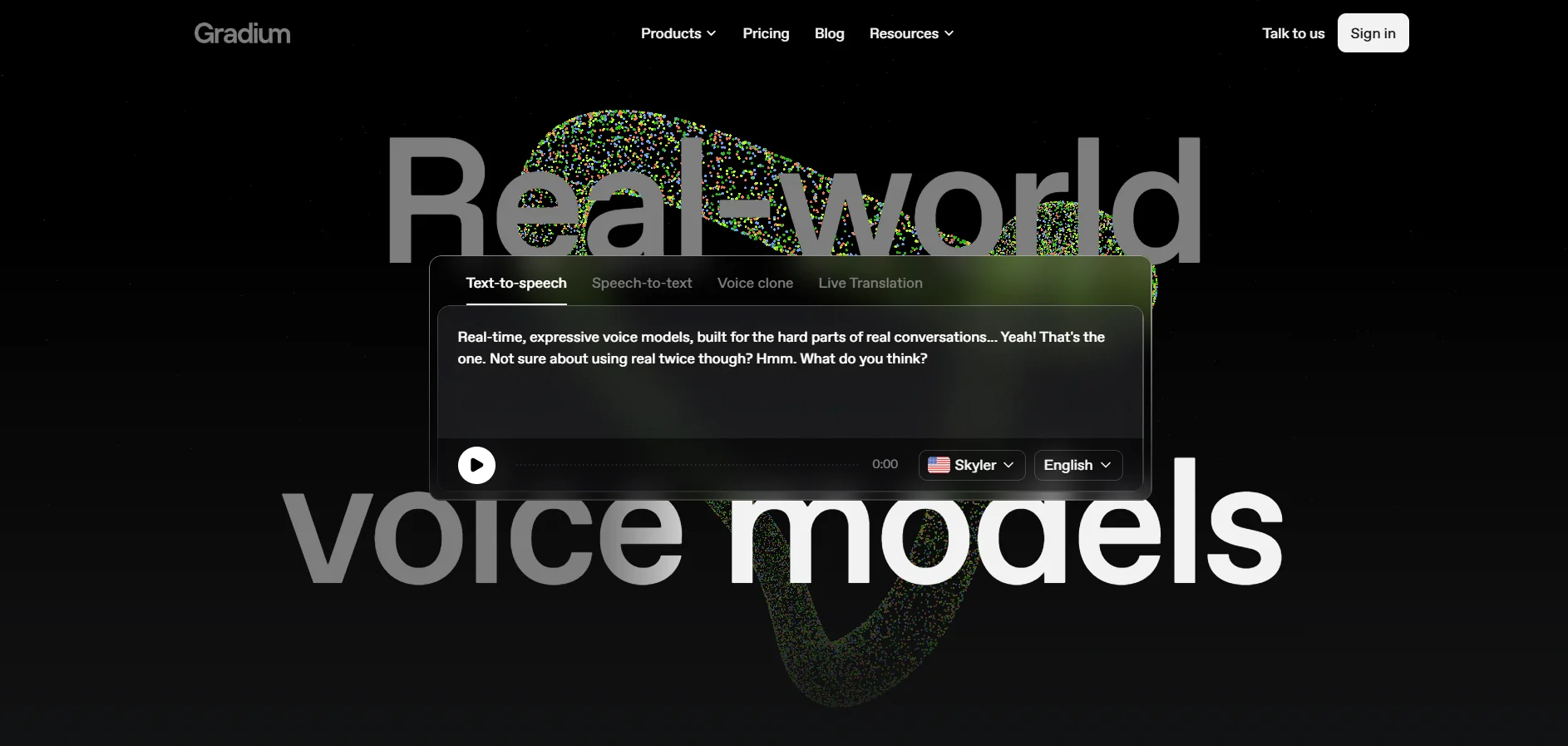
Gradium specializes in fast audio generation and natural-sounding text-to-speech tools tailored for dynamic digital media workflows.
Visit WebsiteHeyGen
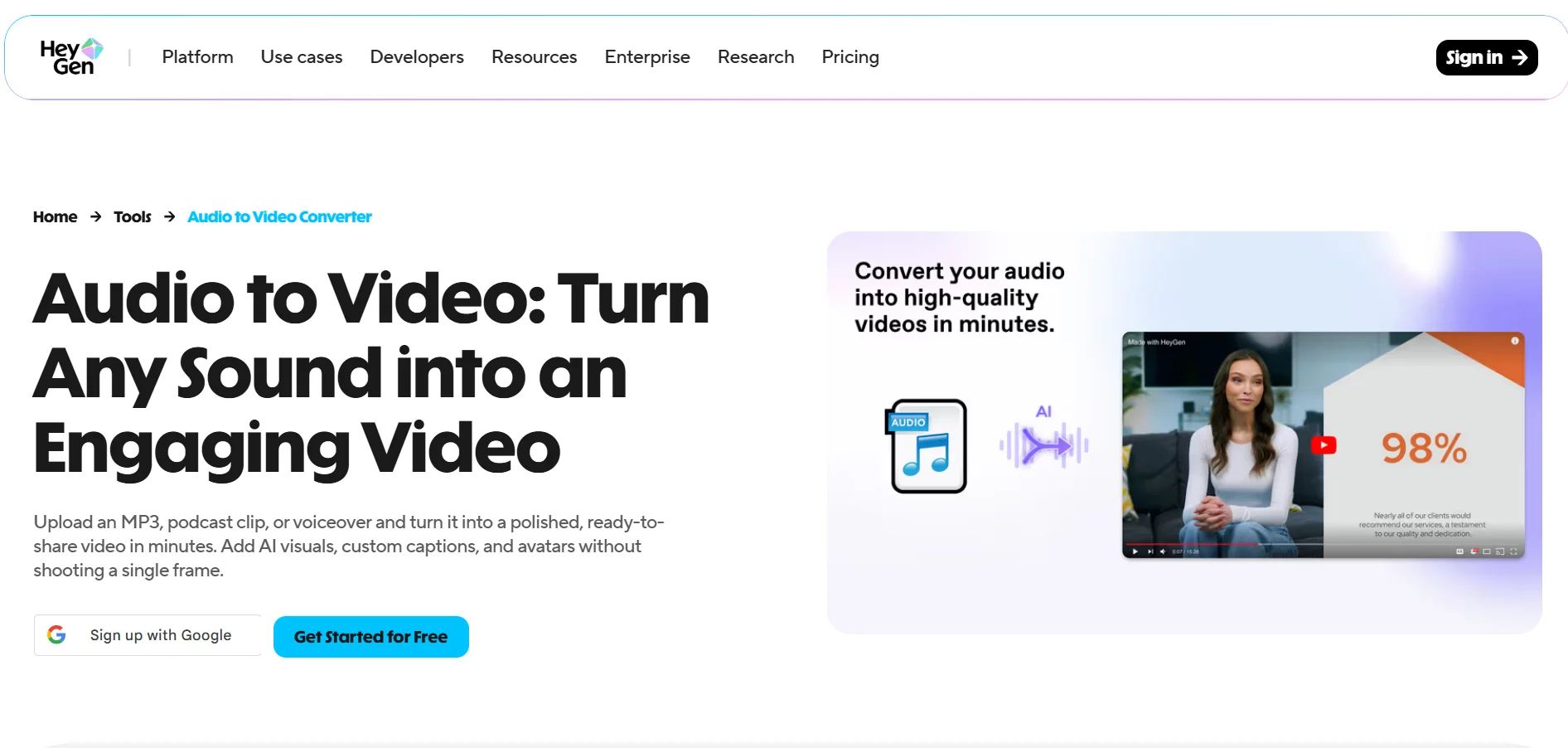
HeyGen creates realistic AI video avatars combined with voice cloning capabilities to easily produce professional video content.
Visit WebsiteMiniMax
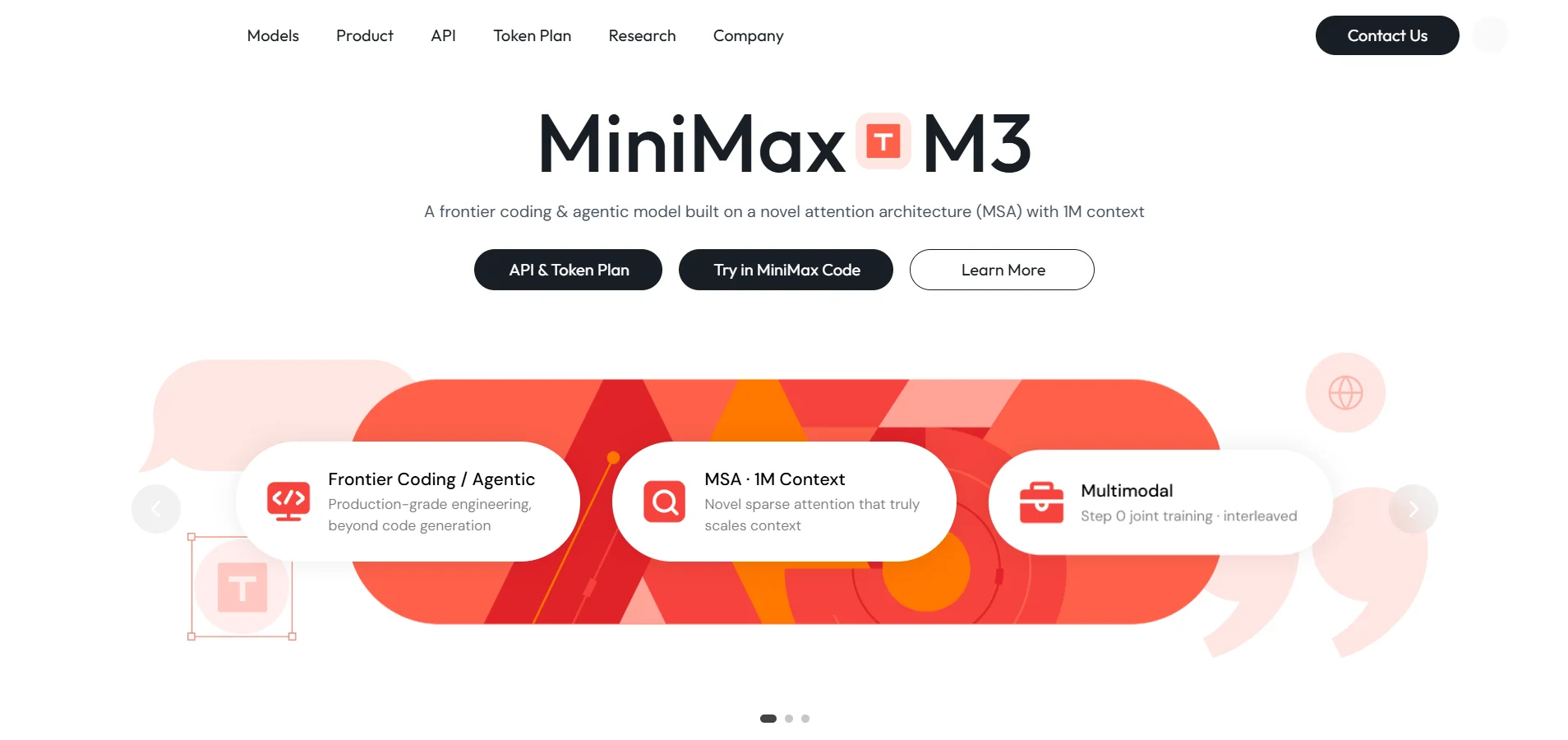
MiniMax leverages large-scale multimodal neural networks to deliver high-fidelity voice cloning, text-to-speech, and audio processing.
Visit WebsiteMurf.AI
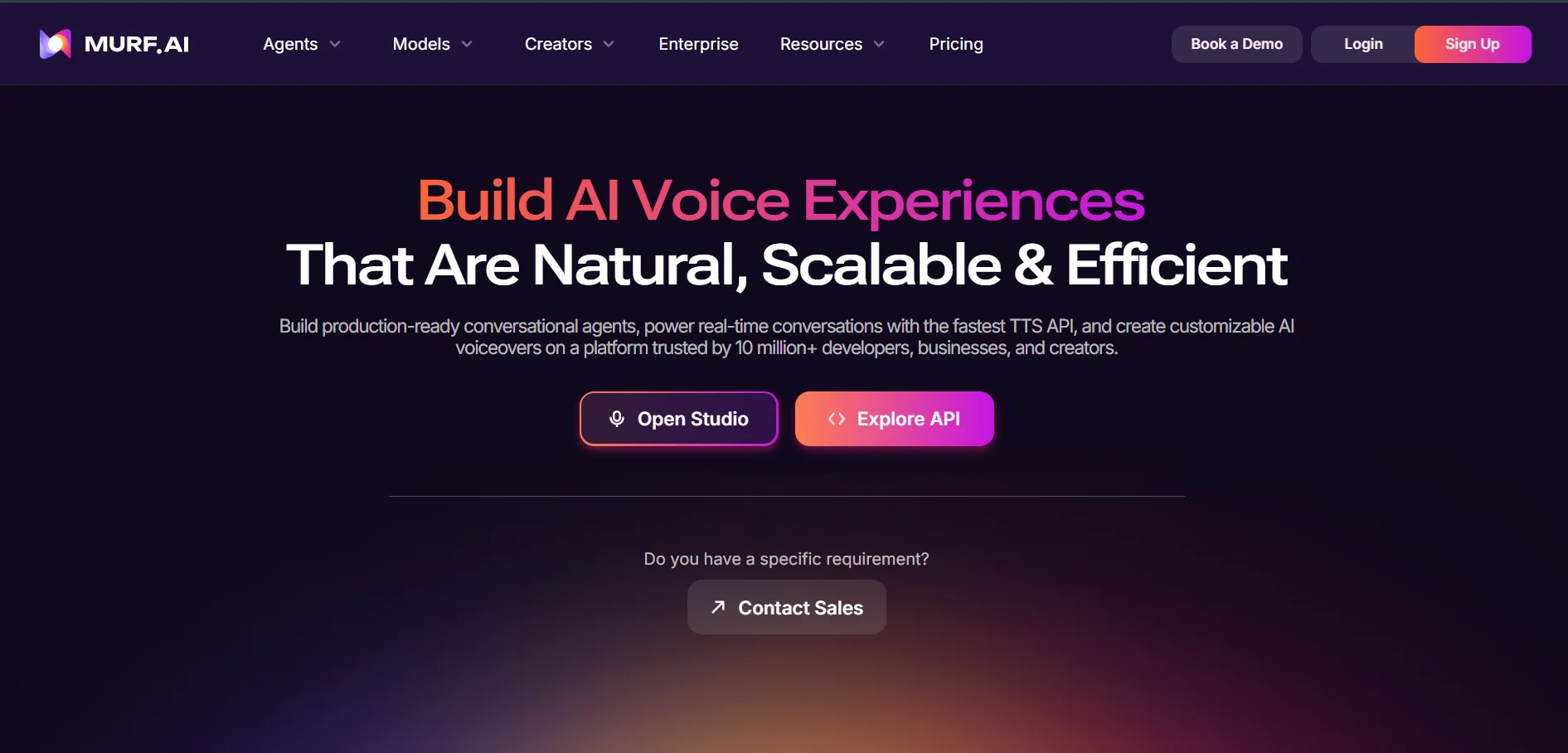
Murf.AI is an intuitive studio platform enabling users to quickly transform written scripts into realistic voiceovers for videos, presentations, and podcasts.
Visit WebsitePodcastle
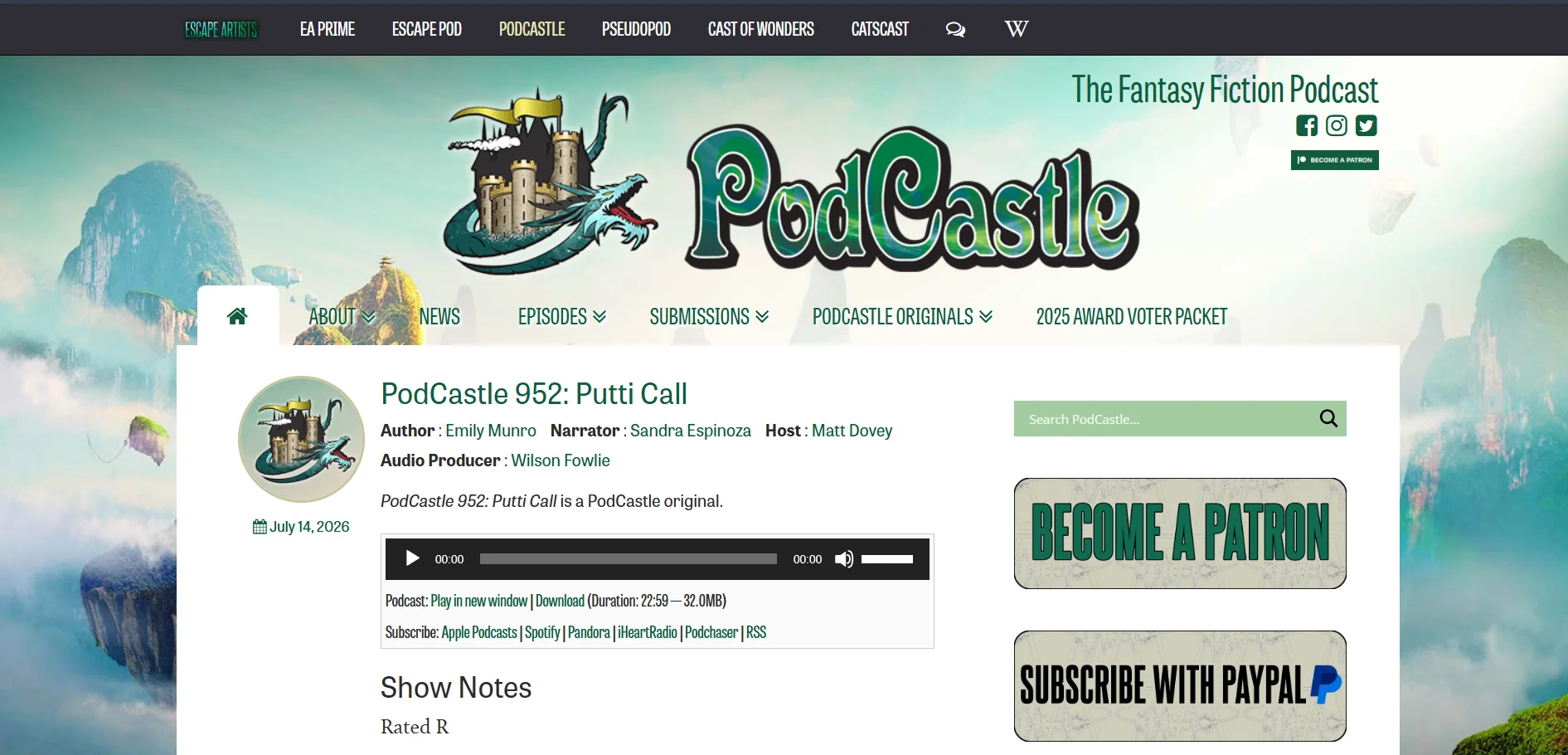
Podcastle is an all-in-one audio creation suite offering digital recording, automated editing, text-to-speech, and AI voice cloning.
Visit WebsiteResemble.ai
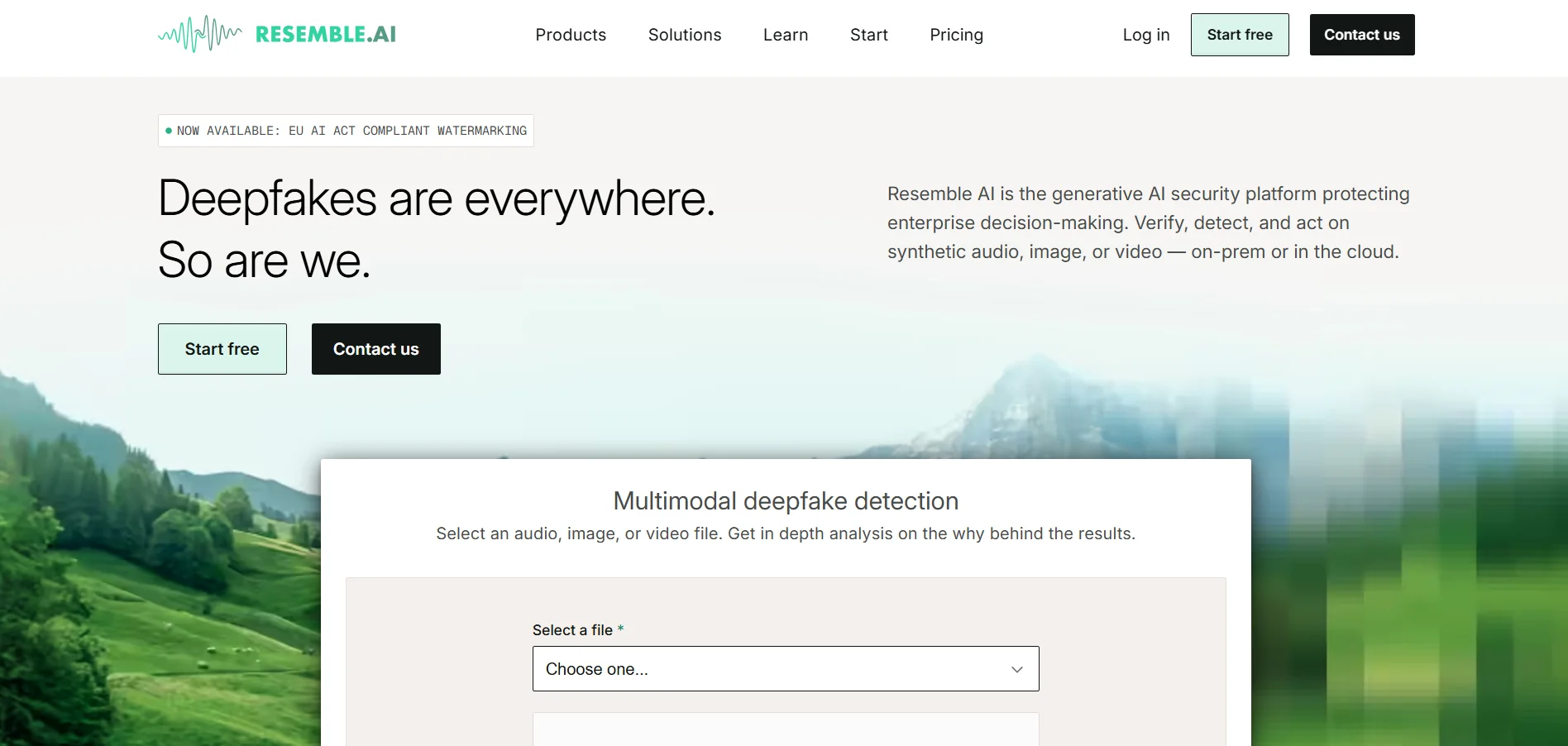
Resemble.ai offers enterprise-grade real-time voice cloning, deepfake detection, and granular speech emotion editing.
Visit WebsiteVEED
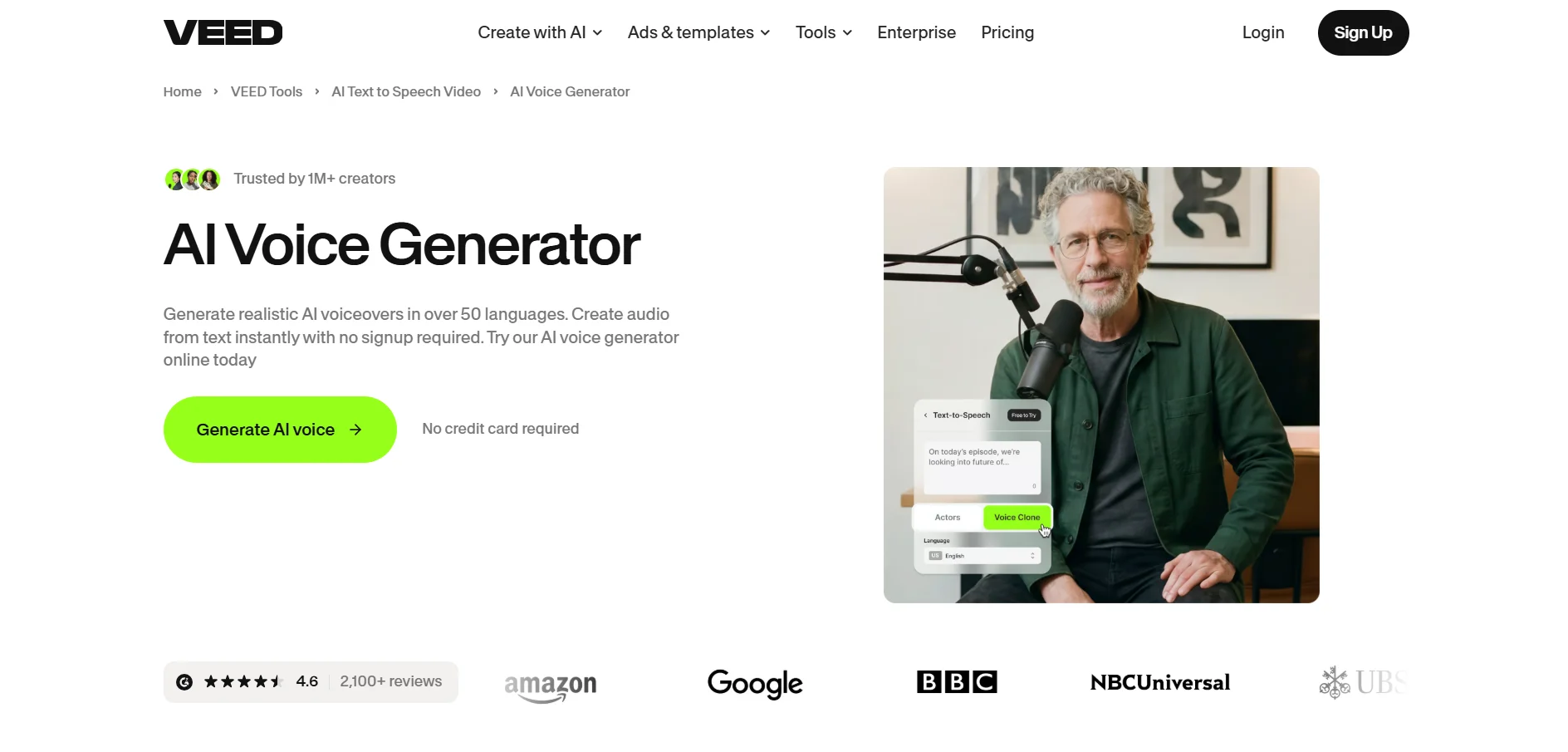
VEED is a cloud-based video editing ecosystem featuring AI voice generators, automatic subtitling, and script creation tools.
Visit WebsiteVoice.ai
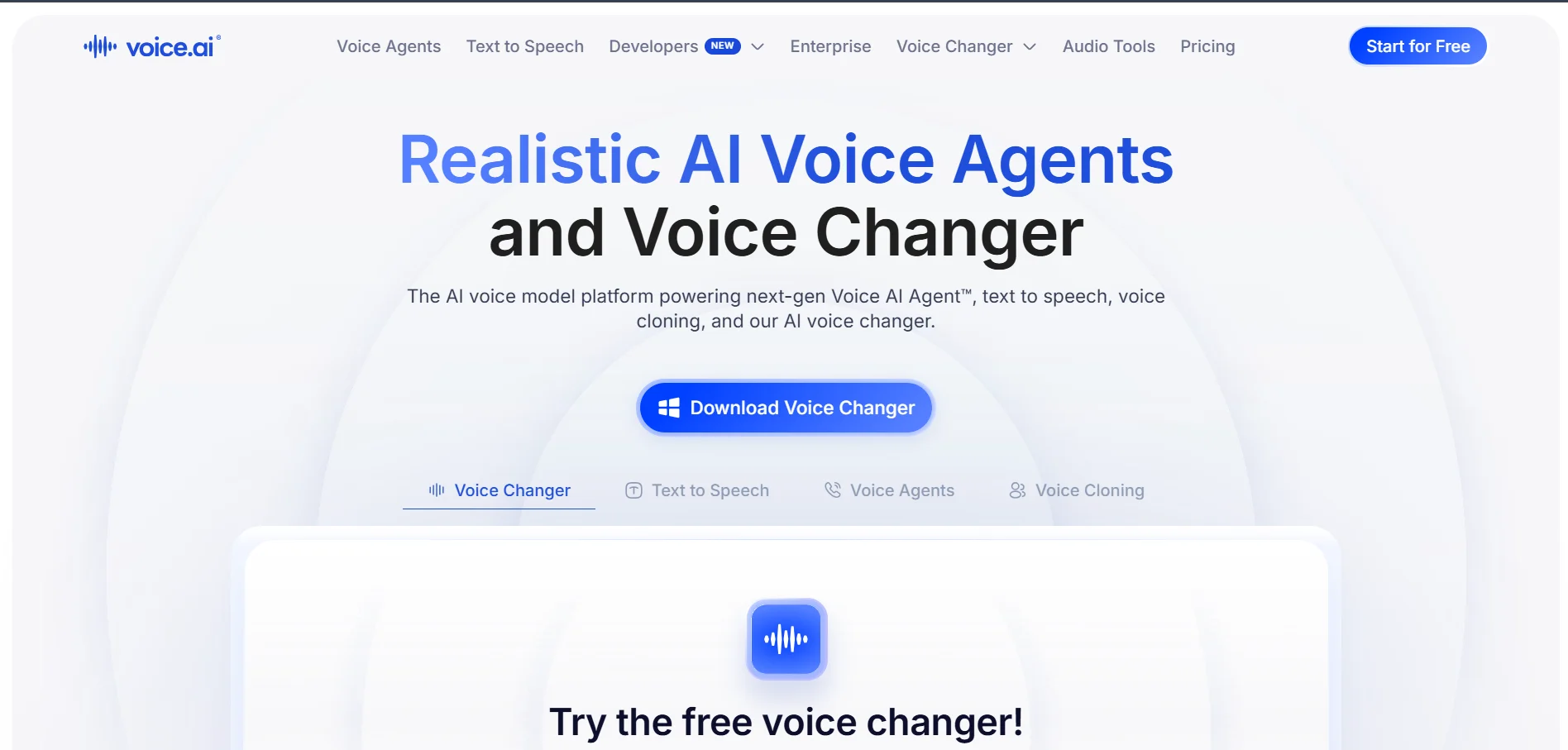
Voice.ai provides real-time voice changing software and custom voice models for streaming, gaming, and content creation.
Visit WebsiteWellSaid Labs
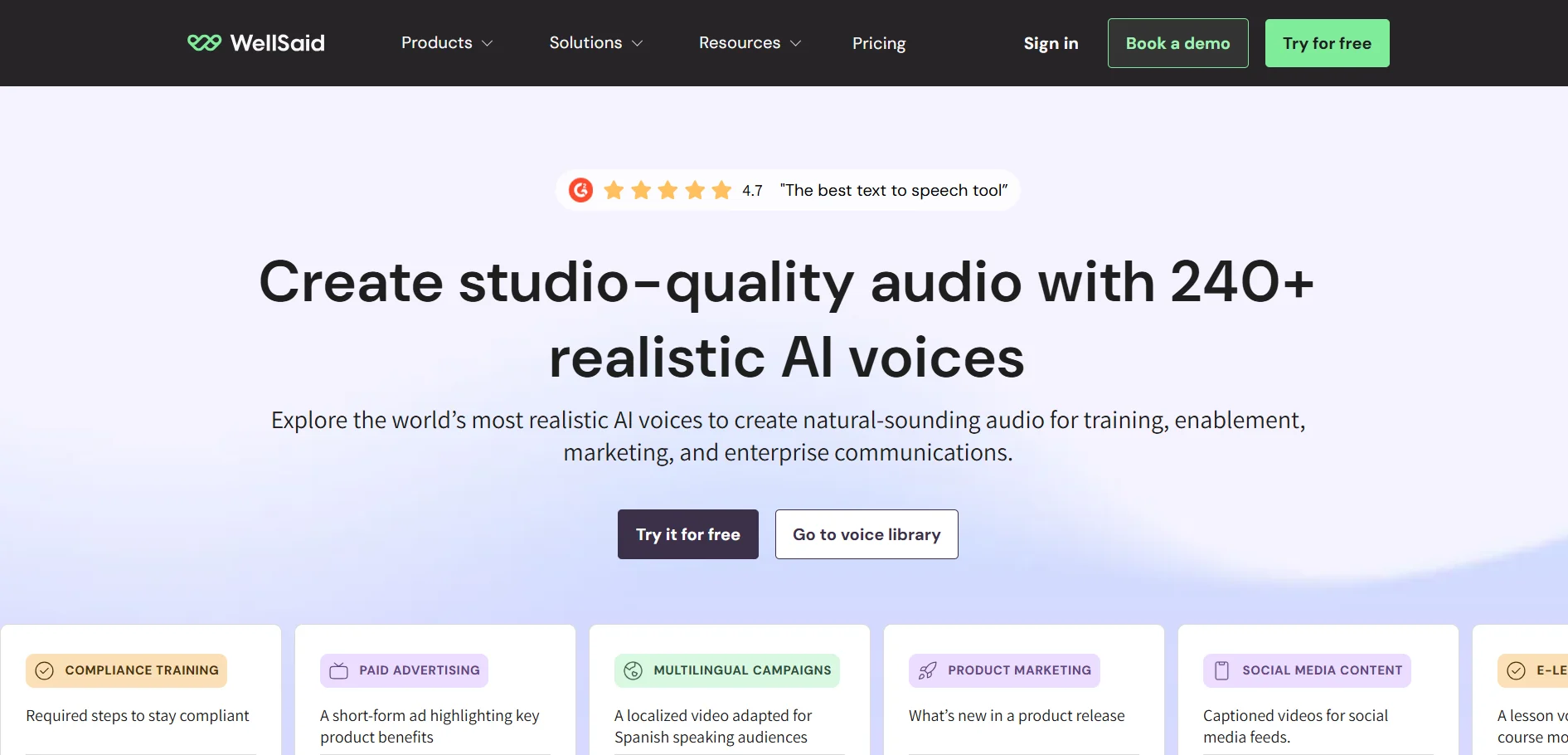
WellSaid Labs delivers high-end, studio-grade neural text-to-speech voices specifically built for corporate training and commercial video production.
Visit Website| Alternative | Description |
|---|---|
| Supertone Play | Multilingual, emotionally expressive TTS and voice cloning platform with a generous free trial. |
| Pixbim | Offline desktop AI suite for voice cloning, lip sync, upscaling, and colorization with one-time pricing. |
| iSpeech | Budget-friendly, long-standing text-to-speech and speech recognition service for basic needs. |
| BookFab | All-in-one eBook converter and audiobook creator combining format conversion with AI narration. |
| ElevenLabs | Industry-leading realistic voice synthesis platform with advanced cloning and dubbing tools. |
| PlayHT | Large voice and language library with API access and phonetic pronunciation control. |
| KikiVoice | Simple, affordable text-to-speech tool aimed at quick, beginner-friendly voiceover creation. |
| Speechify | Accessibility-focused reading app that converts articles, PDFs, and books into audio. |
| Uberduck | Novelty-focused TTS platform with celebrity-style and character voices plus AI rap generation. |
| Noiz.ai | Emotionally adaptive voice platform using emoji controls for expressive speech generation. |
| Lovo.ai | All-in-one voice generator bundled with video editing and AI script writing tools. |
Conclusion
Choosing the right Fliki alternative ultimately depends on what you value most, whether that is voice realism, affordability, offline privacy, or bundled video editing features. ElevenLabs and PlayHT stand out for professional-grade voice quality, Pixbim and iSpeech appeal to budget-conscious or offline-first users, while Lovo.ai and Noiz.ai bring unique creative features to the table. Take advantage of the free trials listed above to test voice quality and workflow fit before committing to a subscription, and always double-check current pricing directly on each platform’s official website since rates and plans do change over time.


