

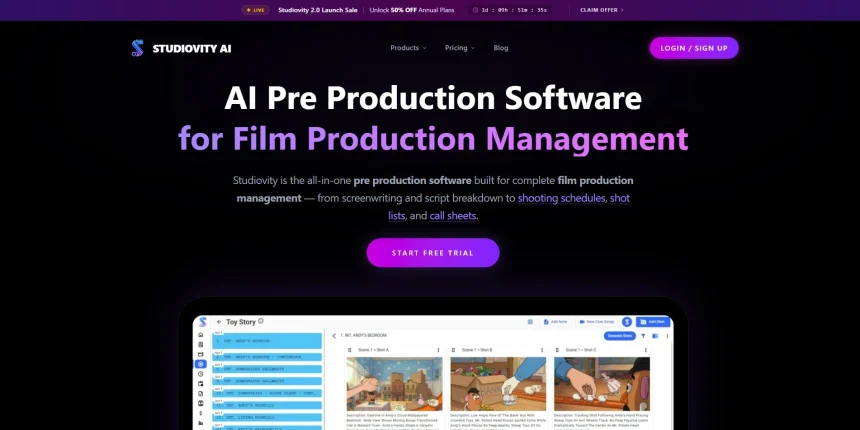
Studiovity has long been a popular choice for screenwriters and content teams who need script formatting, collaboration, and story development tools in one place. However, it is not the only option available, and depending on your workflow, budget, or creative needs, another platform might serve you better. Some writers want AI-assisted drafting, others want distraction-free formatting, and some need robust team collaboration. In this article, we explore 10 notable Studiovity Alternatives, ranging from AI writing assistants to dedicated screenwriting software.

Free Trial & Pricing
Pricing: Subscription pricing details are not fully published on StoryCraft’s official channels at this time; interested users are advised to check the official website directly for current rates.
StoryCraft AI positions itself as a platform that blends storytelling with interactive world-building, letting creators generate characters, settings, and narrative arcs with AI support. It’s aimed at writers who want a more experimental, game-like approach to developing stories rather than a strict screenwriting format.
While it doesn’t focus on industry-standard script formatting like Studiovity, it appeals to hobbyist writers and narrative designers who want to prototype ideas quickly. Its free access point makes it low-risk to try, though professional screenwriters may find it lacks the formatting rigor needed for submissions.
Pros
- Free tier for casual experimentation
- AI-assisted world and character building
- Low barrier to entry for beginners
Cons
- Pricing details not transparently published
- Lacks industry-standard script formatting
- Not ideal for professional screenwriters
2. Dabble
Free Trial & Pricing
Pricing: Basic – $10/month | Standard – $15/month | Premium – $20/month | Lifetime – $699 one-time.
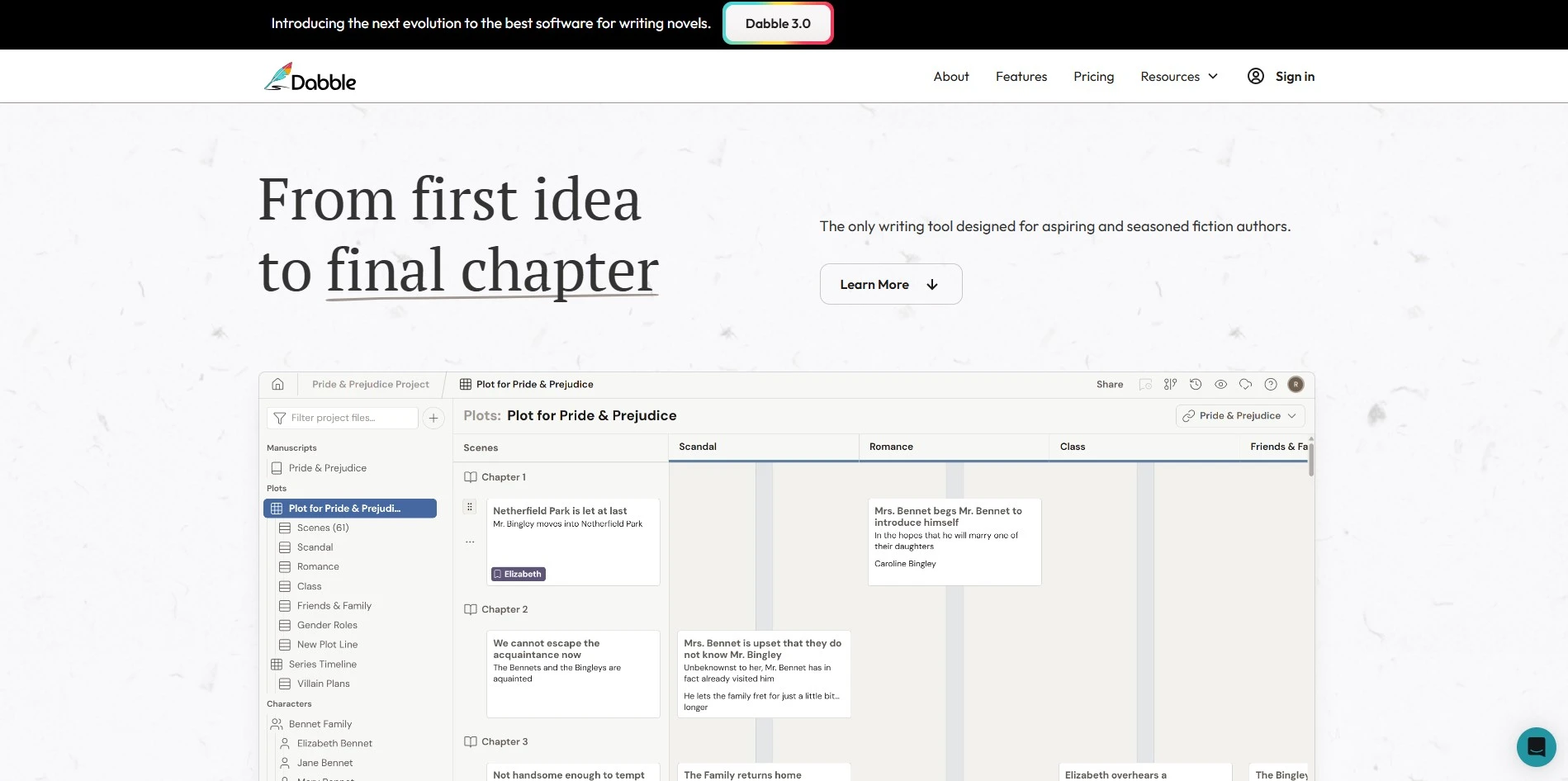
Dabble is a novel-writing platform designed for authors rather than screenwriters, offering tools like the Plot Grid, Story Notes, and Focus Mode. It markets itself as “Scrivener without the learning curve,” making it approachable for beginners while still offering depth for experienced novelists working on long manuscripts.
Its cloud-based syncing across devices and clean interface make it a strong choice for fiction writers who want organization without complexity. However, Dabble is not built for screenplay formatting, so it’s better suited to novelists than filmmakers or TV writers seeking a Studiovity replacement.
Pros
- Generous 14-day trial with no card needed
- Intuitive Plot Grid for story structure
- Cross-device cloud sync
Cons
- No permanent free plan
- Not designed for screenplay formatting
- Premium features locked behind higher tiers
3. Jasper AI
Free Trial & Pricing
Pricing: Pro – from $59/month (billed annually) | Business – custom pricing for teams.
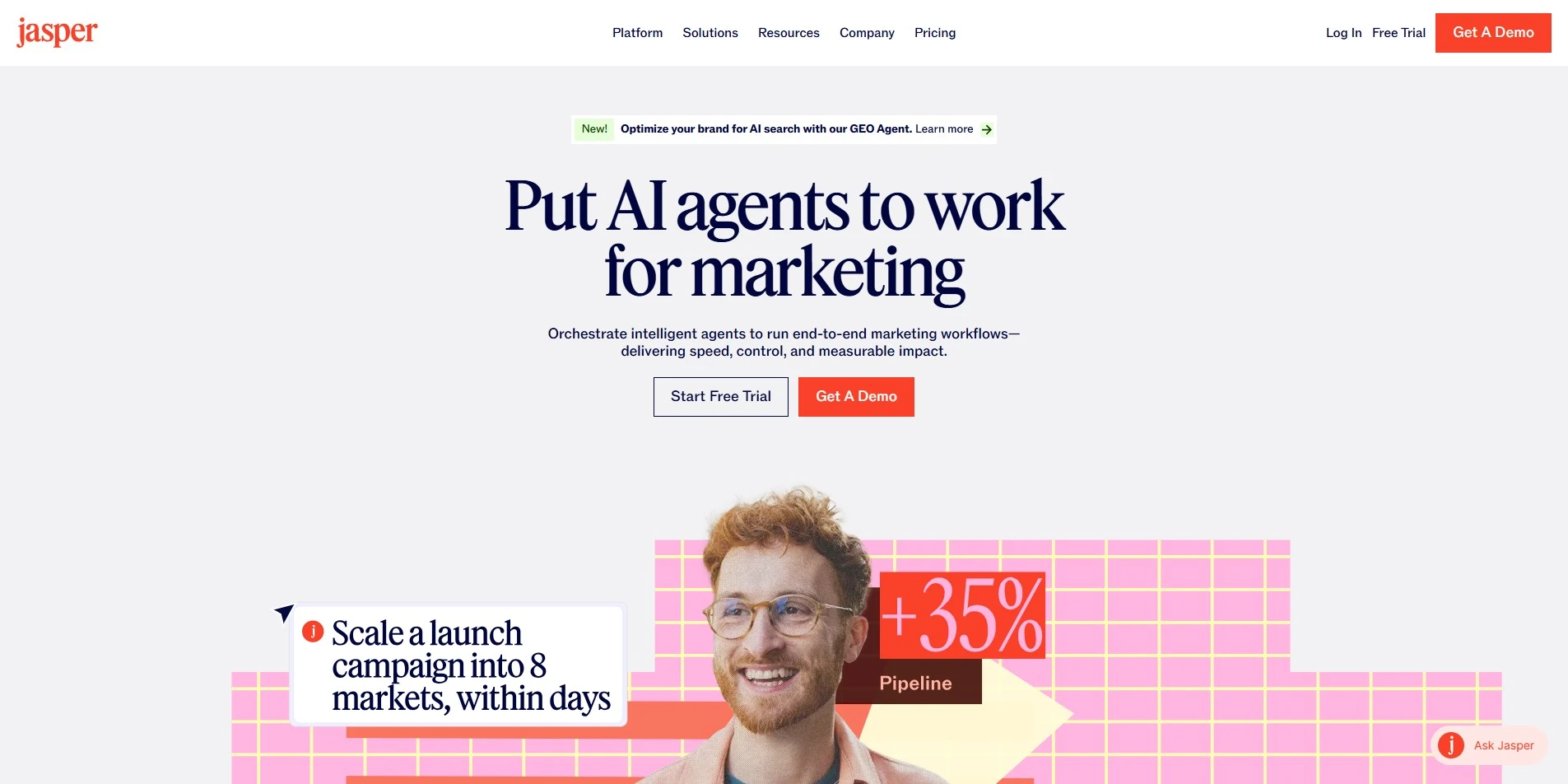
Jasper AI is a marketing-focused AI writing platform built for brands, agencies, and content teams rather than screenwriters. It offers tools like Brand Voice training, a Canvas editor for long-form content, and Jasper Agents that automate repetitive marketing tasks, making it a strong all-in-one content generation suite.
For creators exploring alternatives to Studiovity for general content or promotional writing tied to their scripts, Jasper can be useful, but it isn’t built for dialogue, scene formatting, or story structure. It suits marketing teams more than solo screenwriters or novelists.
Pros
- Powerful brand-voice and marketing tools
- Unlimited word generation on paid plans
- 7-day trial with full feature access
Cons
- No permanent free plan
- Expensive compared to niche writing tools
- Not built for screenplay or novel formatting
4. DialogueGenie

Free Trial & Pricing
Pricing: Official, published pricing tiers are limited; the vendor’s site should be consulted for up-to-date plans.
DialogueGenie is a niche AI tool focused specifically on generating realistic, character-driven dialogue for scripts, games, and interactive fiction. Its narrow focus makes it appealing to writers who struggle specifically with natural-sounding conversation rather than overall plot or structure.
Because it is a smaller, more specialized product, detailed pricing information is not as widely documented across review sites as larger competitors. Writers considering it as a Studiovity alternative should treat it as a supplementary dialogue tool rather than a full screenwriting replacement.
Pros
- Specialized focus on dialogue generation
- Useful for games and interactive fiction
- Lightweight, single-purpose tool
Cons
- Limited public pricing transparency
- Not a full screenwriting suite
- Smaller user base and community support
5. Highland 2
Free Trial & Pricing
Pricing: Pro Upgrade – $49.99 one-time payment (removes watermark, adds templates).
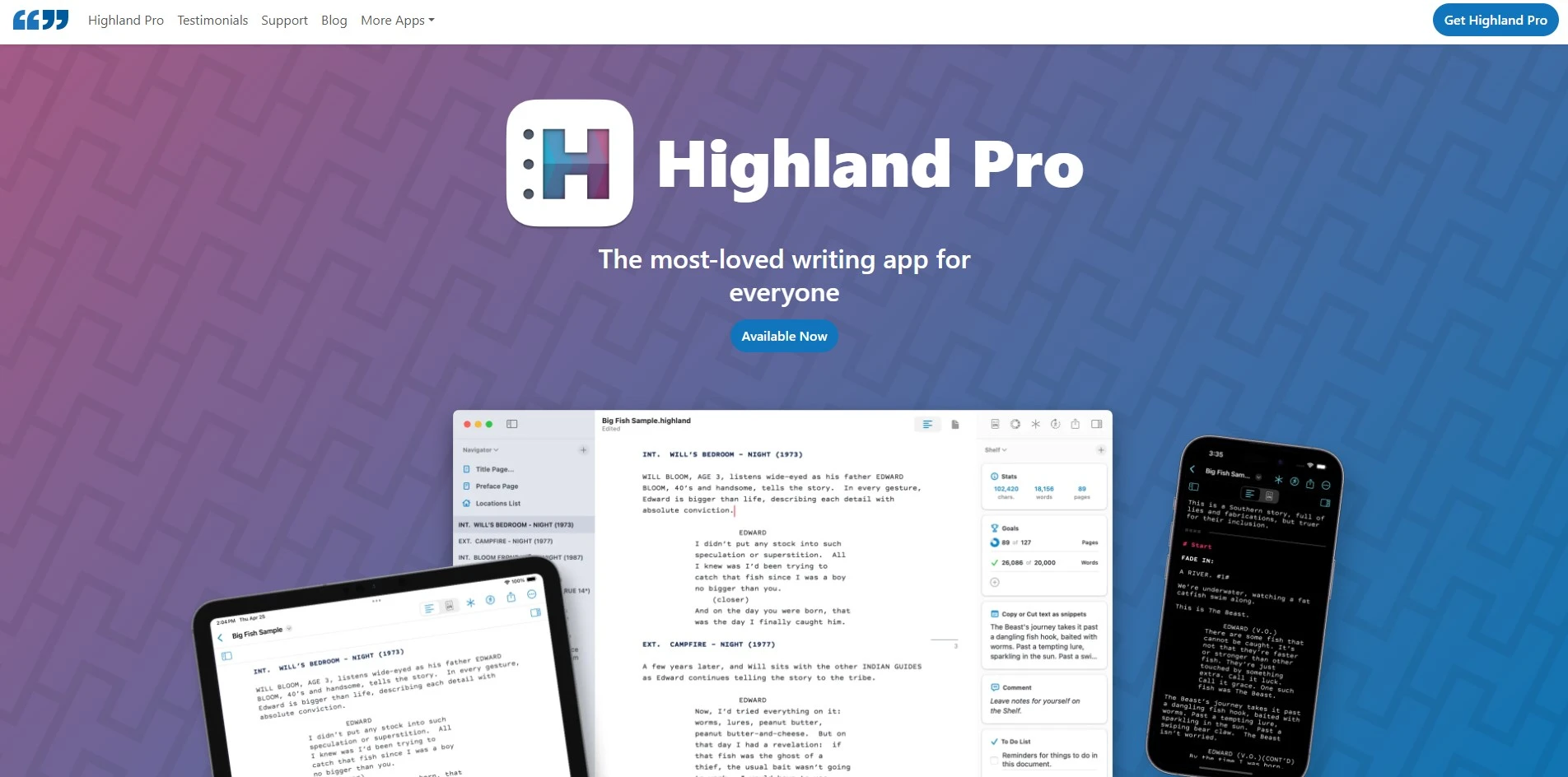
Highland 2 is a Mac-only screenwriting app built by John August using the Fountain plain-text markup language, meaning scripts are saved as readable files rather than proprietary formats. It emphasizes distraction-free writing, automatically formatting scene headings, dialogue, and transitions as you type.
Its one-time payment model is refreshing compared to subscription-heavy competitors, appealing to screenwriters who want simplicity and ownership. However, it lacks collaborative features and cross-platform support, limiting its use for teams or Windows-based writers.
Pros
- One-time payment, no subscription
- Clean, distraction-free writing interface
- Uses open Fountain file format
Cons
- Mac-only, no Windows version
- No real-time collaboration tools
- Fewer advanced production features
6. Claude
Free Trial & Pricing
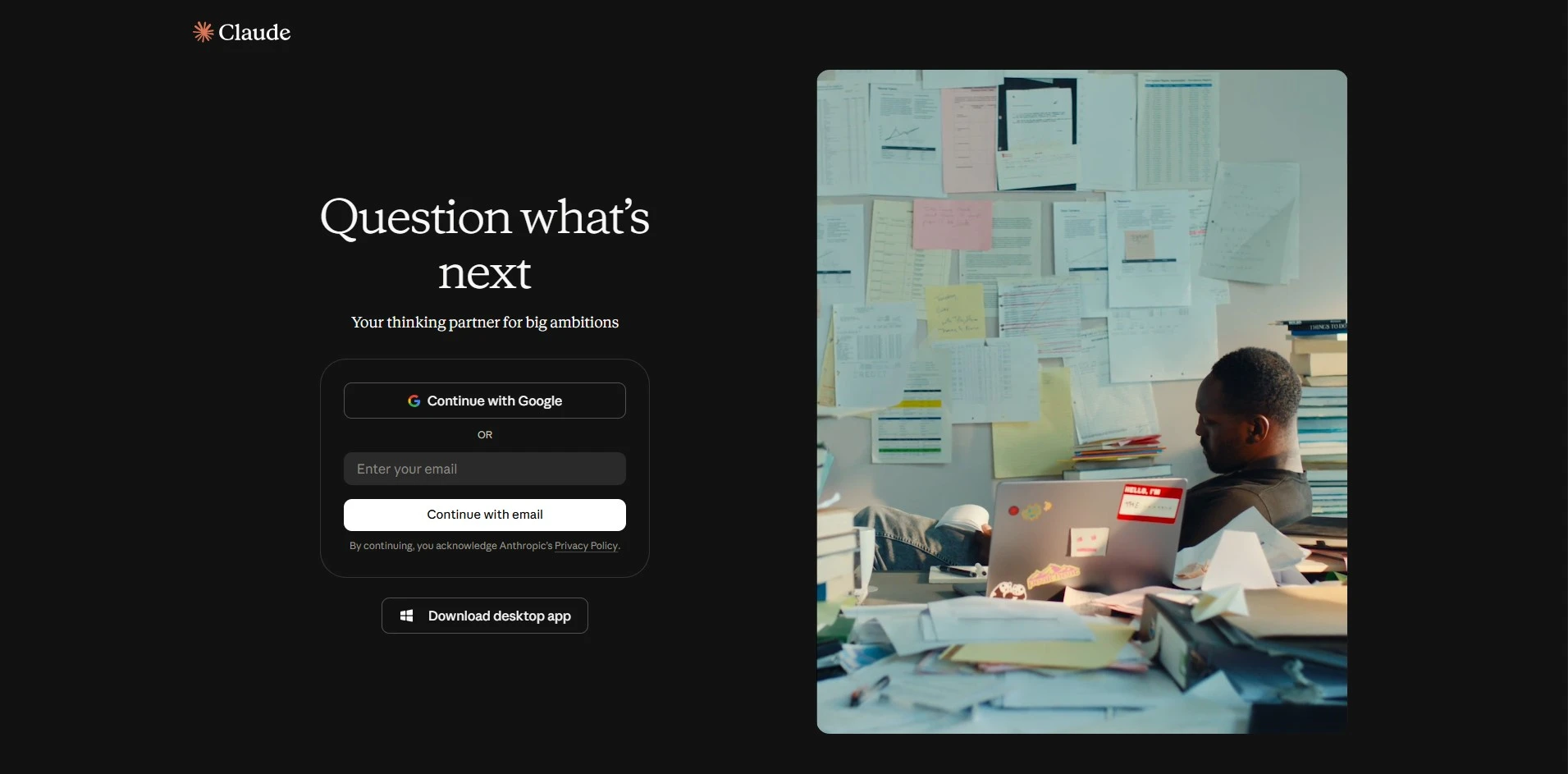
Pricing: Claude Pro – around $20/month; verify current rates on Anthropic’s official website.
Claude is a general-purpose AI assistant capable of long-context conversations, making it useful for screenwriters who want help drafting scenes, analyzing structure, or refining dialogue. Its large context window allows writers to paste in an entire treatment or draft and receive coherent, structurally aware feedback.
However, Claude is not a screenwriting tool in the traditional sense. It has no built-in beat sheets, character bibles, or formatting templates, meaning the writer must manage structure independently. It works best as a writing companion alongside dedicated formatting software rather than a full Studiovity replacement.
Pros
- Strong long-context reading and drafting
- Flexible for brainstorming and revisions
- Affordable Pro tier pricing
Cons
- No dedicated screenplay formatting
- No built-in story structure templates
- Requires manual organization by the writer
7. Copy.ai
Free Trial & Pricing
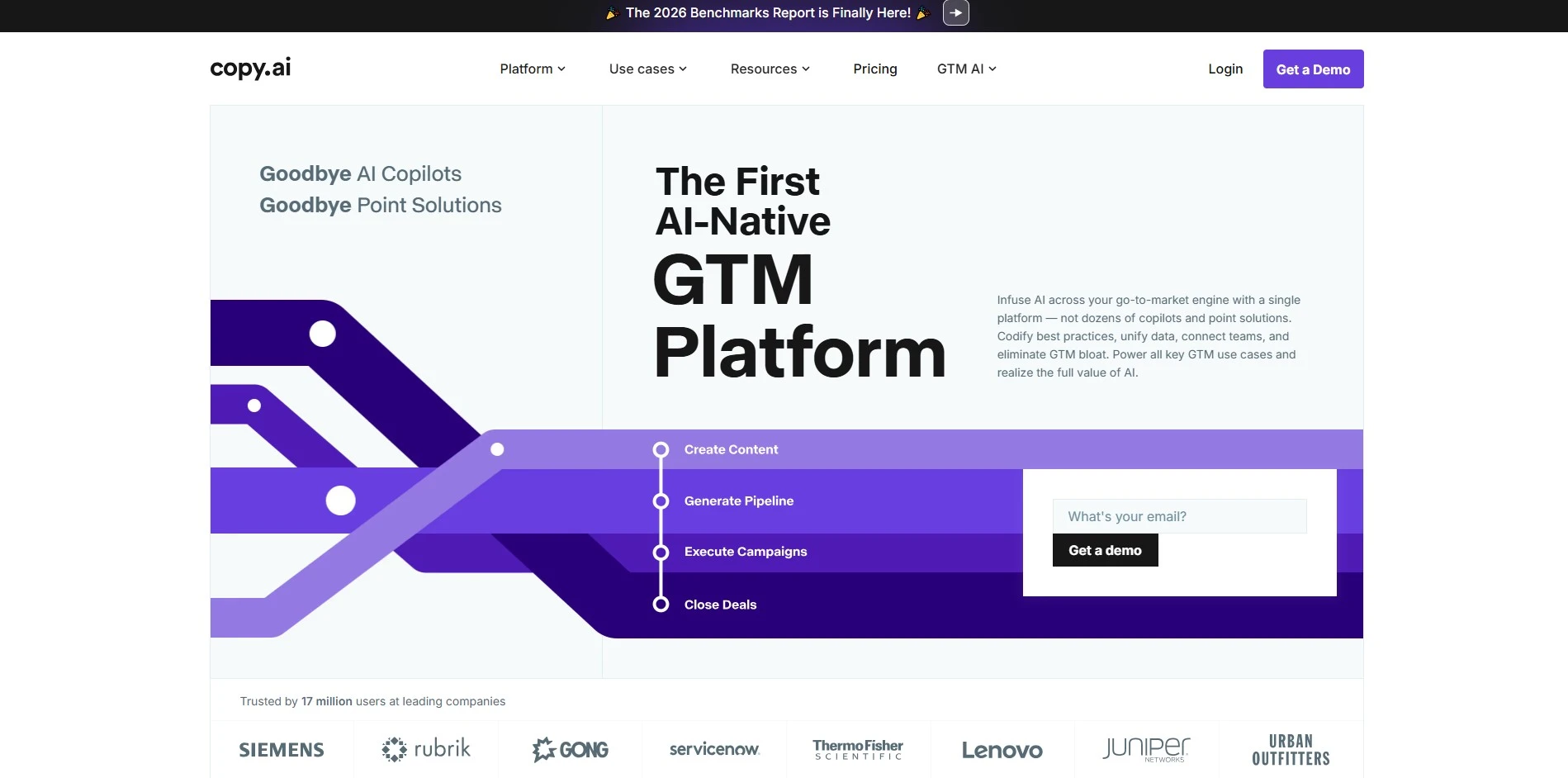
Pricing: Pro/Chat – around $49/month (or lower billed annually) | Team/Enterprise – custom pricing.
Copy.ai began as a copywriting assistant and has since expanded into a broader AI-driven workflow platform for marketing and sales teams. It offers templates for ads, emails, and social captions, along with newer workflow automation features aimed at go-to-market teams rather than creative writers.
For screenwriters, Copy.ai’s usefulness lies mainly in promotional content like loglines, synopses, or pitch materials rather than the script itself. Its permanent free tier makes it accessible for casual use, though serious writers will find it lacks narrative-specific tools.
Pros
- Permanent free plan available
- Useful for pitch and marketing copy
- Supports multiple AI models
Cons
- Not designed for script formatting
- Higher tiers can get expensive
- Focused on marketing, not storytelling
8. WriterDuet
Free Trial & Pricing
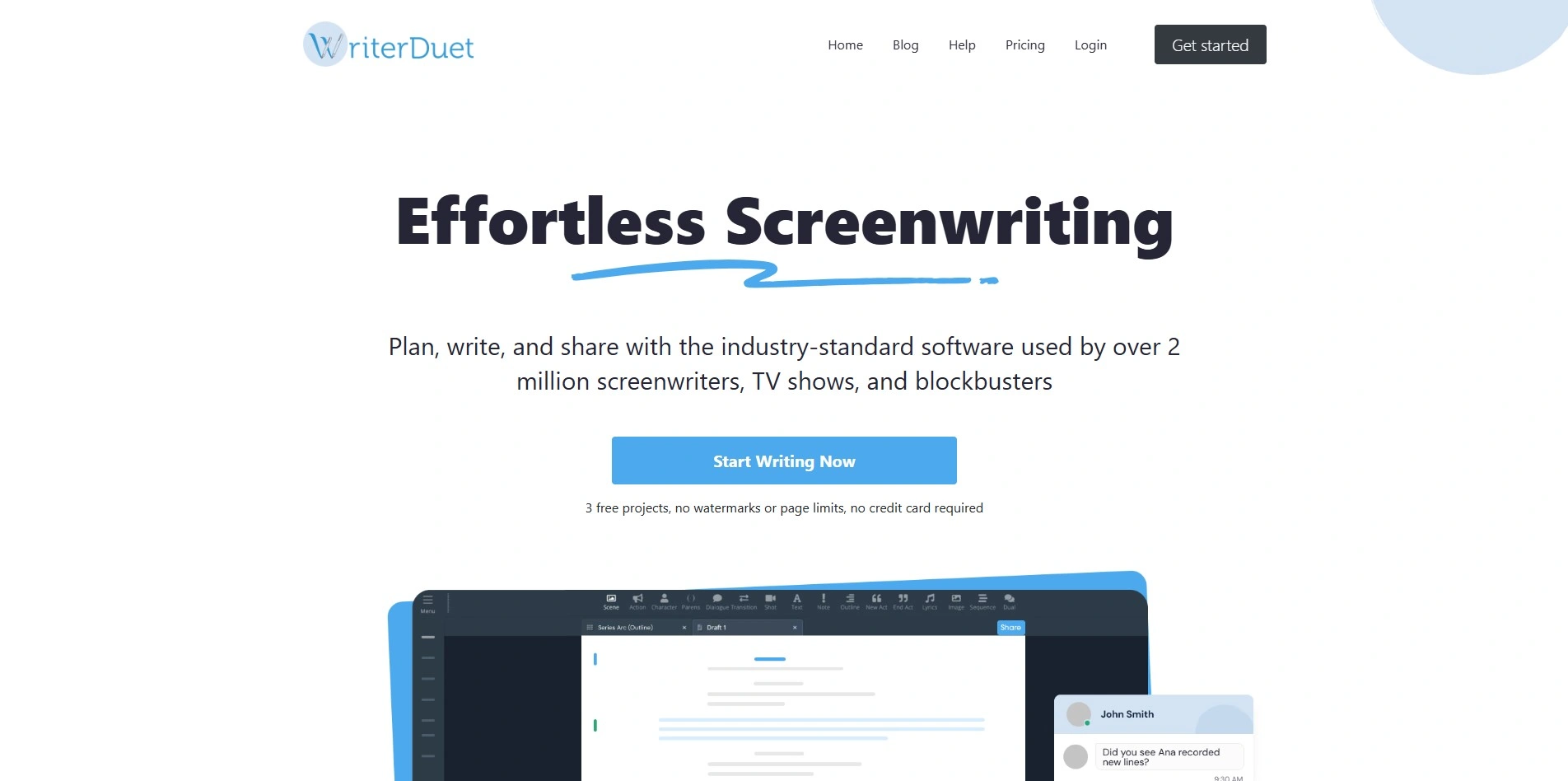
Pricing: Plus – around $9.99/month | Pro – around $11.99/month | Premium – around $13.99/month.
WriterDuet is a cloud-based screenwriting tool built specifically for real-time collaboration, making it a strong direct alternative to Studiovity for writing teams. It supports industry-standard formatting, revision tracking, and syncing across devices, along with integrations like Google Drive and ProWritingAid.
Its tiered pricing is significantly cheaper than legacy tools like Final Draft, and the free plan lets new users test the core writing experience before committing. The main limitation is its lack of native mobile apps, which may frustrate writers who want to draft on the go.
Pros
- Real-time collaborative screenwriting
- Affordable compared to Final Draft
- Free plan with core formatting tools
Cons
- No native iOS or Android apps
- Free plan limited to few projects
- Interface feels dated to some users
9. Sudowrite
Free Trial & Pricing
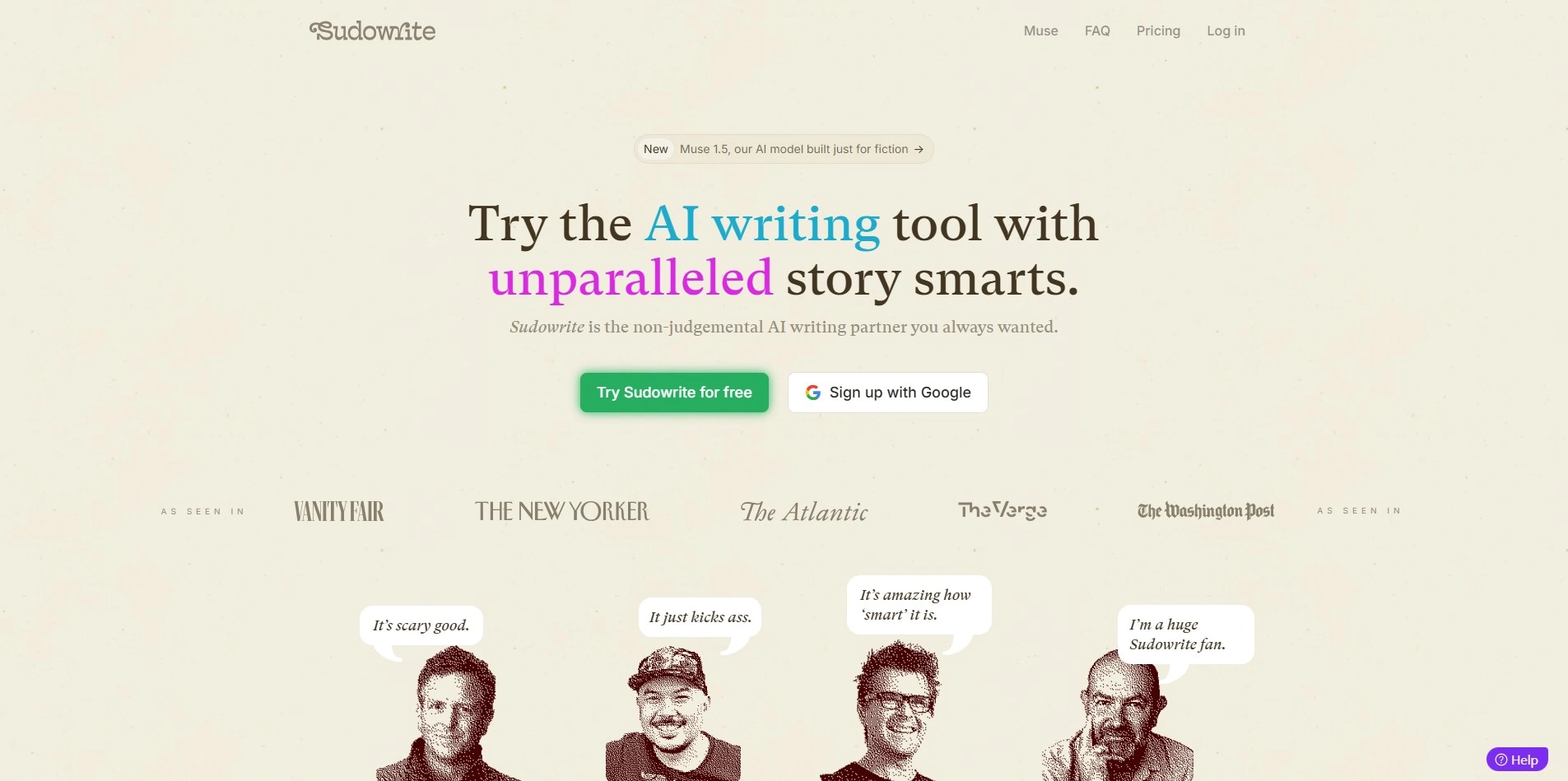
Pricing: Hobby & Student – around $10–19/month | Professional – around $22–29/month | Max – around $44–59/month.
Sudowrite is an AI writing tool built specifically for fiction authors, offering specialized features like Describe, Rewrite, Brainstorm, and a Story Bible to maintain consistency across long manuscripts. Its focus on creative prose sets it apart from general-purpose AI tools and screenwriting software alike.
The credit-based system means heavy users need to budget carefully, as credits can run out faster than expected depending on which tools are used. Still, for novelists seeking AI support without switching to a general chatbot, Sudowrite offers a tailored, fiction-first experience.
Pros
- Fiction-specific AI tools and Story Bible
- Generous no-card-required free trial
- Flexible tier options for different budgets
Cons
- Credit system can feel restrictive
- Not built for screenplay formatting
- Costs rise quickly for heavy users
10. Storyflow
Free Trial & Pricing
Pricing: Plus – $9.99/month | Pro – $14/month | Max – $39/month.
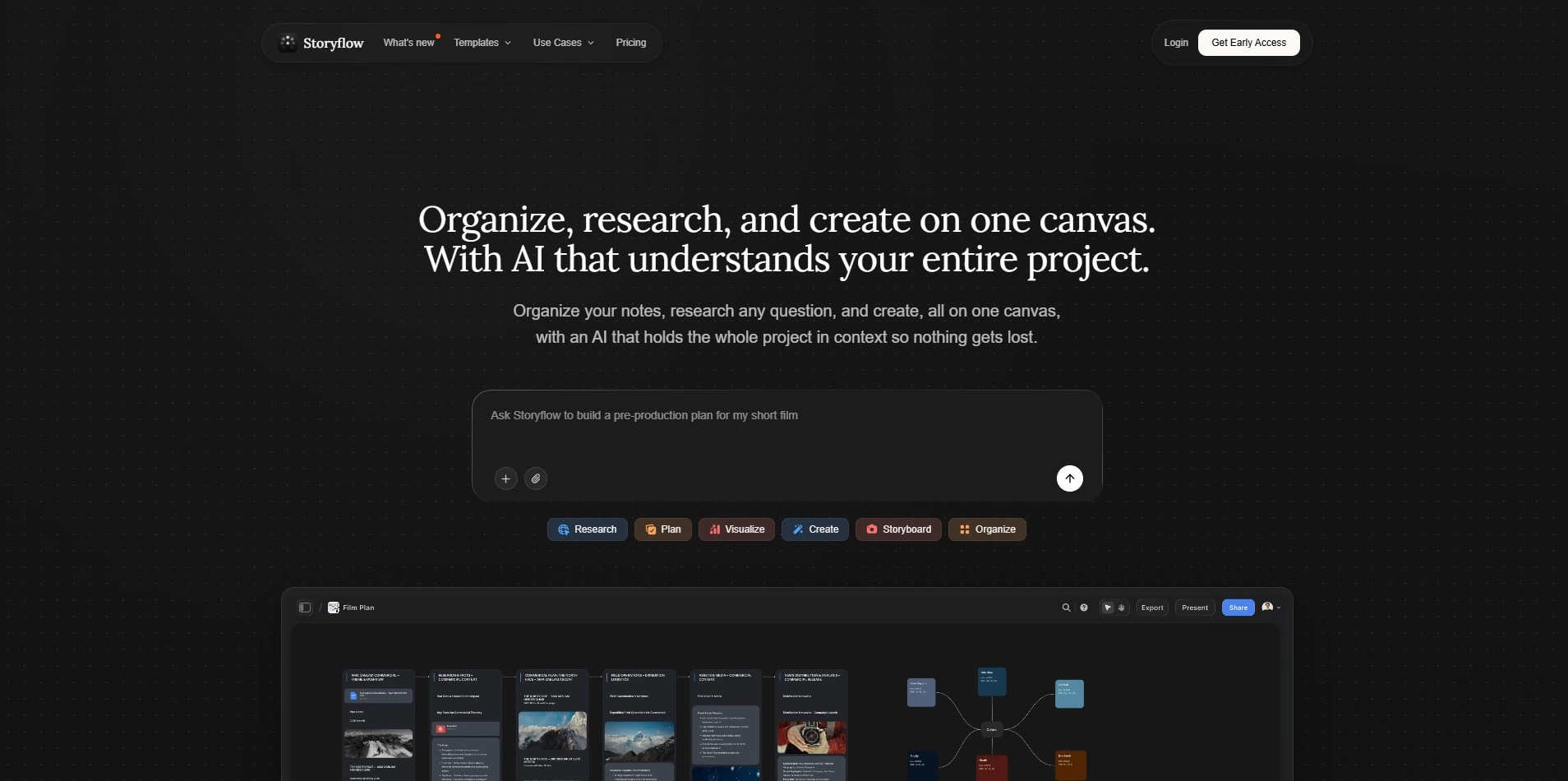
Storyflow is a visual AI project canvas built for creators, filmmakers, and writers who want to keep their world-building, structure, and drafts together in one connected space. Its standout feature is an AI assistant that reads everything pinned to the board, from loglines to character bibles, offering contextual suggestions.
This makes Storyflow a compelling alternative for writers who think visually and want AI woven directly into their planning process rather than bolted on as a separate chatbot. The free tier is genuinely usable long-term, though heavier AI use requires upgrading to Pro or Max.
Pros
- Free forever plan with real functionality
- AI reads entire project canvas for context
- Strong visual planning and collaboration tools
Cons
- Not a dedicated screenplay formatter
- AI usage capped on lower tiers
- Newer platform with a smaller community
| Alternative | Description |
|---|---|
| StoryCraft AI | An AI-driven storytelling and world-building platform aimed at hobbyist writers and narrative designers rather than formal screenwriting. |
| Dabble | A clean, approachable novel-writing app with plotting tools like the Plot Grid, best suited to book authors rather than screenwriters. |
| Jasper AI | A marketing-focused AI writing suite with brand voice and content automation tools, ideal for promotional writing rather than scripts. |
| DialogueGenie | A niche AI tool specialized in generating natural character dialogue for scripts, games, and interactive fiction. |
| Highland 2 | A minimalist Mac screenwriting app using the Fountain format, offering a one-time payment instead of a subscription. |
| Claude | A general-purpose AI assistant with strong long-context reasoning, useful as a writing companion for drafting and revision. |
| Copy.ai | An AI copywriting and workflow automation platform geared toward marketing teams and go-to-market content. |
| WriterDuet | A cloud-based, collaborative screenwriting tool with industry-standard formatting and real-time co-writing support. |
| Sudowrite | A fiction-focused AI writing assistant with specialized tools for description, rewriting, and maintaining story consistency. |
| Storyflow | A visual AI canvas combining story structure, world-building, and context-aware AI assistance in one connected workspace. |
Conclusion
Choosing the right Studiovity alternative ultimately depends on what kind of writer you are and what stage of the creative process you need the most support with. If you need real-time collaboration and industry-standard screenplay formatting, WriterDuet or Highland 2 are strong direct replacements. If your focus is fiction writing rather than screenwriting, Dabble and Sudowrite offer specialized tools built around novels and prose.
For those who want AI woven deeply into planning and structure, Storyflow and StoryCraft AI bring a more visual, connected approach, while Claude, Jasper AI, and Copy.ai serve better as general-purpose or marketing-adjacent writing companions. Whichever tool you choose, most offer free trials or free tiers, so it’s worth testing a few before committing to a paid plan.


