

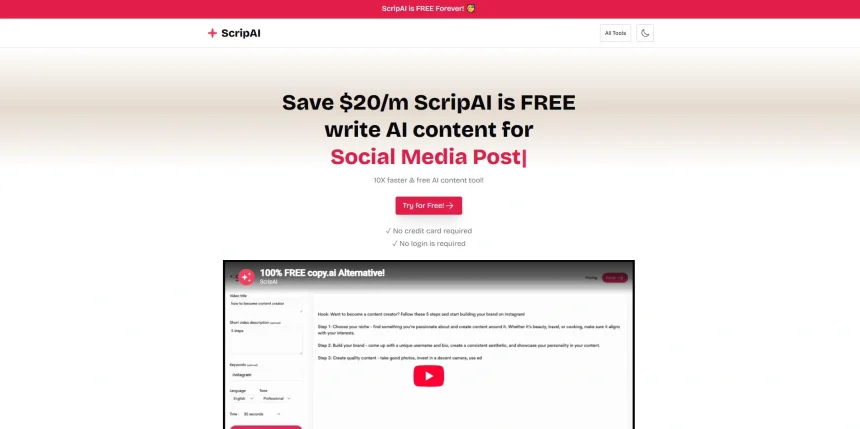
ScriptAI Pro has been a popular pick for writers who want AI assistance with scripts, screenplays, and video content, but it is not the only option on the market. Many creators are searching for alternatives that offer better pricing, more collaboration features, or a workflow that fits their specific niche, whether that’s animation, novels, or feature films. This article has 11 strong ScriptAI Pro Alternatives, covering their trial offers, pricing plans, and the pros and cons of each. Whether you are a solo screenwriter, a YouTuber, or part of a writers’ room, one of these tools should fit your budget and creative process.
1. Powtoon AI Script Writer

Free Trial Available (4-Day Trial)
Powtoon AI Script Writer is best known for turning simple prompts into structured video scripts, making it a favorite for marketers and educators. It pairs script generation with its animation suite, so users can move from written idea to finished video without switching platforms or hiring outside help.
| Plan | Price | Highlights |
|---|---|---|
| Lite | $49/month | Branding removal, MP4 export |
| Professional | $99/month | AI text-to-speech, lip-sync |
| Advanced | $199/month | AI script writer, unlimited exports |
| Corporate | Custom quote | Priority rendering, admin tools |
Beyond scripting, Powtoon shines because it keeps the entire production pipeline in one dashboard, reducing the need for external editing software. Its AI credit system covers voiceovers, avatars, and translations, giving teams flexibility as projects scale from short internal videos to full marketing campaigns.
New users can explore most premium features risk-free during the trial window before committing to a paid tier. The Advanced plan unlocks the AI script writer specifically, so smaller creators may need to grow into that tier rather than access it from day one.
Pros
- All-in-one script-to-video workflow
- AI voiceover and lip-sync included
- Good for non-technical creators
Cons
- AI script writer locked behind higher tiers
- Credit system can get confusing
- Higher plans are pricey for solo users
2. Squibler
Free Plan + Free Trial (No Card Required)
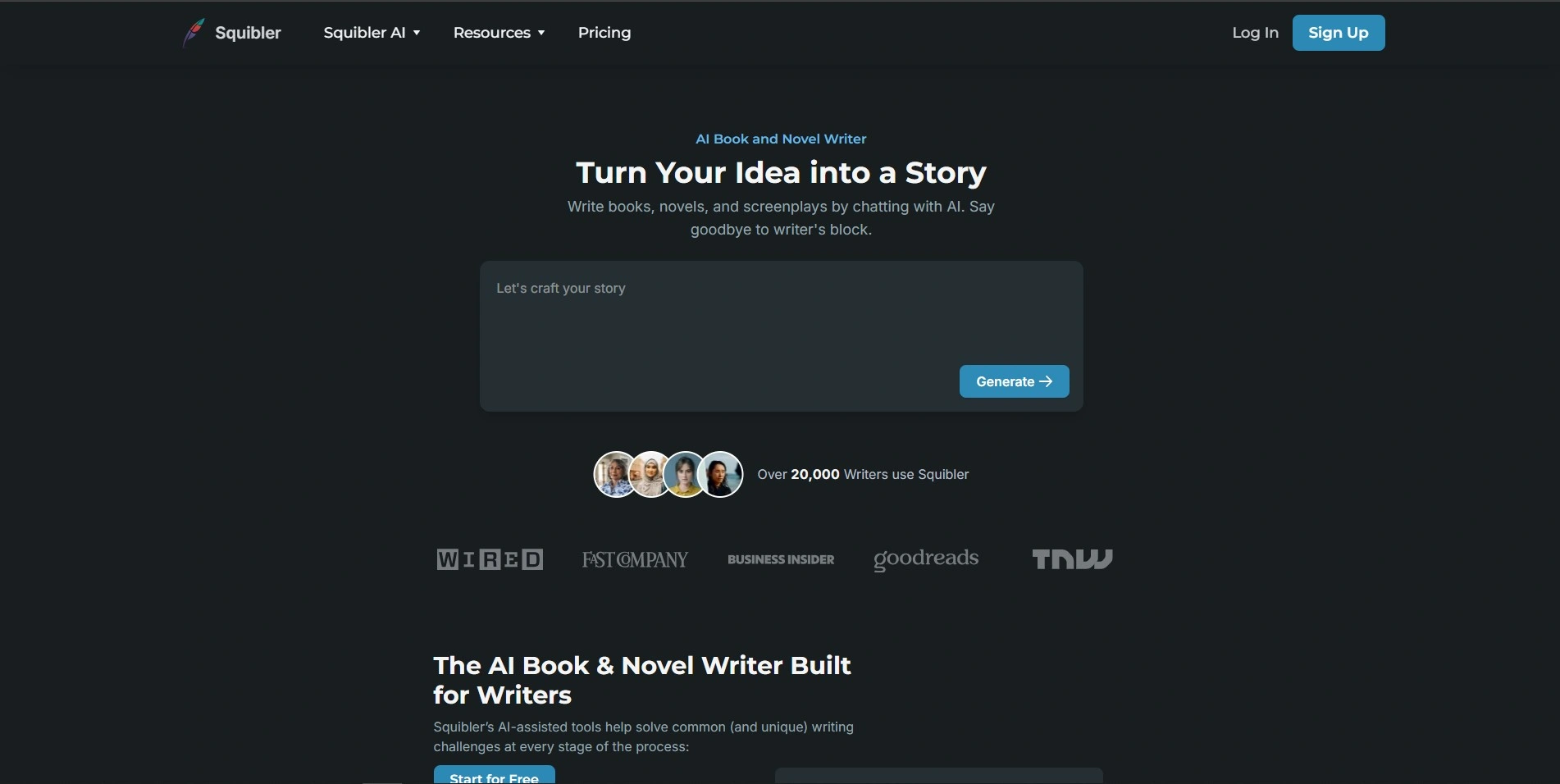
Squibler is an AI-powered writing platform built for novelists, screenwriters, and content creators who want help moving from a blank page to a finished manuscript. It combines a distraction-free editor with story-bible tools like character notes, outlining boards, and drag-and-drop scene organization.
| Plan | Price | Highlights |
|---|---|---|
| Free | $0 | 1,000 AI credits/month |
| Plus | $29.99/month ($15.83 annually) | 10,000 AI credits/month |
| Pro | $89.99/month ($49.17 annually) | Unlimited AI credits |
Its AI credit system replaced the older word-count model, which means heavier users need to track usage more carefully to avoid running out mid-project. Squibler also supports exporting to Kindle, PDF, and print formats, which appeals to independent authors preparing books for self-publishing.
The free plan is generous enough for testing the interface, but serious AI usage quickly requires an upgrade to Plus or Pro. Annual billing offers meaningful savings, making it more attractive for writers planning long-term projects rather than one-off scripts.
Pros
- Strong story-bible and outlining tools
- Free plan with no credit card needed
- Good export options for publishing
Cons
- Pro plan is expensive for casual writers
- Credit-based limits can feel restrictive
- No grammar checker built in
3. Beemgee
Free Trial Available
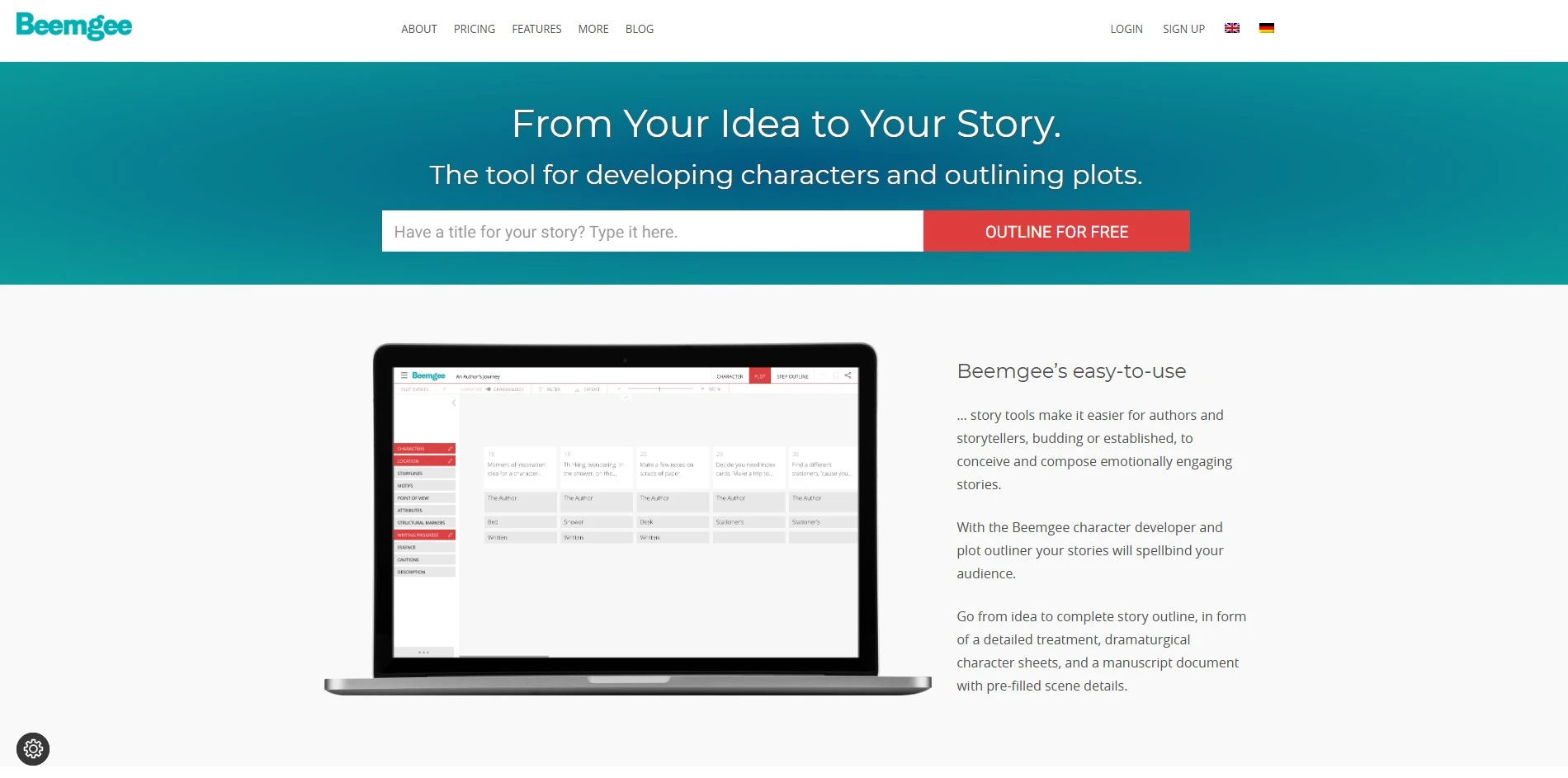
Beemgee takes a character-first approach to story development, helping writers build detailed character profiles before diving into plot structure. It is particularly useful for screenwriters and novelists who struggle with flat characters and want a guided system for deepening motivation and arcs.
| Plan | Price | Highlights |
|---|---|---|
| Free | $0 | Basic character templates |
| Premium | Check official site for current rate | Full story planning suite |
The platform’s visual boards let writers map relationships and story beats side by side, which many find more intuitive than a plain text outline. Beemgee is less about AI generation and more about structured brainstorming, so it complements rather than replaces a full scriptwriting tool.
Because Beemgee focuses narrowly on character and plot planning, it works best paired with a dedicated formatting tool for the final script draft. Writers who need heavy AI text generation may find its feature set lighter compared to fully AI-driven alternatives on this list.
Pros
- Excellent character development tools
- Visual story mapping boards
- Good for beginners learning structure
Cons
- Limited AI text generation
- Not a full screenplay formatter
- Smaller user community
4. WriterDuet
Free Plan + Free Trial on Paid Tiers
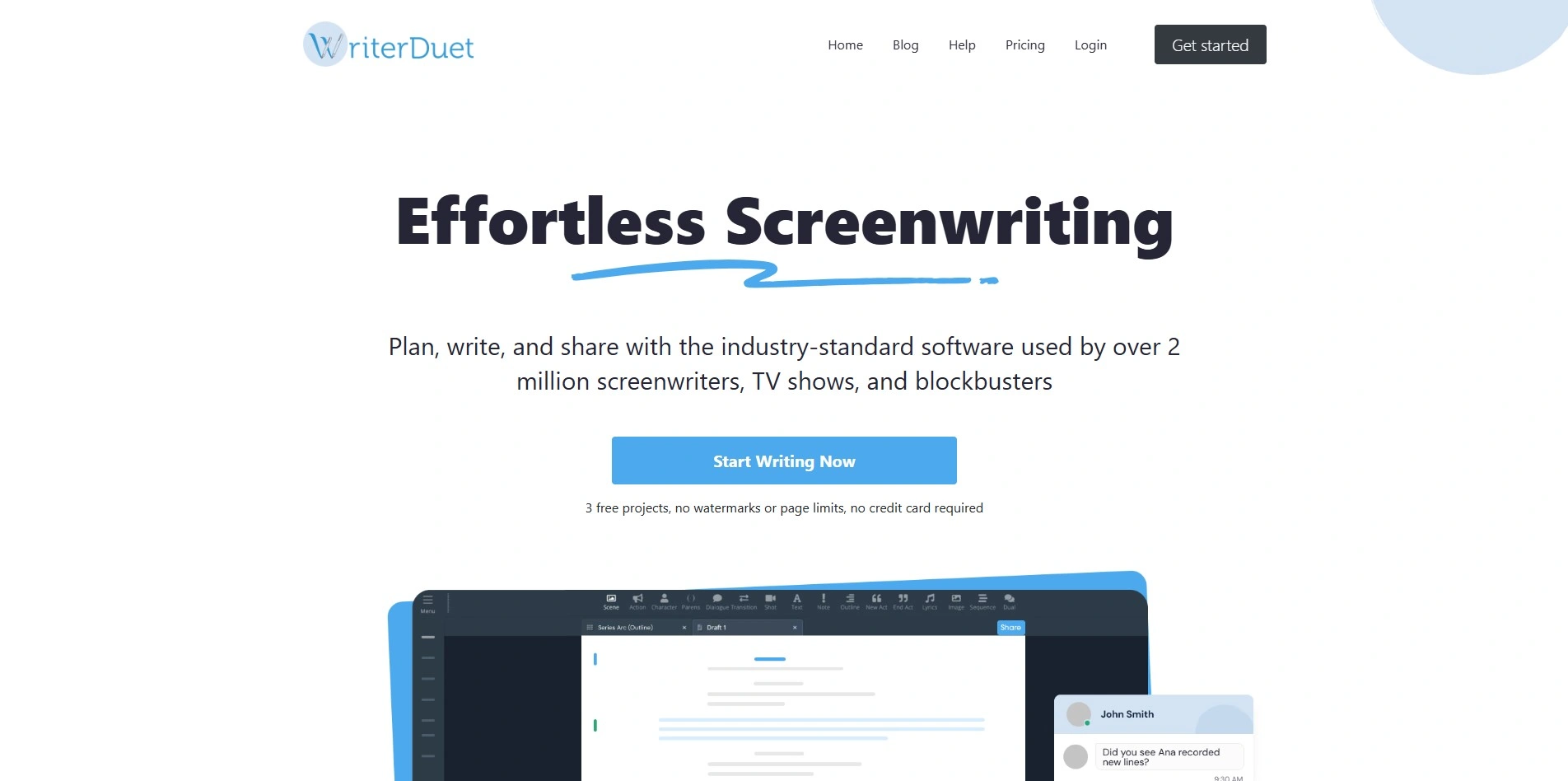
WriterDuet is a cloud-based screenwriting tool built around real-time collaboration, letting two or more writers edit the same script simultaneously like a Google Doc. It has grown its AI features in recent updates, adding drafting help and dialogue suggestions directly inside the editor pane.
| Plan | Price | Highlights |
|---|---|---|
| Free | $0 | Limited projects, core features |
| Plus | $9.99/month | More projects, cloud sync |
| Pro | $11.99/month | Advanced formatting, revisions |
| Premium | $13.99/month | Full collaboration suite |
Industry-standard formatting and FDX export make WriterDuet a natural fit for professional writers’ rooms and co-writing teams working on TV pilots or features. Version history tracks every change by writer, which is valuable for productions juggling multiple revisions and notes rounds.
Students and educators can get 50% off subscriptions, making it one of the more affordable professional-grade tools available. The free tier is functional but capped on project count, so active writers will likely need to upgrade within a few scripts.
Pros
- Best-in-class real-time collaboration
- Affordable paid tiers
- Industry-standard export formats
Cons
- Free plan limits number of projects
- AI features are newer, less mature
- Interface can feel basic visually
5. Claude
Free Tier Available
Claude, developed by Anthropic, is a general-purpose AI assistant that many writers use for scriptwriting, dialogue drafting, brainstorming, and editing feedback. Unlike dedicated scriptwriting software, Claude works conversationally, letting writers iterate on scenes, tone, and structure through natural back-and-forth prompts.
| Plan | Price | Highlights |
|---|---|---|
| Free | $0 | Standard access with usage limits |
| Pro | Check claude.com for current rate | Higher usage limits, priority access |
| Team/Enterprise | Custom pricing | Collaboration and admin controls |
Because Claude is not built specifically for screenplay formatting, writers typically use it alongside a formatting tool like WriterDuet or Squibler for the final polish. Its strength lies in flexible reasoning, character voice consistency, and the ability to explain story or structural feedback in plain language.
Claude’s free tier is generous enough for casual drafting and brainstorming sessions without requiring payment upfront. Heavy daily users working on long scripts will likely want a paid plan to avoid hitting usage caps during active writing sessions.
Pros
- Highly flexible conversational writing help
- Strong at feedback and story reasoning
- Usable free tier for casual writers
Cons
- No built-in screenplay formatting
- Not project-management focused
- Usage limits on free plan
6. DialogueGenie

Free Trial Available
DialogueGenie is built specifically for generating realistic, character-consistent dialogue, making it useful for screenwriters who struggle with natural-sounding conversation. Writers input character traits and scene context, and the tool generates dialogue options that match tone and voice across a script.
| Plan | Price | Highlights |
|---|---|---|
| Starter | Check official site for current rate | Basic dialogue generation |
| Pro | Check official site for current rate | Advanced character voice tools |
The tool’s niche focus means it excels at one specific pain point rather than trying to be a full scriptwriting suite. Writers working on ensemble casts often find it helpful for keeping each character’s voice distinct across long scripts with many speaking parts.
Since DialogueGenie focuses narrowly on dialogue, it works best as a supplement to a broader writing tool rather than a standalone solution. Users needing full formatting, outlining, or export features will need to pair it with something else for complete script production.
Pros
- Specialized in natural dialogue
- Keeps character voices consistent
- Good for ensemble-cast scripts
Cons
- Narrow feature set
- No formatting or export tools
- Less known, smaller support base
7. StoryCraft AI

Free Trial Available
StoryCraft AI focuses on story structure, helping writers build three-act outlines, beat sheets, and plot arcs using AI-guided prompts. It’s aimed at writers who want structural guidance before jumping into full scene writing, reducing the risk of plot holes later in the process.
| Plan | Price | Highlights |
|---|---|---|
| Basic | Check official site for current rate | Outline and beat sheet tools |
| Premium | Check official site for current rate | Full AI story generation |
The AI suggests plot beats based on popular story frameworks like the Hero’s Journey or Save the Cat, which speeds up early-stage development significantly. Writers who prefer a blank page and organic discovery writing may find the structured suggestions more restrictive than helpful.
StoryCraft AI works well for writers stuck at the outlining stage who need momentum to move forward. It is less suited for those already deep into drafting, since its strongest tools are concentrated at the planning and structuring phase of a project.
Pros
- Strong structural and outlining guidance
- Uses proven storytelling frameworks
- Good for beating writer’s block early on
Cons
- Less useful once drafting begins
- Can feel formulaic for some writers
- Limited export and formatting options
8. Studiovity
Free Trial Available
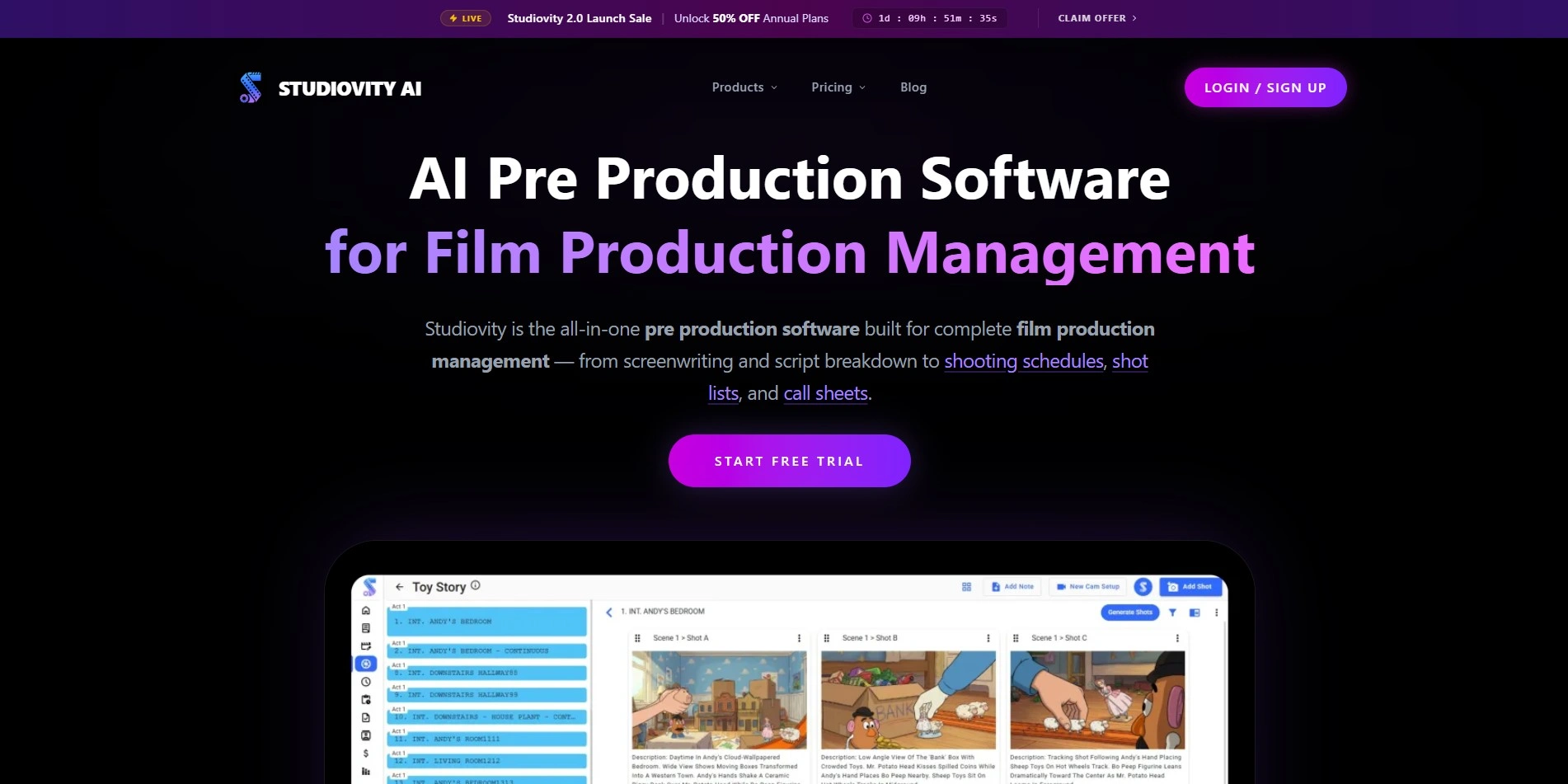
Studiovity is a screenplay software built to streamline script creation for film, television, and other visual media formats. It includes an act-structure board and beat-organization tools, letting writers arrange plot points and scenes visually before or during the drafting process.
| Plan | Price | Highlights |
|---|---|---|
| Individual | Check official site for current rate | Formatting and beat board |
| Studio/Team | Custom pricing | Multi-writer collaboration |
The beat board feature is one of its standout tools, allowing writers to organize plot points, scenes, and character arcs side by side within the same workspace. This makes Studiovity appealing for productions that need both a planning tool and a formatting tool without juggling separate apps.
Studiovity’s team-oriented features make it a solid pick for small production companies managing multiple writers on one project. Solo writers working on a single script may find some of its collaboration tools unnecessary for their workflow.
Pros
- Combines planning and formatting
- Useful beat board for visual structure
- Built for film and TV specifically
Cons
- Pricing not fully transparent upfront
- Overkill for solo, small projects
- Smaller user base than major competitors
9. Dabble
Free Trial (14 Days, No Credit Card Required)
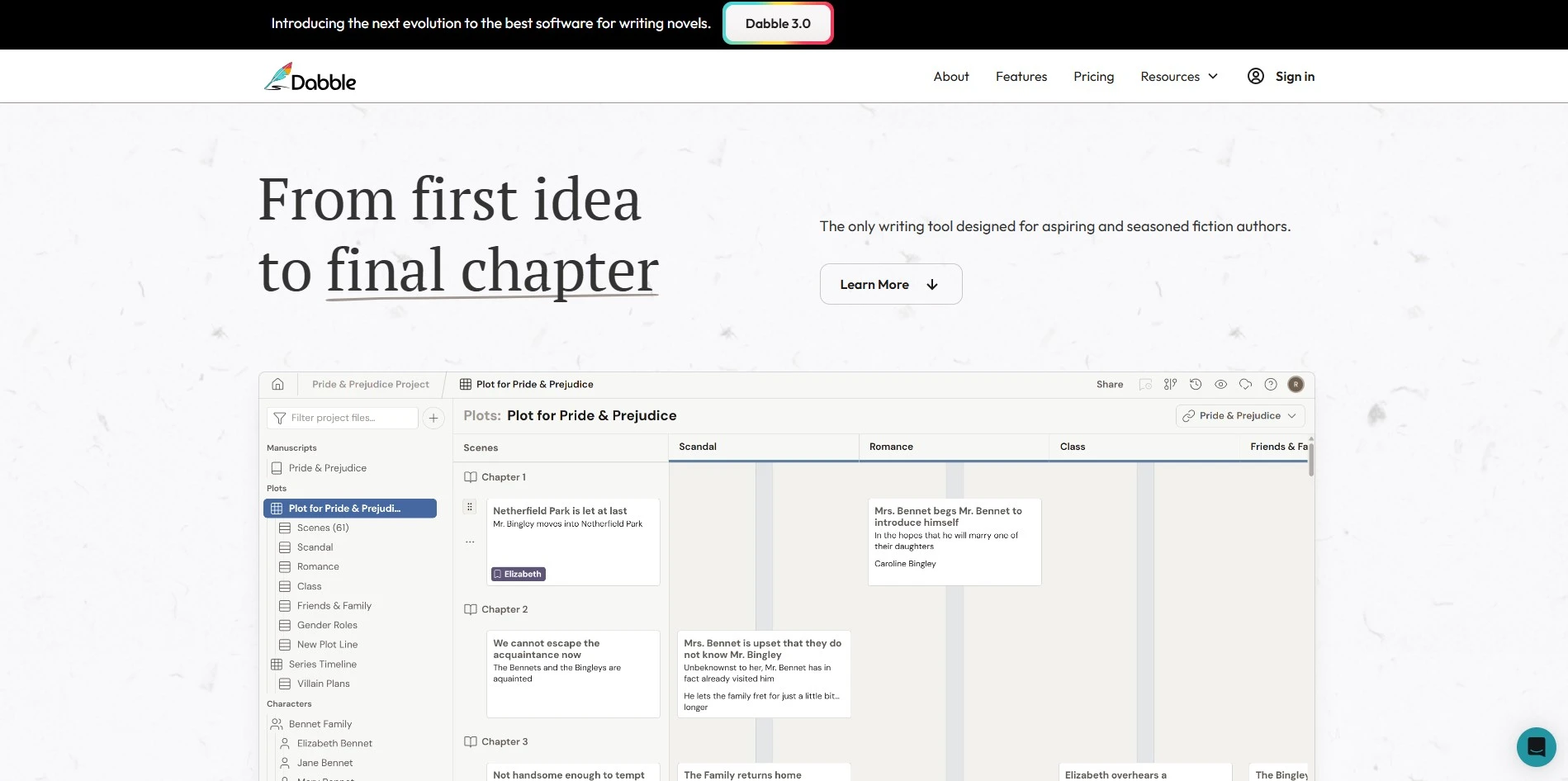
Dabble is a novel-writing platform with a Plot Grid, Story Notes, and Focus Mode, though many screenwriters also use it for outlining and structural work. Originally built for novelists, its AI features assist with drafting and rewriting while keeping research and character notes close to the manuscript.
| Plan | Price | Highlights |
|---|---|---|
| Basic | $7.00/month | Core writing and plotting tools |
| Standard | $15.00/month | Adds collaboration features |
| Premium | $23.00/month | Full workshop and resource access |
Its Plot Grid view lets writers see their entire story structure at a glance, which is especially useful for spotting pacing issues across long projects. Annual billing saves 20%, and academic emails qualify for an additional 30% discount, making it budget-friendly for students.
Dabble leans more novelist-focused than screenplay-first, so writers crossing between formats may need extra formatting help elsewhere. Still, for writers who draft treatments or story bibles before scripting, its organizational tools translate well across mediums.
Pros
- Generous 14-day trial, no card needed
- Affordable entry-level pricing
- Strong plotting and organization tools
Cons
- More novelist-leaning than screenplay-first
- No free permanent plan
- Limited industry-standard script export
10. Vimeo AI Script Writer
Free Trial Available
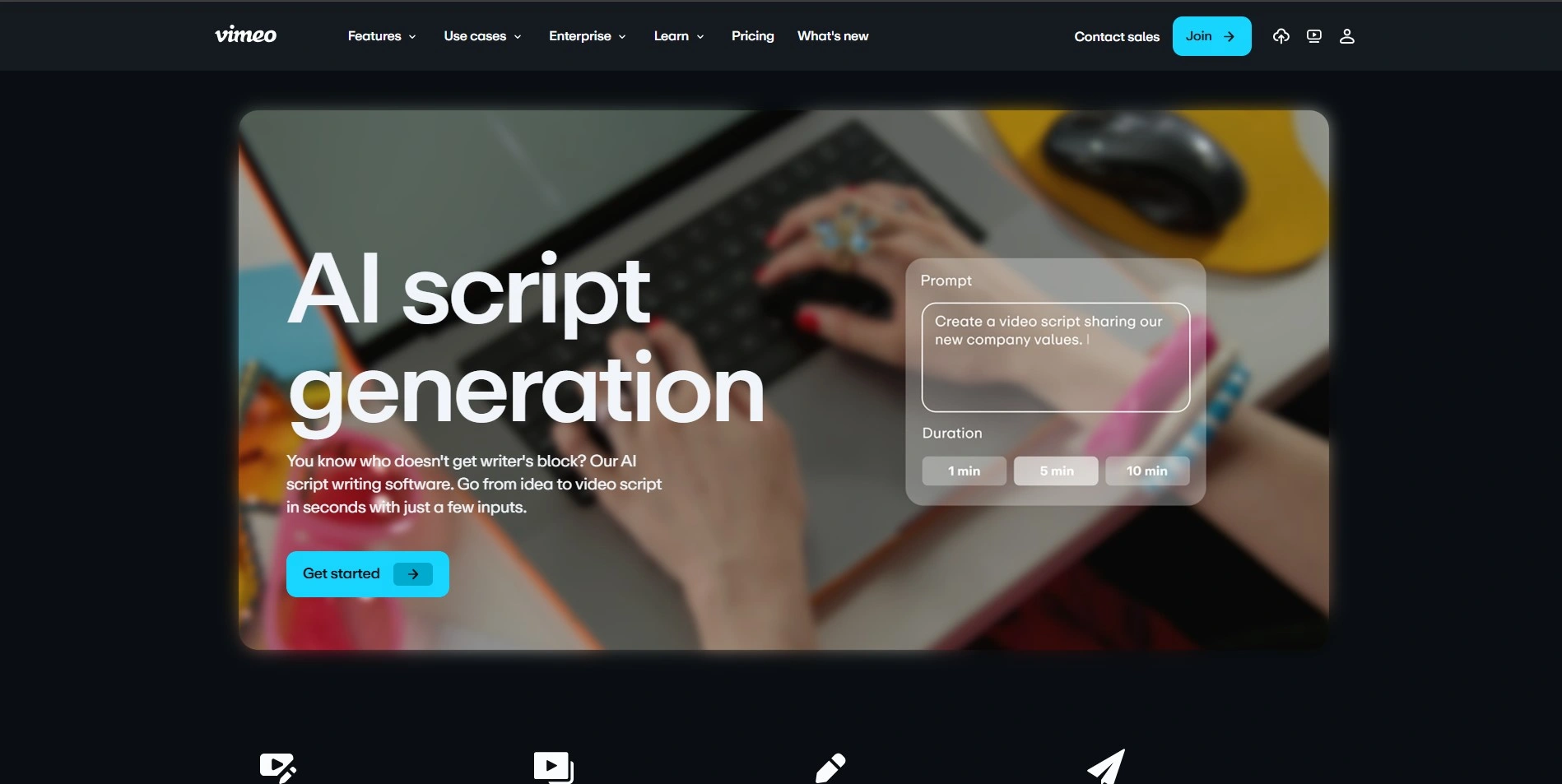
Vimeo AI Script Writer is built into Vimeo’s video creation ecosystem, helping creators generate scripts for marketing videos, tutorials, and social content. Since it’s tied to Vimeo’s hosting and editing tools, users can move from script to filmed or animated video within a single connected platform.
| Plan | Price | Highlights |
|---|---|---|
| Starter | Check vimeo.com for current rate | Basic AI script tools |
| Standard/Advanced | Check vimeo.com for current rate | Full video and script suite |
The tool works especially well for teams already using Vimeo for hosting, since scripts, recordings, and edits all live in one dashboard. It reduces the friction of exporting scripts to a separate app before recording, which speeds up short-form marketing and social video production.
Because it’s bundled with Vimeo’s broader video suite, standalone scriptwriting-only users may find themselves paying for video hosting features they don’t need. Creators fully invested in Vimeo’s ecosystem will get the most value out of this integration.
Pros
- Seamless script-to-video workflow
- Good for marketing and social content
- Integrated with Vimeo hosting tools
Cons
- Tied to Vimeo’s ecosystem
- Not ideal for standalone scriptwriting
- Pricing bundled with video features
11. Mugafi

Free Trial Available
Mugafi is a story-development platform aimed at screenwriters, offering AI-assisted script generation alongside a marketplace connecting writers with production opportunities. It stands out by combining writing tools with networking features for creators trying to get scripts noticed by producers.
| Plan | Price | Highlights |
|---|---|---|
| Free | $0 | Basic script tools, community access |
| Pro | Check mugafi.com for current rate | Advanced AI writing, marketplace features |
Its marketplace angle sets it apart from purely writing-focused tools, giving emerging screenwriters exposure to industry contacts they might not otherwise access. The AI assists with structure, dialogue, and formatting, aiming to bring scripts to a production-ready standard faster.
Mugafi’s dual focus on writing and networking means some features may feel secondary if a writer only wants a scripting tool. For writers actively seeking representation or production deals, though, this combination can add real value beyond the writing software itself.
Pros
- Combines writing tools with industry networking
- Useful for emerging screenwriters
- Free tier to start
Cons
- Marketplace focus may dilute core writing tools
- Pro pricing not always transparent
- Smaller community compared to major players
Comparison Table
| Alternative | Description |
|---|---|
| Powtoon AI Script Writer | Combines AI scriptwriting with a full animated video production suite. |
| Squibler | AI writing platform for novels, screenplays, and long-form content with story-bible tools. |
| Beemgee | Character-first story development tool with visual planning boards. |
| WriterDuet | Cloud-based screenwriting software focused on real-time collaboration. |
| Claude | Conversational AI assistant useful for drafting, dialogue, and story feedback. |
| DialogueGenie | Specialized tool for generating natural, character-consistent dialogue. |
| StoryCraft AI | AI-guided outlining and beat-sheet tool for structuring stories. |
| Studiovity | Screenplay software with a beat board for film and TV writers. |
| Dabble | Novel-writing platform with plotting tools also used for screenwriting. |
| Vimeo AI Script Writer | AI scriptwriting integrated into Vimeo’s video hosting and editing suite. |
| Mugafi | Story-development platform combining AI writing with an industry marketplace. |
Conclusion
Choosing the right ScriptAI Pro alternative depends heavily on what kind of writing you do and how you like to work. Screenwriters focused on collaboration may lean toward WriterDuet or Studiovity, while novelists crossing into scripting might prefer Dabble or Squibler for their organizational tools.
For creators who want flexible, conversational assistance, Claude offers strong story feedback without locking users into rigid formatting software. Whichever tool you choose, testing the free trial or free tier first is the smartest way to confirm it truly fits your creative workflow before committing to a paid plan.


