

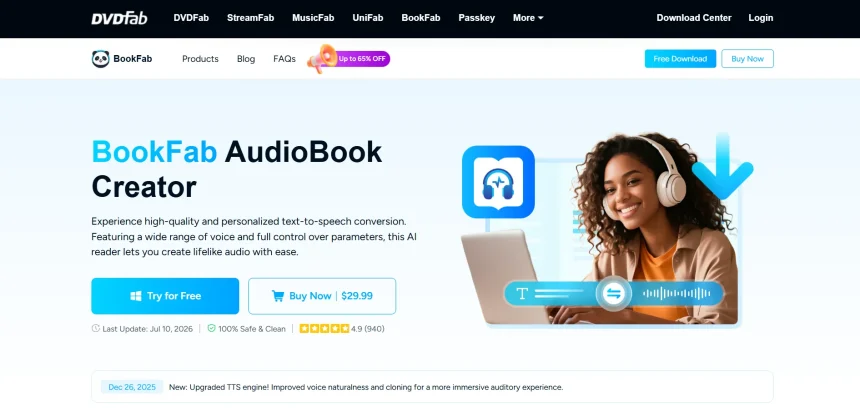
BookFab has been a popular choice for turning text into narrated audio and video content, but it isn’t the only option on the market. Creators, podcasters, and businesses now have access to a wide range of AI-powered voice, video, and audio tools that offer more flexibility, better voice quality, and pricing plans suited to different budgets. In this article, we break down 11 of the best BookFab Alternatives available in 2026. Each entry includes trial availability, current pricing plans, a short overview, and a clear list of pros and cons so you can pick the tool that fits your workflow and budget without wasting time on trial and error.
1. VEED
Free Trial & Pricing
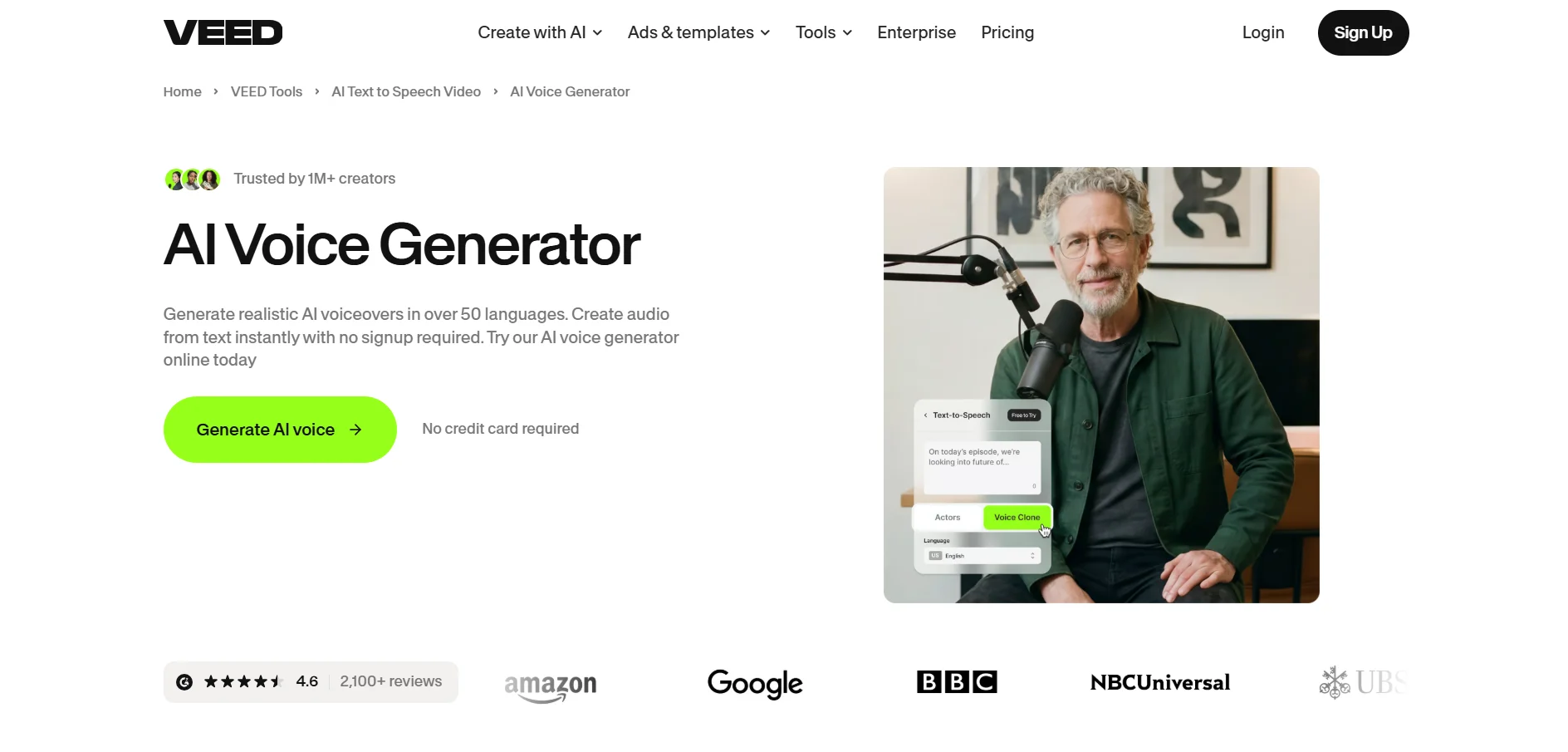
VEED is a browser-based video editing platform built for creators, marketers, and teams who want fast, professional-quality output without installing heavy software. It combines drag-and-drop editing with AI tools for subtitles, translation, voice generation, and social media resizing, making it a strong all-in-one alternative to BookFab for video-first content creators.
The platform’s cloud workflow means projects sync across devices, and its stock media library saves time on sourcing assets. VEED particularly shines for repurposing long-form content into short clips and adding auto-captions. Teams that need brand consistency across multiple editors will appreciate the collaborative Business tier, though heavy AI feature use can burn through credits faster than expected.
Pros
- Easy browser-based editing with no installation
- Strong AI subtitle and translation tools
- Good collaboration features for teams
Cons
- AI credits can run out quickly on lower tiers
- Free plan exports carry a watermark
- Some users report occasional performance lags
2. PlayHT
Free Trial & Pricing
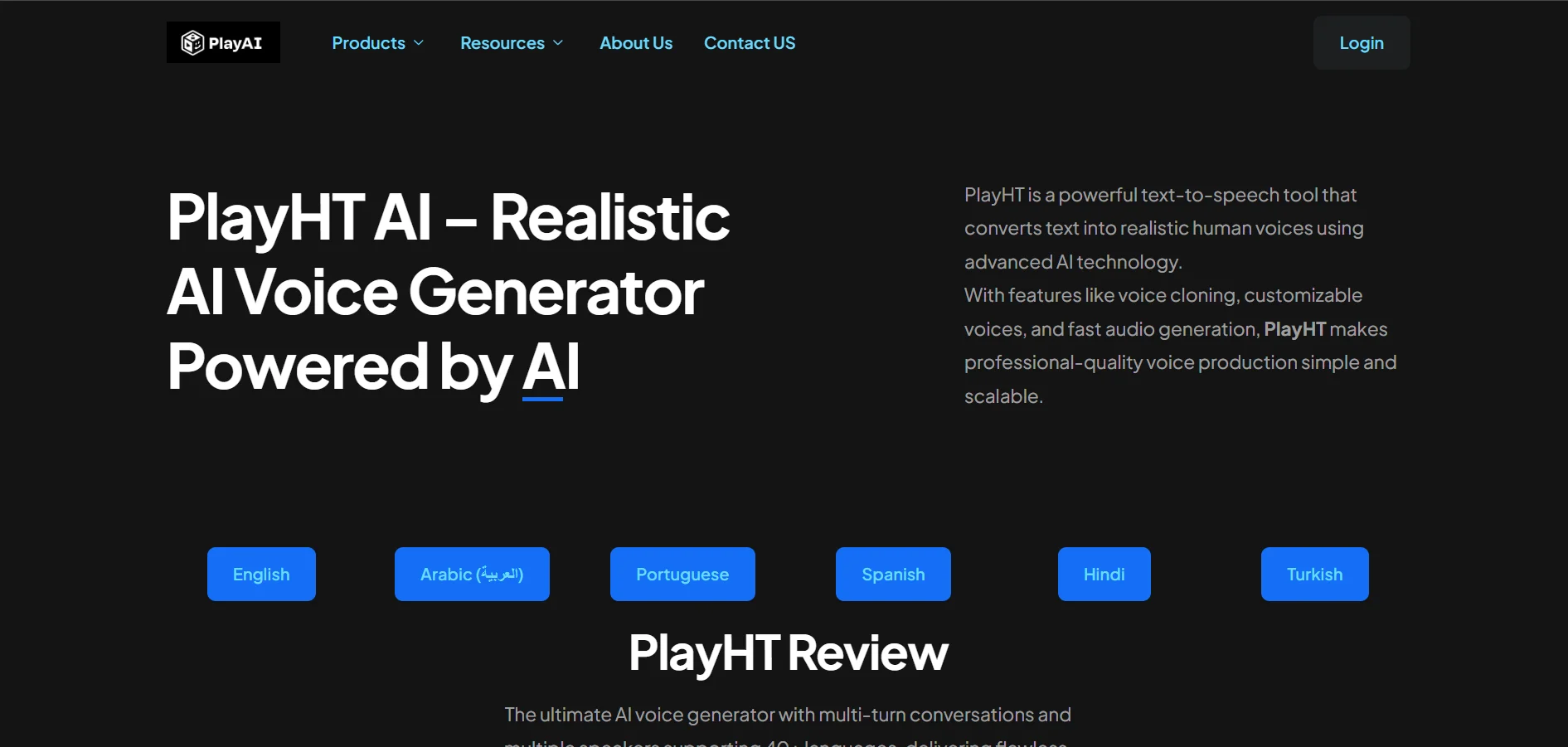
PlayHT is a dedicated AI voice generator offering over 800 realistic voices across more than 140 languages, along with instant voice cloning and a developer-friendly API. It’s a solid BookFab alternative for anyone who primarily needs high-quality text-to-speech for podcasts, e-learning, or video voiceovers rather than a full video editing suite.
The platform’s pronunciation and phonetics library lets users fine-tune how specific words sound, which is valuable for technical or branded content. PlayHT also supports commercial usage rights on paid tiers, making it viable for monetized YouTube content. The free tier’s lack of commercial rights is a common complaint among new users testing the product.
Pros
- Large voice and language library
- Instant voice cloning included
- Developer API for real-time integration
Cons
- No commercial rights on the free plan
- Higher tiers get expensive for heavy usage
- Interface has a learning curve for beginners
3. Podcastle
Free Trial & Pricing
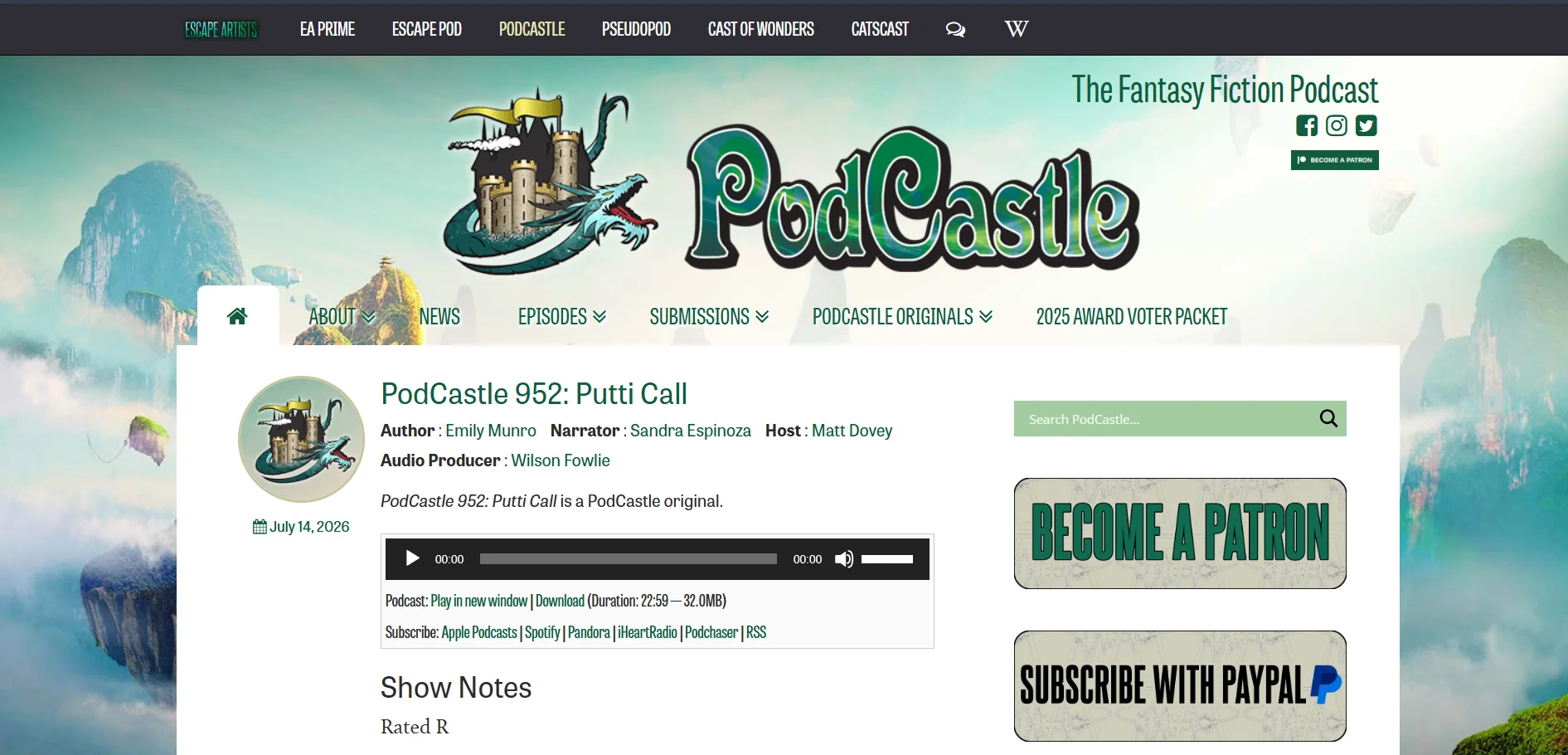
Podcastle is an all-in-one audio and video production platform built for podcasters, interviewers, and content creators who want recording, editing, and AI voice tools in a single dashboard. It stands out from BookFab by combining studio-quality remote recording with AI-powered noise reduction and voice cloning under one roof.
Its Revoice feature, which clones a user’s own voice, is gated behind the Pro plan, so casual users testing the free tier won’t access it. Podcastle’s free video and transcription limits are lifetime caps rather than monthly resets, which can catch new users off guard. Still, it remains one of the more affordable all-in-one options for creators.
Pros
- Combines recording, editing, and TTS in one app
- Affordable entry-level paid plan
- Built-in noise reduction and enhancement tools
Cons
- Free plan video/transcription limits are lifetime, not monthly
- Voice cloning requires the Pro plan
- Limited customization for podcast websites
4. Fliki
Free Trial & Pricing
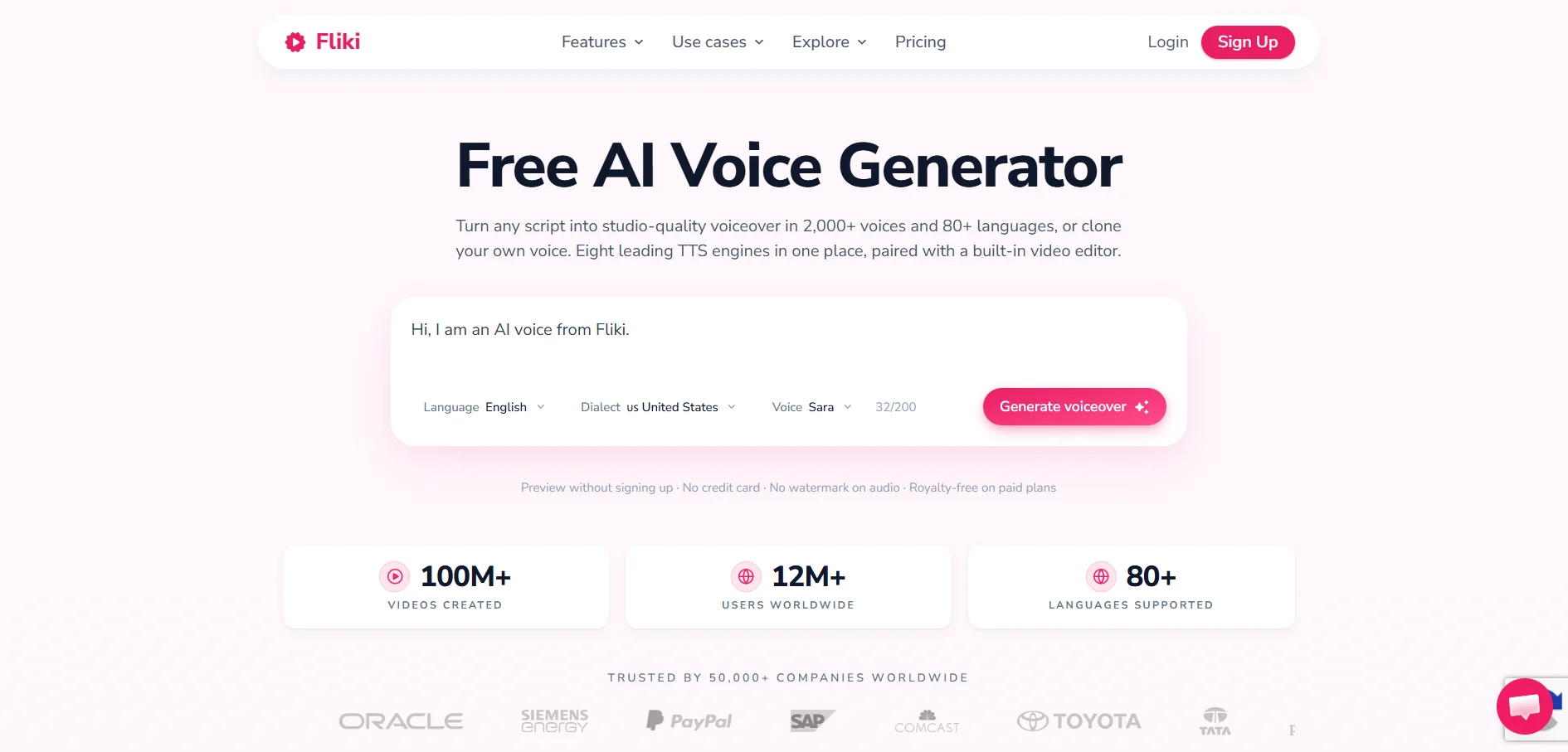
Fliki converts scripts and blog posts into narrated videos using AI voices paired with stock footage, making it a strong text-to-video alternative to BookFab. It offers access to over 1,000 voices across 80+ languages, along with a large stock media library for auto-matching visuals to narration.
The Premium plan unlocks voice cloning, API access, and priority rendering, which suits agencies producing content at scale. Fliki’s credit-based system means heavier AI revisions consume more of the monthly allowance than the sticker price suggests, and some reviewers have flagged inconsistent visual quality in generated footage.
Pros
- Fast script-to-video workflow
- Large voice and stock media library
- Commercial rights included on paid tiers
Cons
- Free plan has a strict 5-minute cap and watermark
- Credit system can be confusing for new users
- Some reported quality inconsistencies in visuals
5. Lovo.ai
Free Trial & Pricing
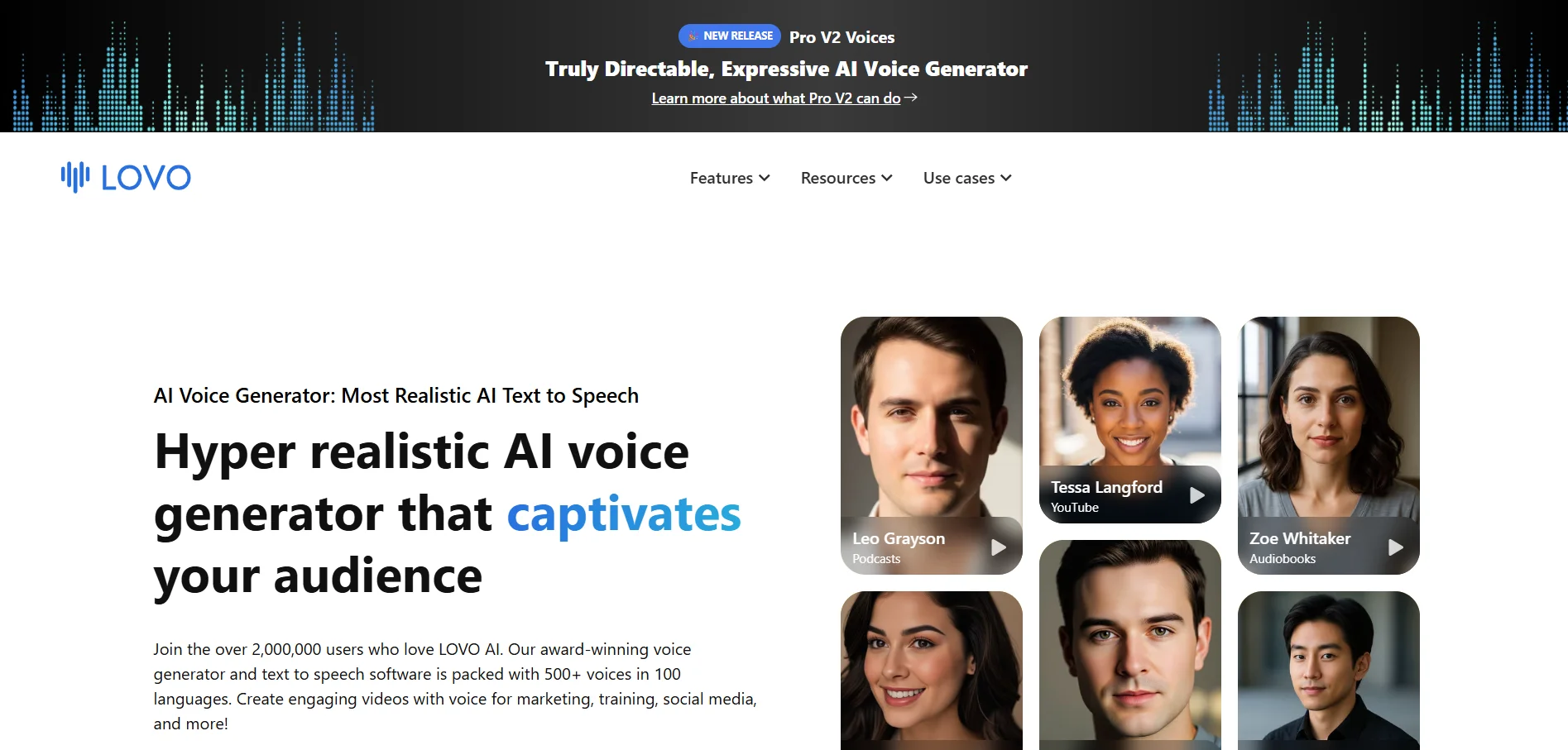
Lovo.ai bundles text-to-speech generation with a video editor, AI script writer, subtitle generator, and voice cloning, positioning itself as a full content studio rather than a single-purpose tool. With over 500 voices across 100+ languages and directable emotional control, it’s built for creators who want granular control over tone and delivery.
Voice cloning requires just one minute of sample audio and is available starting on the Basic plan, which is a notable advantage over some competitors. However, user reviews frequently mention inconsistent customer support and occasional voice-quality variance across the library, so testing the free trial thoroughly before committing is recommended.
Pros
- All-in-one studio with video, subtitles, and AI writing
- Voice cloning available from the entry paid tier
- Directable emotion and accent controls
Cons
- Customer support reviews are mixed
- Some voices sound less natural than flagship options
- Pro+ tier is a steep jump in price
6. WellSaid Labs
Free Trial & Pricing
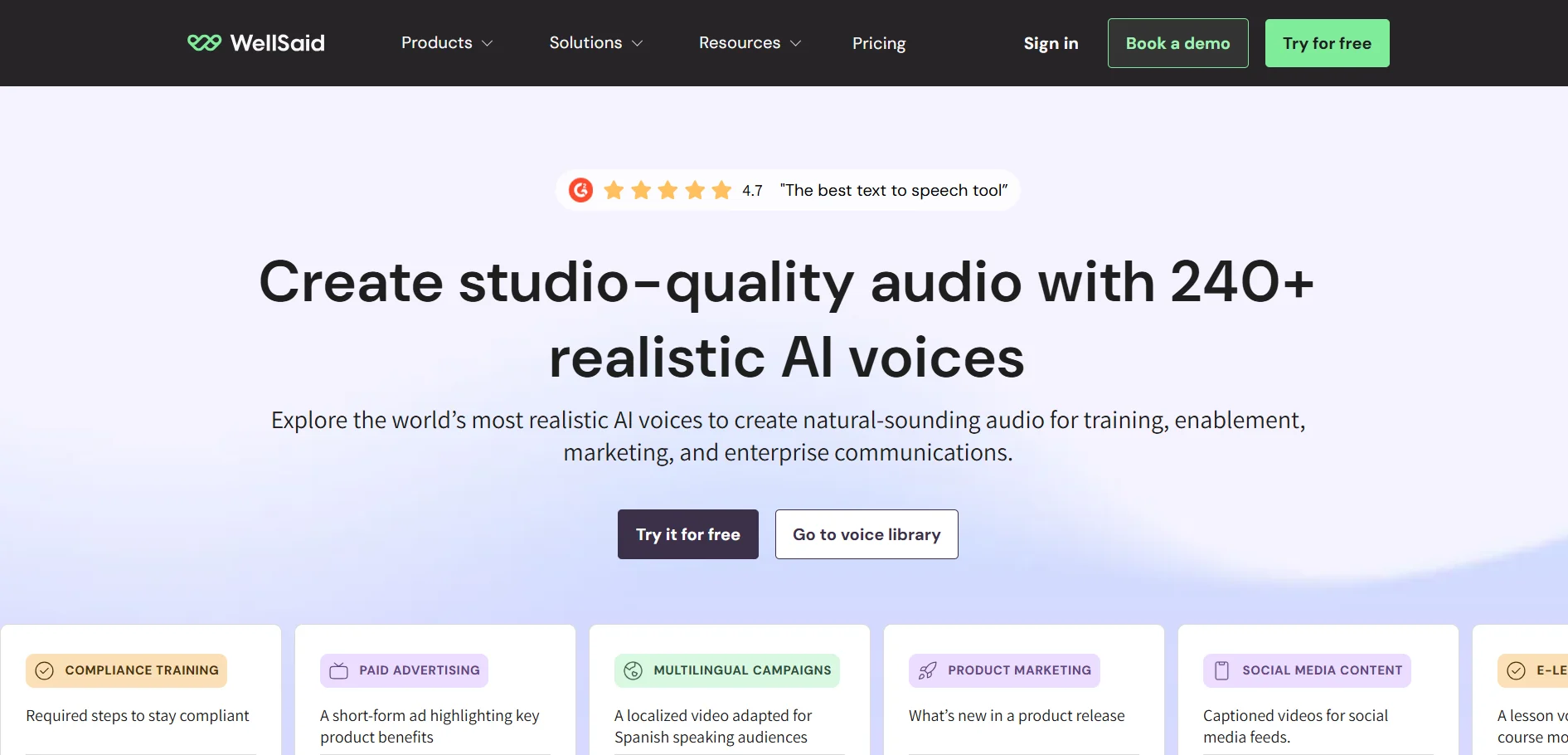
Voice.ai, spun out of the Allen Institute for AI, focuses on studio-quality voice avatars built from real, consenting voice actors. It’s aimed squarely at enterprise and L&D teams that need polished, professional narration for training materials, marketing videos, and corporate content rather than casual creators.
The platform doesn’t charge per word or minute within tier limits, instead pricing by seat and included downloads. This makes budgeting predictable for teams, though the overall cost sits noticeably higher than most competitors on this list. Its ethical voice-sourcing approach is a differentiator for brands concerned about consent and licensing.
Pros
- Studio-quality, ethically sourced voices
- Predictable seat-based pricing
- Strong fit for enterprise training content
Cons
- Noticeably pricier than most alternatives
- Smaller voice library than some competitors
- Less suited for casual or hobbyist creators
7. Minimax
Free Trial & Pricing
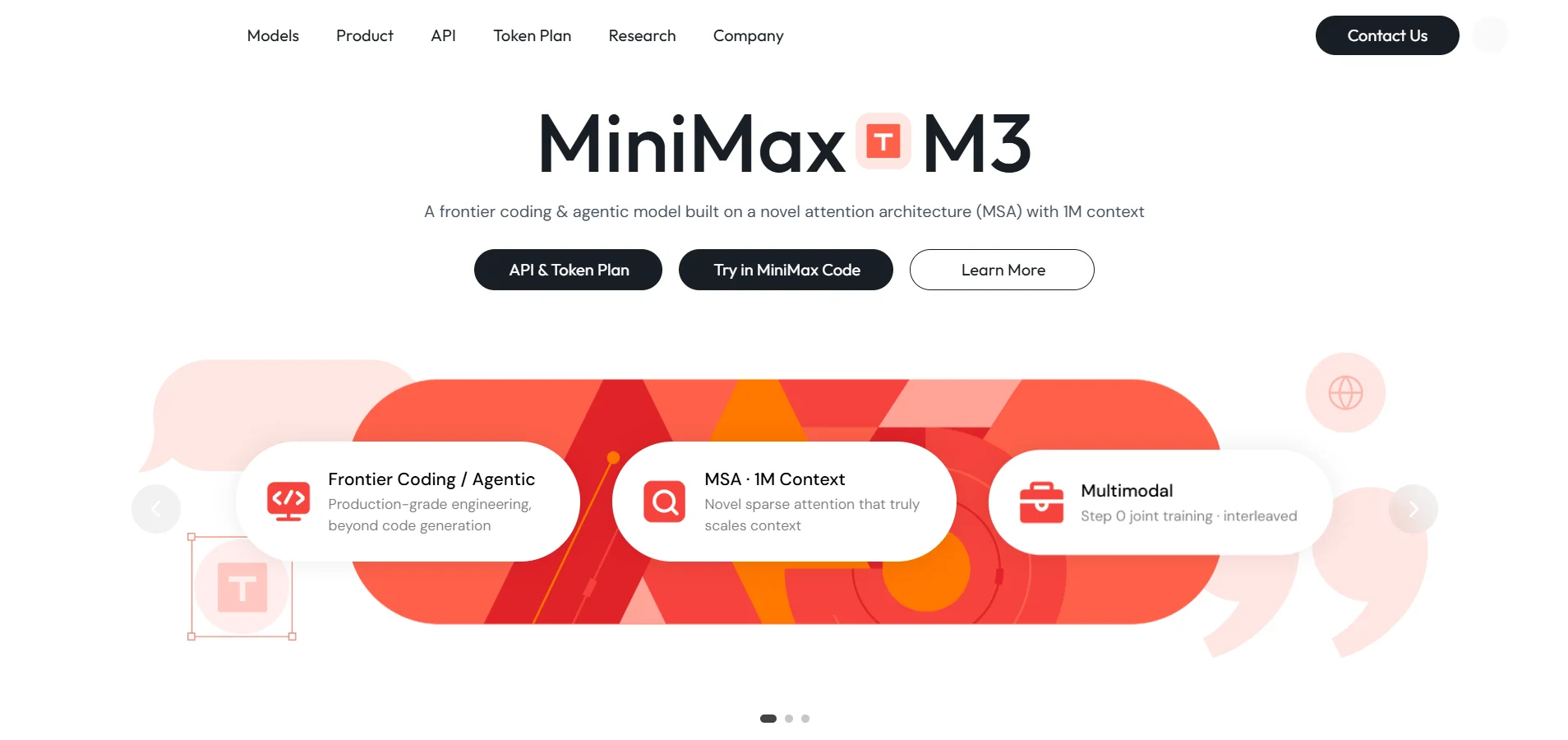
MiniMax is a Shanghai-based AI company offering a broad multimodal suite covering text, audio, image, and video generation, with MiniMax Audio serving as its dedicated text-to-speech and voice cloning product powered by the Speech-2.8 model family. It’s a compelling BookFab alternative for developers and businesses wanting API-first, pay-as-you-go voice generation.
Pricing is unusually granular, with rapid voice cloning priced per voice and generation billed per million characters, which suits high-volume technical users but can feel opaque to casual creators comparing flat subscription tools. The free daily credit allowance is generous enough for small-scale podcasting or prototyping before committing to a paid tier.
Pros
- Competitive per-character API pricing
- Generous free daily credits
- Broad multimodal ecosystem beyond just audio
Cons
- Pricing structure is complex for non-developers
- Less beginner-friendly than subscription-only tools
- Enterprise tiers are costly at high volume
8. Supertone Play
Free Trial & Pricing
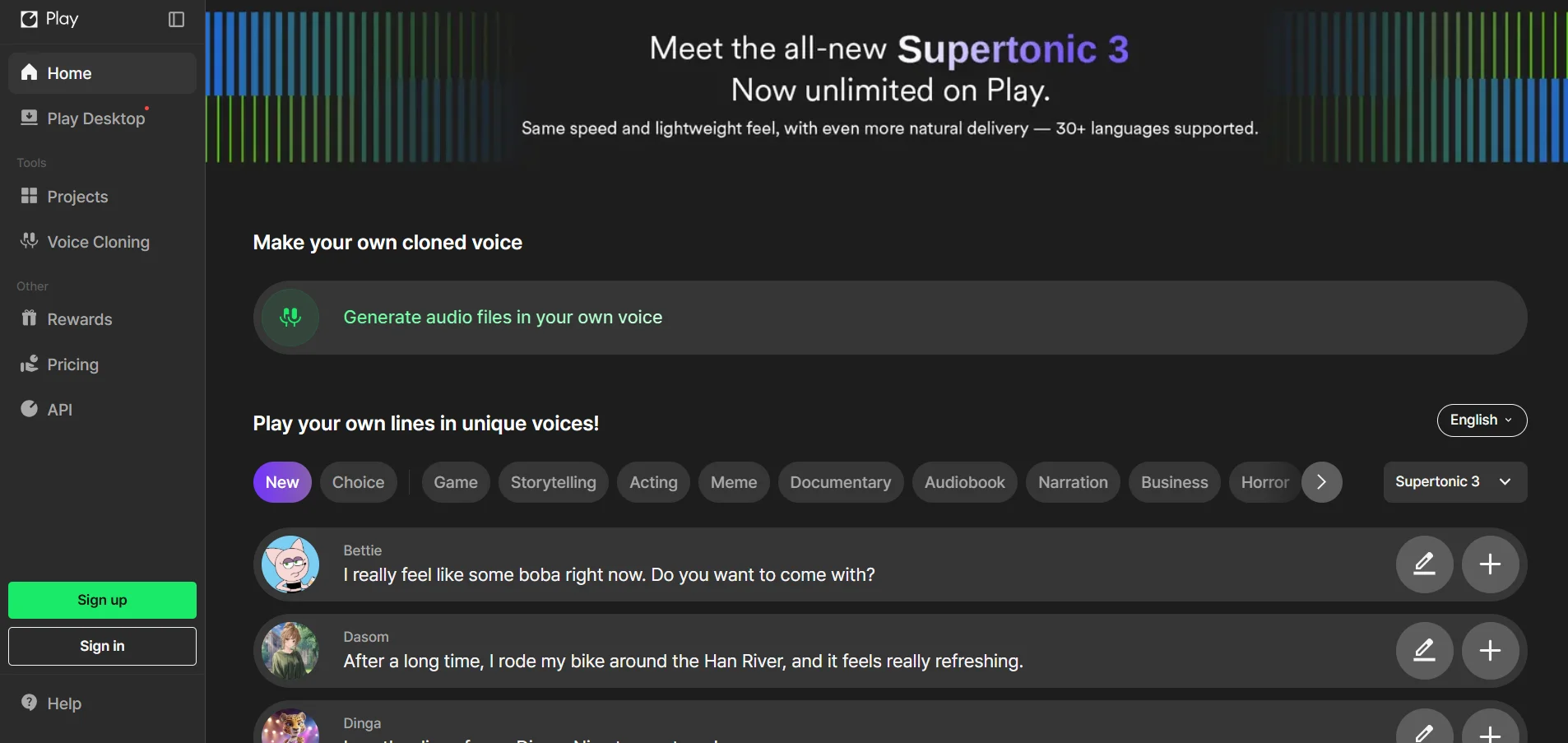
Supertone Play, developed by HYBE-backed Supertone, specializes in hyperrealistic, emotionally expressive text-to-speech with strong support for Korean, Japanese, and English. It uses a credit-based system where each tier unlocks a set number of voice cloning slots and generation minutes, making it a niche but powerful BookFab alternative for expressive multilingual narration.
The Sona and Supertonic models let users trade off between maximum expressiveness and credit efficiency depending on the project. Language support outside its core three markets remains limited, and some users have reported compatibility issues with certain third-party editing software, so it’s worth testing thoroughly during any promotional trial window.
Pros
- Highly expressive, emotionally nuanced voices
- Flexible credit-based tier system
- Strong performance in Korean and Japanese
Cons
- Limited language support beyond three core markets
- Reported compatibility issues with some DAWs
- No refund policy on purchases
9. Pixbim
Free Trial & Pricing
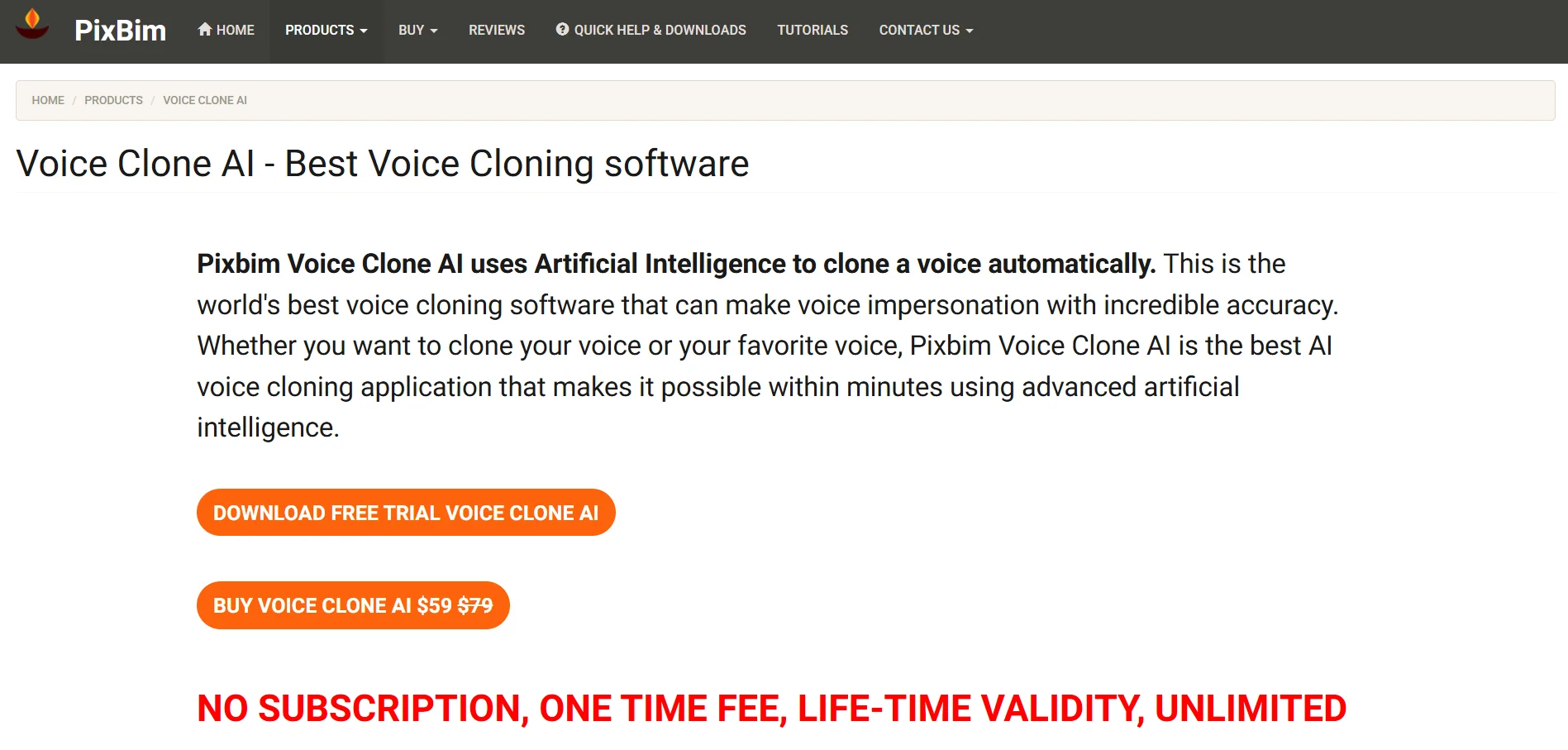
Pixbim takes a different approach from most entries on this list by offering a suite of standalone desktop AI applications rather than a unified cloud platform. Tools like Color Surprise AI, Video Colorize AI, and Voice Clone AI are purchased individually, which appeals to users who prefer a one-time cost over recurring subscriptions.
This fragmented structure means there’s no single dashboard tying features together, so users needing both voice and video tools must buy multiple separate programs. The lifetime-access, pay-once model has earned strong loyalty among budget-conscious creators, reflected in generally positive user ratings for the desktop software line.
Pros
- One-time payment instead of subscriptions
- Lifetime access with free updates
- Good value for specific single-purpose tasks
Cons
- No unified dashboard across tools
- Must purchase each tool separately
- Windows/Mac desktop only, no cloud access
10. Cartesia
Free Trial & Pricing
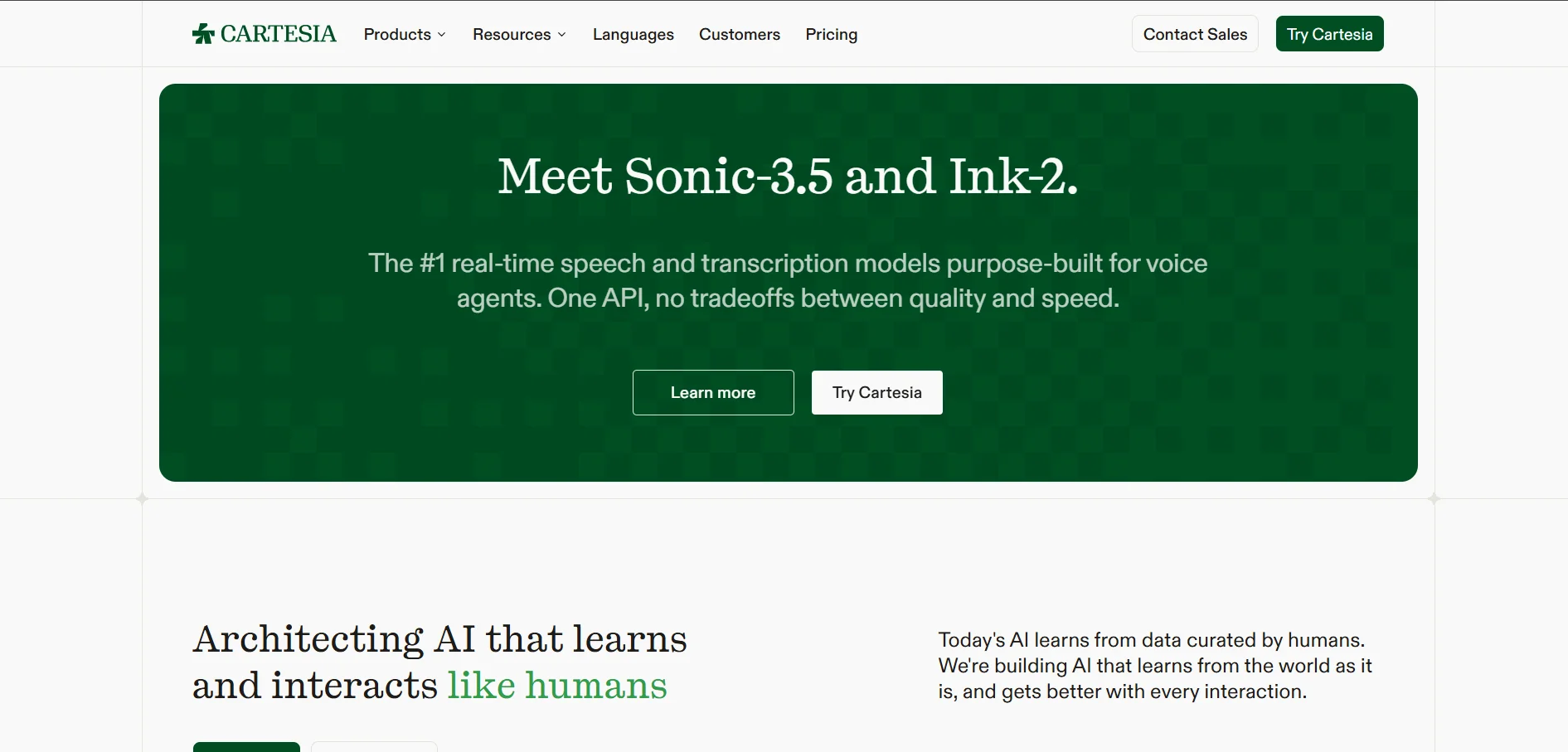
Cartesia is a real-time, ultra-low-latency text-to-speech API built specifically for voice agents and conversational AI applications, using its Sonic model architecture to deliver sub-80ms response times. It’s a strong BookFab alternative for developers building phone agents, chatbots, or interactive voice experiences rather than pre-recorded content.
Pricing is credit- and usage-based rather than flat-rate, with character-based TTS billing plus separate per-minute charges for voice agent telephony. This granular model rewards high-volume technical teams with better rates at scale but can be harder for casual users to predict compared to simple subscription tiers.
Pros
- Industry-leading low-latency performance
- Instant voice cloning from the Pro tier
- Scales well for real-time voice agent apps
Cons
- Complex usage-based pricing model
- Not ideal for non-developers
- Free tier excludes commercial use
11. Speechify
Free Trial & Pricing
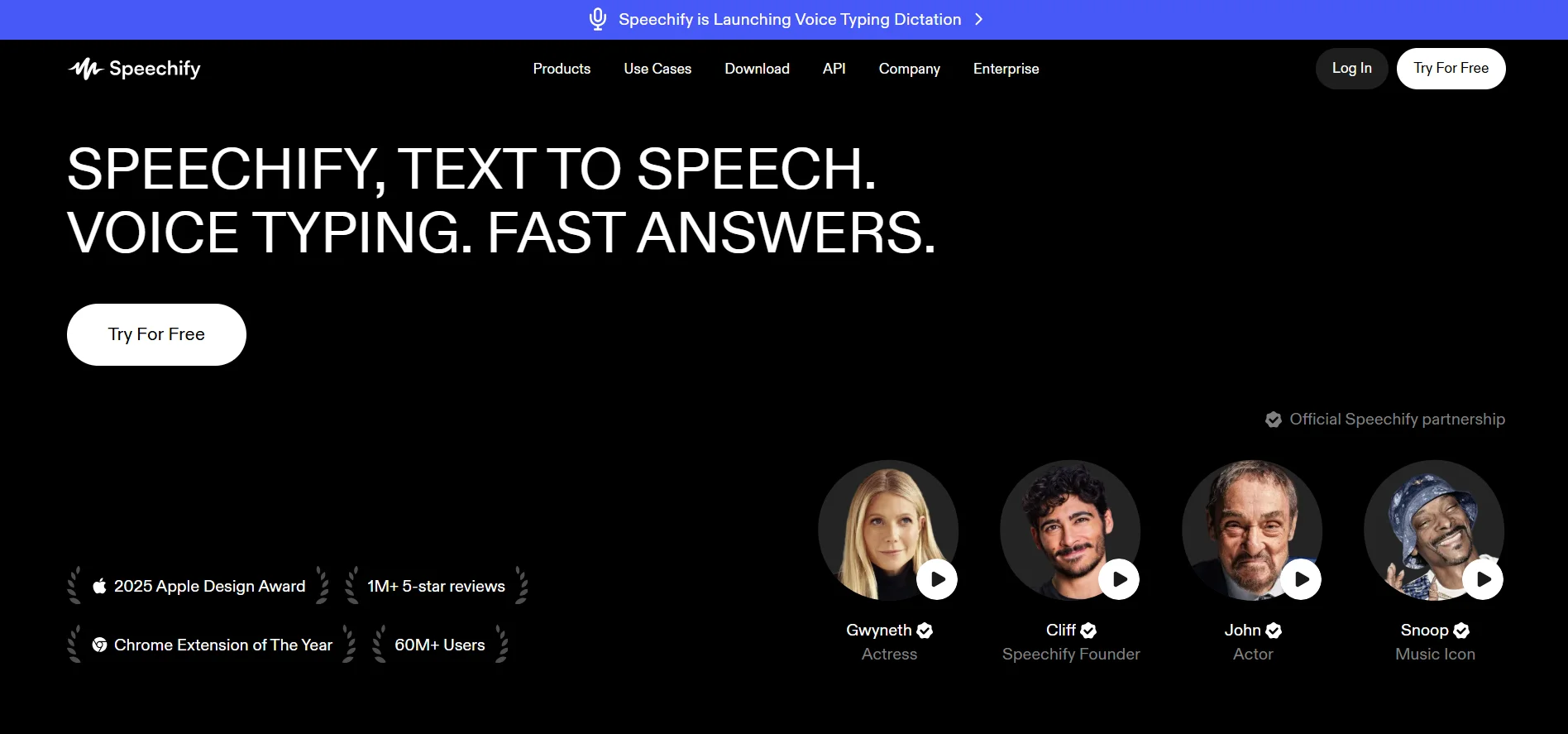
Speechify is best known as a text-to-speech reading tool designed for accessibility, helping users with ADHD, dyslexia, or visual impairments consume written content as audio at speeds up to 4.5x. Its Studio line extends this into commercial-grade voiceover creation, making it a flexible BookFab alternative spanning both personal and creator use cases.
The Chrome extension and mobile apps make it easy to listen to articles, PDFs, and Google Docs on the go, while OCR scanning converts physical text into audio. Studio Creator unlocks commercial rights and higher-quality voices for professional content, though the jump from Studio Starter to Studio Creator represents a significant price increase.
Pros
- Excellent accessibility-focused features
- Available across web, mobile, and browser extension
- Free plan is genuinely usable for light readers
Cons
- Commercial voiceover tools cost extra beyond reading features
- Word/character limits unclear at higher usage
- Studio Creator pricing jump is steep
| Alternative | Description |
|---|---|
| VEED | Browser-based video editor with AI subtitles, translation, and voice tools for creators and teams. |
| PlayHT | Dedicated AI voice generator with 800+ voices, cloning, and a developer API. |
| Podcastle | All-in-one podcast and video recording, editing, and AI voice platform. |
| Fliki | Script-to-video generator combining AI voiceover with matched stock footage. |
| Lovo.ai | Full content studio bundling TTS, voice cloning, video editing, and AI writing. |
| WellSaid Labs | Enterprise-grade, ethically sourced voice avatars for corporate and training content. |
| Minimax | Multimodal AI platform with API-first, pay-as-you-go voice synthesis. |
| Supertone Play | Hyperrealistic, emotionally expressive TTS focused on Korean, Japanese, and English. |
| Pixbim | Suite of one-time-purchase desktop AI tools for voice, photo, and video editing. |
| Cartesia | Ultra-low-latency real-time TTS API built for voice agents and conversational AI. |
| Speechify | Accessibility-focused text-to-speech reader with a commercial Studio voiceover tier. |
Conclusion
Choosing the right BookFab alternative ultimately comes down to your specific use case. If you need full video editing, VEED or Fliki are strong picks, while PlayHT, Lovo.ai, and WellSaid Labs cater better to pure voiceover and narration work. Developers building real-time voice agents should look at Cartesia or Minimax, and Podcastle remains a great all-in-one option for podcasters.
Budget-conscious users who prefer one-time payments over subscriptions may find Pixbim’s desktop tools appealing, while Speechify stands out for accessibility-driven reading. Whichever platform you choose, most offer free trials or free tiers, so testing a few options before committing to a paid plan is the smartest way to find your best fit.


