

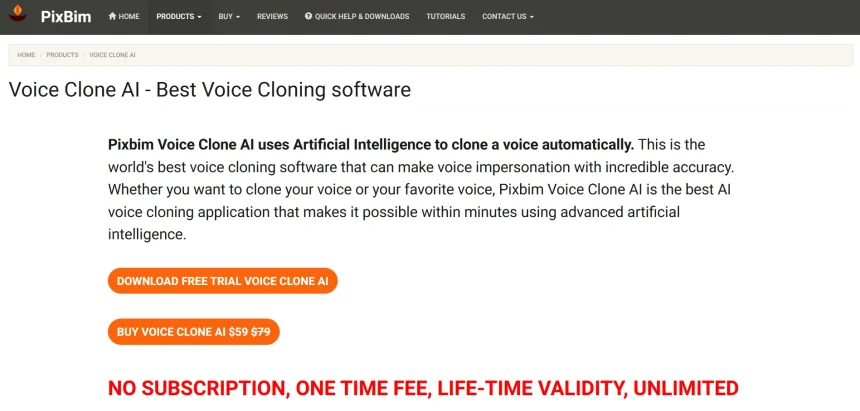
Pixbim has been a popular choice for AI-powered voice and media tools, but it isn’t the only option on the market. In this guide, we’ve rounded up 11 best Pixbim Alternatives available in 2026. Each entry covers what the platform does best, its free trial availability, current pricing plans, and a balanced look at the pros and cons so you can pick the tool that fits your workflow and budget.
1. PlayHT
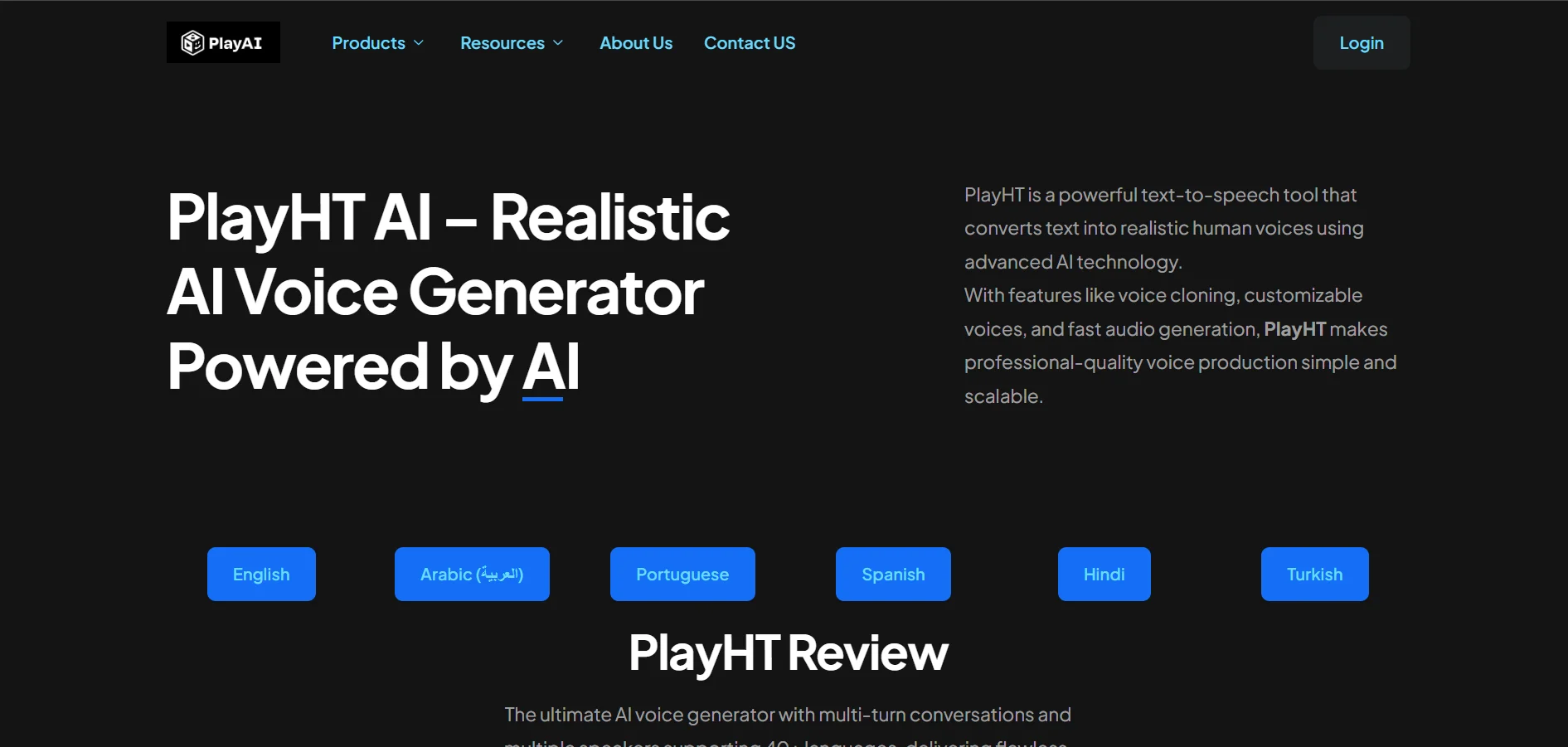
PlayHT is a long-standing AI voice generator known for its library of over 800 realistic voices spanning 140+ languages. While PlayHT does not offer a dedicated free trial for its premium plans, new users get a free tier with 12,500 characters monthly. Its Professional plan starts around $39/month, giving 50,000 words with commercial usage rights.
💰 PlayHT Pricing Plans
- Free: 12,500 characters/month, no commercial use
- Professional: $39/month — 50,000 words/month
- Premium: $99/month — unlimited voice generation
- Business: Custom pricing for teams and enterprises
Beyond raw text-to-speech, PlayHT includes instant voice cloning, a pronunciation library using IPA notation, and an API for developers who want to embed speech generation directly into their apps. It supports MP3 and WAV exports at sample rates up to 48kHz, making it suitable for podcasts, e-learning content, and YouTube narration where audio quality genuinely matters to the final product.
✅ Pros
- Huge voice and language library
- Instant voice cloning available
- High-quality audio export options
- Developer-friendly API access
❌ Cons
- No true free trial on premium tiers
- Commercial use restricted on free plan
- Pricing can climb quickly at scale
2. iSpeech
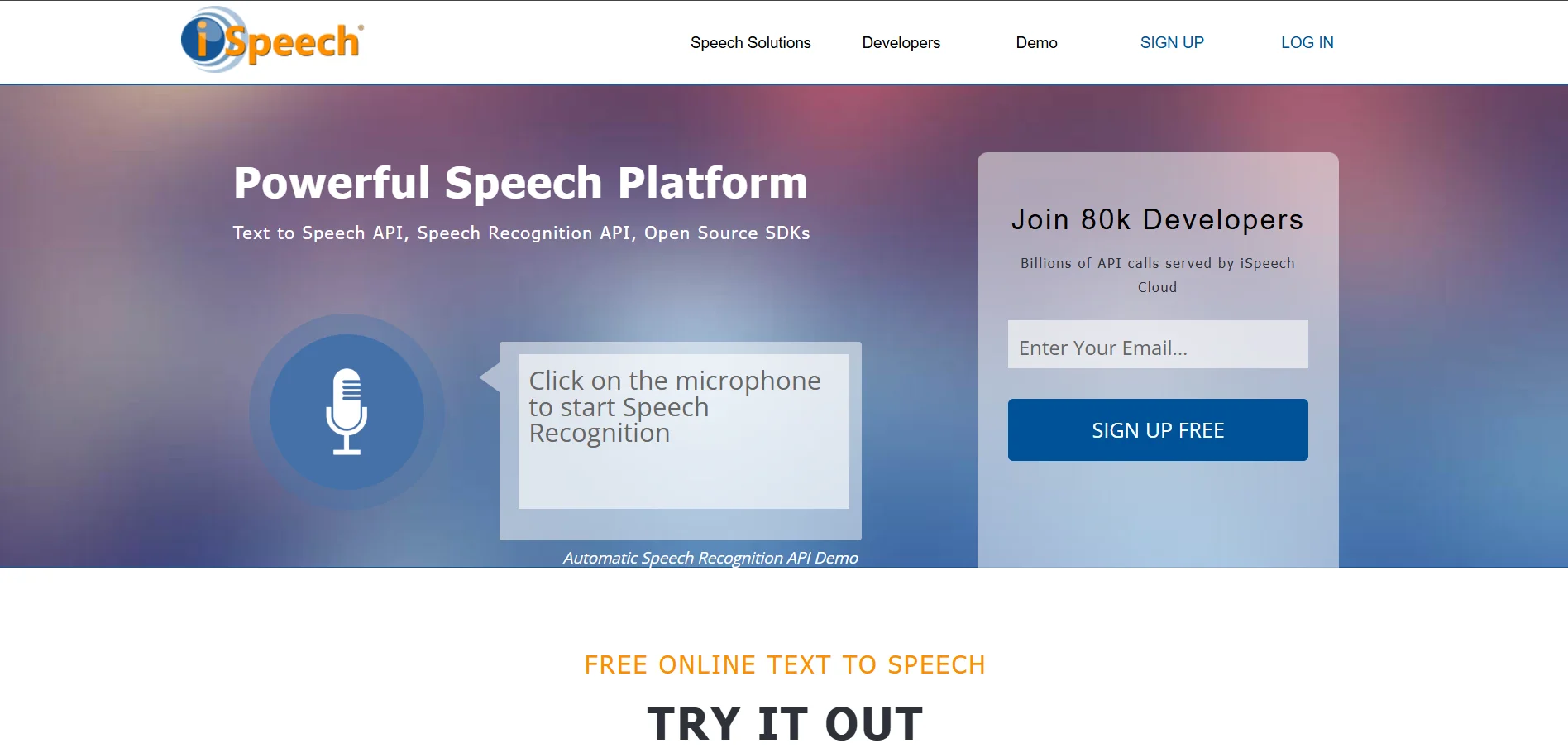
iSpeech is a browser-based text-to-speech platform built for speed and simplicity, offering 21+ expressive voices without requiring any software installation. iSpeech provides a free “Free Voice” option that lets you proofread scripts without using paid credits, functioning as a built-in trial before committing to a subscription. Paid plans are quote-based through their official pricing page.
💰 iSpeech Pricing Plans
- Free Voice: Unlimited proofreading, no premium voice access
- Pro Plan: 250,000 characters/month (lifetime deals also available)
- API/Enterprise: Custom pricing based on usage volume
iSpeech supports 32 languages and focuses heavily on ease of use, positioning itself for creators who don’t want a steep learning curve. It’s a solid pick for voiceovers, e-learning modules, and accessibility tools. The platform continues to expand its voice and language catalog, though its interface and voice library are noticeably smaller than some larger competitors in this list.
✅ Pros
- Simple browser-based workflow
- Free proofreading voice before paying
- No steep learning curve
- Lifetime license options available
❌ Cons
- Smaller voice library than rivals
- Monthly character limits on Pro plan
- Less advanced emotional control
3. Cartesia
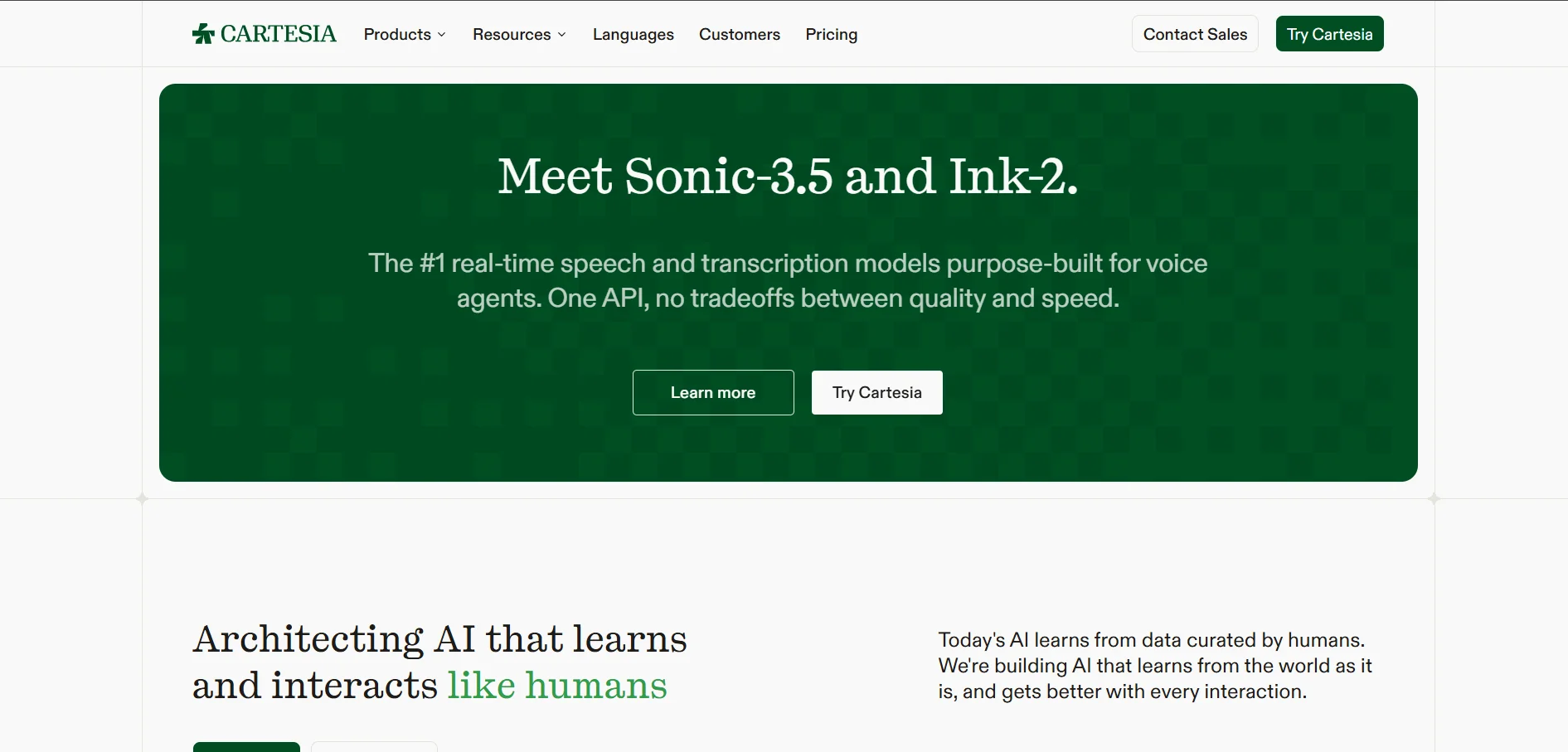
Cartesia is a real-time voice AI platform built for ultra-low latency applications like voice agents and conversational AI. Cartesia offers a free plan with 20,000 monthly credits so you can test the Sonic model before subscribing. Paid tiers begin at the Pro plan for around $5/month, scaling up through Startup and Scale tiers for higher-volume needs.
💰 Cartesia Pricing Plans
- Free: $0/month — 20,000 credits, non-commercial
- Pro: $5/month — 100,000 credits, voice cloning unlocked
- Startup: $39/month — 1.25M credits
- Scale: $239/month — 8M credits, lower telephony rates
- Enterprise: Custom pricing
Cartesia’s Sonic model delivers sub-80ms latency, making it a favorite among developers building phone agents and interactive voice assistants where response speed directly affects user experience. It bills TTS by character-equivalent credits and voice agent minutes separately. While it isn’t optimized for long-form narration the way some content-focused tools are, it is currently one of the fastest voice APIs on the market.
✅ Pros
- Industry-leading low latency
- Generous free tier to start testing
- Instant voice cloning from 3 seconds of audio
- Strong for real-time voice agents
❌ Cons
- Credit system can be confusing
- Fewer languages than some competitors
- Less suited for long-form content creation
4. Speechify
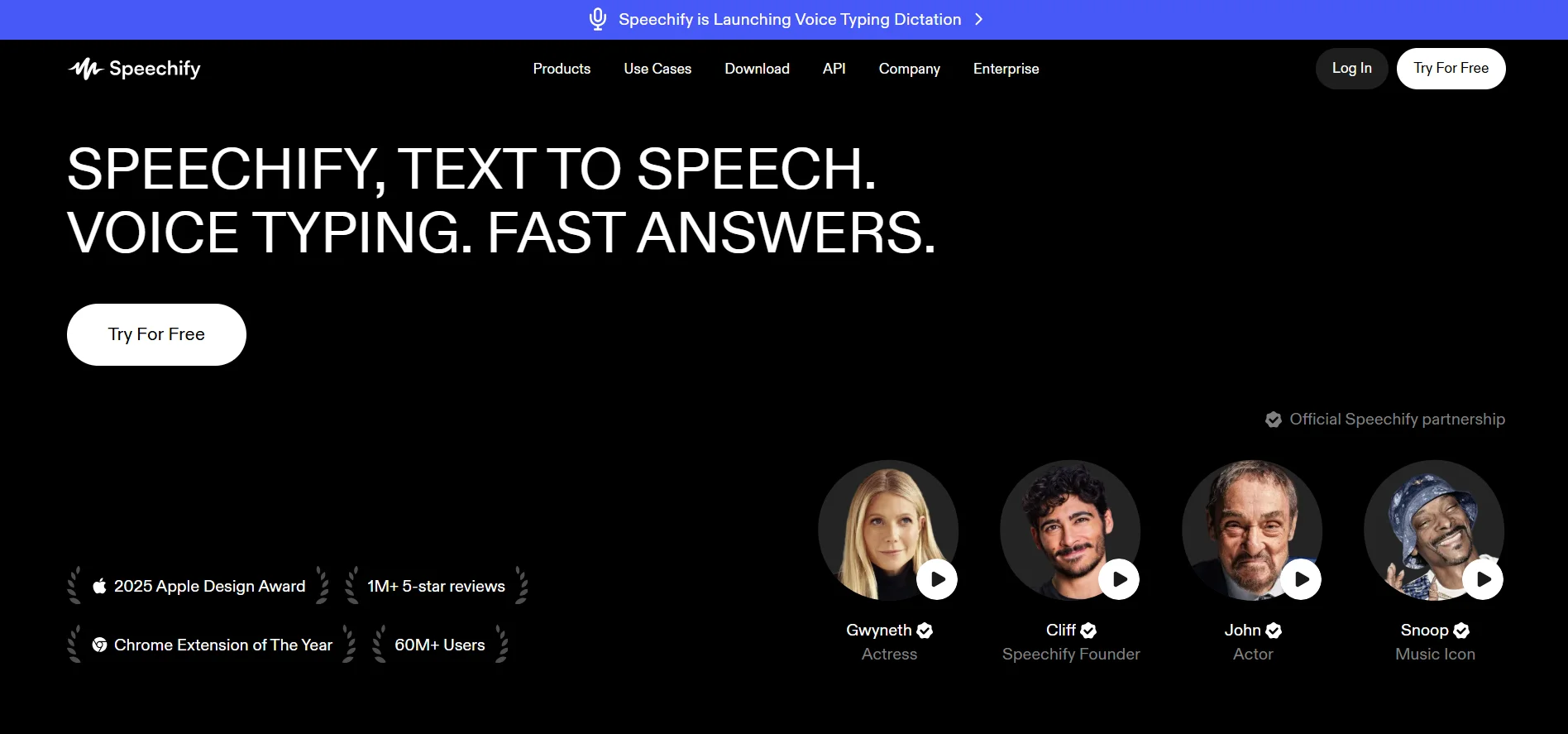
Speechify is best known as a listening app that converts articles, PDFs, and documents into natural-sounding speech, and it’s the top-rated text-to-speech app in the App Store. Speechify offers a free trial period on its premium plan, letting users test premium voices and speed controls before committing. Pricing details are listed openly on the official Speechify pricing page.
💰 Speechify Pricing Plans
- Free: Basic voices with limited features
- Premium (Monthly): Free trial included, then billed monthly
- Premium (Annual): Discounted yearly rate
- Speechify API/SDK: Custom enterprise pricing
Speechify shines for personal productivity use cases: reading emails, Google Docs, PDFs, and web pages aloud with adjustable playback speeds. It’s available across iOS, Android, Chrome, and Safari, which makes it convenient for users who want to consume content hands-free while multitasking. It’s less focused on studio-grade voiceover production compared to tools built specifically for content creators.
✅ Pros
- Free trial available on Premium
- Cross-platform apps and browser extensions
- Great for reading PDFs and documents aloud
- Adjustable playback speed and highlighting
❌ Cons
- Not designed for professional voiceover projects
- Fewer customization tools than studio-focused platforms
- Subscription required for full voice library
5. BookFab
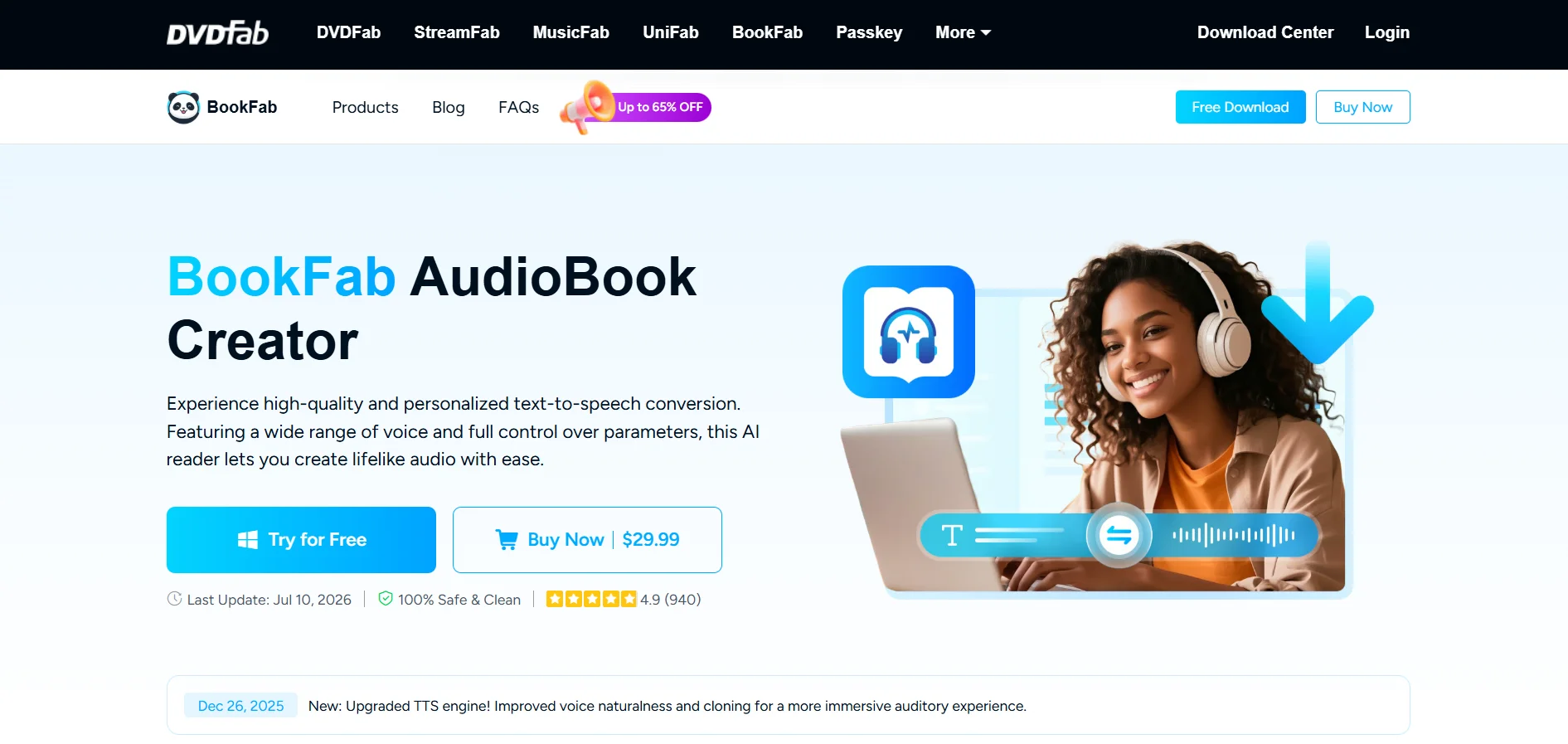
BookFab is primarily known for eBook and audiobook conversion tools but also includes text-to-speech capabilities for narrating digital content. BookFab offers a free trial that lets users convert a limited number of files before purchasing, making it easy to test quality first. Subscription pricing starts around $29.99/month, with lifetime license options also available.
💰 BookFab Pricing Plans
- Free Trial: Limited free conversions/downloads
- 1-Month License: ~$39.99
- Monthly Subscription: From $29.99/month
- Lifetime License: ~$129.99 one-time payment
BookFab is a strong pick for anyone converting eBooks or audiobooks into alternative formats with narration support, rather than for pure voiceover production. It offers modular purchase options, including bundle packages that combine multiple converter tools. Some users note that its modular pricing model can feel restrictive compared to flat, all-inclusive licensing offered by competitors in the space.
✅ Pros
- Free trial before purchase
- Lifetime license option available
- Useful for eBook/audiobook conversion workflows
- Bundle packages for multiple tools
❌ Cons
- Modular pricing can get expensive
- Not a dedicated voice generation platform
- Refund policy window is relatively short
6. Uberduck
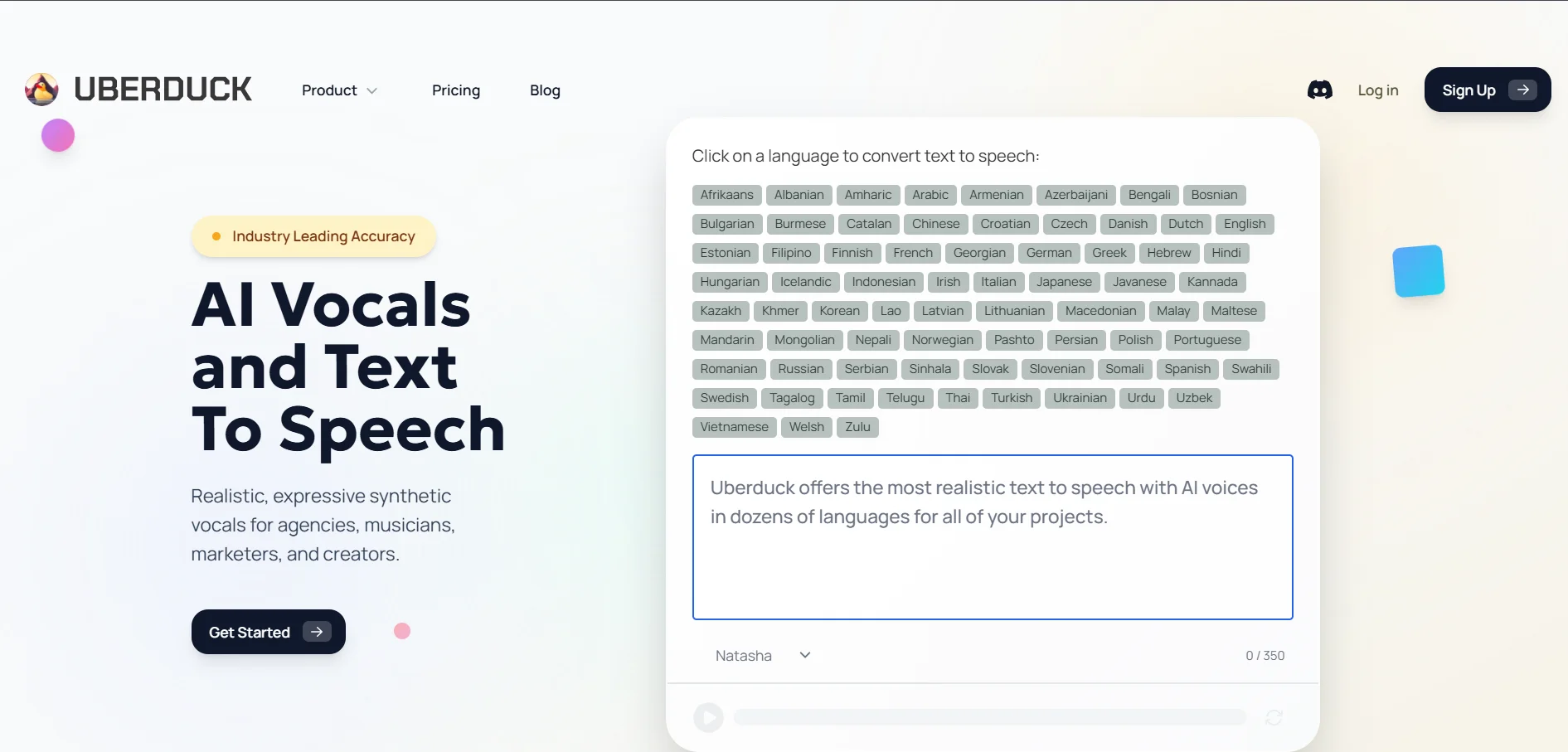
Uberduck is a quirky AI voice platform with a library of 5,000+ voices, including celebrity-style and fictional character voices, popular among TikTokers and musicians. Uberduck offers a free forever plan with 300 monthly render credits, functioning as an ongoing trial before upgrading. Paid plans start as low as $2/month for the Starter tier.
💰 Uberduck Pricing Plans
- Free: 300 monthly credits, non-commercial
- Starter: $2–4/month — non-commercial, private voices
- Creator: $5–10/month — commercial license, API access
- Pro: $30–60/month — larger credit pool, faster support
- Enterprise: Custom pricing
Uberduck’s biggest draw is its novelty voice library and AI rap/singing generation features, which set it apart from more corporate-sounding TTS tools. It’s a fun, low-cost option for social media content and music experimentation. However, voice naturalness and commercial licensing clarity lag behind more polished competitors, so it’s better suited to casual and creative projects than professional broadcast work.
✅ Pros
- Very affordable entry-level pricing
- Unique celebrity-style and character voices
- AI rap and singing generation
- Free forever tier available
❌ Cons
- Voice quality less consistent than top rivals
- Commercial licensing can be unclear
- Not ideal for professional broadcast use
7. MiniMax
Minimax Audio is an enterprise-grade voice synthesis platform powered by the Speech-2.8 model family, known for topping several TTS quality benchmarks. Minimax offers a free tier with 10,000–4,000 daily credits so users can test voice quality before subscribing. Paid plans start around $5/month for the Starter tier.
💰 Minimax Pricing Plans
- Free: Daily free credits, no card required
- Starter: $5/month — 100,000 credits
- Standard: $30/month — 300,000 credits
- Pro: $99/month — 1.1M credits
- Scale: $249/month — 3.3M credits
Minimax supports 300+ voices across 40+ languages and can handle long-form synthesis of up to 200,000 characters in a single request, making it well suited for audiobooks and long-format narration. Its pay-as-you-go API pricing is competitive at scale for high-volume producers. The tradeoff is that its interface and ecosystem are less mature than platforms that have been serving content creators for longer.
✅ Pros
- Top-ranked voice quality benchmarks
- Supports very long single-request synthesis
- Competitive per-character API pricing at scale
- Usable free tier for genuine testing
❌ Cons
- Interface less polished than established rivals
- Credit system takes time to understand
- Higher-tier plans get expensive quickly
8. KikiVoice
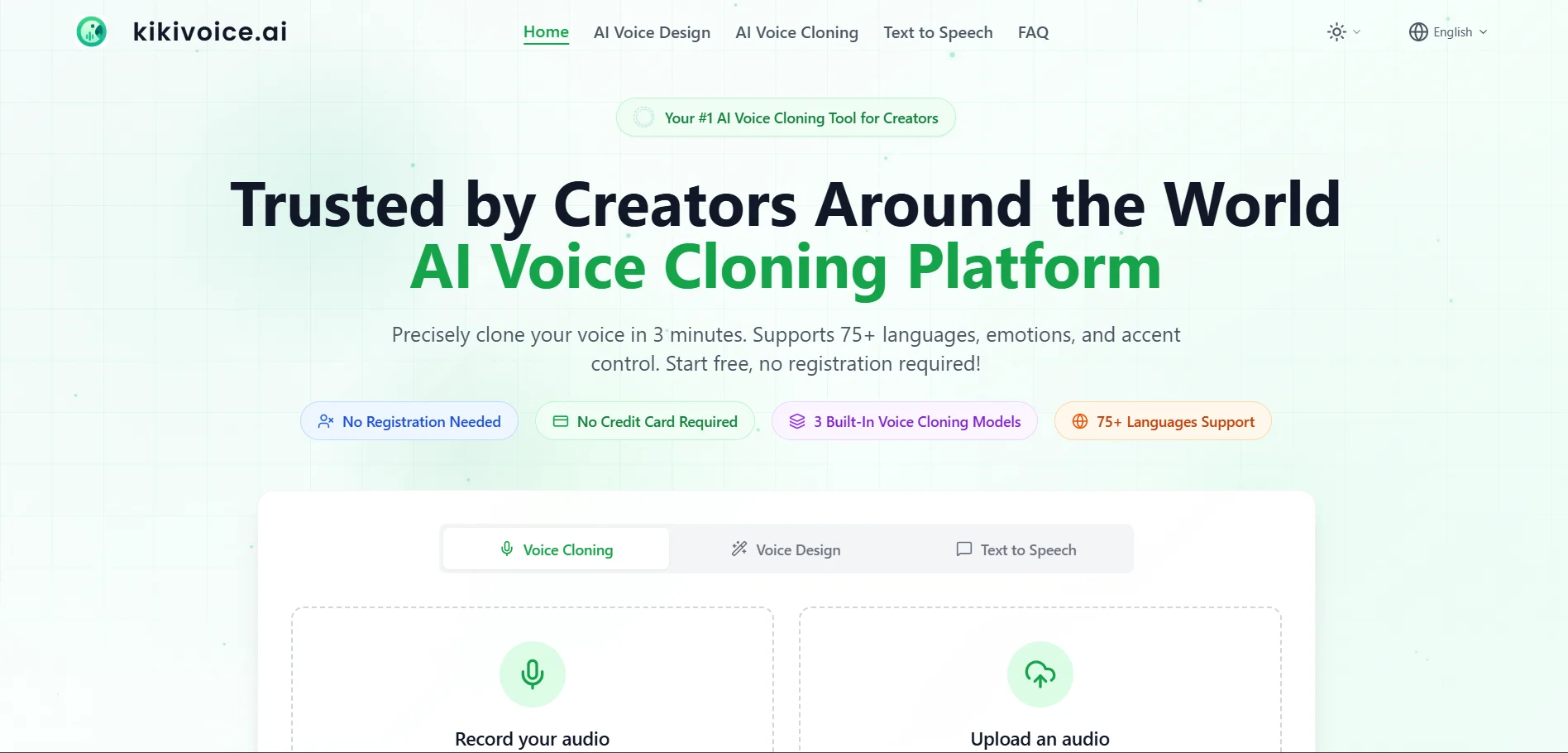
KikiVoice is a free, no-signup AI voice cloning platform that lets users clone a voice from just a few seconds of audio directly in the browser. Because it requires no registration to start, its free tier effectively works as an ongoing trial, with premium plans reported to start around $10–15/month for higher limits.
💰 KikiVoice Pricing Plans
- Free: Weekly resetting credits, no login required
- Premium: From $10–15/month — higher character limits, priority processing
- Enterprise: Custom pricing with governance controls
KikiVoice offers three specialized models — Kiki Core for speed, Kiki Pro for emotion-controlled synthesis, and Kiki Multilingual for cross-lingual generation across 75+ languages. Its no-login, instant-access approach makes it one of the fastest ways to test voice cloning without commitment. The tradeoff is a smaller feature set and less enterprise polish compared to larger, established voice platforms.
✅ Pros
- No sign-up required to start
- Fast voice cloning from short samples
- Supports 75+ languages
- Free tier resets weekly
❌ Cons
- Limited advanced editing features
- Newer platform with a smaller track record
- Premium pricing details less transparent
9. Gradium
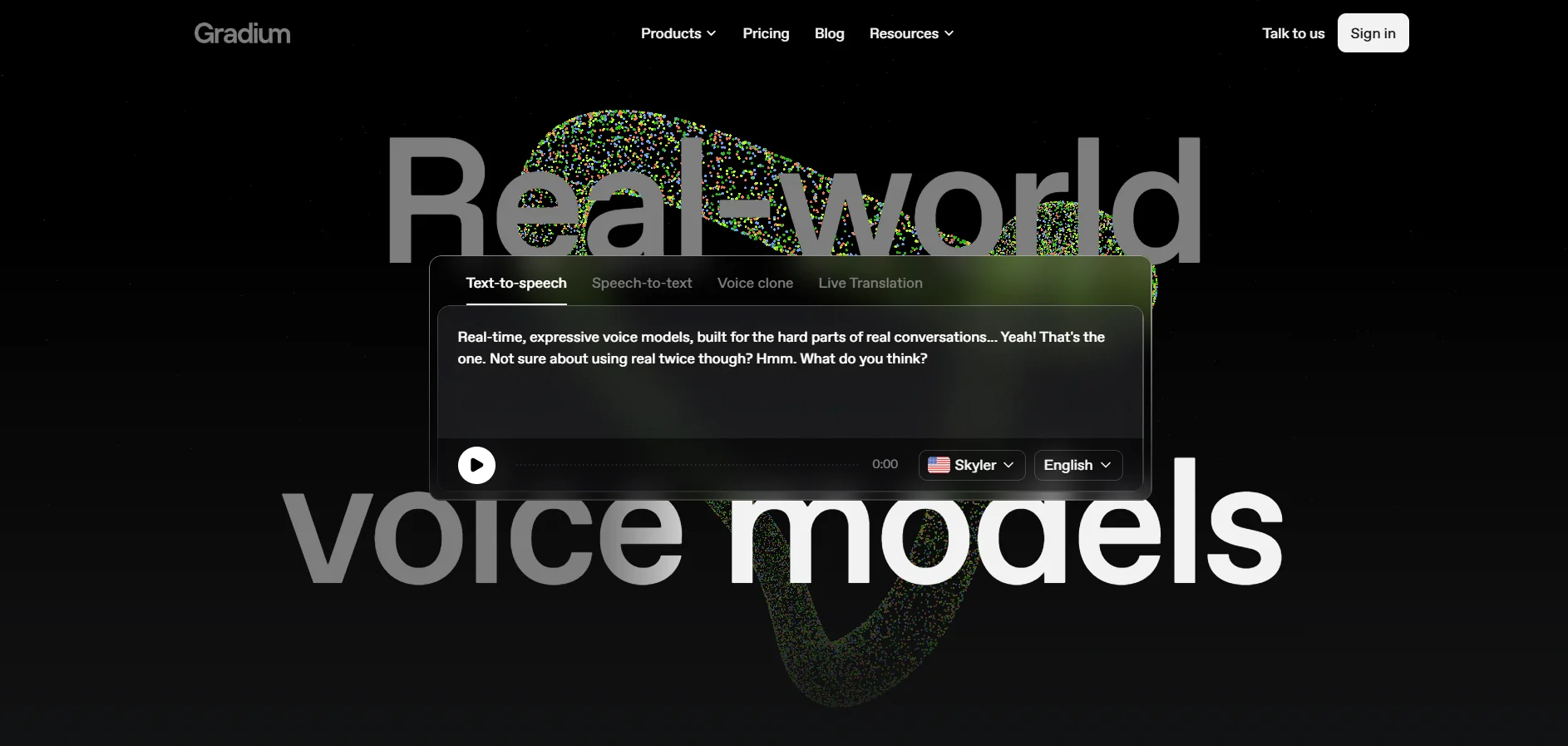
Gradium is a real-time voice AI infrastructure company built by former DeepMind and Meta researchers, offering text-to-speech, speech-to-text, and voice cloning through one API. Gradium provides a genuine free tier with about 45,000 credits monthly (roughly one hour of TTS) and 5 free instant voice clones, with paid plans starting at $13/month.
💰 Gradium Pricing Plans
- Free: $0/month — 45,000 credits, 5 voice clones
- XS: $13/month
- S: $43/month
- M: $340/month — includes 5 Pro Voice Clones
- L: $1,615/month — includes 20 Pro Voice Clones
Gradium is aimed squarely at developers building voice agents that need low-latency, production-grade performance, with on-device and on-premise deployment options for regulated industries. Its Instant Voice Clone feature has scored highly in blind benchmark tests. Language support is currently limited to English, French, German, Spanish, and Portuguese, which is narrower than some global competitors.
✅ Pros
- Strong benchmark performance for cloning
- On-device and on-premise deployment options
- Generous, genuinely usable free tier
- No feature gating on paid plans
❌ Cons
- Only 5 supported languages currently
- Higher tiers are expensive for small teams
- Primarily developer-focused, not creator-friendly UI
10. Supertone Play
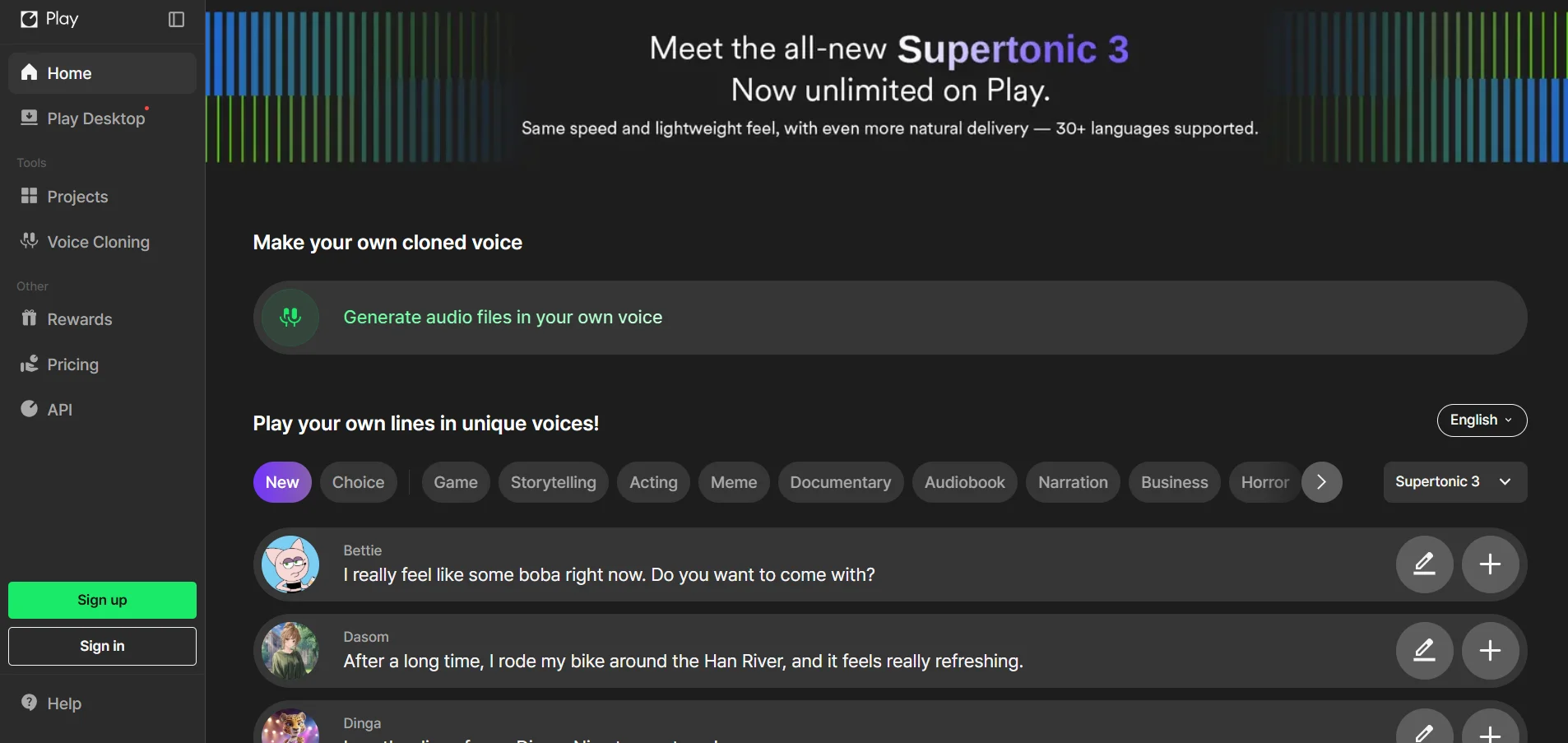
Supertone Play is a text-to-speech tool developed by HYBE-backed Supertone, focused on hyperrealistic and emotionally expressive voices in Korean, Japanese, and English. Supertone occasionally runs limited-time free promotional access to test premium voices, and its standard subscription tiers begin around $2.99/month for the Starter plan.
💰 Supertone Play Pricing Plans
- Starter: $2.99/month — 2,000 credits
- Creator: $14.99/month — 10,000 credits
- Pro: $79.99/month — 50,000 credits
- Enterprise: Custom pricing for voice creation
Supertone Play stands out for its emotional nuance and language-switching capability while preserving the same character voice, which is popular for gaming and virtual character work. Its 10% annual billing discount adds long-term value for regular users. The major drawback is limited language support beyond Korean, Japanese, and English, along with reported compatibility issues in some third-party audio software.
✅ Pros
- Highly expressive, emotional voice output
- Affordable entry-level pricing
- Language-switching within the same character voice
- Annual billing discount available
❌ Cons
- Limited to three core languages
- Reported compatibility issues with some DAWs
- No refund policy on digital purchases
11. Lovo.ai
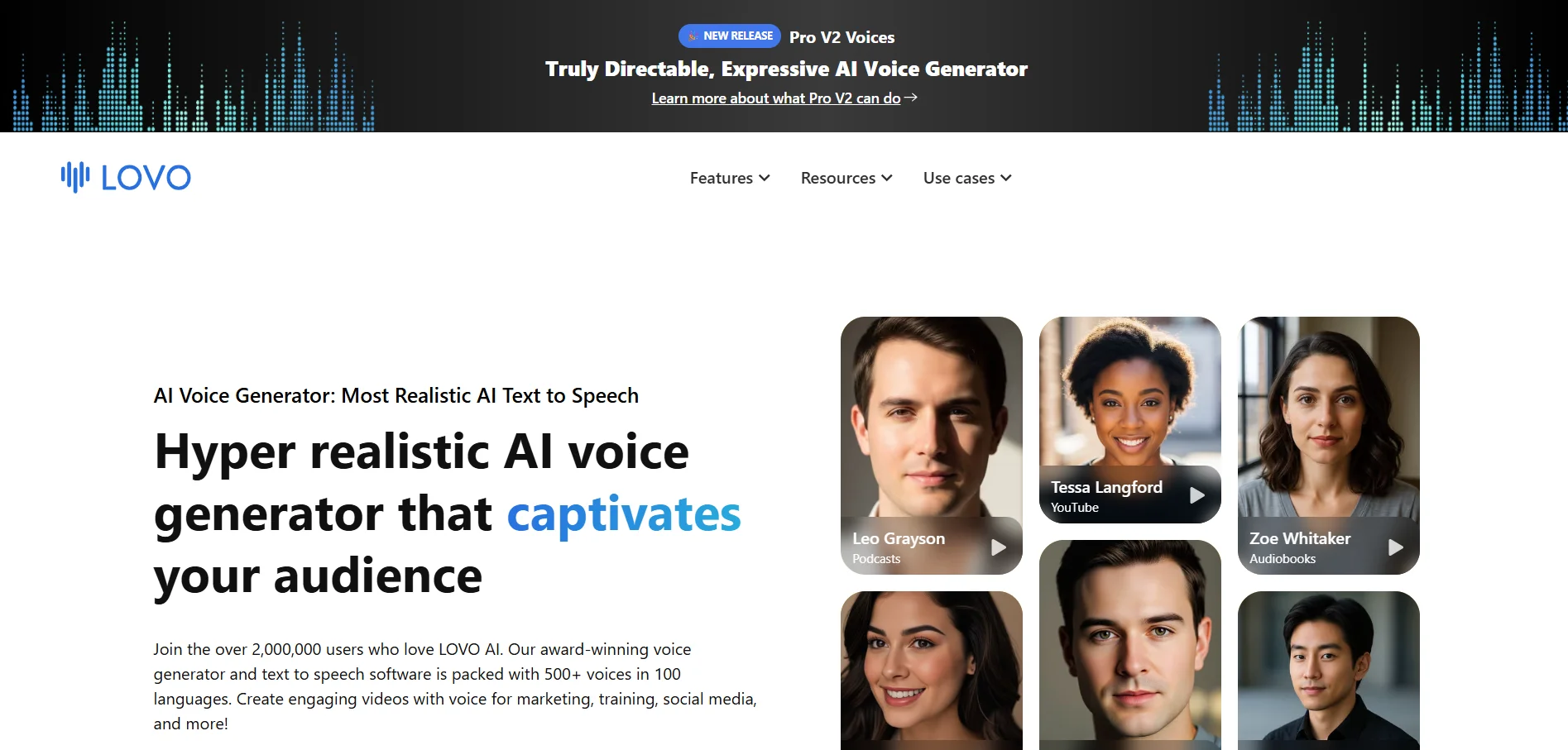
Lovo.ai (Genny) is an all-in-one AI voice and video platform offering 500+ voices across 100+ languages, plus a built-in video editor and script writer. Lovo offers a 14-day free trial on its Pro plan with no credit card required, alongside a limited free tier for basic testing. The Basic plan starts at $24/month when billed annually.
💰 Lovo.ai Pricing Plans
- Free: Limited downloads per month, watermarked
- Basic: $24/month — commercial rights, voice cloning
- Pro: $48/month — extended minutes, priority queue
- Pro+: $149/month — high-volume content production
- Enterprise: Custom pricing with SLAs
Lovo’s biggest strength is bundling TTS with a full content creation suite, including subtitles, AI art, and video editing, replacing several separate subscriptions for creators and marketing teams. Its Pro V2 directable voices let users control emotion and accent with natural-language tags. On the downside, Lovo has a notably low Trustpilot rating, with user complaints about billing issues and slow customer support response times.
✅ Pros
- All-in-one voice, video, and subtitle suite
- 14-day free Pro trial, no card required
- Voice cloning on all paid plans
- Directable emotion and accent control
❌ Cons
- Mixed reputation for billing and support issues
- Free tier heavily watermarked and limited
- Higher tiers needed for serious volume
Comparison Table
| Alternative | Description |
|---|---|
| PlayHT | Large voice library with 800+ voices and 140+ languages, ideal for creators needing broad language coverage and cloning. |
| iSpeech | Simple browser-based TTS tool with a free proofreading voice and no installation required. |
| Cartesia | Ultra-low latency voice AI built for real-time voice agents and conversational applications. |
| Speechify | Listening app that converts articles, PDFs, and documents into natural speech across devices. |
| BookFab | eBook and audiobook conversion suite with narration and format-conversion tools. |
| Uberduck | Novelty AI voice platform with celebrity-style voices, rap generation, and low-cost plans. |
| Minimax | Enterprise-grade voice synthesis with top benchmark scores and long-form audio support. |
| KikiVoice | No-signup instant voice cloning tool supporting 75+ languages directly in the browser. |
| Gradium | Developer-focused real-time voice API with on-device deployment and strong cloning benchmarks. |
| Supertone Play | Emotionally expressive TTS platform focused on Korean, Japanese, and English voices. |
| Lovo.ai | All-in-one voice, video, and subtitle creation suite with a 14-day free Pro trial. |
Conclusion
Choosing the right Pixbim alternative ultimately comes down to your specific use case. Developers building real-time voice agents will likely lean toward Cartesia or Gradium, while content creators producing videos and audiobooks may prefer the all-in-one convenience of Lovo.ai or the vast voice library of PlayHT. Budget-conscious users experimenting with fun, novelty voices can start with Uberduck or KikiVoice at little to no cost.


