

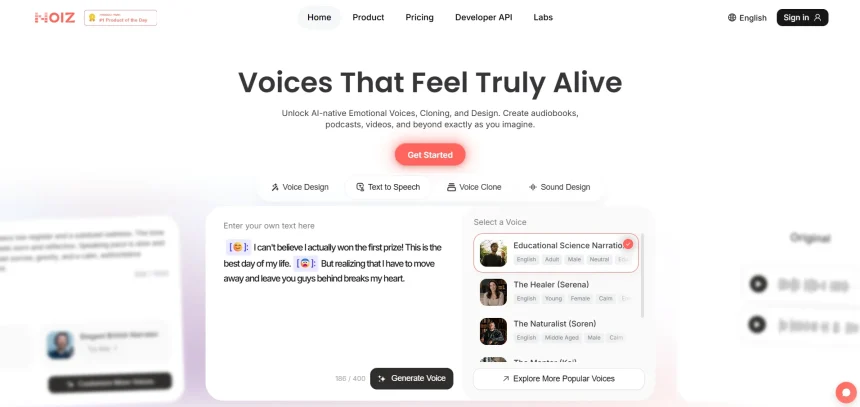
Noiz.ai has carved out a place among AI voice generation tools, but it is far from the only option available to creators, developers, and businesses who need synthetic voices for videos, podcasts, apps, or games. Depending on your budget, the language support you need, or whether you want a simple text-to-speech tool versus a full voice-cloning API, another platform may serve you better. Below is a detailed roundup of 11 Noiz.ai Alternatives, covering their free trials, pricing plans, and the pros and cons that matter most when choosing a voice AI platform in 2026.
Supertone Play
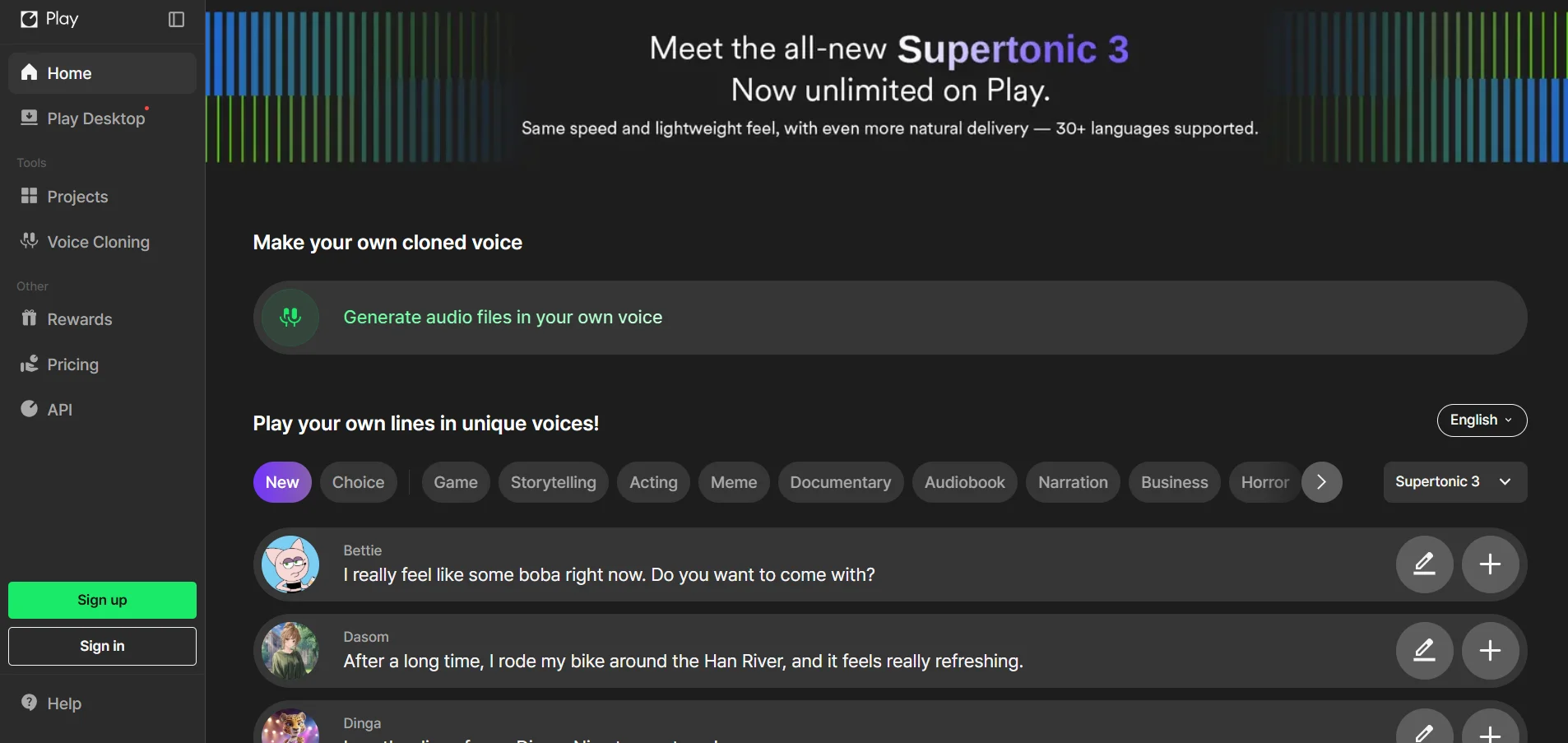
Supertone Play offers a free tier to test its multilingual, emotionally expressive voices before committing to a paid plan, and it recently ran a limited-time unlimited promotion for new signups. Paid subscriptions are credit-based: Starter costs $2.99/month, Creator is $14.99/month, and Pro runs $79.99/month, each unlocking more cloning credits and voice slots, with a 10% discount available on annual billing.
Backed by HYBE, Supertone Play focuses heavily on Korean, Japanese, and English voices with strong emotional nuance, making it popular for music, gaming, and content creation in those markets. Its Enterprise tier unlocks custom voice creation, while the API supports developers building voice features into apps, though language coverage outside its three core markets remains limited.
Pricing: Starter $2.99/mo, Creator $14.99/mo, Pro $79.99/mo, Enterprise custom.
| Plan | Price | Best For |
|---|---|---|
| Starter | $2.99/month | Casual testing and small projects |
| Creator | $14.99/month | Content creators needing more credits |
| Pro | $79.99/month | Heavy voice cloning users |
| Enterprise | Custom | Custom voice development |
Pros
- Expressive, emotionally rich voice output
- Affordable entry-level pricing
- Annual billing discount available
Cons
- Limited language support outside KR/JP/EN
- Reported compatibility issues with some DAWs
- No refunds during beta pricing periods
KikiVoice
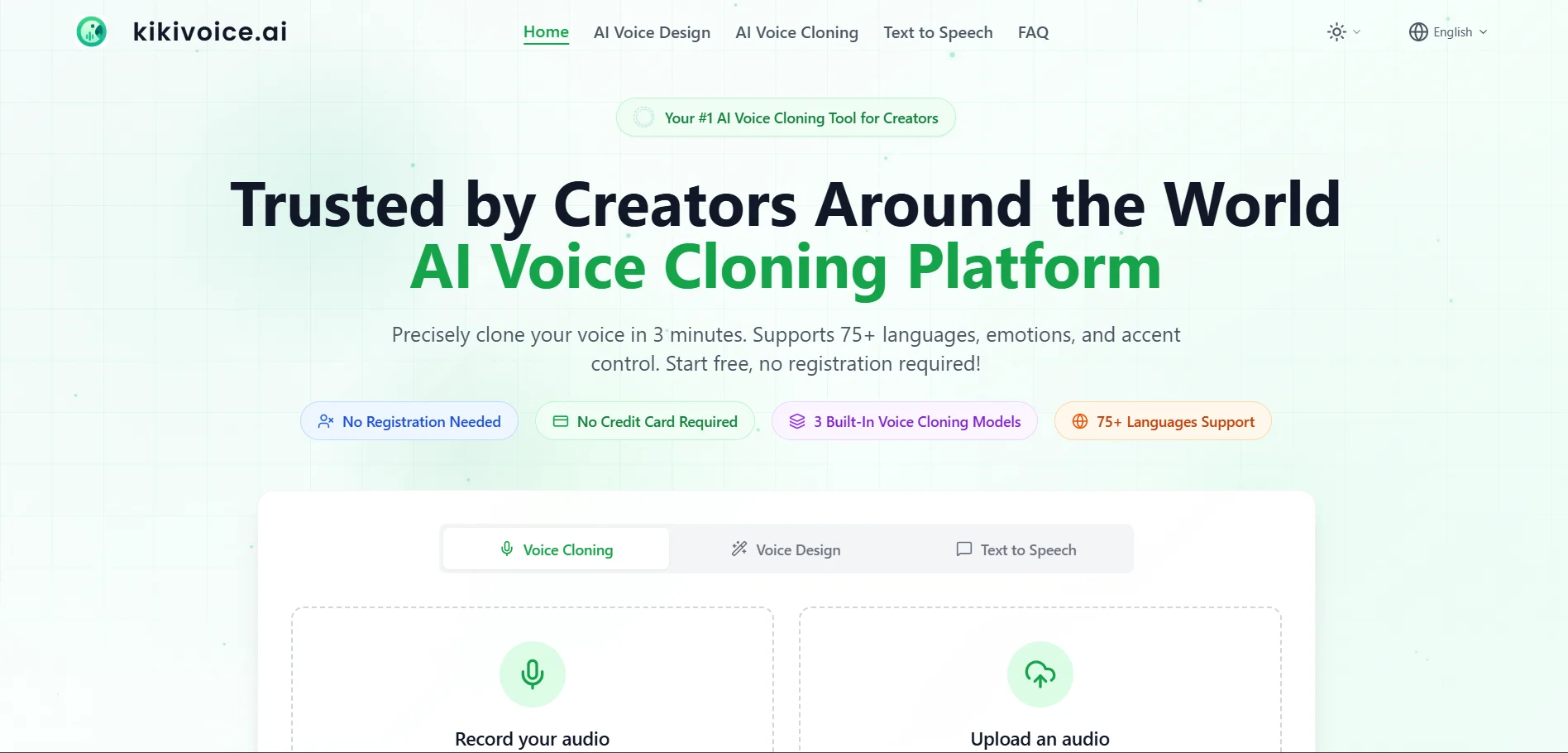
KikiVoice stands out because it requires no signup at all, letting anyone clone a voice or generate speech instantly for free with no trial limitations blocking basic use. This makes it one of the most accessible entry points on this list for creators who want to test voice cloning quality before deciding whether to pay for extended commercial features.
Paid plans begin around $10–15/month for commercial voice cloning, API access, and priority processing, while enterprise pricing is available for larger deployments. With three specialized models (Kiki Core, Kiki Pro, and Kiki Multilingual) and support for 75+ languages, it appeals to creators who need quick, no-friction voiceovers across global markets without a steep learning curve.
Pricing: Free tier; paid commercial plans from approximately $10–15/month; Enterprise custom.
| Plan | Price | Best For |
|---|---|---|
| Free | $0/month | Testing and non-commercial use |
| Pro | ~$10–15/month | Commercial voiceovers and API access |
| Enterprise | Custom | Large-scale multilingual deployments |
Pros
- No signup required to start generating
- Supports 75+ languages
- Multiple models balancing speed and emotion
Cons
- Free tier has daily generation limits
- Less brand recognition than major competitors
- Commercial licensing details less transparent
Uberduck
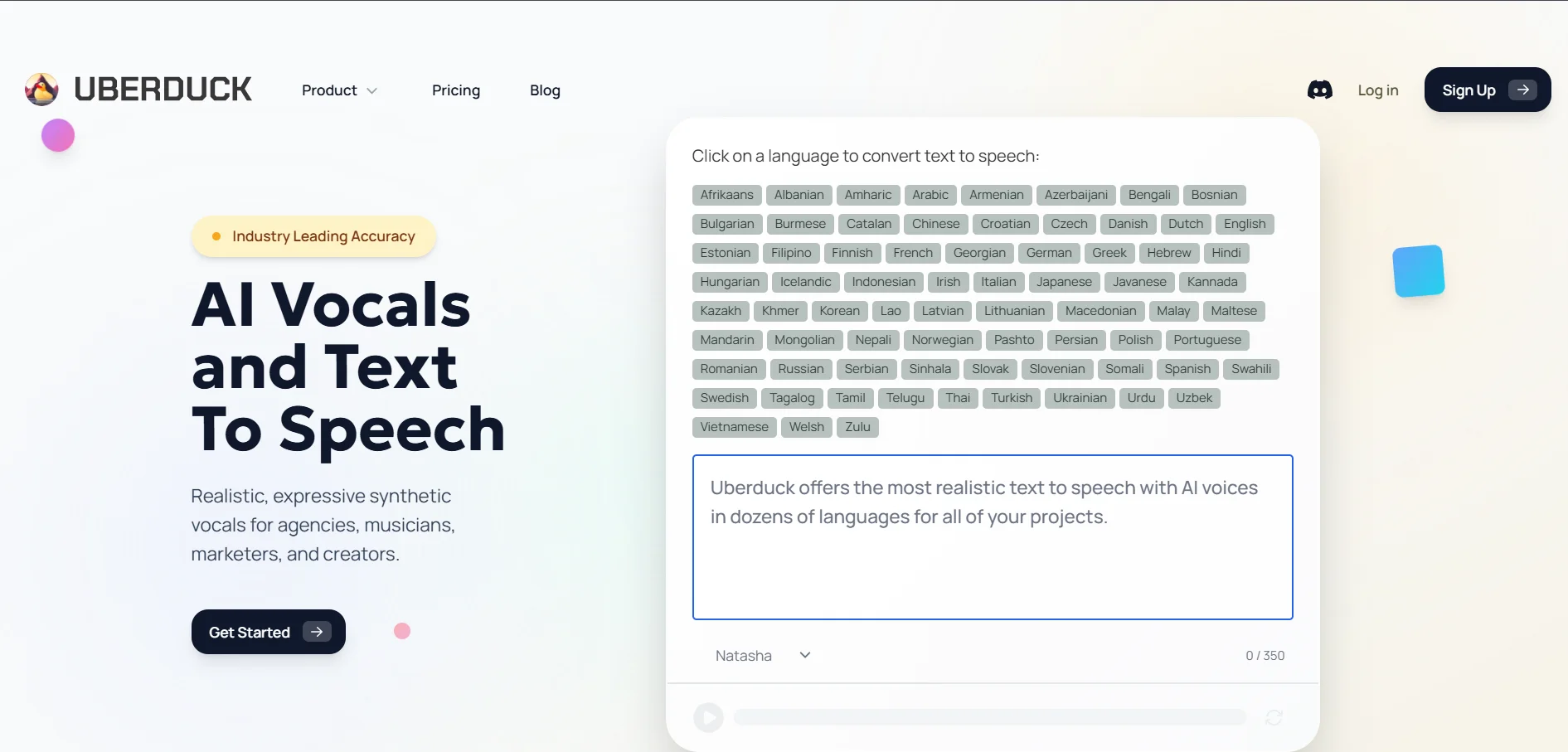
Uberduck offers a genuinely free tier with around 300 monthly render credits and access to thousands of voices, making it easy to explore before spending anything. Paid plans start at the Starter tier for about $2–4/month for non-commercial use, scaling to Creator at $5–10/month with commercial rights and API access, and Pro at $30–60/month for heavier production needs.
Uberduck’s biggest draw is its enormous novelty voice library, including celebrity-style and character voices alongside AI rap and singing tools that most competitors don’t offer. However, reviewers note inconsistent output quality compared to premium alternatives, and licensing clarity around cloned or celebrity-style voices remains murky for commercial music releases.
Pricing: Starter ~$2–4/mo, Creator ~$5–10/mo, Pro ~$30–60/mo, Enterprise custom.
| Plan | Price | Best For |
|---|---|---|
| Starter | $2–4/month | Personal, non-commercial use |
| Creator | $5–10/month | Commercial content with API access |
| Pro | $30–60/month | Large creators and businesses |
| Enterprise | Custom | Agencies and heavy-duty usage |
Pros
- Huge novelty and character voice library
- Unique AI rap and singing features
- Very low entry price
Cons
- Inconsistent voice quality reported by users
- Falls behind ElevenLabs and Murf on realism
- Commercial licensing for cloned voices is unclear
Murf.AI
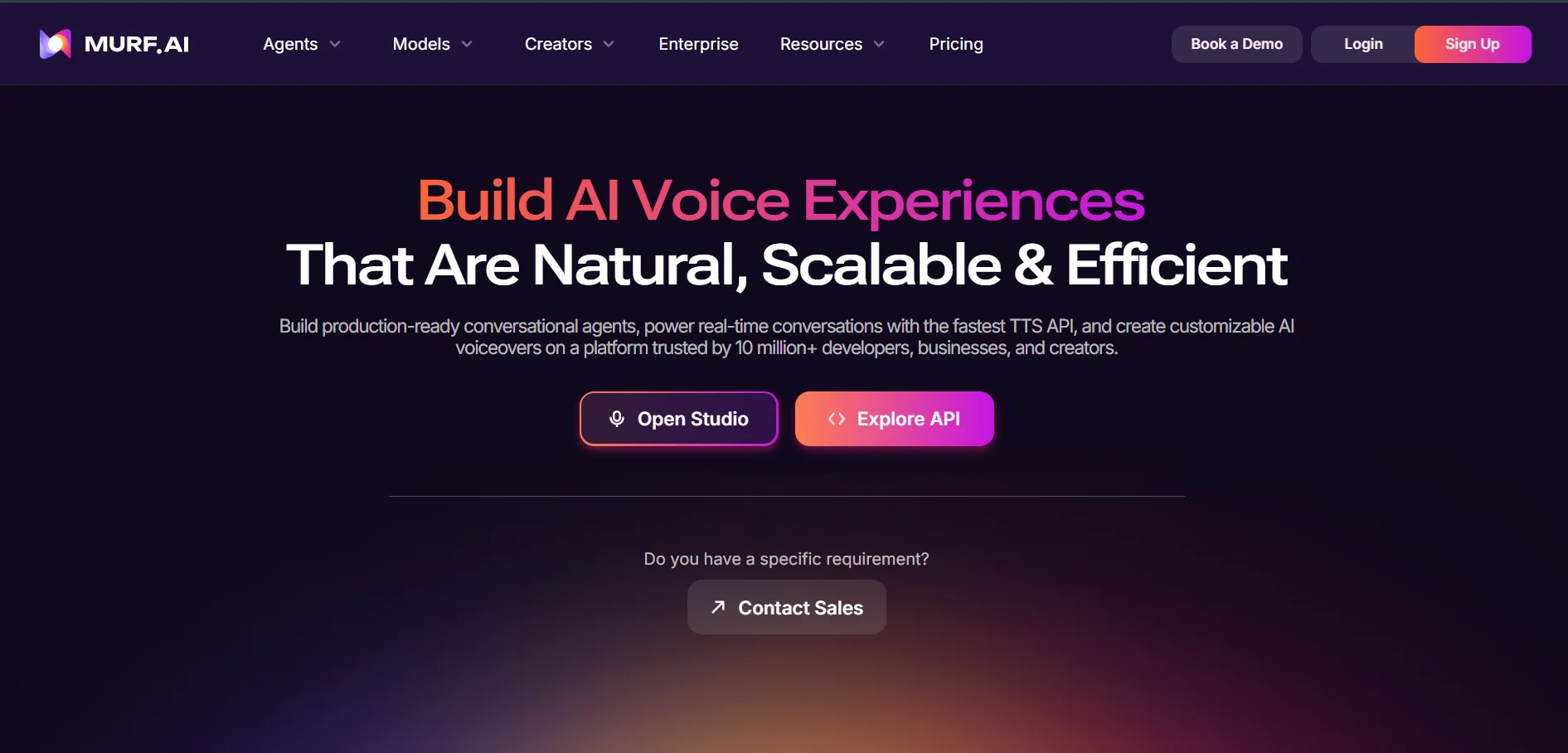
Murf.AI provides a free plan offering about 10 minutes of voice generation for testing, though it lacks downloads and commercial rights, functioning purely as a preview tool. Its paid Creator plan starts at $19/month billed annually ($29 monthly), while the Business plan is $66/month annually ($99 monthly), and Enterprise pricing is custom with SOC 2 and ISO 27001 compliance.
Murf targets non-technical users such as marketers, instructional designers, and content teams who want a polished visual editor rather than raw API access. It also offers separate API pricing at $0.03 per 1,000 characters for developers, plus video dubbing in 25+ languages, though unused generation minutes do not roll over between billing periods.
Pricing: Creator $19/mo (annual), Business $66/mo (annual), Enterprise custom.
| Plan | Price | Best For |
|---|---|---|
| Free | $0/month | Testing the interface only |
| Creator | $19/month (annual) | Individual creators, commercial rights |
| Business | $66/month (annual) | Teams needing higher usage limits |
| Enterprise | Custom | Regulated industries needing compliance |
Pros
- Polished, non-technical visual editor
- 200+ voices across 30+ languages
- ISO 42001 AI management certification
Cons
- Free plan very restrictive, no exports
- Unused minutes don’t carry over
- API billed separately from Studio plans
Gradium
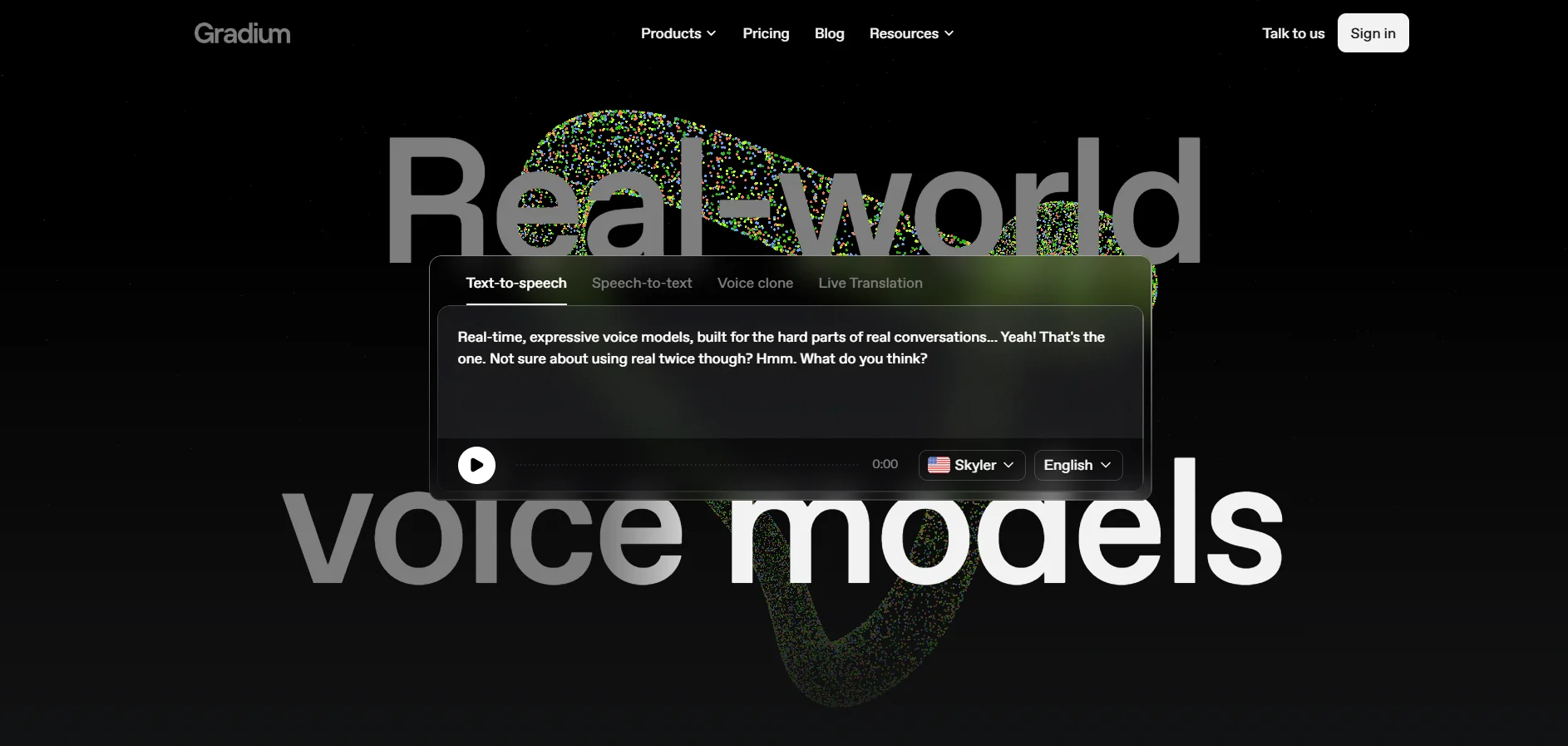
Gradium, a well-funded audio language model startup founded by former DeepMind and Meta researchers, offers a free tier with roughly one hour of text-to-speech and three concurrent requests for evaluation. Paid plans scale from XS at $13/month to S at $43/month, M at $340/month, and L at $1,615/month, all including voice cloning and WebSocket streaming with no feature gating.
Gradium is built primarily for developers creating real-time voice agents, customer service bots, and conversational AI where latency matters most. Its Instant Voice Clone reportedly leads blind benchmarks in English, French, Spanish, and German, though language coverage is narrower than some competitors and its higher tiers get expensive fast for high-volume use.
Pricing: XS $13/mo, S $43/mo, M $340/mo, L $1,615/mo.
| Plan | Price | Best For |
|---|---|---|
| Free | $0/month | Evaluation and prototyping |
| XS | $13/month | Small developer projects |
| S | $43/month | Growing voice agent apps |
| M / L | $340 – $1,615/month | Production-scale voice agents |
Pros
- Ultra-low latency real-time voice generation
- Top-ranked instant voice cloning benchmarks
- No feature gating across paid tiers
Cons
- Supports only five languages currently
- Higher tiers are expensive for smaller teams
- Newer platform with a shorter track record
ElevenLabs
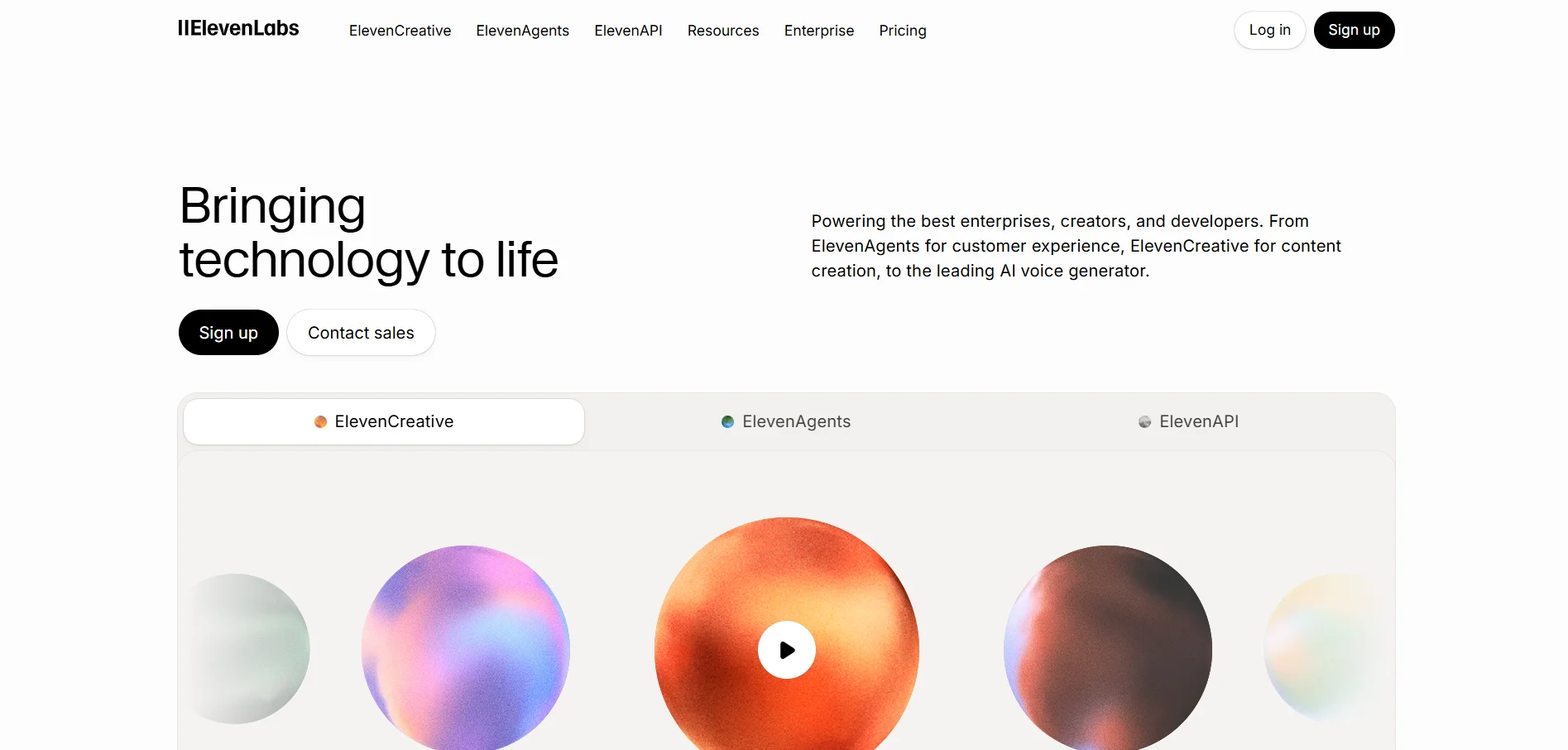
ElevenLabs offers a free tier with 10,000 credits monthly (about 10 minutes of audio) but no commercial license, useful only for evaluation. Paid tiers start with Starter at $5/month, Creator at $22/month ($18.33 annually), Pro at $99/month, Scale at $299/month, and Business at $990/month, with custom Enterprise pricing above that.
Widely regarded as the industry leader for voice realism, ElevenLabs supports professional voice cloning, real-time streaming, and dozens of languages, making it the top pick for podcasters, audiobook narrators, and developers building conversational AI. The tradeoff is a complex credit system with overage charges that can escalate quickly, and pricing sits well above budget-focused competitors.
Pricing: Starter $5/mo, Creator $22/mo, Pro $99/mo, Scale $299/mo, Business $990/mo, Enterprise custom.
| Plan | Price | Best For |
|---|---|---|
| Free | $0/month | Testing voice quality only |
| Starter | $5/month | Individuals starting out |
| Creator | $22/month | Podcasters and audiobook creators |
| Pro | $99/month | Businesses needing volume |
| Scale / Business | $299 – $990/month | High-volume production teams |
Pros
- Best-in-class voice realism and naturalness
- Professional voice cloning and streaming
- Wide language and API support
Cons
- Premium pricing compared to competitors
- Complex credit and overage system
- Free plan lacks commercial usage rights
Fliki
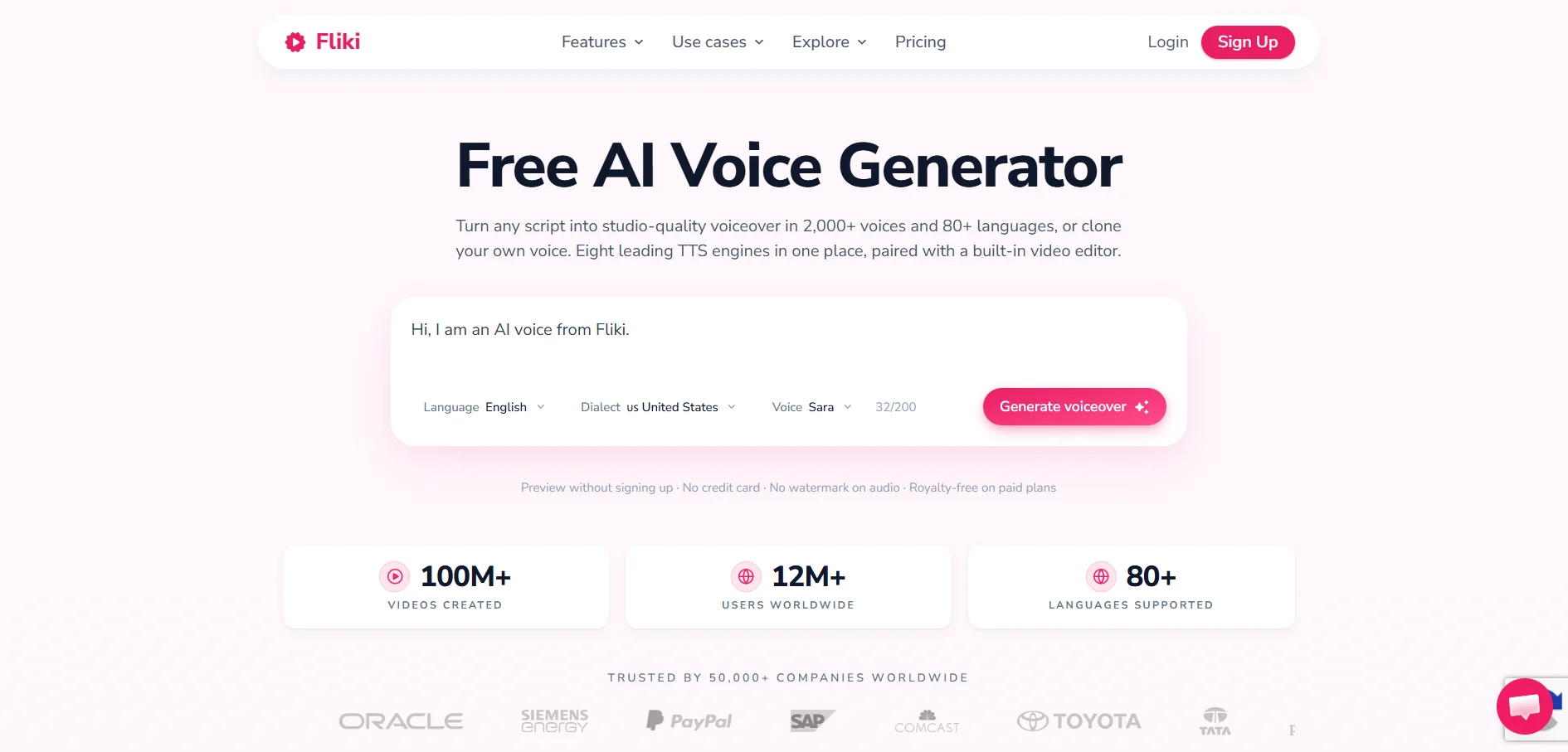
Fliki offers a free plan with about 5 minutes of monthly credits and watermarked exports, giving new users a taste of its text-to-video and voice tools. Paid plans start with Standard at roughly $14–21/month (annual billing) or $28 monthly, and Premium at around $44–66/month annually or $88 monthly, with a custom Enterprise tier above that.
Fliki combines AI voiceovers with automated video creation, offering 1,000+ voices, AI avatars, and translation into 80+ languages, making it a strong choice for YouTube creators and marketers who want voice and visuals in one workflow. The credit-based system and watermarked free tier, however, mean serious use almost always requires a paid subscription.
Pricing: Standard $14–21/mo (annual), Premium $44–66/mo (annual), Enterprise custom.
| Plan | Price | Best For |
|---|---|---|
| Free | $0/month | Trying voice and video generation |
| Standard | $14–21/month | Regular content creators |
| Premium | $44–66/month | Professional, high-volume creators |
| Enterprise | Custom | Teams needing API and branding |
Pros
- Combines voice generation with video creation
- 1,000+ voices and 80+ language translation
- Good for idea-to-video workflows
Cons
- Free tier very limited and watermarked
- Credit system can feel restrictive at scale
- Higher-tier pricing rises quickly for volume users
iSpeech
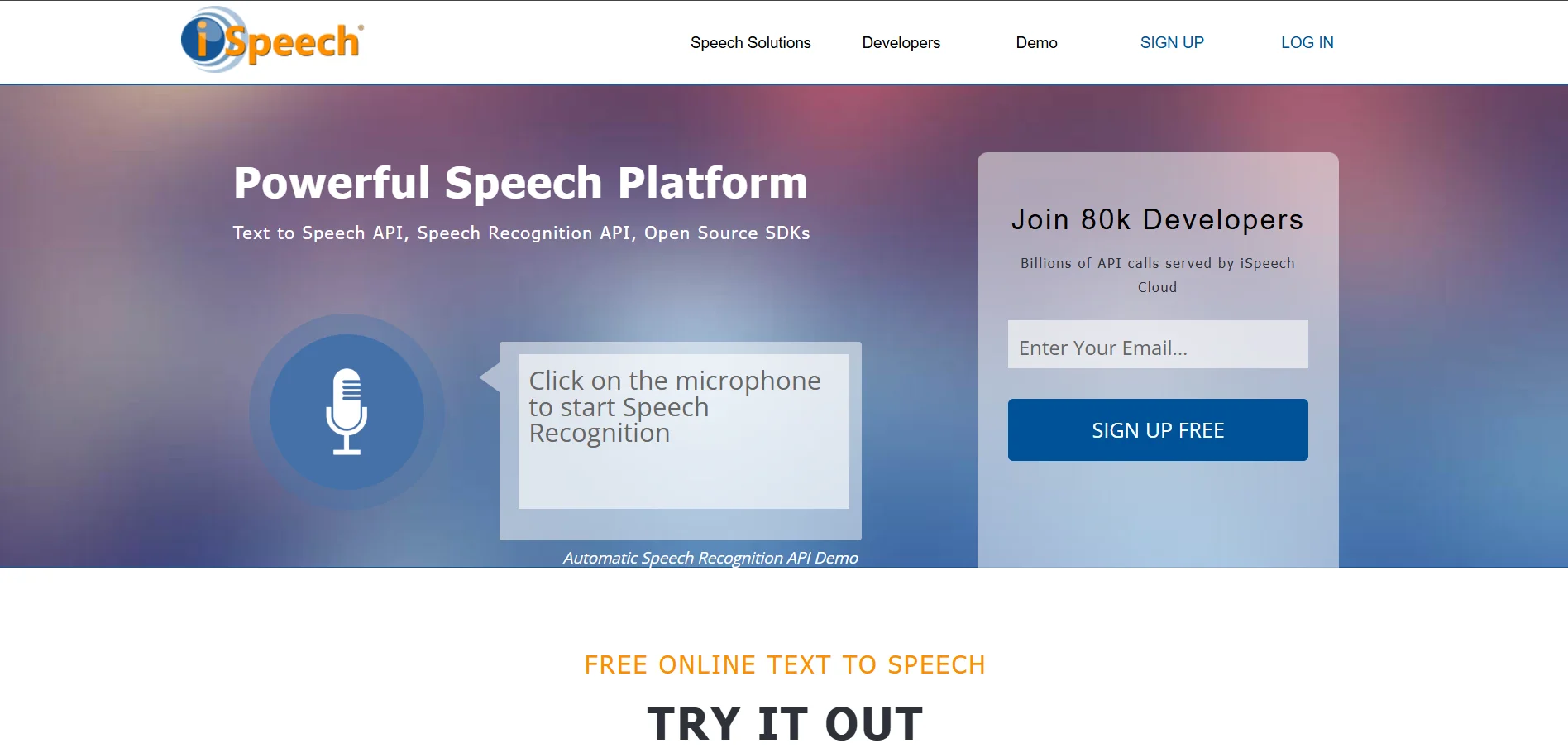
iSpeech has long offered a “Free Voice” option that lets users proofread and test scripts without consuming paid credits, a handy way to check text accuracy before final generation. Its pricing follows a package-based, pay-as-you-go structure rather than fixed monthly tiers, with costs scaling according to character volume and voice quality selected on its official pricing page.
As one of the older players in the text-to-speech space, iSpeech is known for fast processing and straightforward API integration for developers building apps, IVR systems, or accessibility tools. It lacks the modern voice-cloning realism of newer AI-native platforms, making it better suited to functional TTS needs than expressive, emotionally nuanced narration.
Pricing: Pay-as-you-go packages; exact tiers available on the official iSpeech pricing page.
| Plan | Price | Best For |
|---|---|---|
| Free Voice | $0 | Script proofreading before purchase |
| Pay-as-you-go Packages | Variable, by volume | Developers and businesses needing API TTS |
Pros
- Fast, reliable API for developers
- Free script-testing feature saves credits
- Long-established, stable platform
Cons
- Voice realism lags behind newer AI tools
- Pricing structure less transparent upfront
- Fewer emotional or expressive voice controls
Lovo.ai
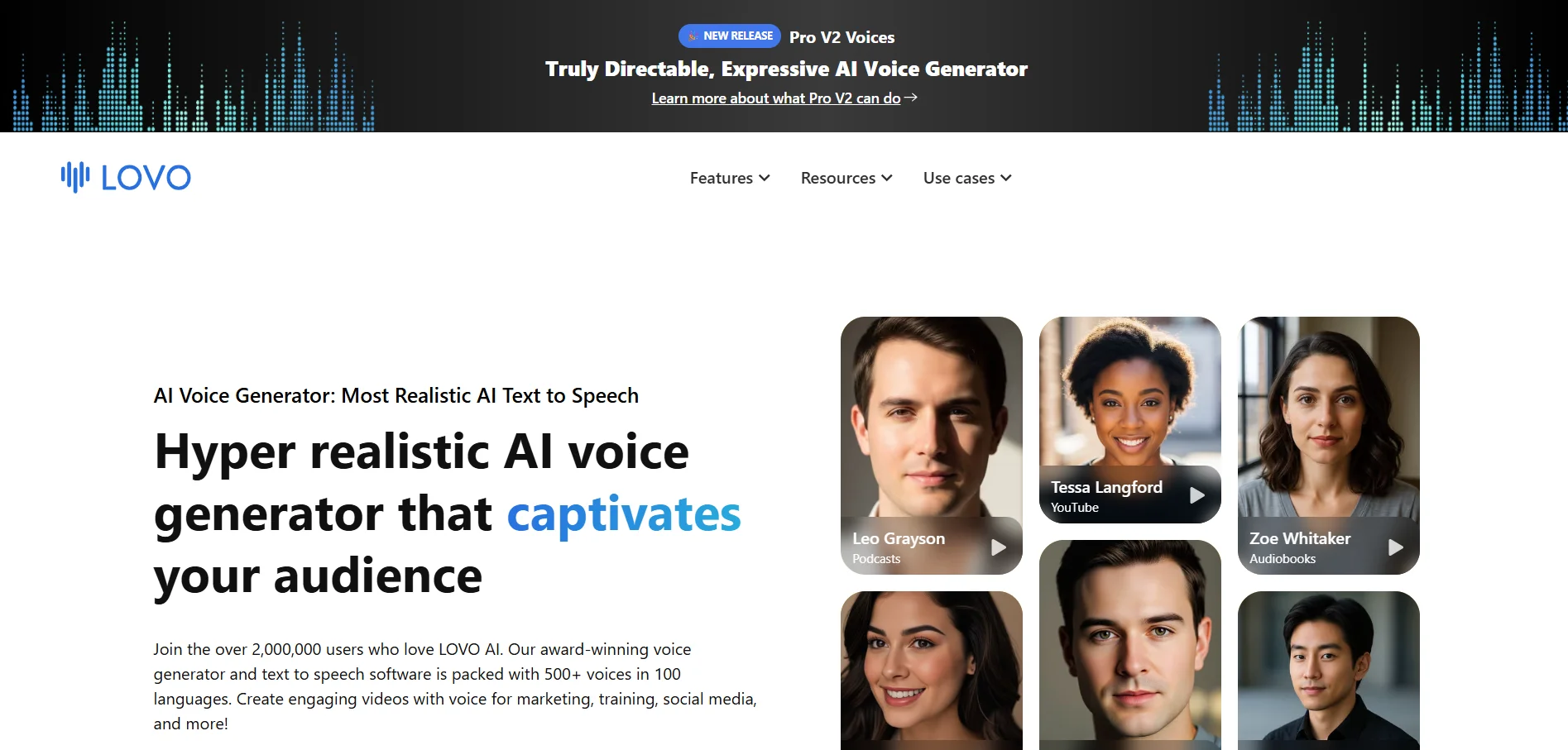
Lovo.ai provides a 14-day free trial on its Pro plan along with a free-forever tier offering limited downloads, giving users a fair window to evaluate its voice and video tools. Paid plans include Basic at $24/month (2 hours of voice), Pro at $48/month (5 hours), and Pro+ at $149/month (20 hours), with annual billing typically saving around 20% and Enterprise pricing available on request.
Lovo bundles text-to-speech with an AI script writer, video editor, subtitles, and AI art generation, appealing to YouTube creators, e-learning teams, and marketing agencies who want an all-in-one content studio. Its newer Pro V2 voices support directable emotion and accent control, though its 2.3-star Trustpilot rating reflects real complaints about billing and cancellation issues that prospective buyers should note.
Pricing: Basic $24/mo, Pro $48/mo, Pro+ $149/mo, Enterprise custom.
| Plan | Price | Best For |
|---|---|---|
| Free | $0/month | Basic testing, 3 downloads/month |
| Basic | $24/month | Individuals needing 2 hours of voice |
| Pro | $48/month | Creators needing 5 hours and cloning |
| Pro+ | $149/month | Heavy users needing 20 hours |
Pros
- All-in-one studio: voice, video, script, art
- Directable Pro V2 voices with emotion control
- Voice cloning from just 1 minute of audio
Cons
- Low Trustpilot rating with billing complaints
- Free tier watermark limits real evaluation
- Pricier than some single-purpose TTS tools
Podcastle
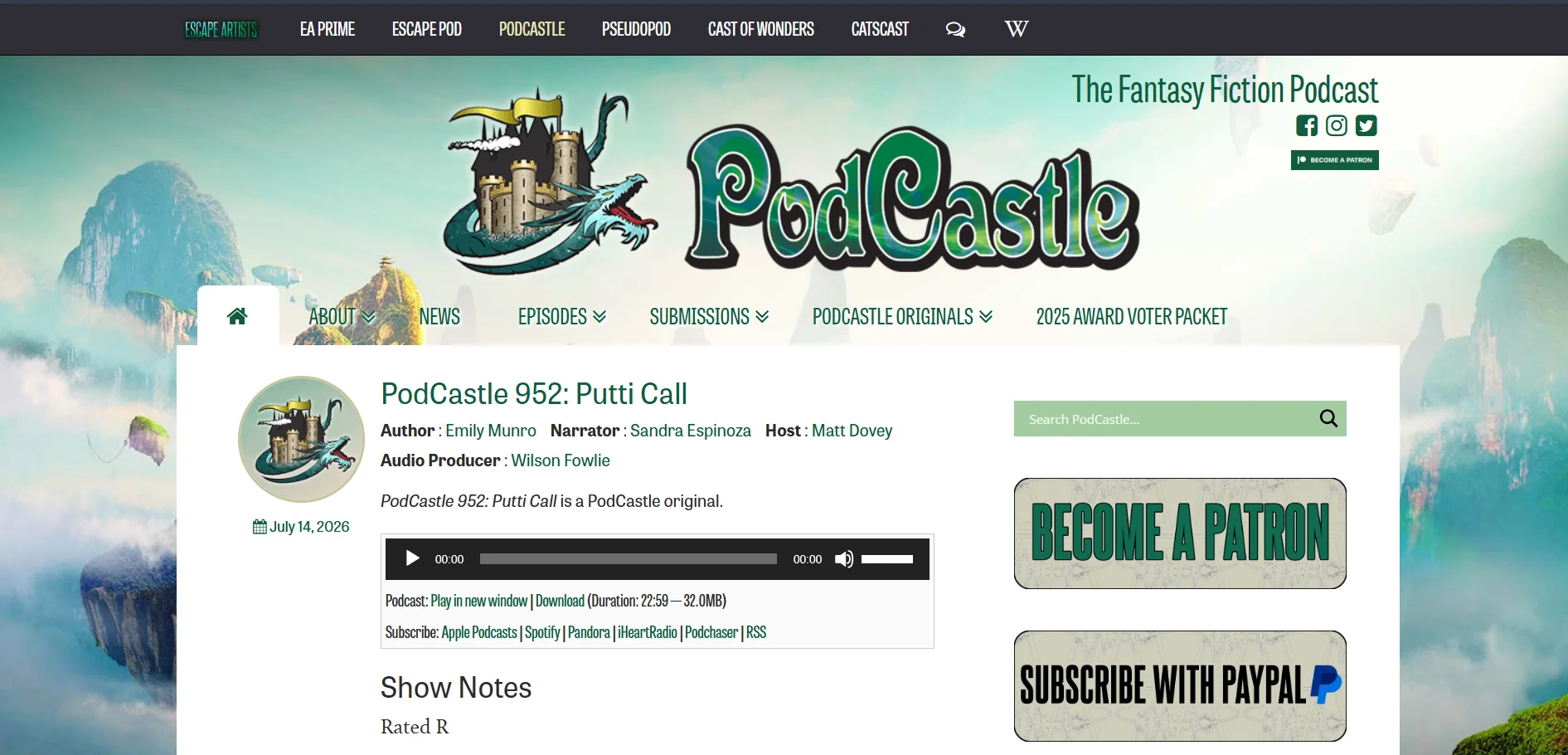
Podcastle (now also branded Async) offers a genuinely useful free plan with unlimited audio recording, though video and transcription are capped at lifetime limits rather than monthly. Paid tiers include Storyteller/Essentials around $12–20/month, Pro around $24–40/month (required for its Revoice voice-cloning feature), and Business at roughly $65/month, with Enterprise pricing available for teams.
Podcastle is best known as an all-in-one podcast recording, editing, and publishing suite rather than a pure text-to-speech tool, offering remote recording, AI noise reduction, and RSS distribution to major platforms. Its AI voice cloning feature, Revoice, is gated behind the Pro plan, meaning the advertised free tier isn’t enough for creators specifically chasing voice cloning capabilities.
Pricing: Storyteller ~$12–20/mo, Pro ~$24–40/mo, Business ~$65/mo, Enterprise custom.
| Plan | Price | Best For |
|---|---|---|
| Free | $0/month | Unlimited audio recording |
| Storyteller | $12–20/month | Solo podcasters and hobbyists |
| Pro | $24–40/month | Voice cloning (Revoice) access |
| Business | ~$65/month | Team collaboration and permissions |
Pros
- Unlimited free audio recording
- Built-in podcast hosting and distribution
- AI noise reduction and remote recording
Cons
- Voice cloning locked behind Pro plan
- Video and transcription caps are lifetime, not monthly
- Team features require pricier Business tier
Cartesia
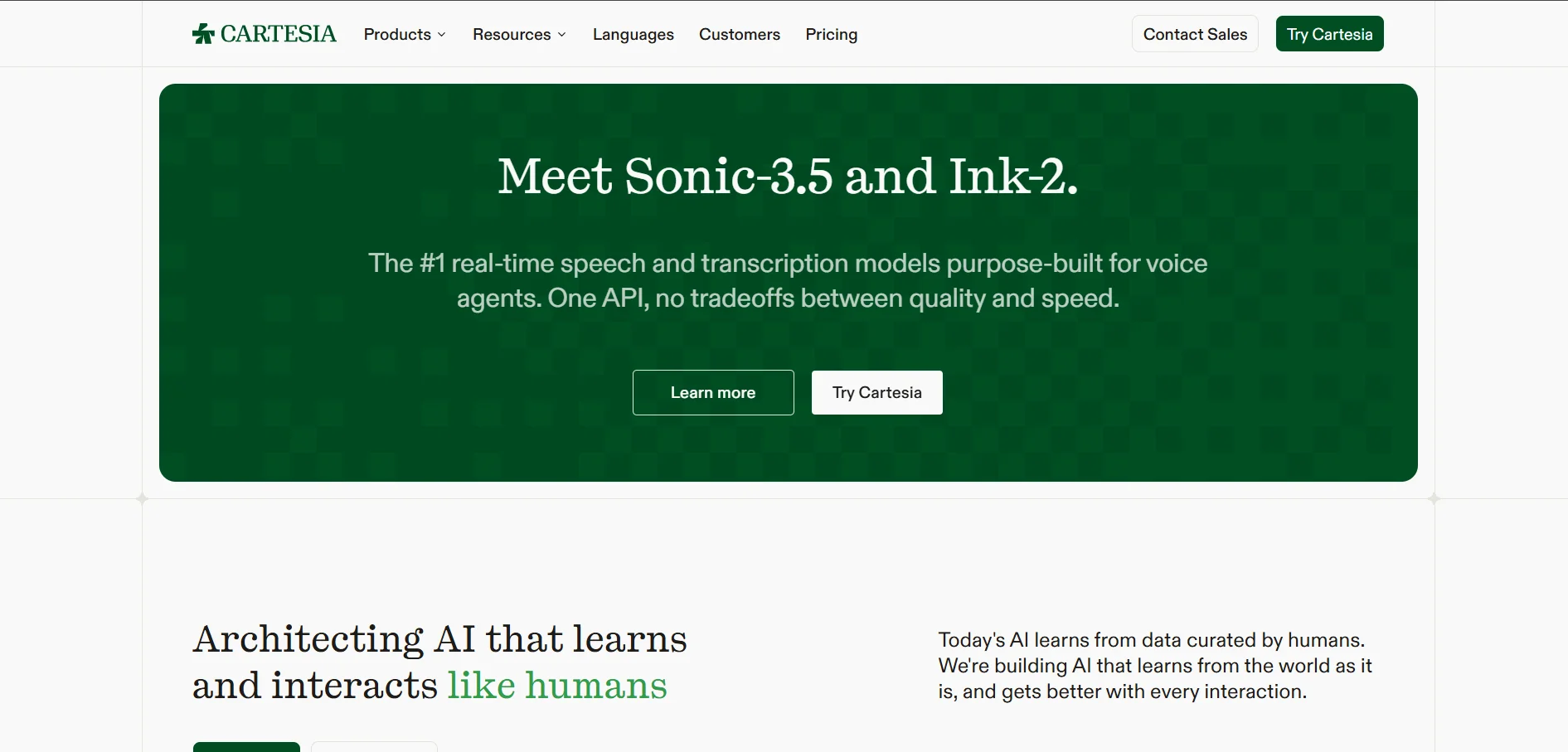
Cartesia offers a free tier with around 10,000–20,000 credits monthly, one parallel request, and support for 15 languages, though it excludes commercial use and voice cloning. Its Pro plan unlocks commercial rights for about $4–5/month with 100,000 credits and instant voice cloning, while Scale reaches roughly $239–299/month for 8 million credits, and Enterprise offers custom pricing.
Built for real-time, low-latency voice applications, Cartesia’s Sonic model delivers audio with under 80ms latency, making it a favorite for developers building voice agents, call center automation, and conversational AI products. It’s less suited to casual content creators who want a polished visual editor, since Cartesia is fundamentally a developer-first API platform.
Pricing: Pro $4–5/mo, Growth/Scale ~$239–299/mo, Enterprise custom.
| Plan | Price | Best For |
|---|---|---|
| Free | $0/month | Non-commercial testing |
| Pro | $4–5/month | Individual developers, light commercial use |
| Scale | $239–299/month | High-volume production voice agents |
| Enterprise | Custom | Large-scale conversational AI deployments |
Pros
- Industry-leading low latency (under 80ms)
- Affordable entry-level commercial tier
- Strong fit for real-time voice agents
Cons
- Developer-focused, no visual editor
- Free tier excludes voice cloning
- Fewer supported languages than some rivals
Comparison Table
| Alternative | Description |
|---|---|
| Supertone Play | Emotionally expressive, multilingual (KR/JP/EN) voice cloning platform backed by HYBE, with credit-based subscriptions. |
| KikiVoice | No-signup, free AI voice cloning and TTS tool supporting 75+ languages with multiple specialized models. |
| Uberduck | Voice generation platform known for its huge celebrity and character voice library plus AI rap and singing tools. |
| Murf.AI | Polished, non-technical voiceover studio for marketers and instructional designers with 200+ voices and video dubbing. |
| Gradium | Developer-focused, ultra-low-latency real-time voice API built by ex-DeepMind and Meta researchers for voice agents. |
| ElevenLabs | Industry-leading AI voice realism and cloning platform popular with podcasters, developers, and audiobook creators. |
| Fliki | Combined text-to-video and AI voiceover tool with 1,000+ voices and translation into 80+ languages. |
| iSpeech | Long-established text-to-speech API offering fast processing and pay-as-you-go pricing for developers. |
| Lovo.ai | All-in-one AI content studio combining TTS, video editing, script writing, subtitles, and AI art generation. |
| Podcastle | All-in-one podcast recording, editing, and publishing suite with an AI voice cloning feature called Revoice. |
| Cartesia | Real-time, low-latency voice AI API built for conversational agents, call automation, and streaming applications. |
Conclusion
Choosing the right Noiz.ai alternative ultimately comes down to your specific use case. Developers building real-time voice agents will lean toward Gradium or Cartesia for their low latency, while content creators chasing polish and ease of use will likely prefer Murf.AI, Lovo.ai, or Fliki. If raw voice realism and professional cloning matter most, ElevenLabs remains the benchmark, while budget-conscious creators or hobbyists may find KikiVoice, Uberduck, or Supertone Play more approachable. Podcastle stands out for podcasters who want recording and voice tools bundled together, and iSpeech remains a dependable choice for straightforward API-based TTS.


