

Claude has become one of the most trusted AI assistants for writing, coding, and research, but it is far from the only option on the market. Depending on your goals, whether you are drafting a novel, writing a screenplay, scripting an animated explainer video, or generating marketing copy, a specialized tool may serve you better than a general-purpose chatbot. This article rounds up 12 Claude Alternatives spanning general AI chat, fiction writing, screenwriting, storyboarding, and video scripting, so you can pick the right tool for your specific creative or professional workflow.
1. Sudowrite
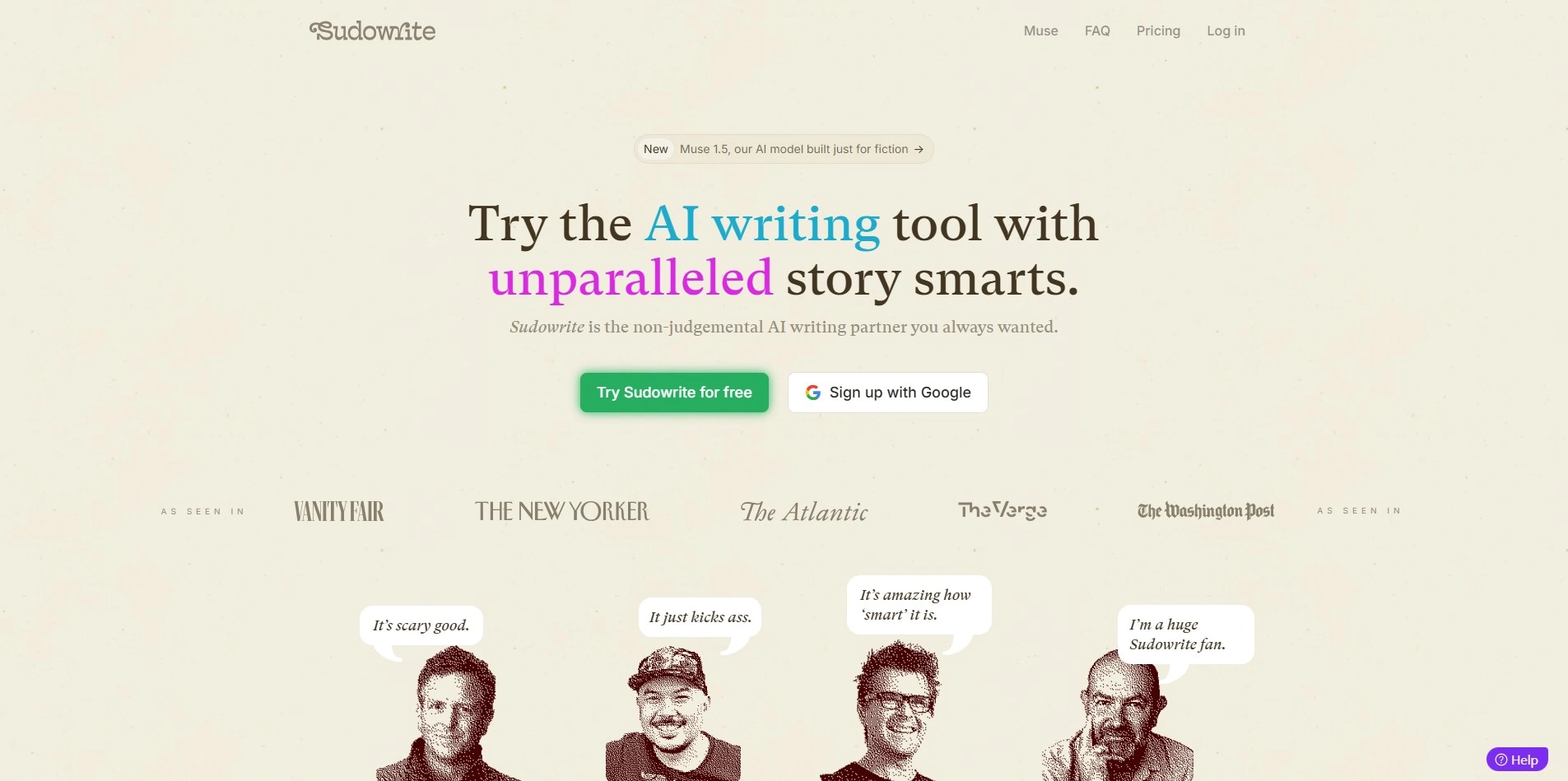
Pricing: Hobby & Student ~$10–19/mo, Professional ~$22–29/mo, Max ~$44–59/mo (annual billing discounted), Enterprise on request.
Sudowrite is an AI writing tool built specifically for fiction authors and novelists, rather than general-purpose text generation. It offers a Story Bible, Describe, Rewrite, and Brainstorm tools designed to help writers overcome blocks, deepen prose, and maintain narrative consistency. It works alongside multiple underlying AI models rather than a single one.
Its free trial gives new users a generous number of credits to test the interface before committing financially. Compared to Claude, Sudowrite trades general versatility for fiction-specific depth, making it a favorite among novelists, but its credit-based system can feel restrictive for heavy monthly writers who exceed their tier’s allocation quickly.
Pros
- Purpose-built tools for fiction writing
- Generous no-card-required free trial
- Story Bible keeps characters and plot consistent
- Access to multiple AI models in one place
Cons
- Credit system can run out mid-month
- Less useful for non-fiction or general tasks
- No unlimited usage tier like ChatGPT Plus
- Learning curve for new users
2. Google Gemini

Pricing: Free $0, AI Plus ~$4.99–7.99/mo, AI Pro $19.99/mo, AI Ultra $99.99–199.99/mo, Workspace Business plans from ~$14–22/user/mo.
Google Gemini is Google’s flagship AI assistant, deeply integrated into Search, Gmail, Docs, and the wider Workspace ecosystem. It offers a huge context window, strong multimodal capability across text, images, and documents, and tight integration with Google’s productivity suite, making it a natural Claude alternative for users already living inside Google apps.
Gemini’s restructured 2026 pricing ladder makes it more accessible than before, with a genuinely usable free tier and an affordable entry-level paid plan. Its biggest strength over Claude is ecosystem integration; its biggest weakness is that tier names and included features have changed frequently, so it pays to double-check the current plan details before subscribing.
Pros
- Deep integration with Gmail, Docs, and Workspace
- Very large 1M-token context window
- Usable free tier for casual users
- Competitive entry-level paid pricing
Cons
- Frequent renaming of plans causes confusion
- Pro-level models removed from the free tier
- Ultra tier is expensive for casual users
- Business Gemini requires a Workspace subscription
3. Highland 2
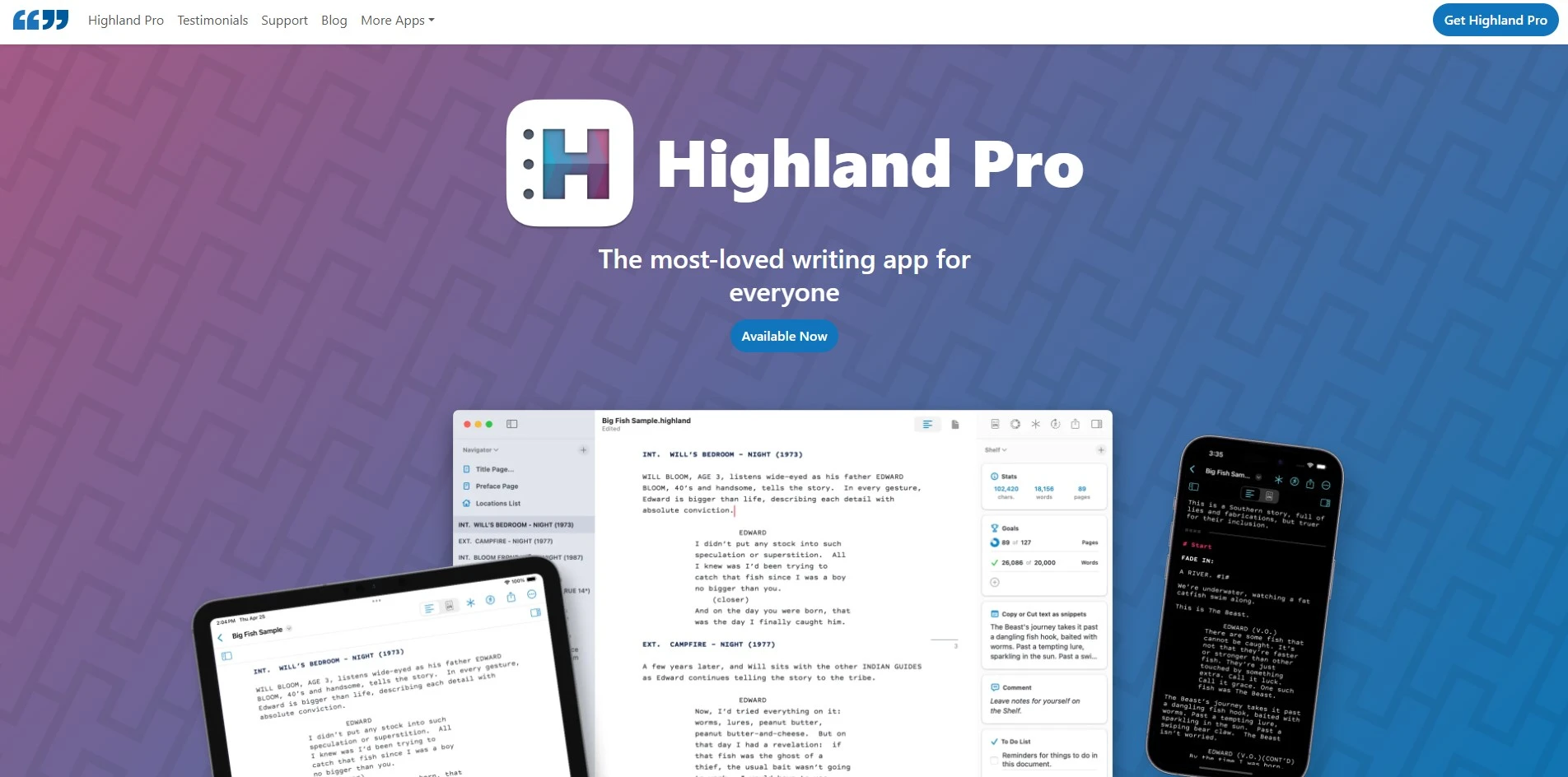
Pricing: One-time in-app purchase of about $49.99 (no subscription) to remove watermarks and unlock extra templates.
Highland 2 is a Mac-only screenwriting and novel-writing app built around the plain-text Fountain markup format, created by screenwriter John August. It emphasizes a distraction-free writing environment, automatic formatting, and native performance across Mac, iPad, and iPhone with iCloud syncing built in.
Unlike Claude, Highland 2 is not a conversational AI, it is a dedicated writing environment, but it remains a popular alternative for screenwriters who want structure without subscription fatigue. The one-time payment model is refreshingly simple, though the lack of a Windows version and AI chat capability limits it for broader use cases.
Pros
- One-time payment, no recurring subscription
- Clean, distraction-free writing interface
- Fountain markup keeps files portable and readable
- Native Mac, iPad, and iPhone apps with iCloud sync
Cons
- Mac-only, no Windows or web version
- No built-in AI chat or generative writing help
- Watermarked exports until the paid upgrade
- Feature set is basic compared to full-scale suites
4. Storyflow
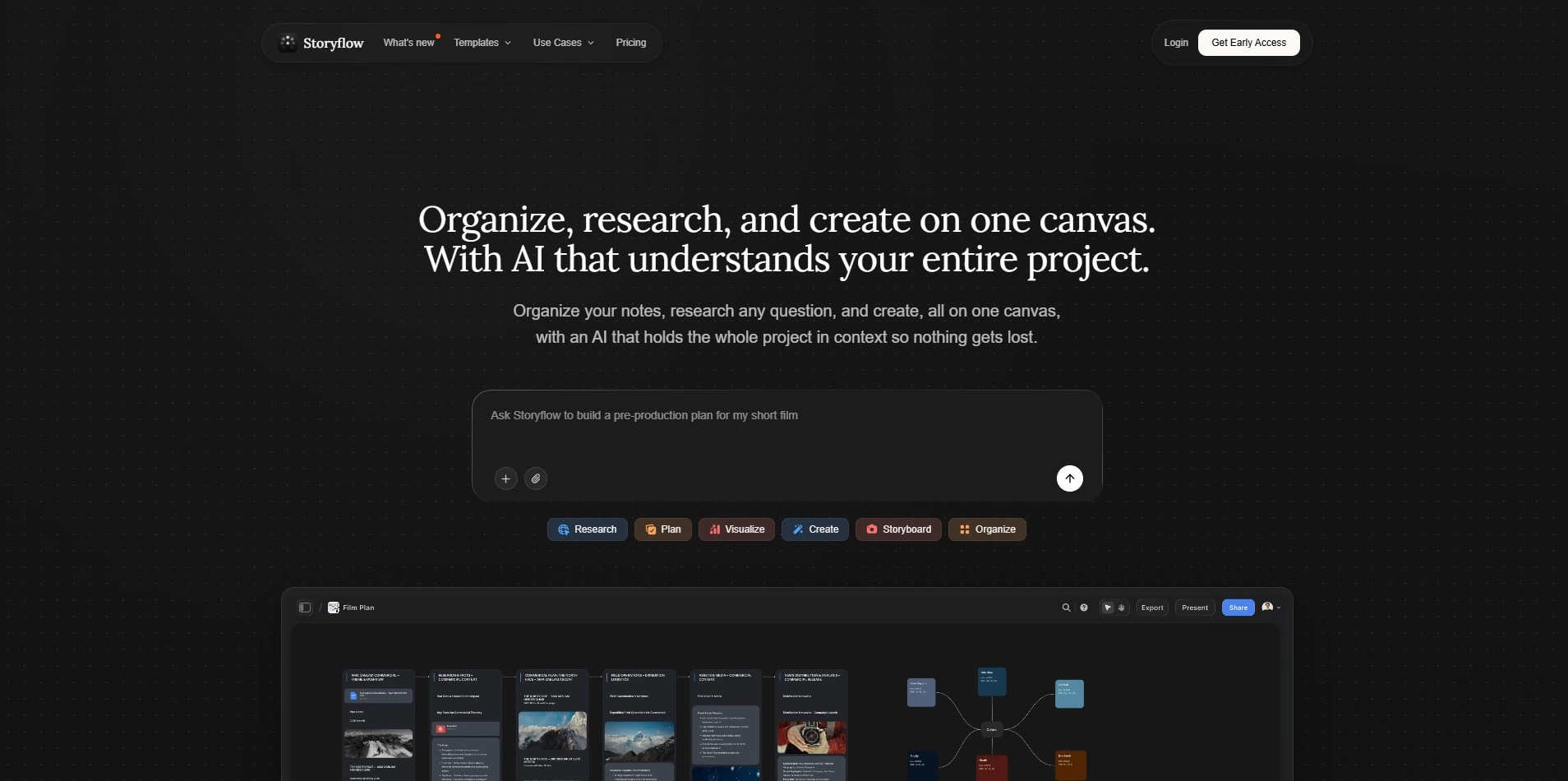
Pricing: Free $0, Plus $9.99/mo, Pro $14/mo, Max $39/mo (annual billing).
Storyflow is a visual canvas tool for story development that combines character cards, chapter beats, research notes, and story blueprints like the Hero’s Journey into one collaborative board. It positions itself as an alternative to juggling separate apps for AI writing, moodboards, and documentation.
Its free plan is unusually generous, offering unlimited projects, boards, and basic AI usage without ever requiring payment. This makes Storyflow appealing to screenwriters, novelists, and content creators who want structural planning support alongside lightweight AI assistance, though it is not a full prose-drafting replacement for Claude.
Pros
- Genuinely free forever tier with no card required
- Visual canvas for characters, beats, and research
- 196+ built-in story structure templates
- Good for series bibles and long-term worldbuilding
Cons
- Not a dedicated prose editor or manuscript compiler
- AI usage capped on lower tiers
- Best paired with another writing tool
- Less known than mainstream competitors
5. WriterDuet
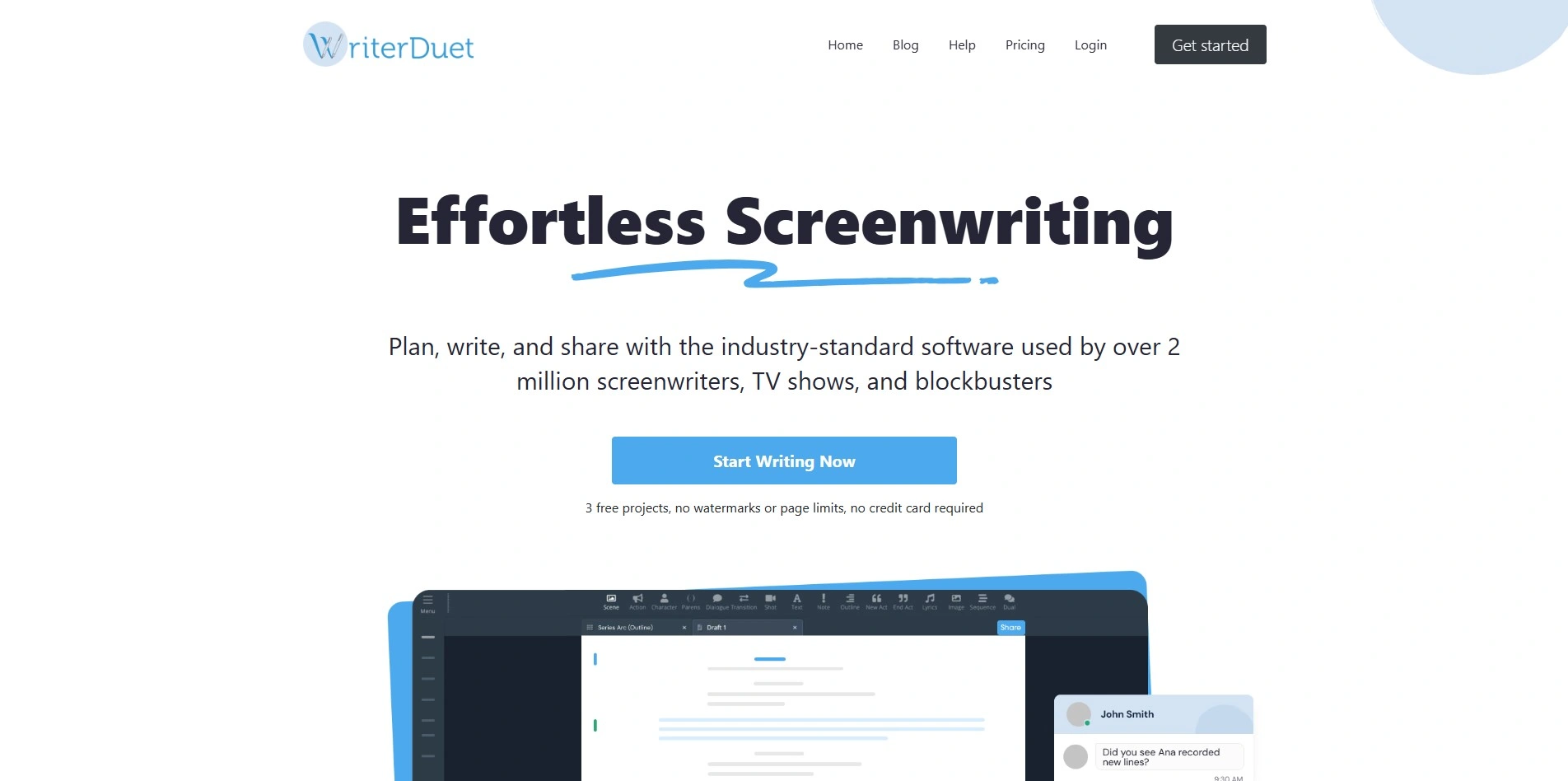
Pricing: Plus ~$7.99–9.99/mo, Pro ~$11.99/mo, Premium ~$13.99–15.99/mo (annual billing lowers each tier).
WriterDuet is a cloud-based screenwriting platform built around real-time collaborative writing, closer to Google Docs than a traditional desktop screenwriting app. It supports industry-standard formatting, revision tracking, and import/export with Final Draft’s .fdx format, making it easy to move scripts between tools.
Compared to Claude, WriterDuet is a specialized production tool rather than a conversational assistant, but its collaboration features make it valuable for writing teams and duos. The free tier is genuinely usable for solo writers, though real-time collaboration and higher script limits require a paid subscription.
Pros
- Strong real-time collaborative writing experience
- Generous free tier (up to 3 full scripts)
- Cloud-based, accessible from any device
- Affordable compared to Final Draft
Cons
- Collaboration locked behind paid plans
- AI features are limited to line-level rewriting
- No deep structural planning tools
- Interface can feel busy for solo writers
6. Powtoon AI Script Writer

Pricing: Lite $49/mo, Professional $99/mo, Advanced $199/mo (includes AI Script Writer), Corporate custom quote.
Powtoon AI Script Writer is a video creation platform for animated explainer videos, marketing content, and presentations, with an AI Script Writer feature bundled into its higher tiers. It lets teams generate a script, then turn it directly into an animated video using built-in characters, templates, and voiceover tools.
Where Claude helps you write, Powtoon helps you turn that writing into a finished animated video, making it a natural companion tool rather than a direct substitute. Its pricing is notably higher than most writing tools on this list, and the AI Script Writer itself is only available on the Advanced tier and above.
Pros
- Combines scriptwriting with animated video production
- Large library of templates and characters
- AI text-to-speech and character lip-sync
- Good for marketing and educational content teams
Cons
- AI Script Writer locked to the $199/mo Advanced tier
- Expensive compared to standalone writing tools
- Free plan heavily watermarked and limited
- Credit system adds unpredictable extra costs
7. Copy.ai
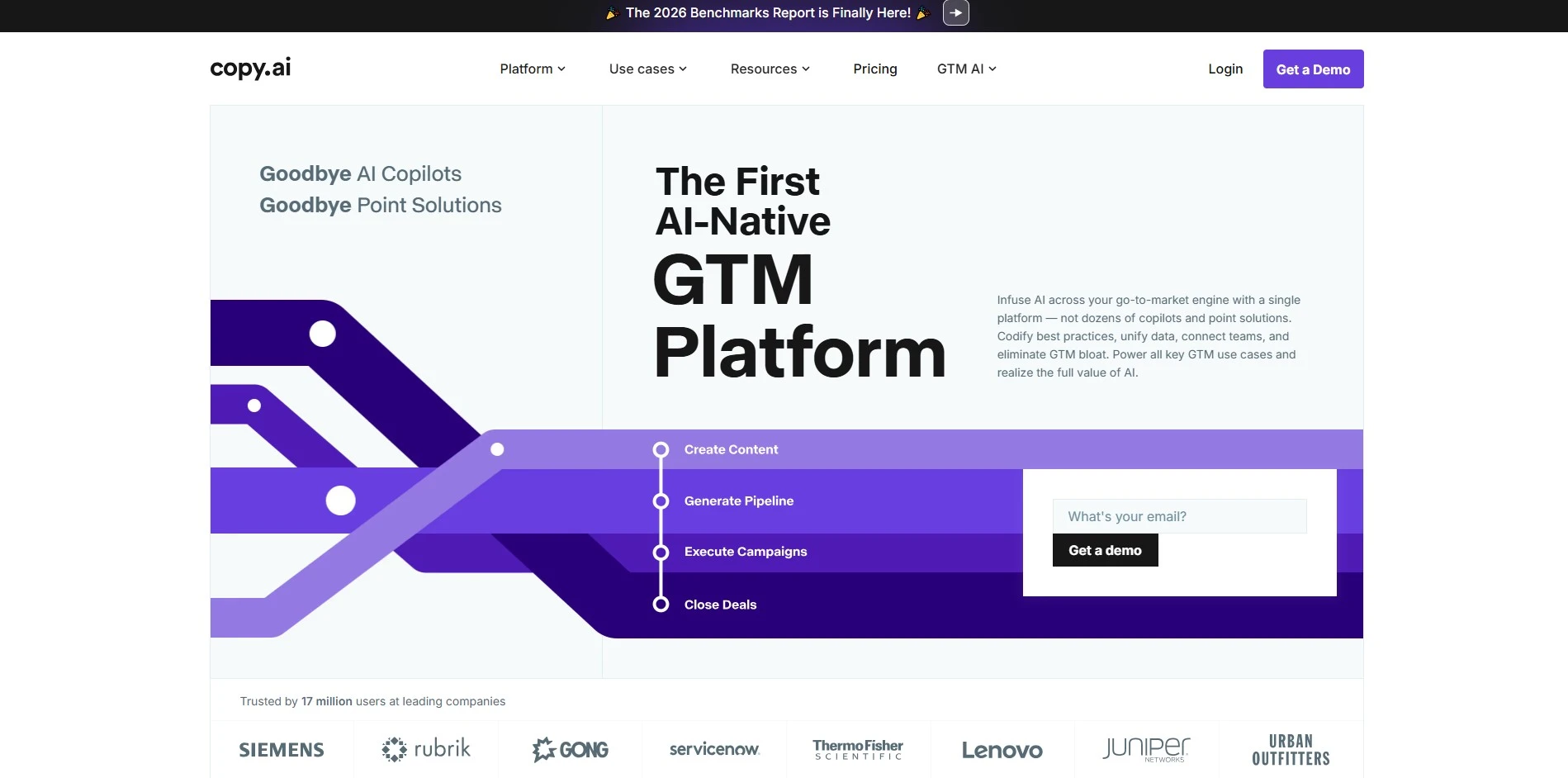
Pricing: Free $0, Pro/Starter $49/mo (~$36/mo annual), Advanced $249/mo, Enterprise custom.
Copy.ai began as a marketing copywriting tool and has since evolved into a broader go-to-market automation platform, combining AI writing with workflow automation for sales and marketing teams. It supports brand voice customization, multiple underlying AI models, and pre-built workflow templates for ads, emails, and social content.
Its free tier is one of the more usable permanent free plans among AI writing tools, making it easy to sample before committing. Copy.ai suits marketing teams needing repeatable content workflows more than long-form conversational assistance, and its higher tiers can get pricey once workflow automation is added.
Pros
- Permanent free plan with no expiry
- 90+ templates for marketing copy
- Workflow automation for repeatable GTM tasks
- Access to multiple LLMs in one platform
Cons
- Higher tiers are costly for small teams
- Less suited to long-form or nuanced writing
- Output can require heavy editing at times
- Learning curve for advanced workflow features
8. Beemgee
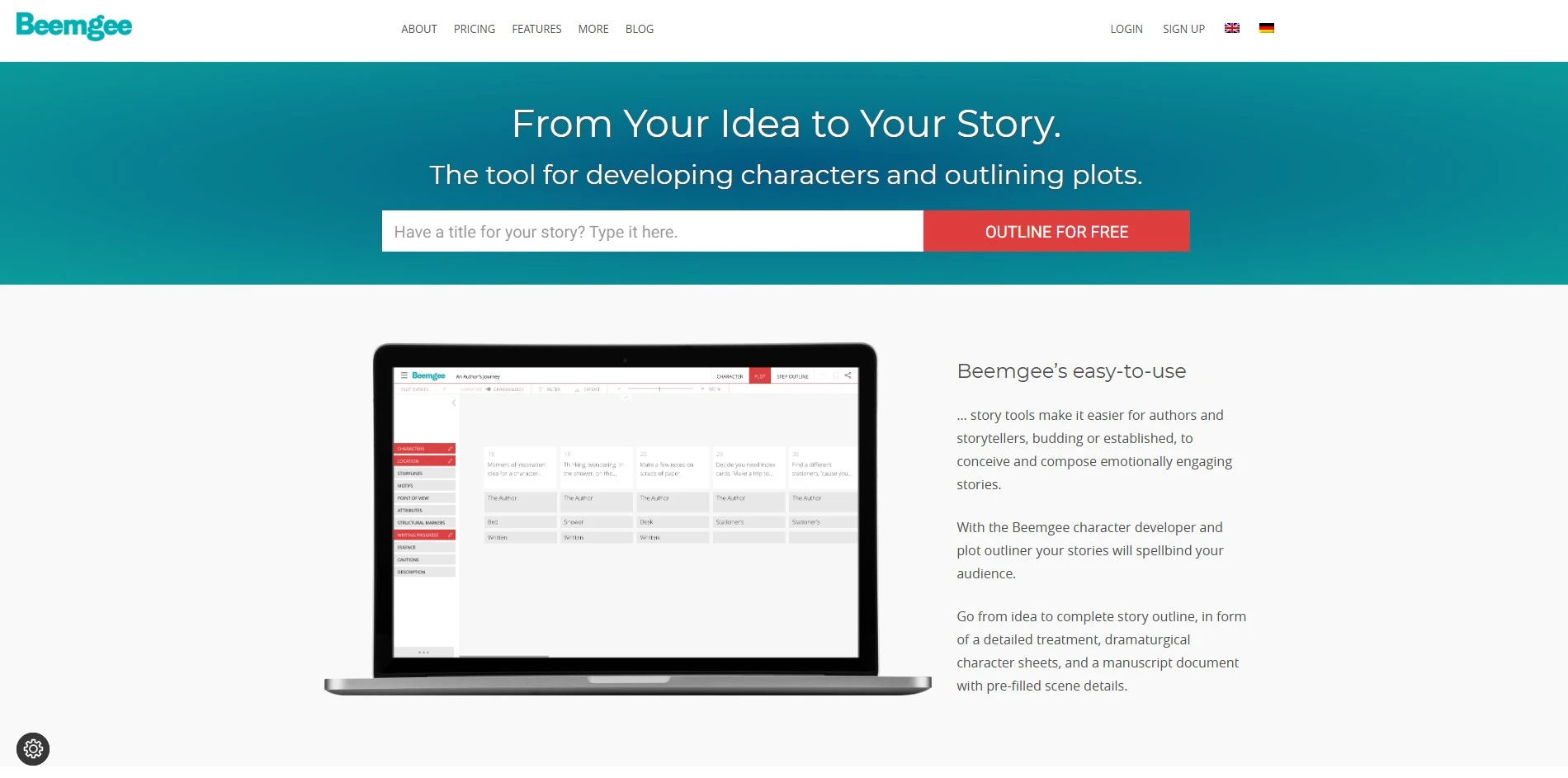
Pricing: Premium subscription roughly €8/month (billed annually at €96/year).
Beemgee is a browser-based story development tool built around character motivation and plot outlining rather than prose generation. It uses a horizontal timeline and corkboard-style interface to help authors map dramatic structure, character arcs, and the Hero’s Journey without writing a single line of manuscript text.
Unlike Claude, Beemgee is not an AI chat assistant at all, it is a structured outlining tool aimed at novelists, screenwriters, and stage writers. Its free tier covers the essentials, while Premium unlocks detail views, exports, and advanced dramaturgy attributes, all at a notably low annual cost compared to most tools on this list.
Pros
- Very affordable Premium tier (~€8/month)
- No trial registration friction, try instantly
- Strong focus on dramatic structure and character function
- Works across page, stage, and screen projects
Cons
- No AI text generation or chat features
- Free tier limits exports and detail views
- Interface may feel niche for casual writers
- Small company with a narrower feature roadmap
9. Arc Studio Pro
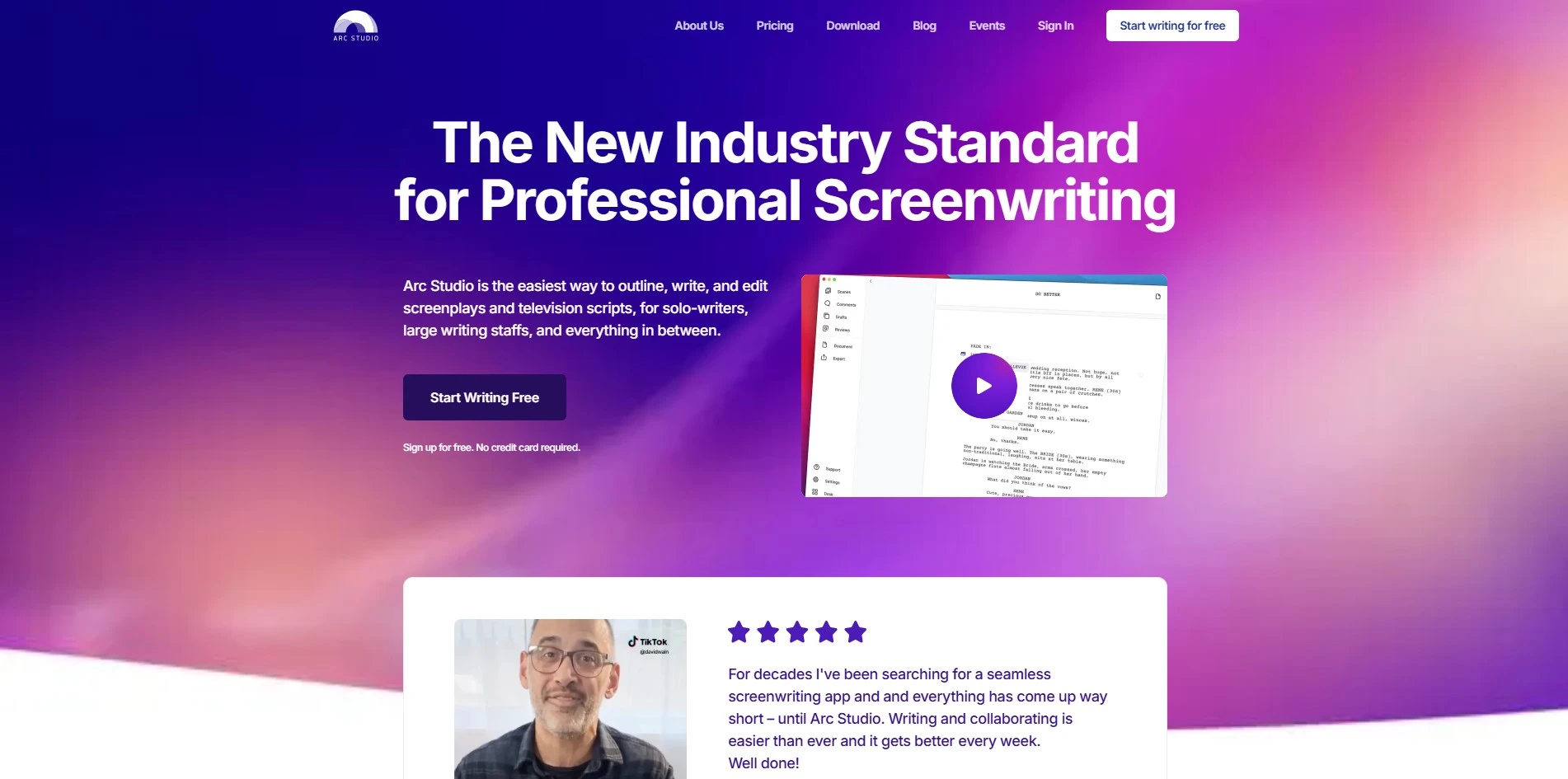
Pricing: Pro plan roughly $69–99/year depending on feature tier, with education discounts available.
Arc Studio Pro is a modern, cloud-based screenwriting tool built for real-time collaboration, comparable in spirit to Google Docs but tailored specifically for screenplay formatting. It includes outlining boards, character images, and a Table Read feature that turns your script into an audio read-aloud.
Compared to Claude, Arc Studio focuses entirely on the screenwriting workflow rather than open-ended conversation, appealing to writers who left desktop tools behind for something lighter and web-native. The free plan is workable for short scripts, but full collaboration and export features require the paid Pro subscription.
Pros
- Modern, fast, cloud-based interface
- Real-time collaboration built in
- Affordable annual pricing versus desktop competitors
- Table Read audio feature for script read-throughs
Cons
- Free plan limited to a small number of scripts
- Some AI features require extra purchased credits
- No deep worldbuilding or series bible tools
- Exports on the free tier carry a watermark
10. Studiovity
Pricing: Starts around $2–2.5 per user/month for Screenwriting, with broader Pre-Production suite plans available on request.
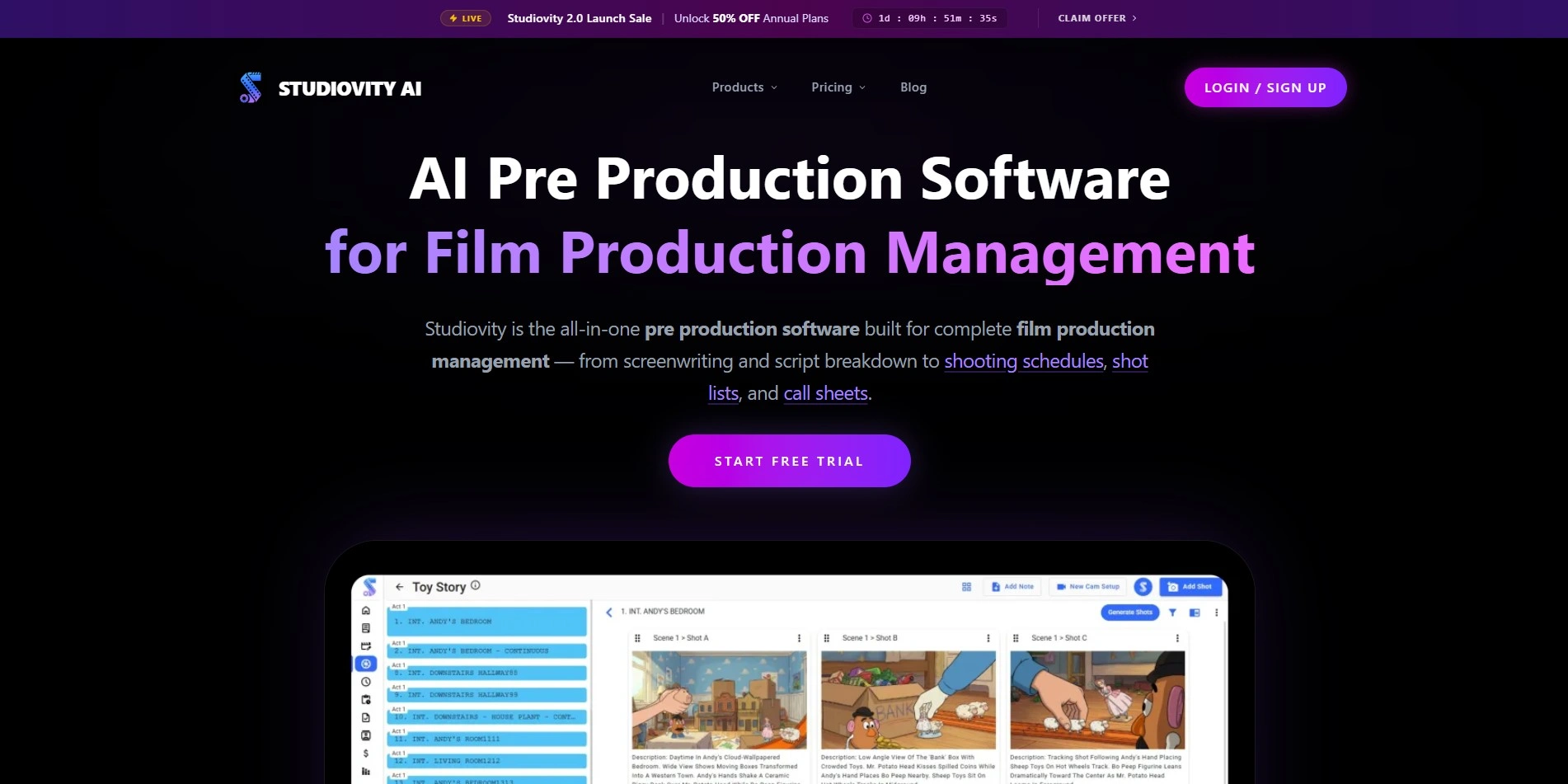
Studiovity is a web and mobile-based film production platform covering screenwriting, pre-production breakdowns, scheduling, call sheets, and storyboarding in one place. It supports script formats like Final Draft (.fdx), PDF, and Fountain, along with real-time collaboration and character relationship analysis tools.
Where Claude is a general assistant, Studiovity is an end-to-end production management suite used by studios and independent filmmakers alike. Its entry price is remarkably low for the screenwriting module alone, though the fuller pre-production suite used by professional studios is typically quoted separately.
Pros
- Very low entry price for screenwriting features
- Combines writing with full pre-production planning
- Supports 385+ regional languages
- Used by major studios and productions
Cons
- Full pre-production suite pricing is not fully public
- Free trial period considered short by some users
- Interface can feel dense for solo writers
- Limited standalone AI chat capability
11. Final Draft
Pricing: One-time license around $199.99–249.99 for Final Draft 12/13; education pricing available from about $90–100.
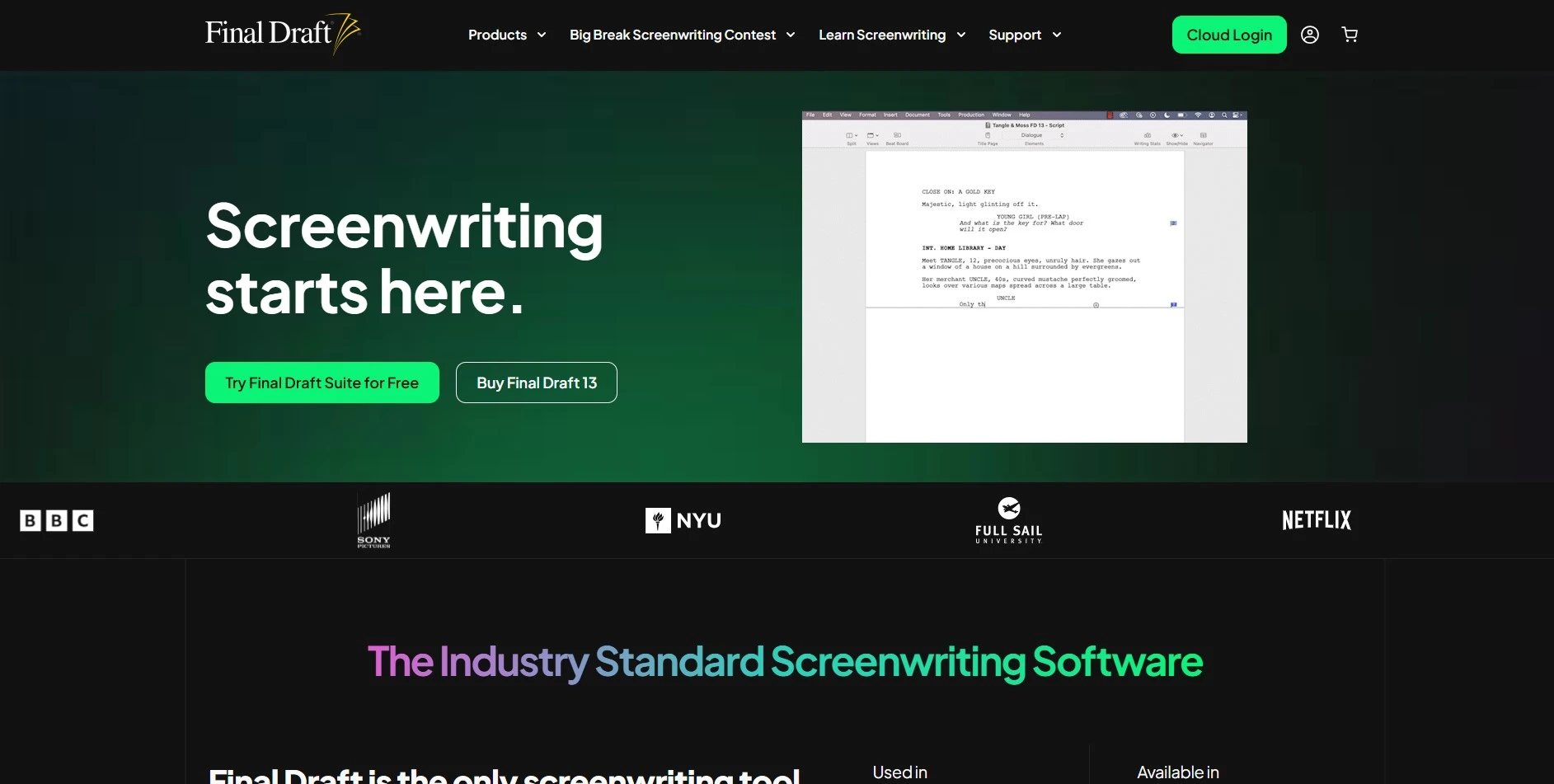
Final Draft is the long-standing industry-standard screenwriting software used across major film and TV productions, offering precise script formatting, a Beat Board for outlining, ScriptNotes for collaborative feedback, and speech-to-script dictation. Its .fdx file format is the de facto standard accepted by studios and agents.
Unlike Claude’s subscription model, Final Draft is sold as a one-time license, making it a bigger upfront investment but with no recurring fees. It remains the safest choice for writers who need seamless compatibility with production companies, though its price is steep next to free or low-cost alternatives that produce similarly formatted scripts.
Pros
- Industry-standard format accepted everywhere
- One-time purchase, no ongoing subscription
- Robust outlining and revision tracking tools
- Strong reputation among studios and agents
Cons
- High upfront cost compared to cloud alternatives
- Major version upgrades cost extra
- Collaboration features are weaker than newer cloud tools
- No native AI writing assistant built in
12. ChatGPT

Pricing: Free $0, Go $8/mo, Plus $20/mo, Pro $100–200/mo, Business ~$25–30/user/mo, Enterprise custom.
ChatGPT, developed by OpenAI, is the most widely used general-purpose AI chatbot and Claude’s most direct competitor, offering conversational assistance, coding help, image generation, and deep research tools across a tiered subscription ladder. Its Plus plan is widely regarded as the best value entry point for regular users.
ChatGPT’s pricing structure has grown more complex over time, now spanning six tiers with different model access at each level. Compared to Claude, ChatGPT offers a broader ecosystem of built-in tools like Sora and Codex, though the free tier now runs an older model generation than paid plans, and the pricing ladder can be confusing to navigate.
Pros
- Massive user base and broad tool ecosystem
- Plus plan offers strong value at $20/month
- Built-in image generation, Codex, and Deep Research
- Frequent model updates and feature rollouts
Cons
- Six pricing tiers can be confusing to compare
- Free tier lags behind on model quality
- Ads now appear on Free and Go tiers in some regions
- No public trial for the Plus subscription
| Alternative | Description |
|---|---|
| Sudowrite | AI writing assistant purpose-built for fiction authors, featuring Story Bible, Describe, and Rewrite tools. |
| Google Gemini | Google’s multimodal AI assistant, tightly integrated with Search, Gmail, Docs, and Workspace. |
| Highland 2 | Mac-only distraction-free screenwriting and novel app built on the plain-text Fountain format. |
| Storyflow | Visual canvas tool combining character cards, story blueprints, and lightweight AI for narrative planning. |
| WriterDuet | Cloud-based, real-time collaborative screenwriting platform with industry-standard formatting. |
| Powtoon AI Script Writer | Video creation platform pairing an AI script generator with animated explainer video production. |
| Copy.ai | Marketing-focused AI writing and workflow automation platform for sales and content teams. |
| Beemgee | Browser-based story development tool for outlining plot structure and character motivation. |
| Arc Studio Pro | Modern cloud-based screenwriting software with real-time collaboration and Table Read audio. |
| Studiovity | End-to-end film production platform combining screenwriting with pre-production management. |
| Final Draft | Industry-standard, one-time-purchase screenwriting software used by major studios worldwide. |
| ChatGPT | OpenAI’s flagship conversational AI assistant with a broad six-tier pricing ladder and tool ecosystem. |
Conclusion
Choosing the right Claude alternative ultimately depends on what you are trying to create. General-purpose thinkers and researchers will likely gravitate toward ChatGPT or Google Gemini, while novelists benefit more from Sudowrite, Storyflow, or Beemgee’s structural planning tools. Screenwriters have a rich set of dedicated options in Highland 2, WriterDuet, Arc Studio Pro, Studiovity, and the industry-standard Final Draft, and video creators scripting explainer content will find Powtoon’s AI Script Writer especially useful. Rather than searching for a single all-purpose replacement for Claude, many creators end up combining two or three of these tools, one for AI-assisted drafting and another for structural planning or industry-standard formatting, to build a workflow that fits their exact creative process.


