

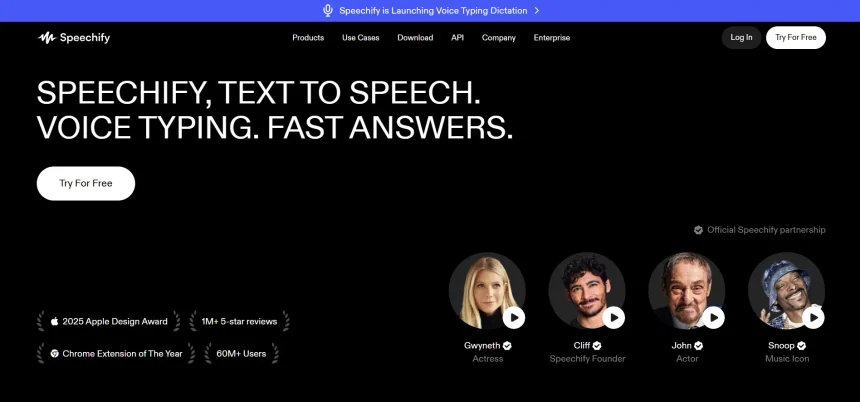
Speechify has become a household name in text-to-speech, but it isn’t the only option for creators, developers, and businesses who need natural-sounding voice generation. Whether you want richer voice cloning, better pricing, multilingual dubbing, or a full audio production suite, there are several platforms worth exploring. Below is a detailed roundup of 11 Speechify Alternatives, covering their trials, pricing, and pros and cons to help you choose the right fit for your workflow.
1. Lovo.ai
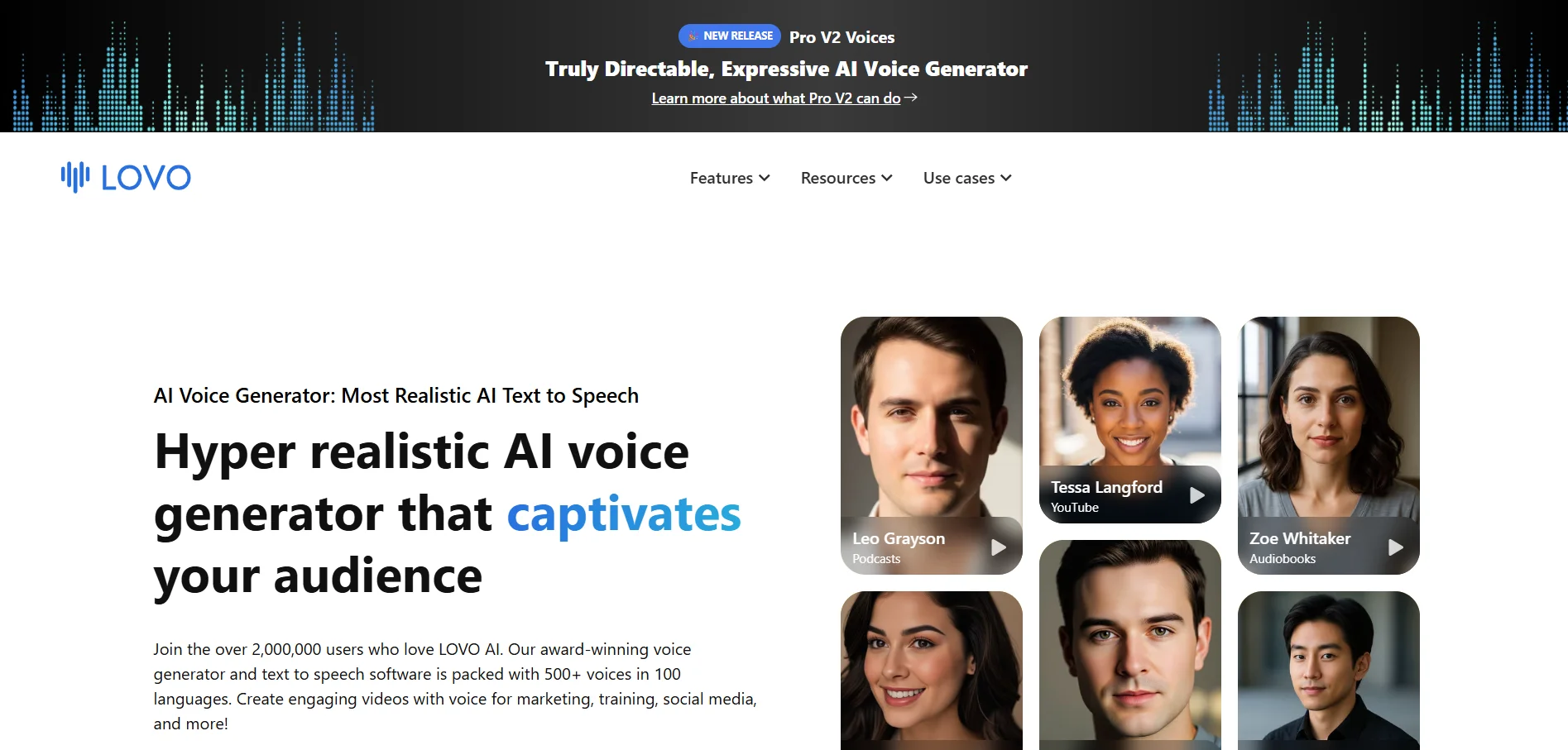
Lovo.ai offers a 14-day free trial on its Pro plan along with a limited free version for testing basic features. Its pricing includes a Basic plan for around $24/month, Pro at roughly $48/month, and Pro+ at about $149/month, with an Enterprise tier available at custom pricing for larger teams and agencies needing higher usage limits.
Lovo.ai, through its Genny platform, provides over 500 voices across 100+ languages with adjustable emotions, making it popular for video narration and e-learning. It also bundles a video editor, AI script writer, and subtitle generator, so creators don’t need to juggle multiple apps for a single voiceover project.
Pros
- Huge voice and language library
- All-in-one video and voice editor
- Voice cloning from short samples
Cons
- Mixed customer support reviews
- Free trial exports carry watermarks
- Billing complaints reported by some users
2. Cartesia
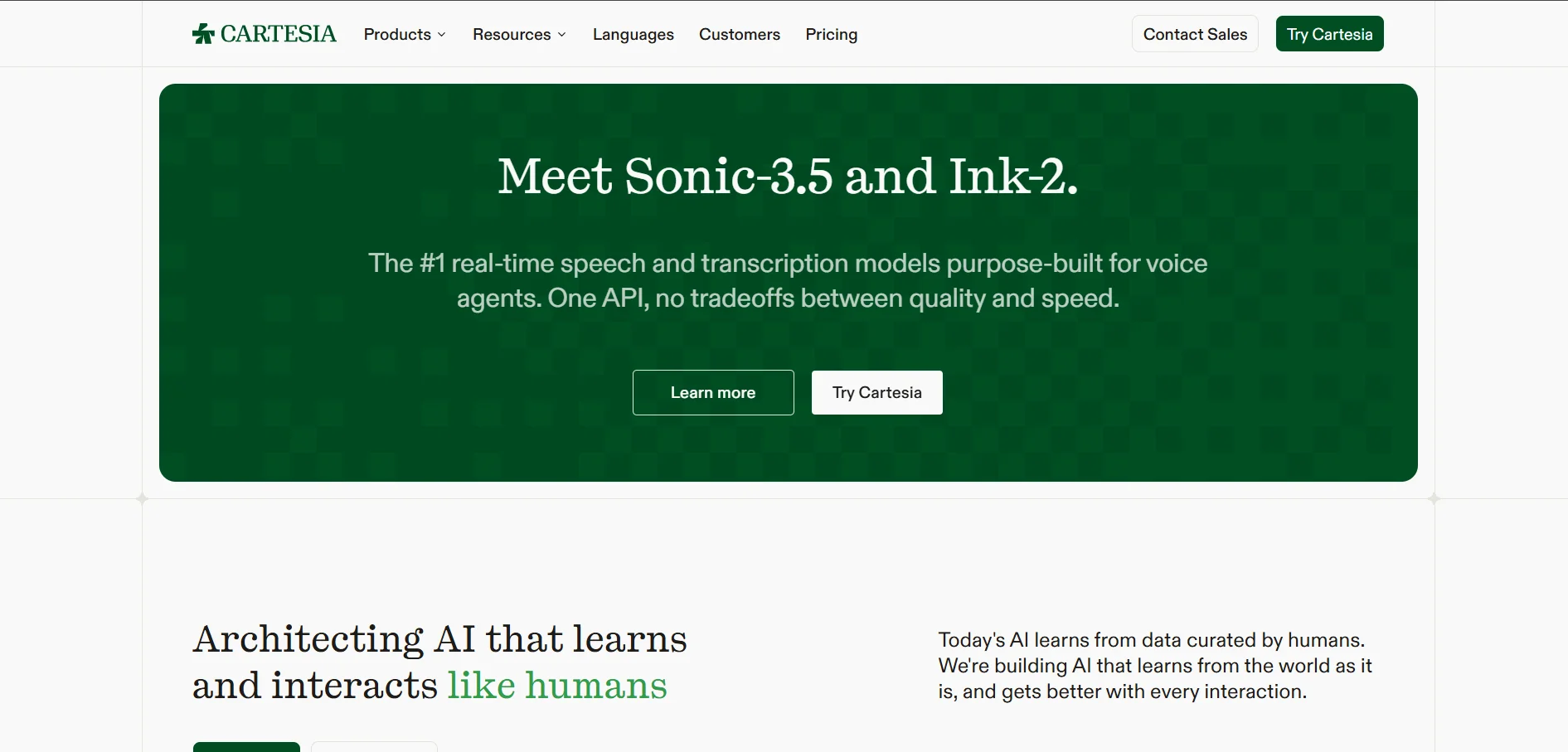
Cartesia provides a free tier for testing with a limited monthly credit allowance, letting developers prototype before committing. Paid tiers start around $5/month for the Pro plan, scaling to a Startup tier near $49/month, and a Scale plan around $239/month billed annually for high-volume production and enterprise-grade voice agent deployments.
Cartesia is built for ultra-low-latency, real-time speech synthesis, making it ideal for voice agents and conversational AI rather than simple narration. Its Sonic model delivers sub-80ms latency, and it supports instant voice cloning, streaming audio output, and multilingual generation for developers building interactive voice applications.
Pros
- Extremely low latency for real-time use
- Developer-friendly API
- Instant voice cloning included on paid tiers
Cons
- Credit-based billing can be confusing
- Not built for non-technical users
- Free tier lacks commercial rights
3. Murf.AI
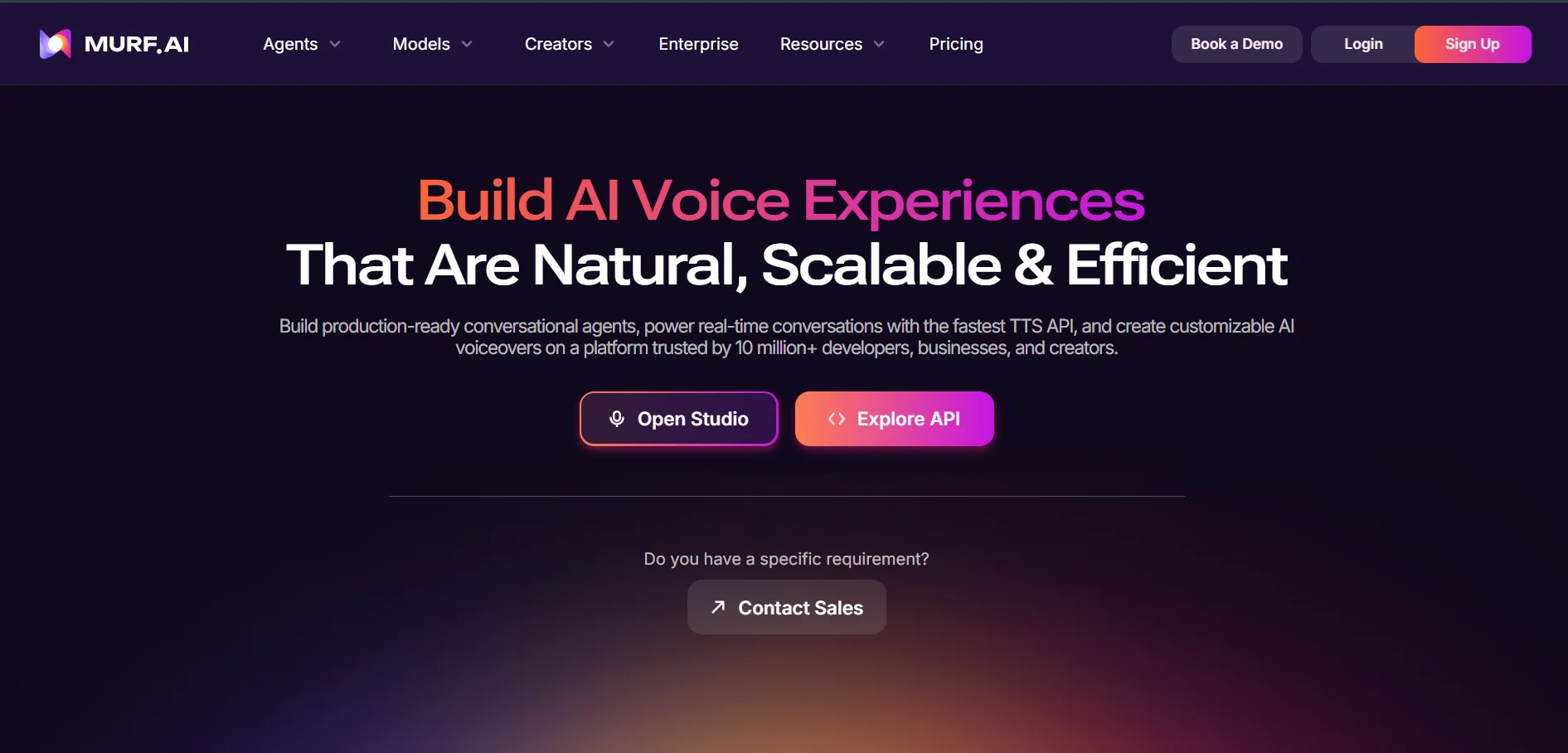
Murf.AI offers a free trial with about 10 minutes of voice generation, though downloads and commercial use are restricted until upgrading. Paid plans include the Creator tier at roughly $29/month (or $19/month billed annually), Business around $66–$99/month, and a custom-priced Enterprise plan for larger organizations.
Murf.AI is a polished voiceover studio offering 120+ voices, a visual timeline editor, and integrations with tools like Canva. It’s a favorite for training content, explainer videos, and presentations, with an ISO 42001 certification that appeals to businesses in regulated industries needing compliance assurance.
Pros
- Professional, easy-to-use editor
- Strong voice quality and variety
- Canva and PowerPoint integrations
Cons
- Free plan blocks downloads entirely
- Usage measured in limited voice-generation hours
- API pricing separate from Studio plans
4. Noiz.ai
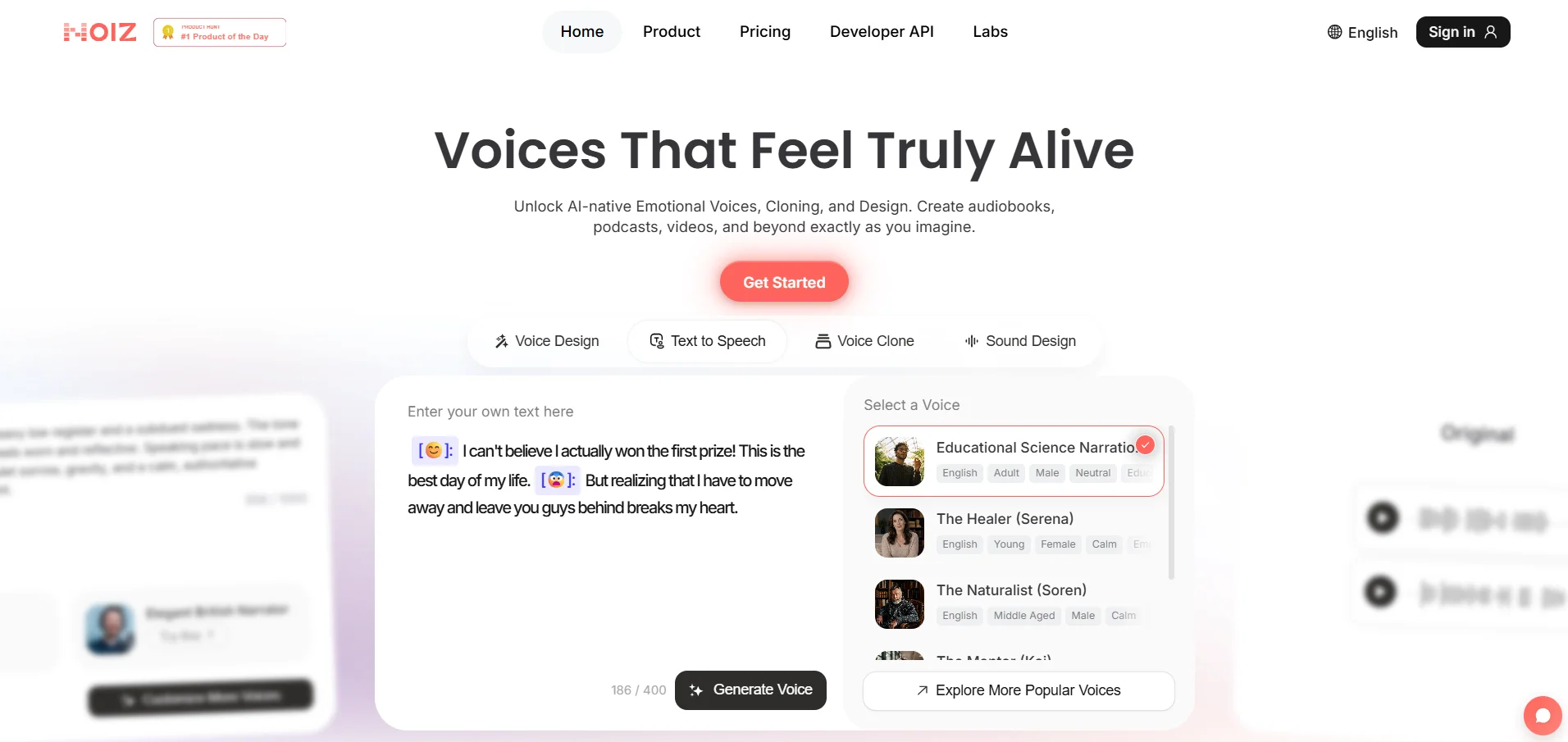
Noiz.ai offers a free-forever plan along with a full-function trial account that unlocks voice cloning and emotional TTS for evaluation. Paid plans are budget-friendly, starting around $2.90/month for the Starter tier and about $8.90/month for the Creator tier, making it one of the more affordable options on this list.
Noiz.ai focuses heavily on emotional expression, letting users control tone through emoji-based cues for happiness, sadness, or excitement. It also supports fast voice cloning from just a few seconds of audio and includes multilingual dubbing, making it well-suited for storytelling, social clips, and character-driven content.
Pros
- Very affordable entry pricing
- Unique emoji-based emotion control
- Fast voice cloning from short samples
Cons
- Smaller brand with less track record
- Limited language support for dubbing
- Fewer advanced enterprise features
5. Resemble.ai
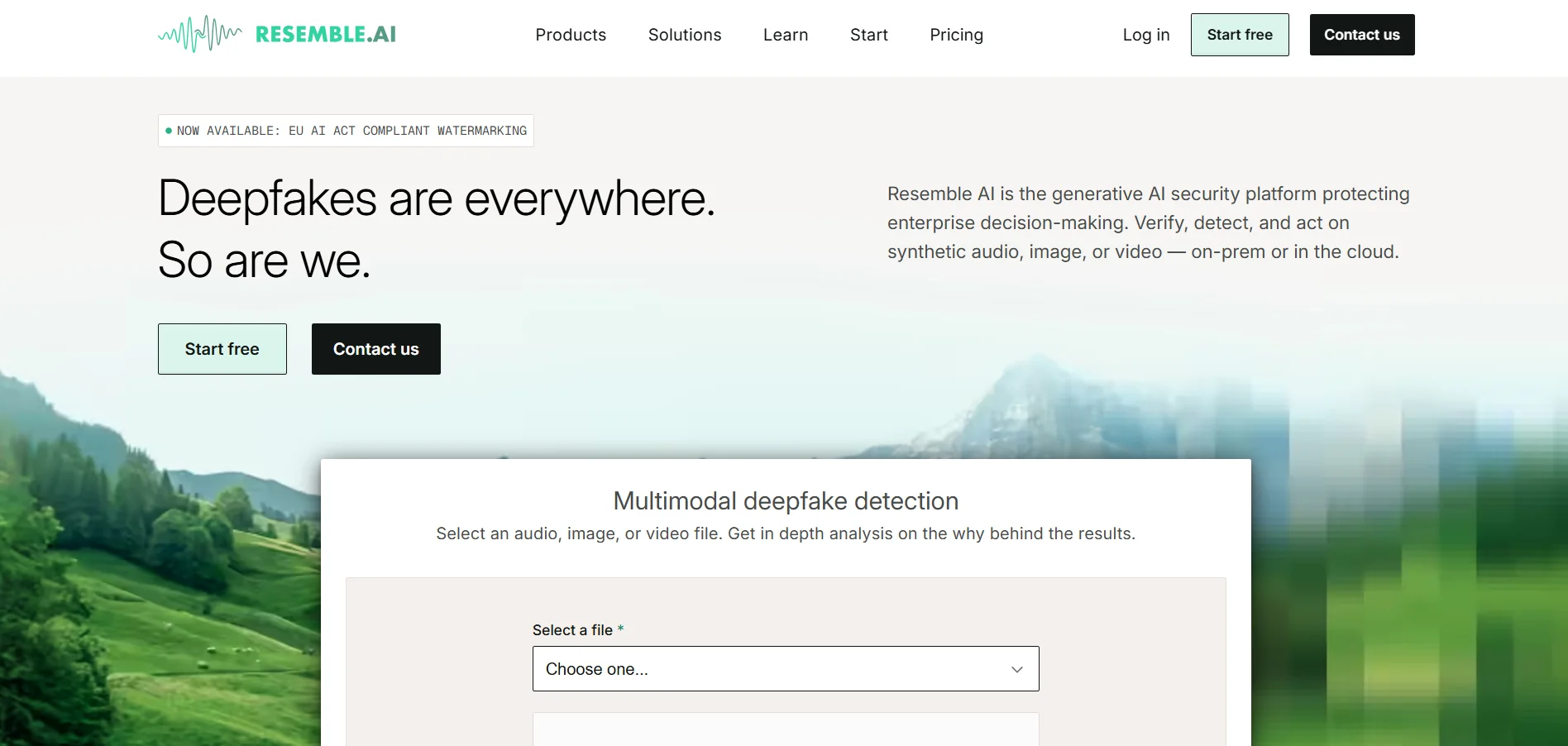
Resemble.ai runs on a Flex plan that requires no subscription fee and lets users start free, buying credits as needed with no minimum commitment. The Team plan costs around $350/month ($280/month billed annually), while Business is priced near $1,000/month ($800/month annually), plus a custom Enterprise tier for large-scale deployments.
Resemble.ai specializes in voice cloning, deepfake detection, and generative voice security, making it a strong pick for enterprises concerned about AI voice misuse. Its Detect and Watermarker tools add a layer of trust and authentication that few competitors offer alongside standard text-to-speech generation.
Pros
- Pay-as-you-go flexibility with no minimums
- Built-in deepfake detection and watermarking
- Credits never expire on Flex plan
Cons
- Higher-tier plans are expensive for small teams
- More enterprise-security focused than creator-focused
- Steeper learning curve for beginners
6. Uberduck
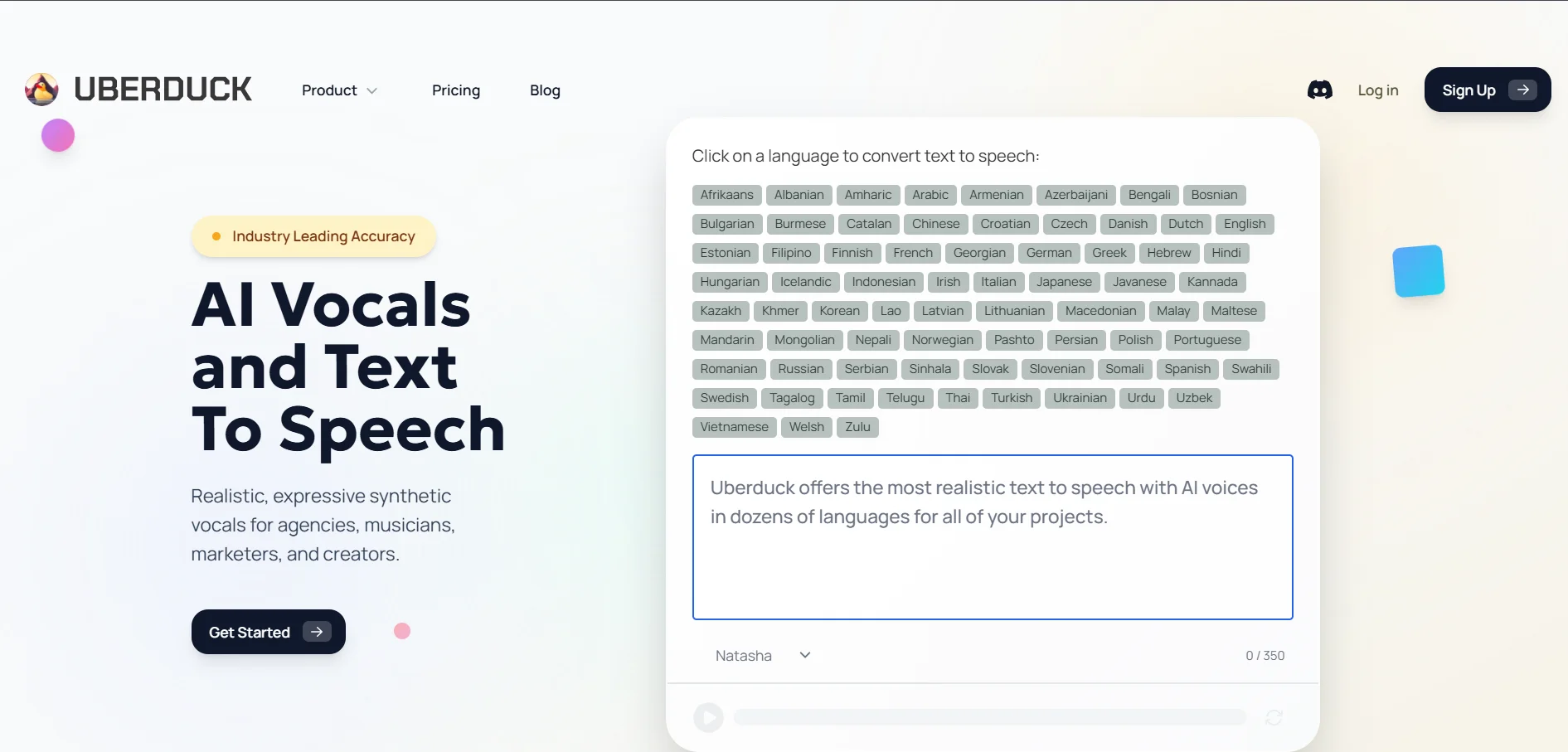
Uberduck offers a free plan with a limited monthly credit allowance, letting users experiment with its voice synthesis before upgrading. Paid plans start at approximately $4/month, offering more generation credits, faster processing, and access to a wider range of character and celebrity-style voice options for creative projects.
Uberduck is best known for its playful, creative approach to voice synthesis, including its popular rap generator and meme-style voice options. It supports over 100 languages and appeals to hobbyists, streamers, and content creators who want quirky, fun audio rather than strictly professional-grade narration.
Pros
- Very low-cost entry pricing
- Fun, creative voice styles
- Supports 100+ languages
Cons
- Interface can feel gimmicky
- Lower audio quality than premium competitors
- Not ideal for professional business use
7. Podcastle
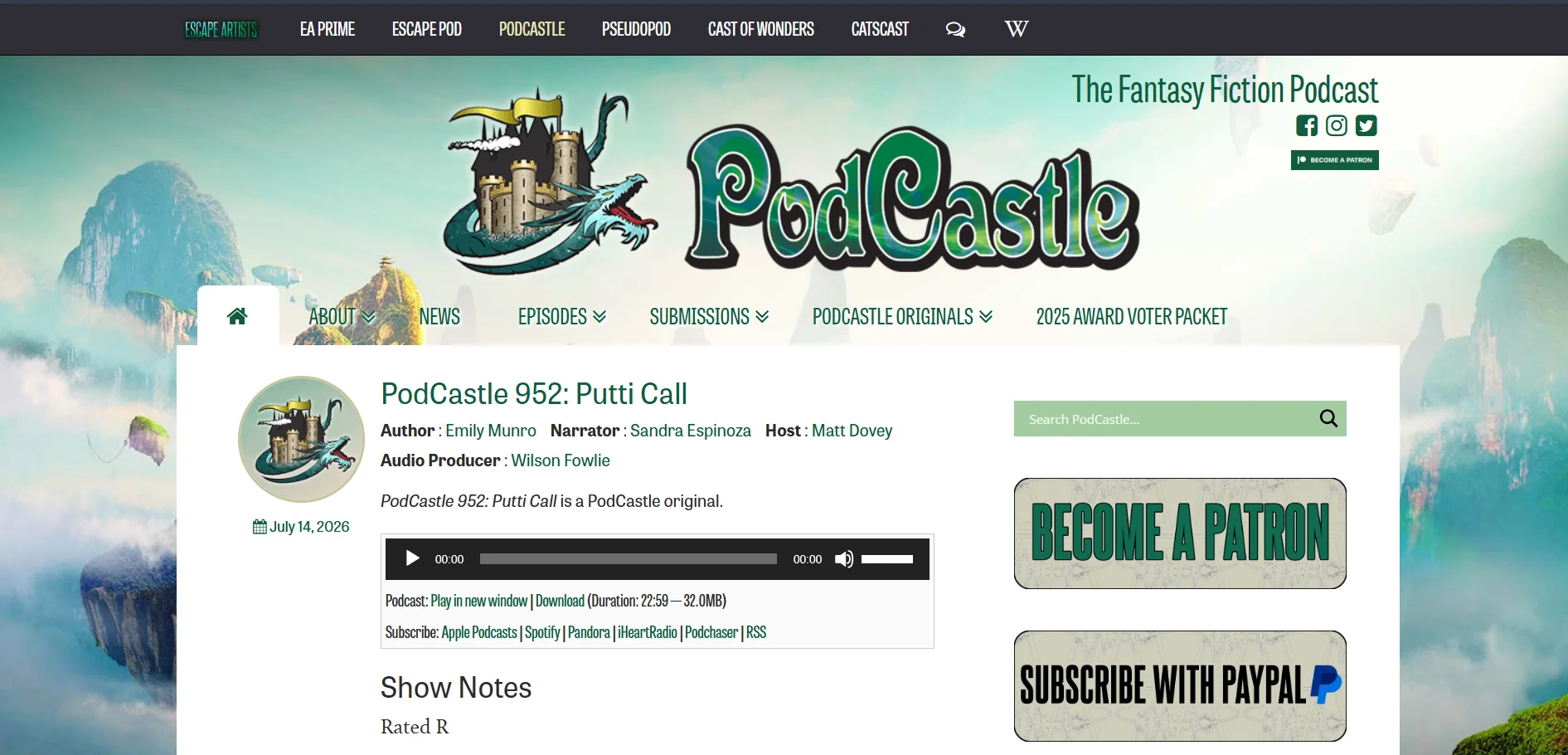
Podcastle provides a genuinely usable free plan with core recording and editing tools, along with limited AI credits and watermarked exports. Paid tiers include Storyteller at roughly $11.99/month and Pro at about $23.99/month, with some listings citing Essentials, Business, and Enterprise tiers reaching up to $64.99/month or custom pricing.
Podcastle is an all-in-one audio and video production platform combining recording, AI editing, transcription, and text-to-speech in one workspace. Its Revoice feature lets creators clone their own voice for quick edits, and it’s especially popular among podcasters who want a single tool instead of separate recording and voice-generation apps.
Pros
- All-in-one podcast and voice platform
- Revoice feature for personal voice cloning
- Generous free plan for beginners
Cons
- Some users report billing and refund issues
- Free plan adds watermarks to exports
- Higher tiers needed for full TTS hours
8. Pixbim
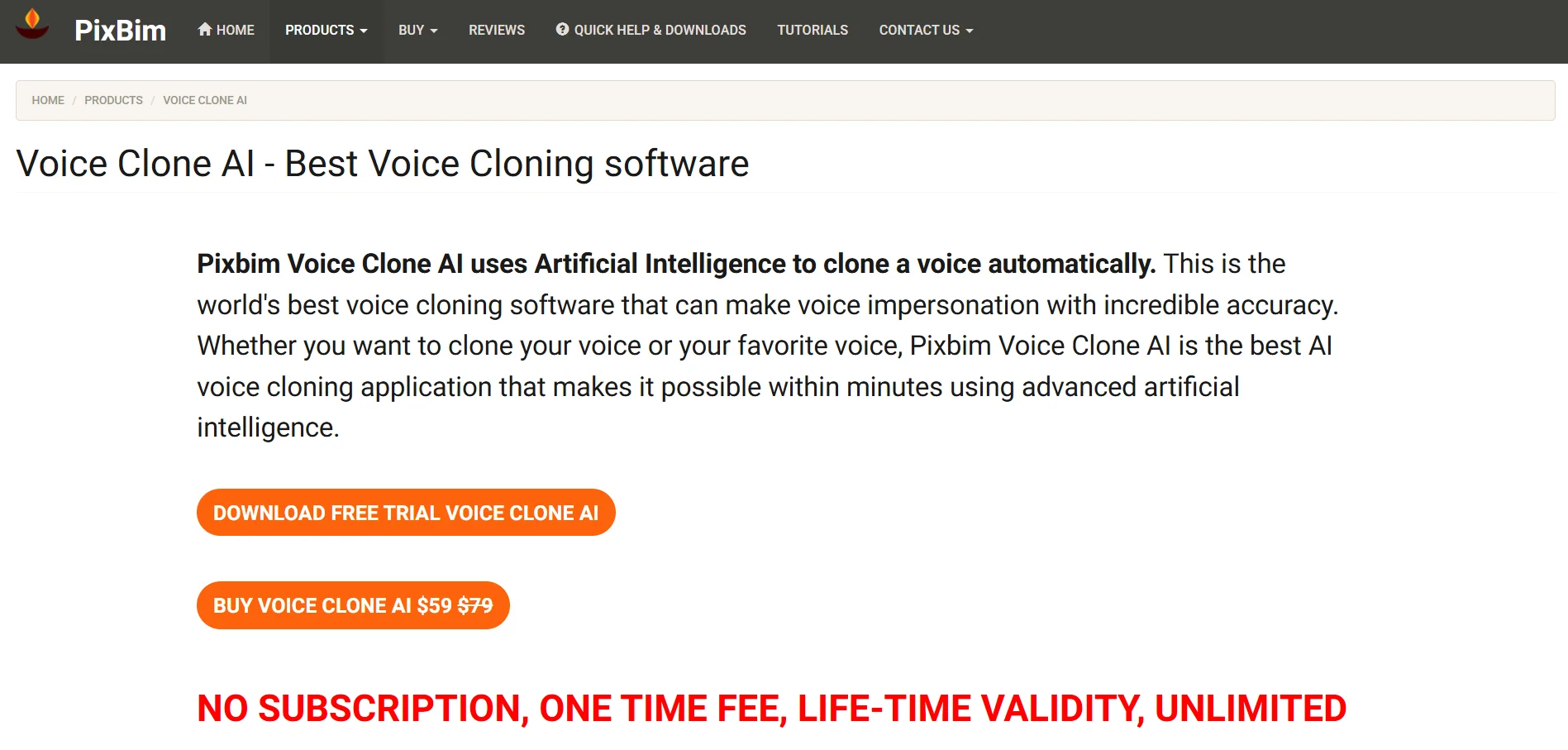
Pixbim offers a free trial version of its AI tools, including voice and video features, allowing users to test output quality before subscribing. Its paid plans are typically offered as one-time purchases or affordable monthly subscriptions, generally priced well below premium competitors, making it accessible for individual creators on tighter budgets.
Pixbim focuses on AI-powered video and voice enhancement tools, including voice changers, video upscaling, and face-related AI utilities alongside text-to-speech capabilities. It’s geared toward hobbyist creators and small businesses who want simple, desktop-friendly AI tools without committing to complex subscription ecosystems.
Pros
- Budget-friendly one-time pricing options
- Simple, desktop-based tools
- Bundles voice with video enhancement features
Cons
- Smaller voice library than major competitors
- Less suited for enterprise-scale needs
- Fewer language options overall
9. Supertone Play
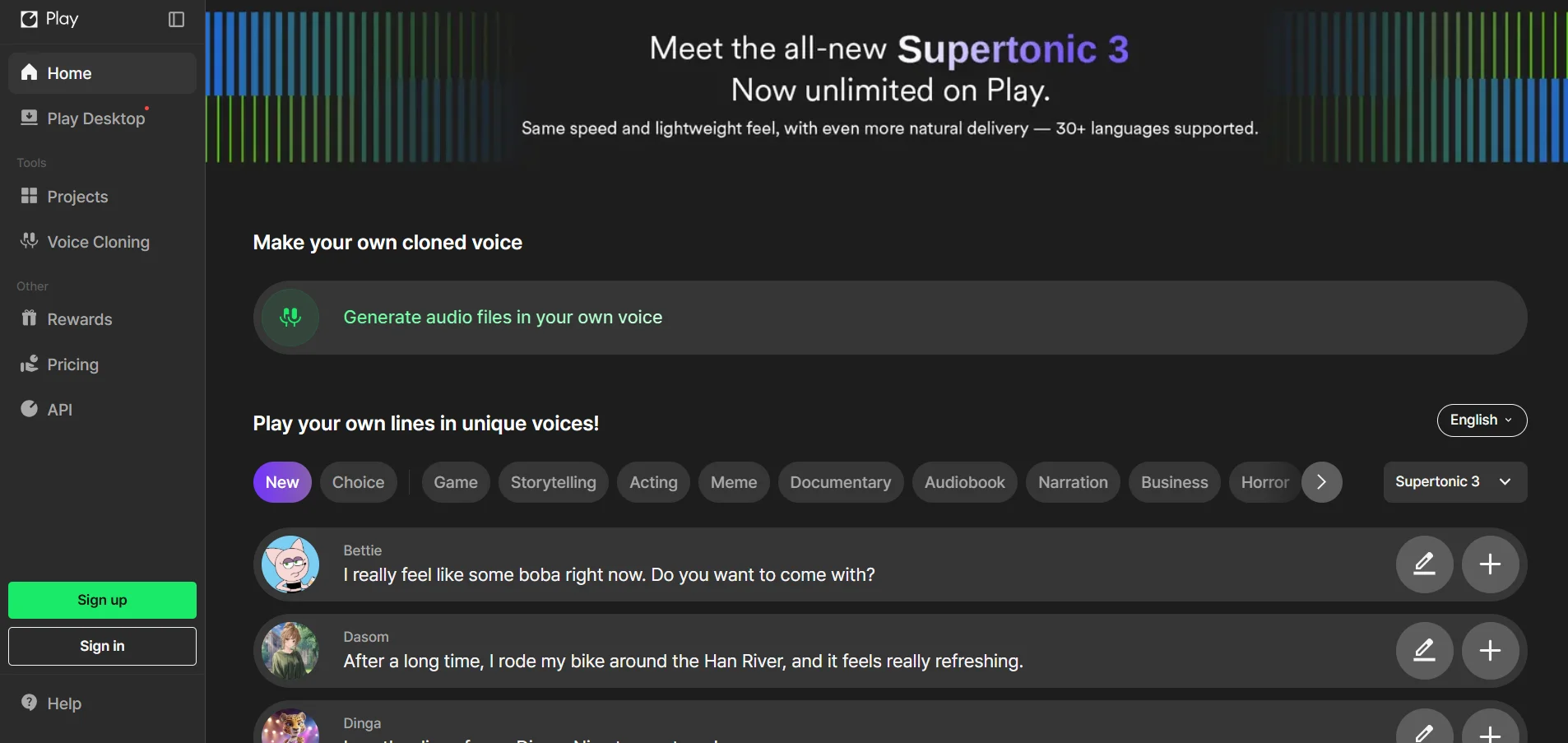
Supertone Play offers a free trial that lets users sample its emotional voice synthesis technology before subscribing to a paid plan. Pricing is typically structured around monthly subscription tiers based on usage volume and voice cloning access, with exact rates best confirmed on their official pricing page as plans are region-specific.
Supertone Play, developed by the team behind Supertone’s audio AI research, emphasizes highly expressive and emotionally nuanced voice synthesis. It’s popular in gaming, animation, and entertainment production where subtle emotional delivery matters more than flat, neutral narration typical of many TTS tools.
Pros
- Strong emotional expressiveness
- Popular for gaming and animation voiceovers
- Backed by dedicated audio AI research
Cons
- Less known outside entertainment niches
- Pricing details less transparent than rivals
- Smaller community and support resources
10. VEED
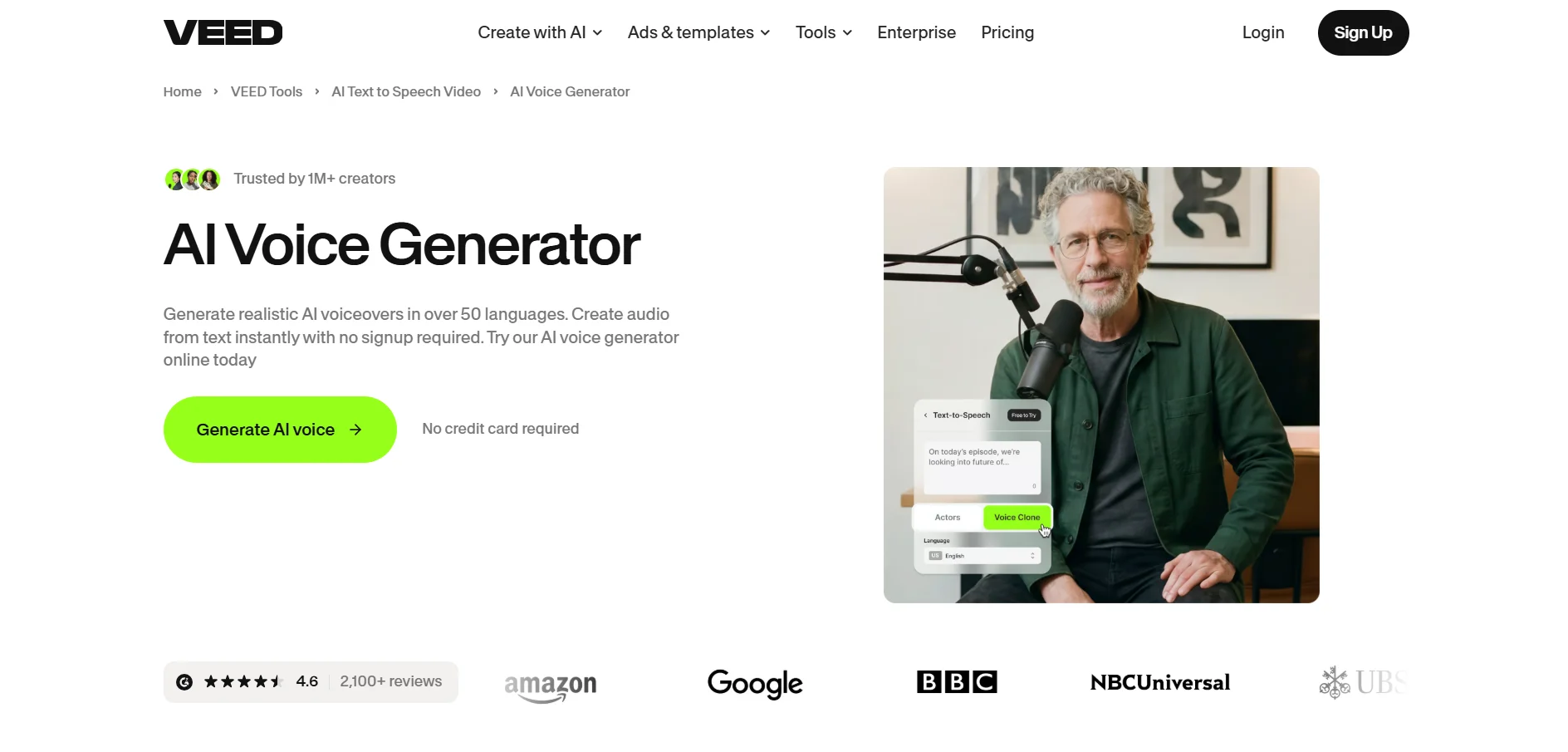
VEED offers a free plan that’s genuinely usable for basic projects, along with a free trial period on all paid tiers before committing to a subscription. Paid plans scale from an affordable entry tier for individuals to higher-priced team plans, with annual billing typically saving users 20–30% compared to monthly pricing.
VEED is primarily a browser-based video editor that includes built-in text-to-speech, AI avatars, subtitles, and audio cleanup tools. It’s a strong pick for creators who need voice generation as part of a broader video production workflow rather than as a standalone TTS product.
Pros
- No downloads needed, fully browser-based
- Combines TTS with full video editing
- Usable free plan for simple projects
Cons
- TTS is secondary to video editing focus
- Smaller voice library than dedicated TTS tools
- Free plan has export limitations
11. MiniMax
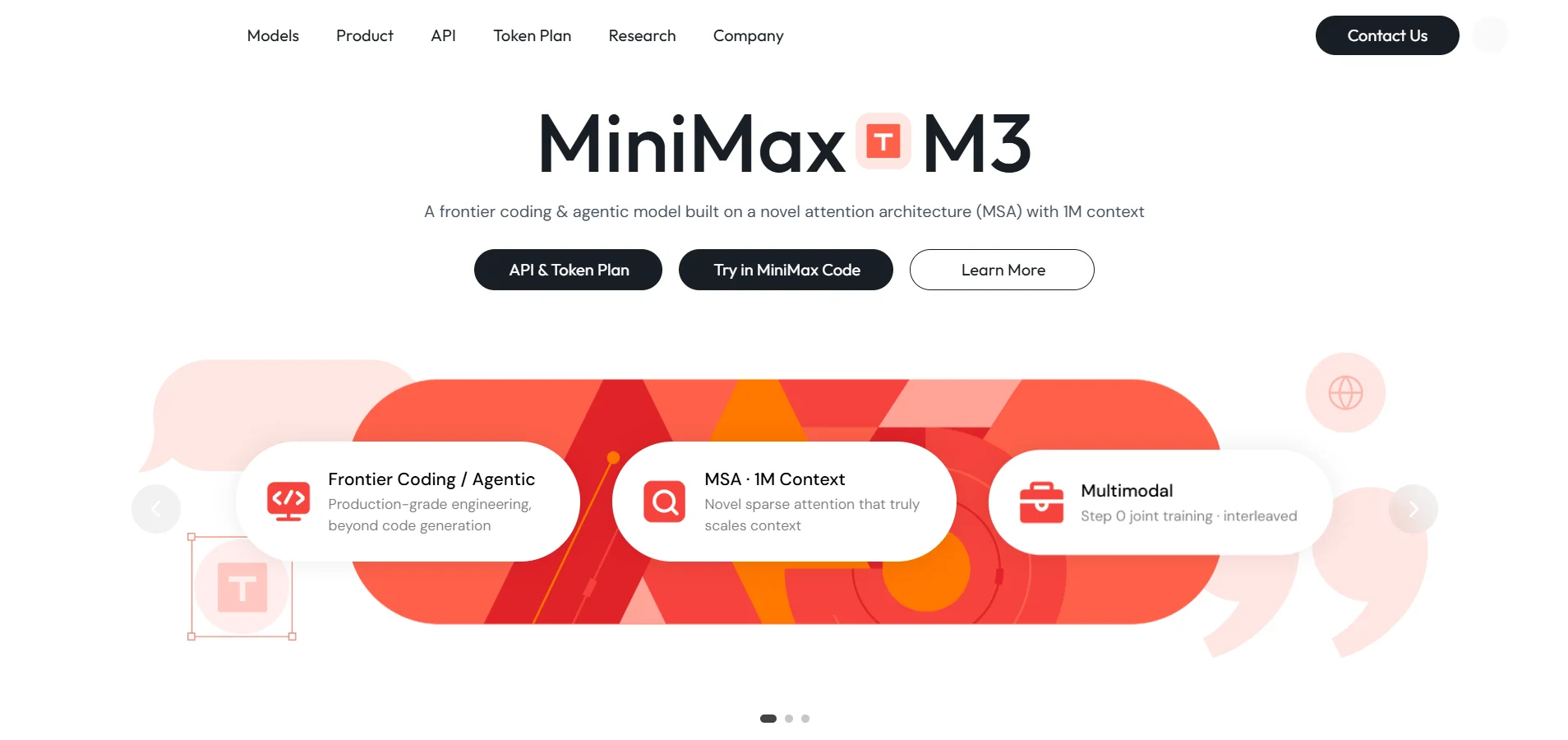
MiniMax provides a free trial or free-tier access to its text-to-speech and voice cloning API, allowing developers to test output quality before committing. Paid usage is typically billed on a pay-per-character or credit basis, competitive with other API-first voice platforms, with exact rates available on their official developer pricing page.
MiniMax is an AI company offering a multimodal suite including text-to-speech, voice cloning, and large language models, popular among developers building voice-enabled applications. Its TTS output is known for natural intonation and strong multilingual support, making it a solid API-based alternative for teams building custom voice products.
Pros
- Competitive API pricing for developers
- Natural-sounding multilingual voices
- Part of a broader multimodal AI suite
Cons
- Primarily developer-focused, less no-code friendly
- Documentation can be less mature than larger rivals
- Fewer built-in editing tools compared to studio platforms
Comparison Table
| Alternative | Description |
|---|---|
| Lovo.ai | All-in-one voice and video platform with 500+ voices, video editor, and voice cloning. |
| Cartesia | Ultra-low-latency real-time TTS API built for voice agents and conversational AI apps. |
| Murf.AI | Professional voiceover studio with a visual editor, 120+ voices, and business integrations. |
| Noiz.ai | Affordable, emotion-driven TTS tool with fast voice cloning and emoji-based tone control. |
| Resemble.ai | Voice cloning and deepfake detection platform aimed at enterprise-grade AI voice security. |
| Uberduck | Playful, low-cost voice synthesis tool known for creative and meme-style voice options. |
| Podcastle | All-in-one podcast and video creation suite with recording, editing, and TTS features. |
| Pixbim | Budget-friendly AI voice and video enhancement tools with one-time purchase options. |
| Supertone Play | Emotionally expressive voice synthesis platform popular in gaming and animation production. |
| VEED | Browser-based video editor with built-in TTS, AI avatars, and subtitle generation. |
| Minimax | Developer-focused multimodal AI suite offering natural-sounding, multilingual TTS via API. |
Conclusion
Speechify remains a solid choice for many users, but the alternatives above show there’s no shortage of options depending on your specific needs. Developers building voice agents may prefer Cartesia or Minimax, podcasters might lean toward Podcastle or Murf.AI, and creators wanting emotional depth could explore Noiz.ai or Supertone Play. Testing free trials across a few platforms is the best way to find the voice quality, pricing, and workflow that fits your project.


