

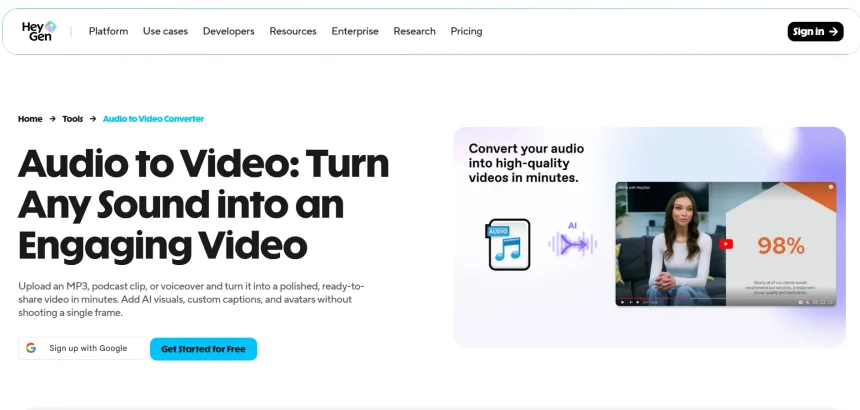
HeyGen has become a go-to name for AI avatar videos and voice generation, but it isn’t the only option worth considering. Depending on your budget, workflow, and whether you need voice cloning, dubbing, podcasting tools, or full text-to-video pipelines, another platform may fit your needs better. Below, we break down 12 strong HeyGen Alternatives covering their free trials, official pricing, and honest pros and cons so you can pick the right tool for your content creation goals in 2026.
1. WellSaid Labs
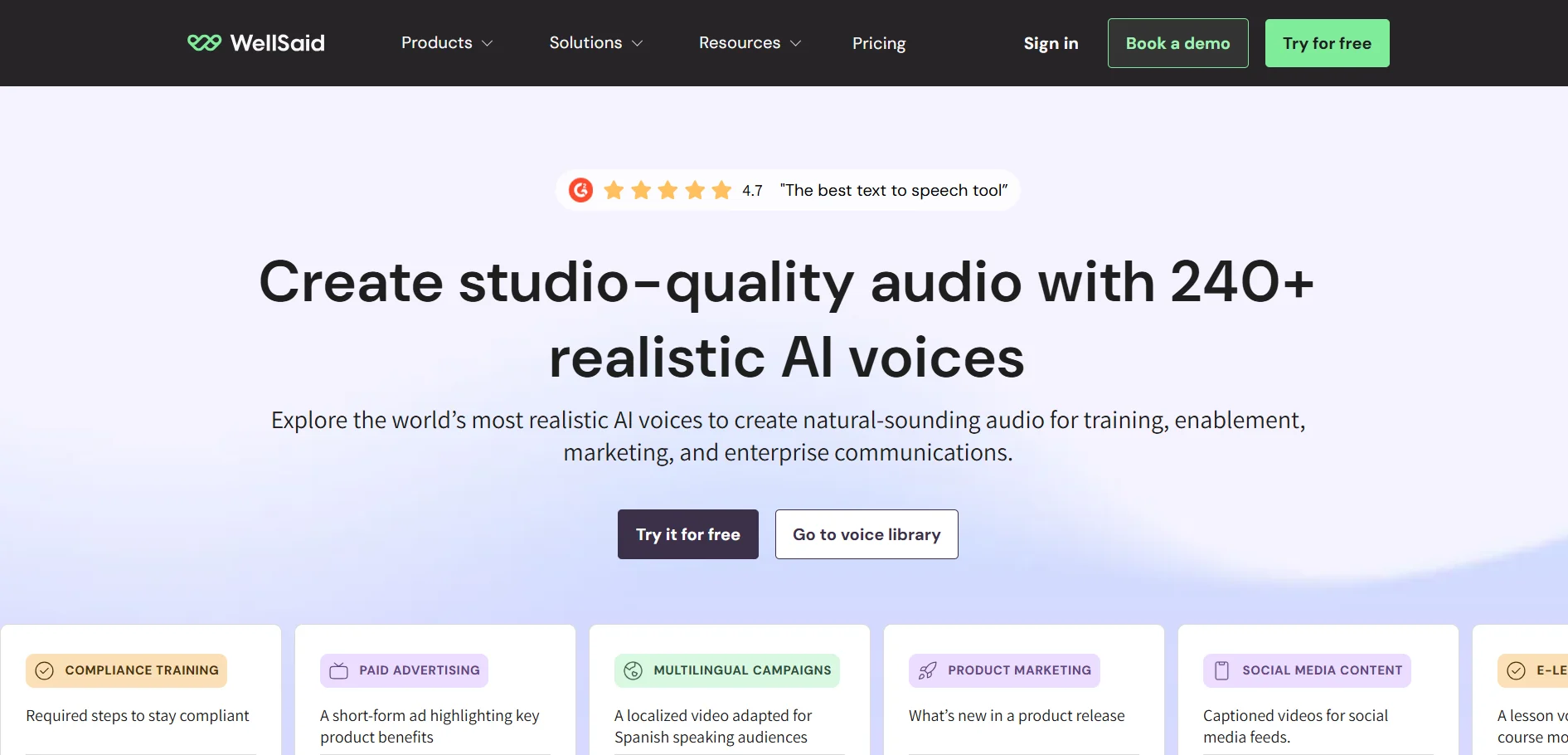
7-Day Free Trial Voice.ai offers a one-week free trial with full access to Studio and API and all English voices, though downloads are disabled during the trial period. Once the trial ends, users must choose a paid subscription to keep creating content, since there’s no permanent free tier available on this platform.
WellSaid Labs is best known for its natural-sounding voice avatars aimed at corporate and e-learning content. The interface favors desktop use, and clips are capped at 5,000 characters on lower tiers. It supports around 15 languages, which is fewer than some competitors, but voice quality remains a standout feature that reviewers consistently praise.
Pros
- Extremely natural, human-like voice avatars
- Strong enterprise security (SOC 2, SSO)
- Adobe and Canva integrations on higher tiers
Cons
- No permanent free plan
- Limited to about 15 languages
- Pricing is high compared to newer competitors
2. PlayHT
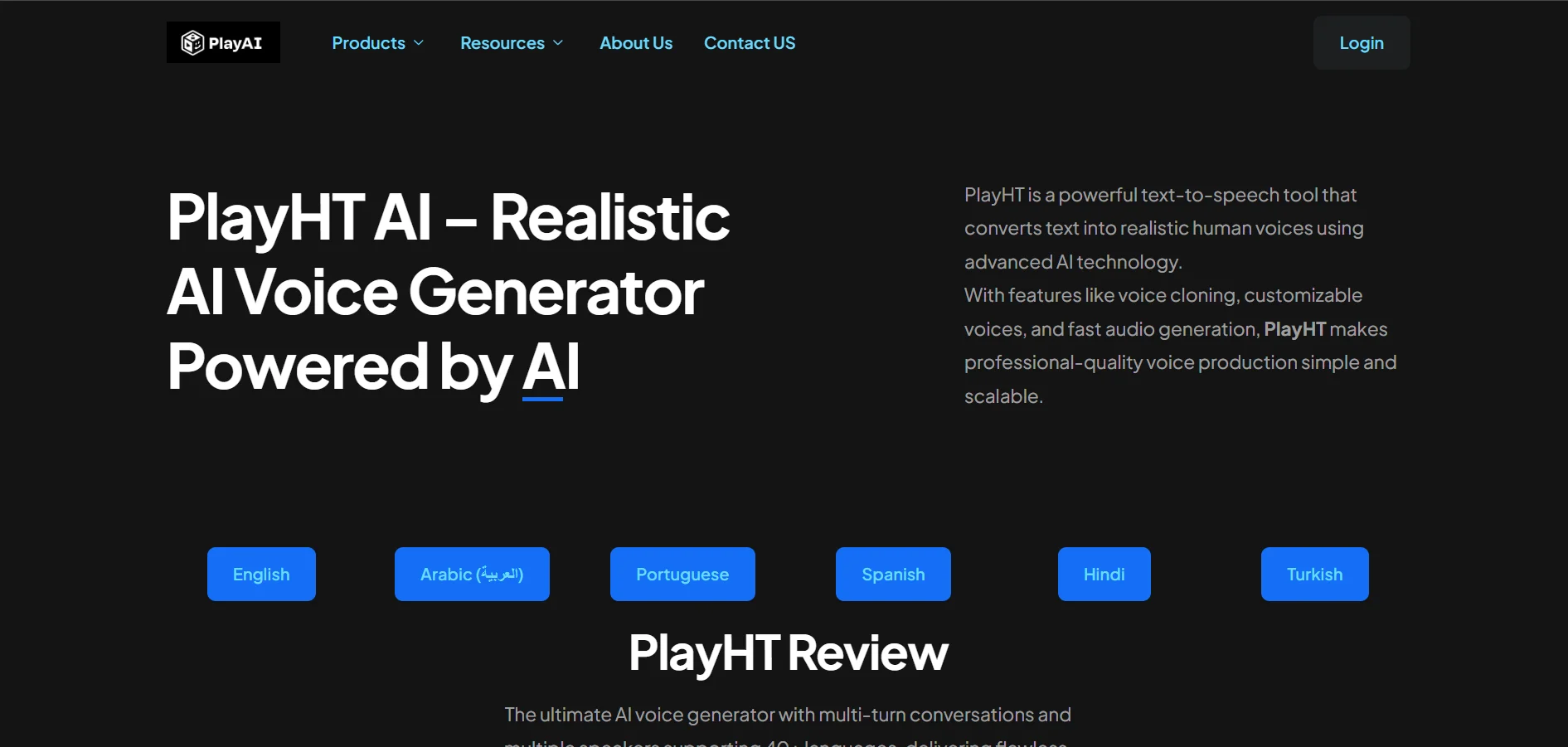
Free Forever Plan (No Credit Card) PlayHT doesn’t run a time-limited trial; instead it offers a free-forever Starter plan so users can test core text-to-speech features before upgrading. New paid subscribers also get a 7-day money-back guarantee, giving extra room to evaluate the platform risk-free.
PlayHT stands out for its massive voice library of over 800 voices across 140+ languages, plus instant voice cloning and an API built for real-time applications. Credits roll over monthly on paid plans and never expire on prepaid packs, which makes budgeting predictable for teams with fluctuating production needs.
Pros
- Huge voice and language library
- Free-forever tier with no card required
- Credits roll over instead of resetting
Cons
- Refund window is short (24–48 hours in some cases)
- Free plan requires attribution and blocks commercial use
- Some users report slow customer support
3. Podcastle
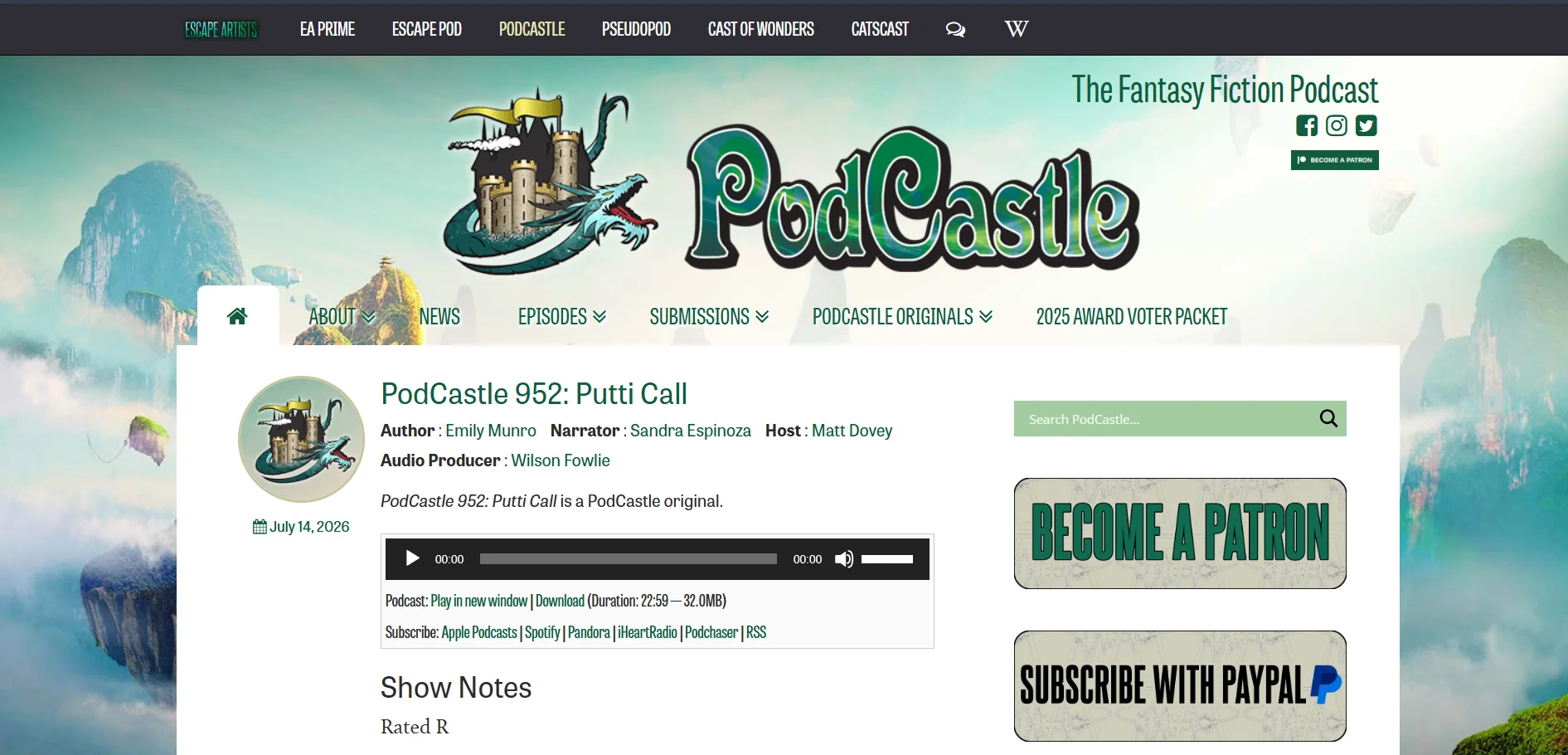
Free Tier Available Podcastle offers a genuine free tier rather than a countdown trial, letting creators record, edit, and publish podcasts with core AI editing tools before deciding whether to upgrade. This makes it easy to test its interface and audio quality without any financial commitment upfront.
Podcastle is built specifically around podcasting workflows, combining recording, AI-based noise removal, transcription, and text-to-speech into a single browser-based studio. It’s a strong pick for creators who want an all-in-one platform rather than stitching together separate recording and voice-generation tools for their shows.
Pros
- All-in-one podcast recording and editing suite
- Affordable entry-level paid plans
- Browser-based, no heavy software needed
Cons
- Voice library is smaller than dedicated TTS tools
- Free tier has tight usage limits
- Less suited for avatar or video-first content
4. Speechify
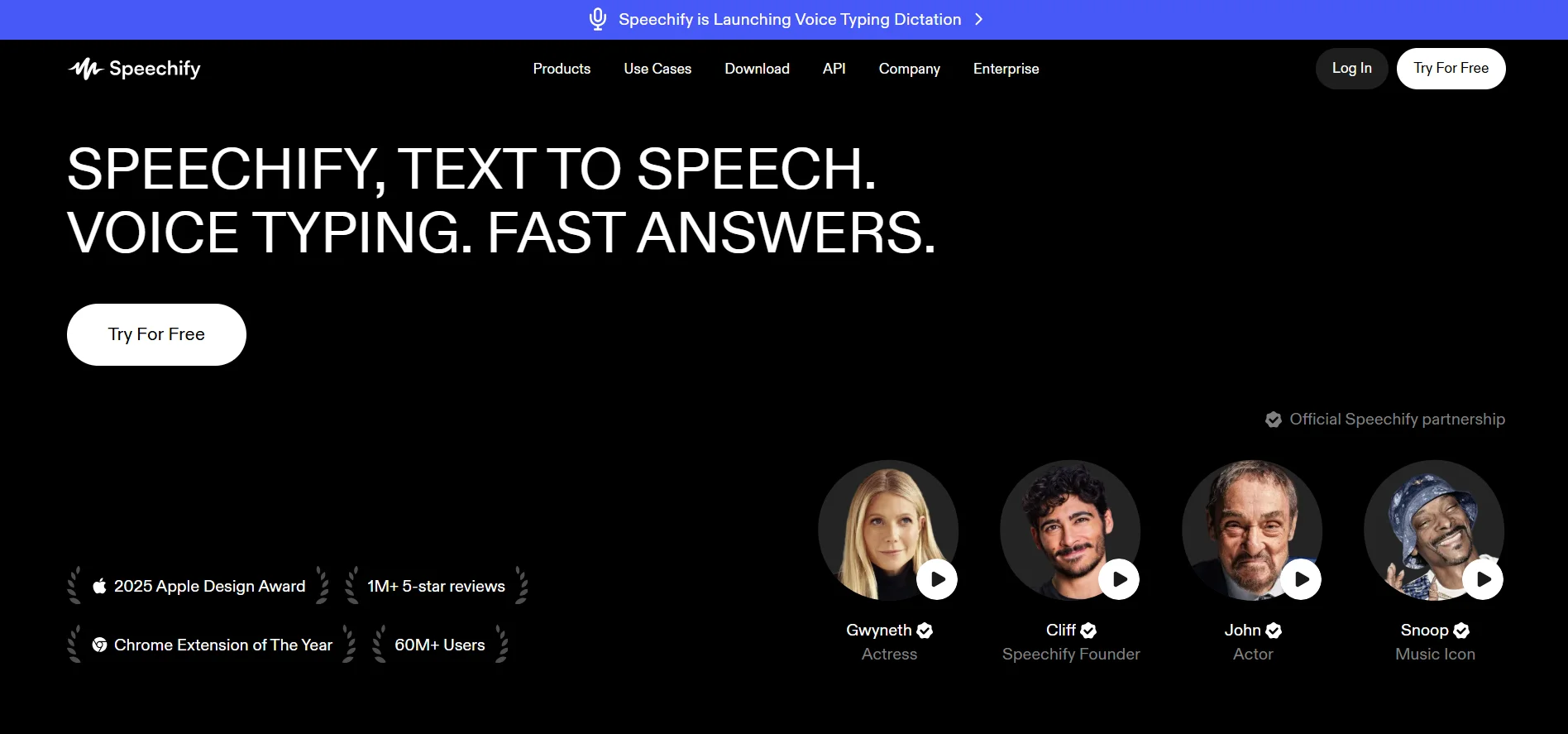
Free Plan + Trial (No Card for Free Tier) Speechify offers a genuine free plan with 10 basic voices and limited speed options, plus a separate free trial for Premium features on some sign-up paths. Users should watch for post-trial billing, since several reviewers report unexpected charges after forgetting to cancel.
Speechify is best known as a text-to-speech reading app for students and professionals who prefer listening to written content, but its Studio product also targets voiceover creators. The free tier is genuinely usable for light reading needs, while Premium unlocks a much larger voice library and faster playback speeds.
Pros
- Excellent for accessibility and reading assistance
- Large voice library on Premium (200+ voices)
- Available across mobile, desktop, and browser extension
Cons
- Billing complaints after trial cancellation
- Studio pricing adds up quickly for teams
- Free tier speed and voice options are limited
5. KikiVoice
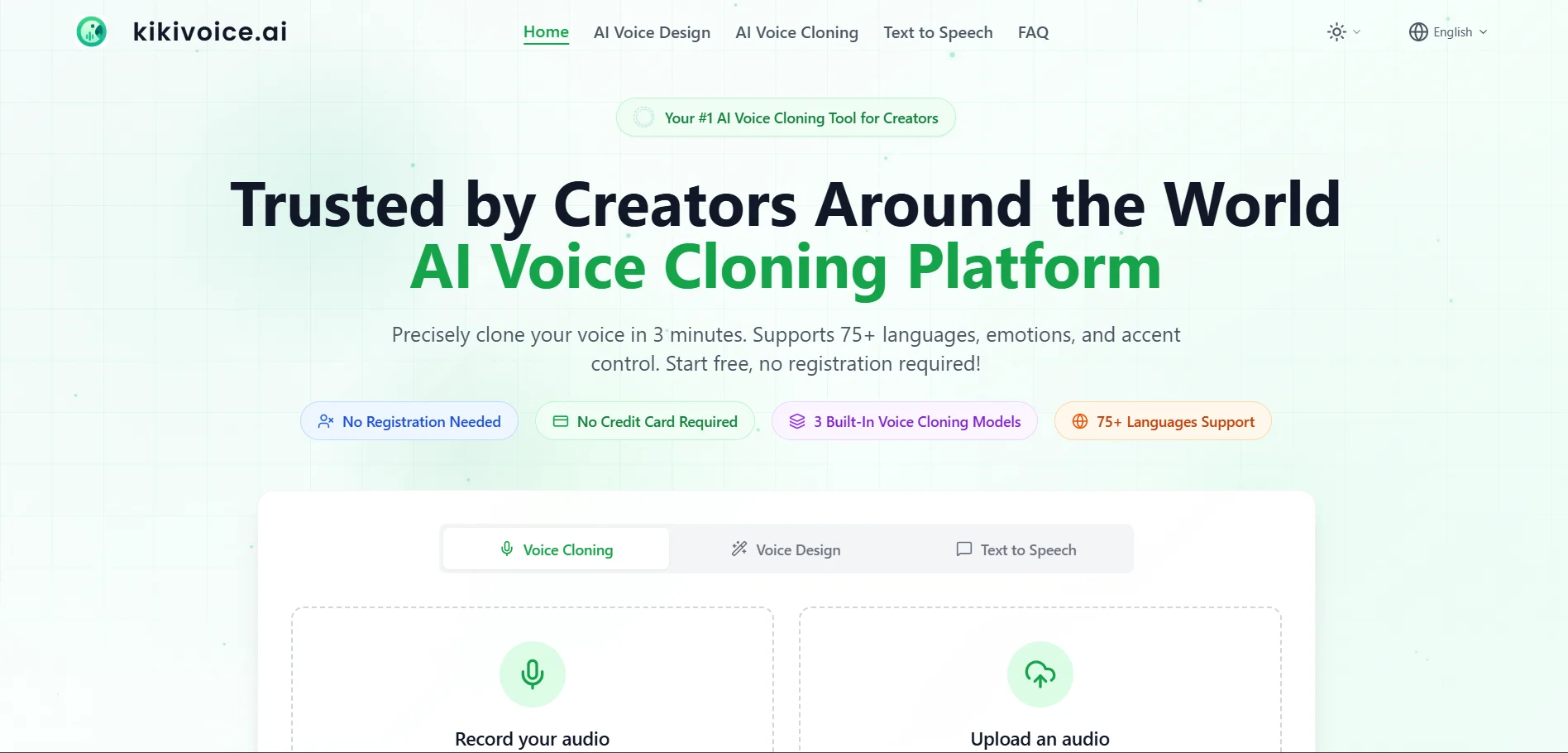
Free, No Signup Required KikiVoice offers free voice cloning and text-to-speech without requiring registration or a credit card, letting users clone a voice from a short sample in under three minutes. This no-friction access makes it one of the fastest tools on this list to actually start using.
KikiVoice focuses on quick, consumer-friendly voice cloning with support for 75+ languages and adjustable emotion and accent controls. It ships with three built-in models Core, Pro, and Multilingual giving casual creators a fast way to generate voiceovers without navigating a complex dashboard or steep learning curve.
Pros
- No signup needed to start cloning voices
- Supports 75+ languages with emotion control
- Fast turnaround, generation in minutes
Cons
- Limited enterprise-grade features
- Less established than major competitors
- Pricing details are not consistently published
6. Fliki
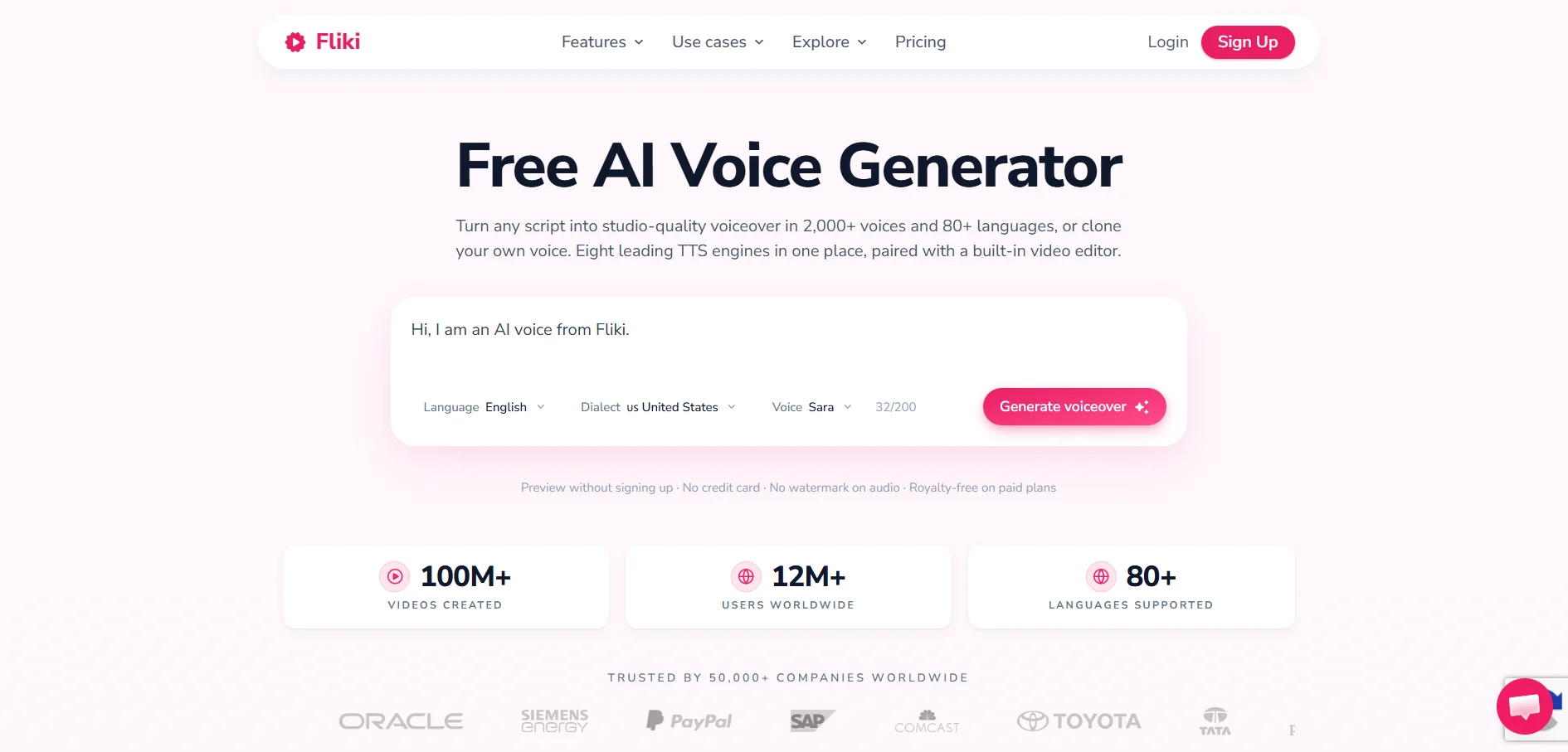
Free Plan (No Credit Card) Fliki provides a free plan with about 5 minutes of monthly audio/video credit and access to 200+ voices, though exports carry a watermark. There’s no separate time-limited trial the free tier itself functions as the trial for evaluating voice quality and workflow.
Fliki combines text-to-video generation with a library of over 1,300 AI voices across 75+ languages, making it popular with creators repurposing blog posts into narrated videos. The free tier is genuinely useful for testing voice quality, but the watermark and minute cap mean serious publishing requires a paid upgrade.
Pros
- Combines voiceover and video creation in one tool
- Large voice and language library (1,300+ voices)
- Genuine free tier for testing before paying
Cons
- Auto-selected stock footage can miss context
- Free exports are watermarked at limited resolution
- Higher tiers get pricey for frequent publishers
7. Minimax (Hailuo Audio)
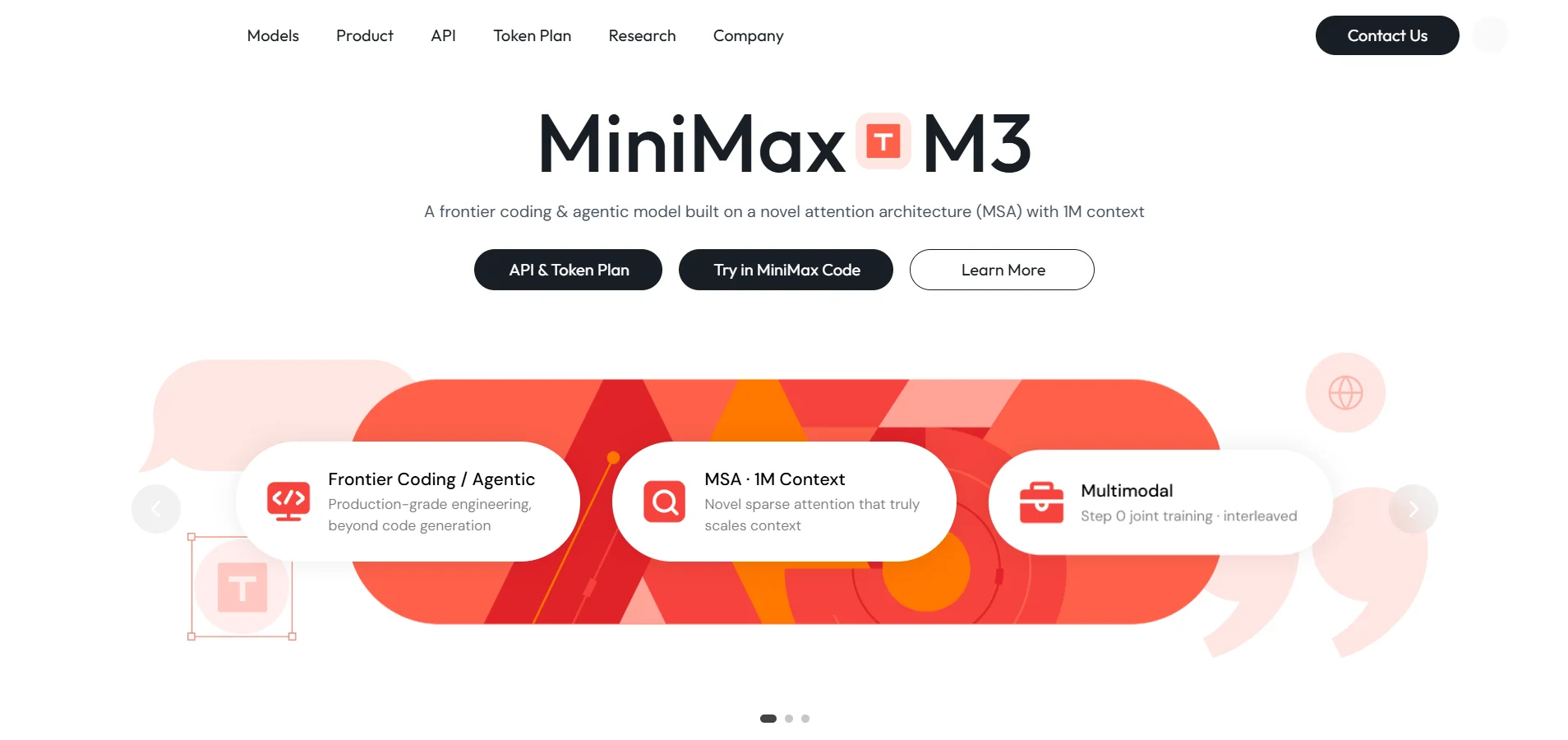
Pay-As-You-Go + Subscription Options MiniMax Audio offers flexible access through pay-as-you-go API billing based on actual usage, alongside fixed monthly subscription quotas for teams wanting predictable costs. This dual approach lets individual developers experiment cheaply before committing to a locked-in plan.
MiniMax is a Chinese multimodal AI company whose audio arm powers text-to-speech alongside its broader ecosystem of video generation and coding agents. It’s a strong pick for developers who want usage-based flexibility rather than fixed tiers, especially those already integrating other MiniMax products into their stack.
Pros
- Flexible pay-as-you-go pricing for developers
- Part of a broader, well-funded AI ecosystem
- Competitive per-character rates for multilingual TTS
Cons
- Less beginner-friendly than subscription-based tools
- Documentation skews toward developers, not casual users
- Fewer creator-specific features like templates
8. Uberduck
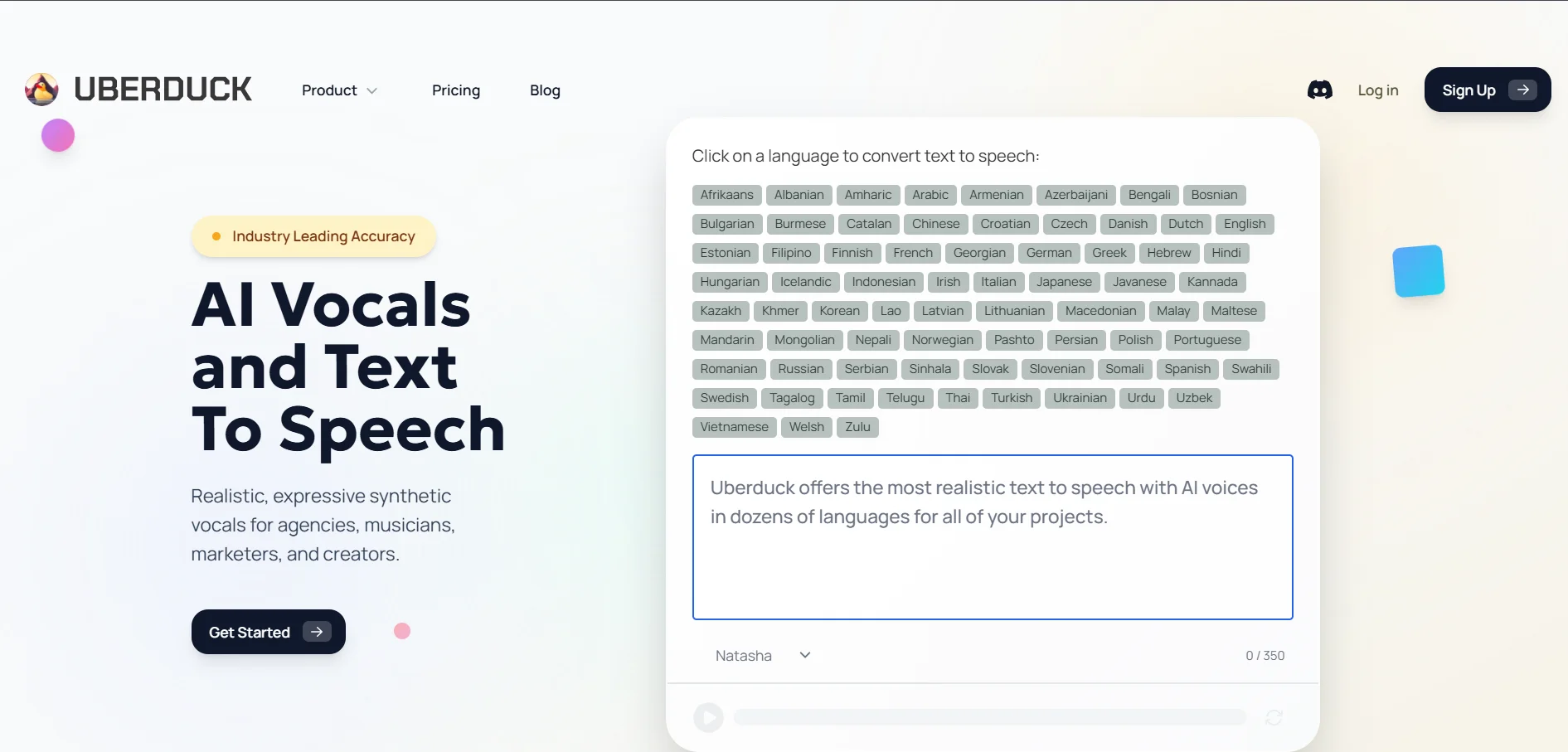
Free Plan (300+ Credits) Uberduck offers a free tier with a solid credit allowance and access to thousands of voices, making it easy to experiment before paying anything. However, commercial use and voice cloning are locked behind paid tiers, so hobbyist testing is really what the free plan is meant for.
Uberduck built its reputation on fun, character-driven voices, including celebrity-style impersonations and AI-generated rap and singing vocals. While affordable, reviewers note that voice quality is inconsistent compared to premium competitors, making it better suited for casual or entertainment projects than polished, client-facing narration work.
Pros
- Very low-cost entry point for commercial use
- Large, quirky voice library including rap/singing vocals
- Free tier has a generous credit allowance
Cons
- Voice quality inconsistent across models
- Falls behind premium tools for professional narration
- Support and updates have slowed in recent years
9. ElevenLabs
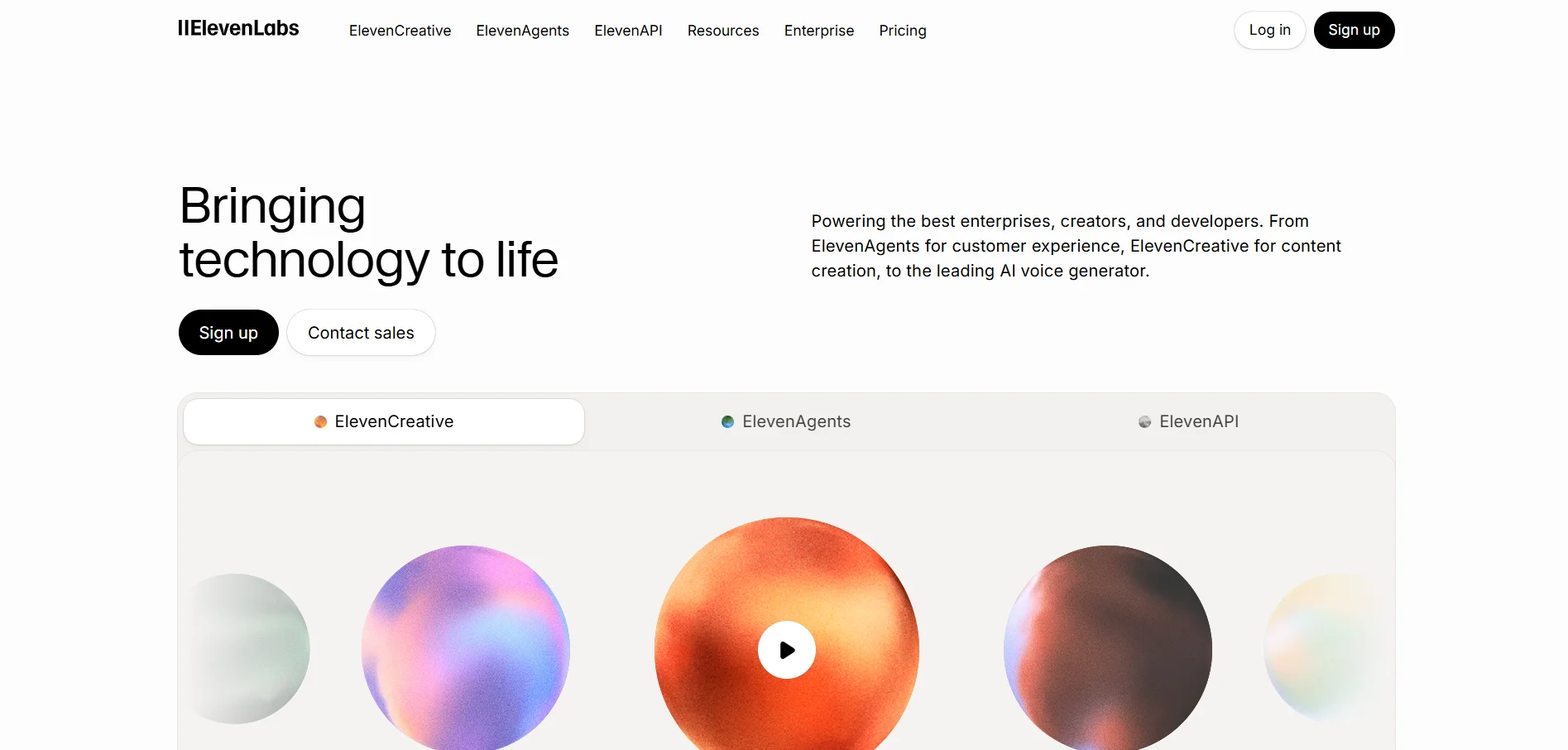
Free Plan (10,000 Credits/Month) ElevenLabs offers a permanent free plan rather than a time-limited trial, giving roughly 10,000 credits about 10 minutes of audio monthly for non-commercial testing. Pay-as-you-go top-ups are also available across most self-serve tiers, including the Free plan itself.
ElevenLabs is widely regarded as the market leader in AI voice realism, powering text-to-speech, professional voice cloning, dubbing, and conversational AI agents. Its usage-based credit system offers flexibility, though costs can climb quickly for high-volume users, and overage billing applies once monthly credit allocations are exceeded.
Pros
- Industry-leading voice realism and emotional range
- Permanent free tier, no credit card needed
- Strong developer API and conversational AI agents
Cons
- Credit-based system can get expensive at scale
- Free plan has no commercial usage rights
- Professional cloning locked behind Creator tier and above
10. Murf.AI
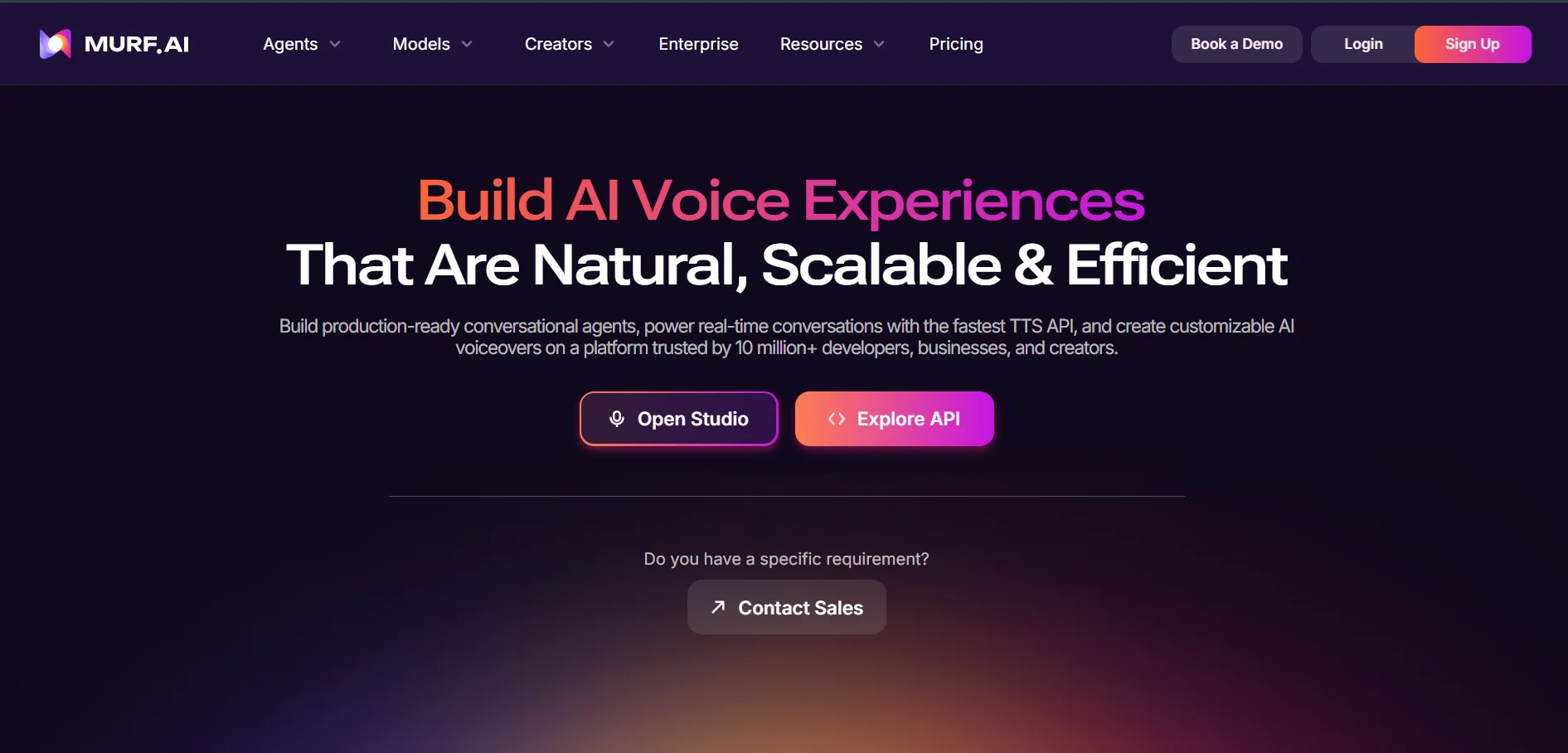
Free Plan + Free Trial Available Murf.AI offers both a genuine free plan with $0.00 entry-level pricing and a free trial for testing paid features, giving new users flexibility in how they evaluate the platform. This dual approach has helped Murf earn strong satisfaction scores among reviewers on independent platforms.
Murf.AI is positioned as an all-in-one voiceover studio with strong team collaboration tools, over 200 voices in 35+ languages, and enterprise-grade security certifications. Its recently launched Falcon model targets real-time voice agents with impressively low latency, making Murf competitive for both content creators and developers building voice-driven applications.
Pros
- Strong all-in-one studio with team collaboration
- Free plan and free trial both available
- Low-latency Falcon model for real-time use cases
Cons
- Monthly/annual cost can feel steep for light users
- Business plan jump from Creator is significant
- Some advanced features reserved for Enterprise tier
11. BookFab
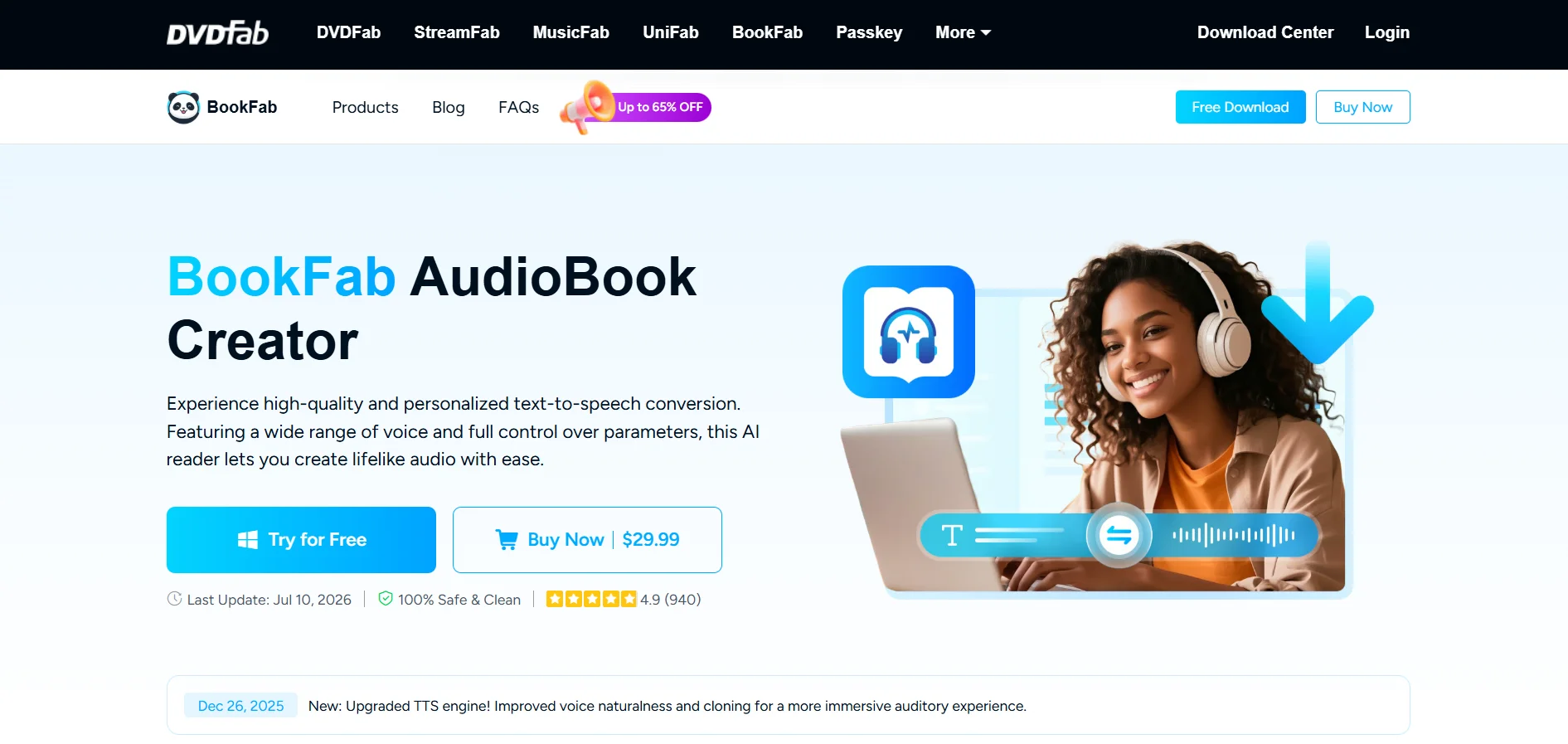
Free Trial Typically Offered BookFab positions itself around audiobook narration and long-form content, typically offering a free trial or limited free tier so authors and publishers can preview narration quality before committing. As with many niche narration tools, checking the official site for the latest trial terms is recommended since offers can change.
BookFab is geared toward turning manuscripts into narrated audiobooks quickly, appealing to independent authors who can’t afford traditional studio narration. It fills a specific niche compared to broader TTS platforms, focusing on long-form consistency and pacing rather than short marketing clips or avatar-driven video content.
Pros
- Purpose-built for audiobook-length narration
- More affordable than traditional studio narration
- Good fit for independent authors and small publishers
Cons
- Less brand recognition than major TTS players
- Narrower feature set outside audiobook use cases
- Pricing transparency varies; best confirmed directly
12. Noiz.ai
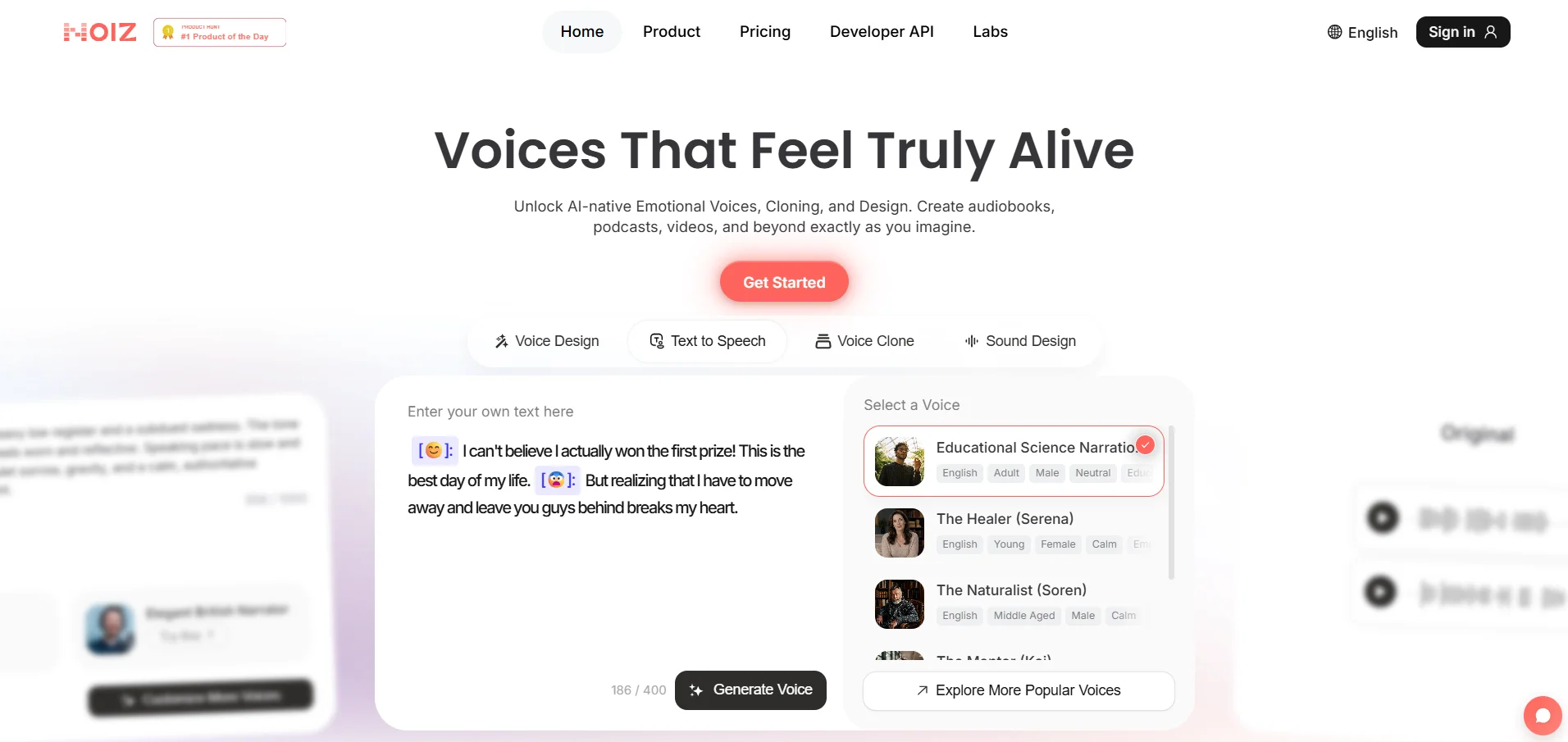
Free-Forever Plan Available Noiz.ai offers a free-forever plan alongside paid tiers, letting creators experiment with emotionally expressive text-to-speech and voice cloning before upgrading. Its zero-friction onboarding makes it one of the more approachable tools for creators who want to test before paying anything.
Noiz.ai emphasizes emotionally adaptive voice technology, letting a single cloned voice convey happiness, sadness, anger, or excitement for more expressive narration. With over 800,000 users, 150+ voices, and 1–3 second generation latency, it’s positioned well for interactive apps, dubbing, and character-driven content needing emotional range.
Pros
- Strong emotional range and expressive voice technology
- Very low latency (1–3 seconds) for real-time use
- Affordable entry-level pricing starting near $2.90/month
Cons
- Full pricing structure not always clearly published
- Smaller brand footprint than ElevenLabs or Murf
- Newer platform with a shorter track record
Comparison Table
| Alternative | Description |
|---|---|
| WellSaid Labs | Premium, natural-sounding voice avatars aimed at corporate and e-learning content, with strong enterprise security features. |
| PlayHT | Massive voice library across 140+ languages with a free-forever tier and API built for real-time applications. |
| Podcastle | All-in-one browser-based podcast studio combining recording, AI editing, transcription, and text-to-speech. |
| Speechify | Popular text-to-speech reading app for accessibility, with a Studio product for voiceover and commercial content. |
| KikiVoice | Fast, no-signup voice cloning platform supporting 75+ languages with emotion and accent control. |
| Fliki | Combines text-to-video generation with a large AI voice library, ideal for repurposing blogs into videos. |
| Minimax | Developer-focused multimodal AI platform offering flexible pay-as-you-go audio API pricing. |
| Uberduck | Affordable, character-driven voice platform known for celebrity-style, rap, and singing vocal generation. |
| ElevenLabs | Industry-leading voice realism with professional cloning, dubbing, and conversational AI agents. |
| Murf.AI | All-in-one voiceover studio with strong team collaboration tools and a low-latency real-time model. |
| BookFab | Niche platform focused on turning manuscripts into narrated audiobooks for independent authors. |
| Noiz.ai | Emotionally expressive voice cloning and dubbing platform with very low latency for interactive apps. |
| Enterprise TTS APIs | Usage-based cloud providers offering enterprise reliability and fine-grained SSML control for developers. |
Conclusion
Tools like ElevenLabs and Murf.AI lead on voice realism and studio features, PlayHT and Noiz.ai offer generous free access, and niche platforms like BookFab and Podcastle serve very specific content formats well. Testing two or three free tiers side by side is the fastest way to find the platform that fits your voice, budget, and workflow best.


