

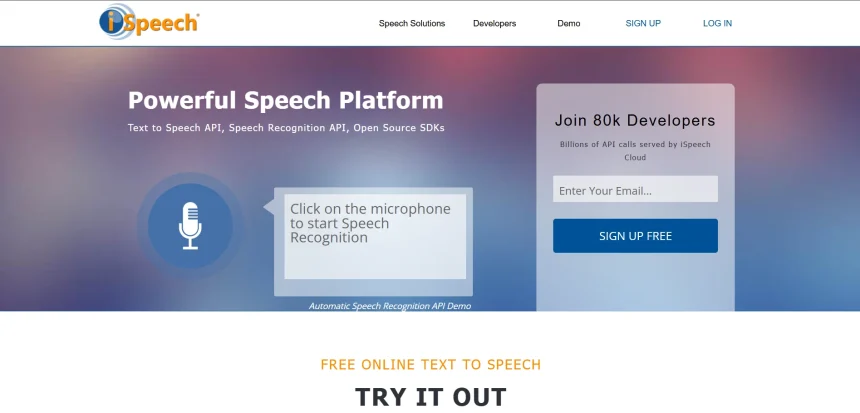
iSpeech has long been a reliable name in text-to-speech technology, offering API access, voice cloning, and multilingual synthesis for developers and content creators. But as the AI voice landscape has exploded in 2026, dozens of newer platforms now offer richer emotional range, faster real-time generation, and more flexible pricing. This guide covers 12 of the strongest iSpeech Alternatives available today, ranging from all-in-one video and podcast studios to developer-first APIs built for real-time voice agents. For each tool, we break down free trial availability, current pricing plans, and the pros and cons that matter most before you commit.
1. VEED
✔ 7-Day Free Trial (Paid Plans)
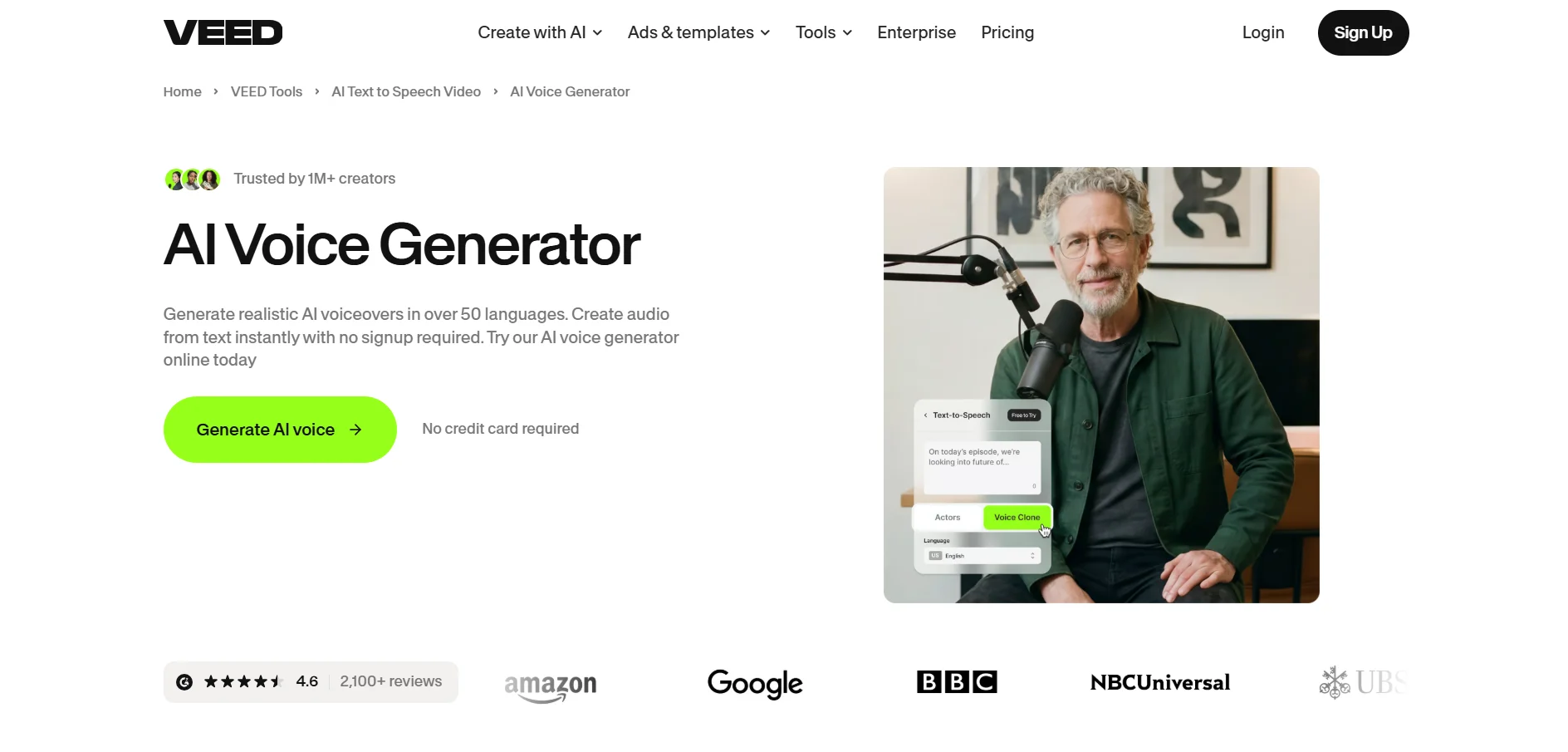
VEED is a browser-based video editing platform that has expanded well beyond simple editing into AI-powered voiceovers, avatars, and subtitles. It offers a free tier limited to 10-minute videos with watermarked exports, and paid plans start around $18 a month when billed annually. A seven-day free trial is available on paid tiers, though a credit card is typically required for Pro and Enterprise access.
💰 VEED Pricing (Official Site)
| Free | $0/mo — watermark, 720p export |
| Basic / Creator | ~$18–20/mo |
| Pro | ~$30–36/mo (voice cloning unlocked) |
| Business / Studio | ~$59/mo |
| Enterprise | Custom pricing |
The platform’s standout AI tools include automatic subtitles, AI avatar generation, and voice cloning that lets users upload a short sample of their own voice to create a custom clone. Its subtitle engine supports more than 100 languages, making VEED a strong pick for creators who need video and voice in one place rather than a dedicated TTS tool.
Pros
- All-in-one video, subtitle, and voice platform
- 100+ language subtitle support
- Easy browser-based workflow, no downloads
Cons
- Voice cloning locked behind Pro plan
- Free plan adds watermarks
- Pricing can climb quickly for teams
2. Resemble.ai
✘ No Traditional Free Trial (Free Credits on Sign-Up)
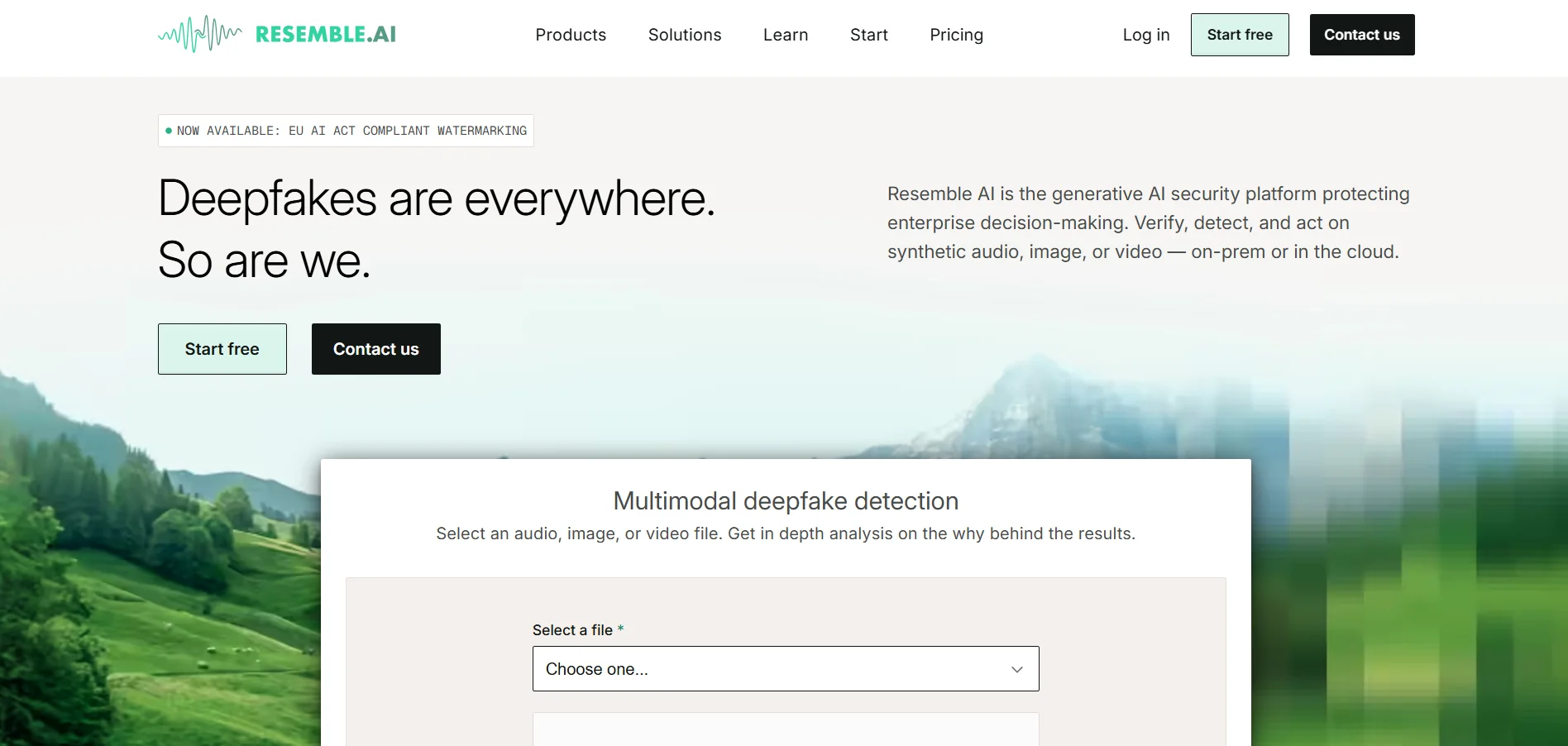
Resemble.ai is a developer-focused voice cloning and TTS platform known for broadcast-quality synthetic voices and real-time API integration. The platform retired its consumer subscription tiers in 2025 and now runs on a pay-per-use “Flex” model alongside custom Enterprise pricing, giving users flexibility without locking them into a fixed monthly seat cost.
💰 Resemble.ai Pricing (Official Site)
| Flex (Pay-as-you-go) | $0.0005/second TTS, credits never expire |
| Voice Clones | $2–$5/month per clone |
| Team Seats | $20/month per user |
| Enterprise | Custom quote, up to 80% volume discount |
Resemble stands out for its deepfake detection and audio watermarking features. Its integrated PerTh watermarking and detection tools are aimed at security-first deployments, making it especially attractive for media companies and enterprises worried about audio authenticity rather than just casual voiceover work.
Pros
- Pay-per-use pricing avoids wasted subscription spend
- Built-in deepfake detection and watermarking
- Full API access from the first dollar spent
Cons
- No flat monthly plan for predictable budgeting
- Costs can scale unpredictably at high volume
- Steeper learning curve for non-developers
3. BookFab
✘ No Free Trial (One-Time Purchase)
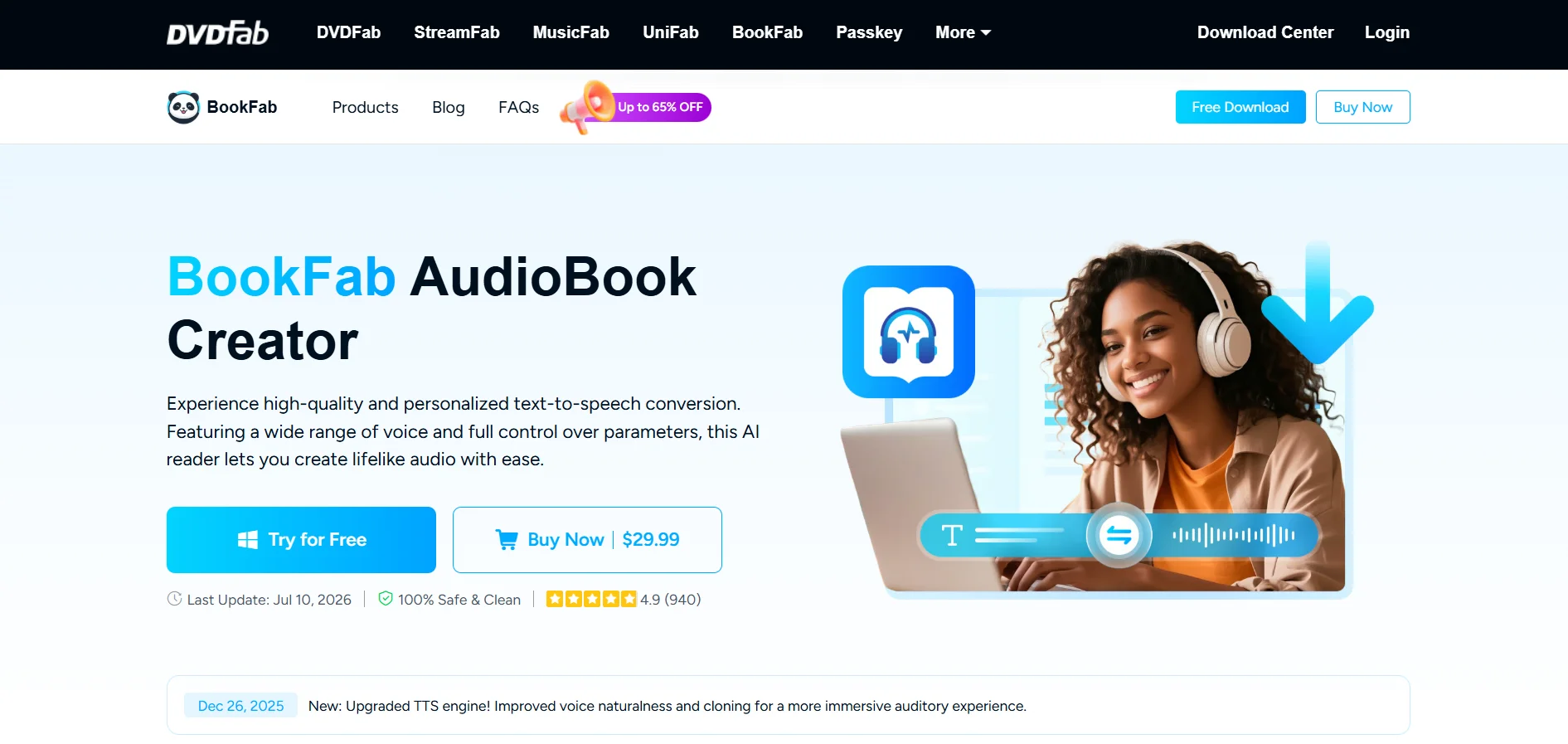
BookFab, developed by DVDFab, is a desktop application built specifically for converting eBooks and plain text into narrated audiobooks. It converts TXT and EPUB files into MP3, OPUS, or M4B audiobook formats and includes more than 20 AI voice presets with adjustable prosody and expressivity settings. Unlike most competitors, it is sold as a one-time software purchase rather than a subscription.
💰 BookFab Pricing (Official Site)
| Standard License | $59.99 one-time purchase |
| Voice Presets | 20+ voices included |
| Languages | English and Japanese |
BookFab also includes an AI voice cloning feature that generates a more personalized narration style from a short voice sample, giving indie authors and self-publishers a way to produce distinctive-sounding audiobooks without hiring a studio narrator or paying recurring subscription fees.
Pros
- One-time payment, no recurring subscription
- Purpose-built for audiobook and EPUB conversion
- Includes basic voice cloning from a sample
Cons
- Limited to English and Japanese
- Windows-only desktop software
- Smaller voice library than cloud competitors
4. MiniMax
✔ Free Daily Credits
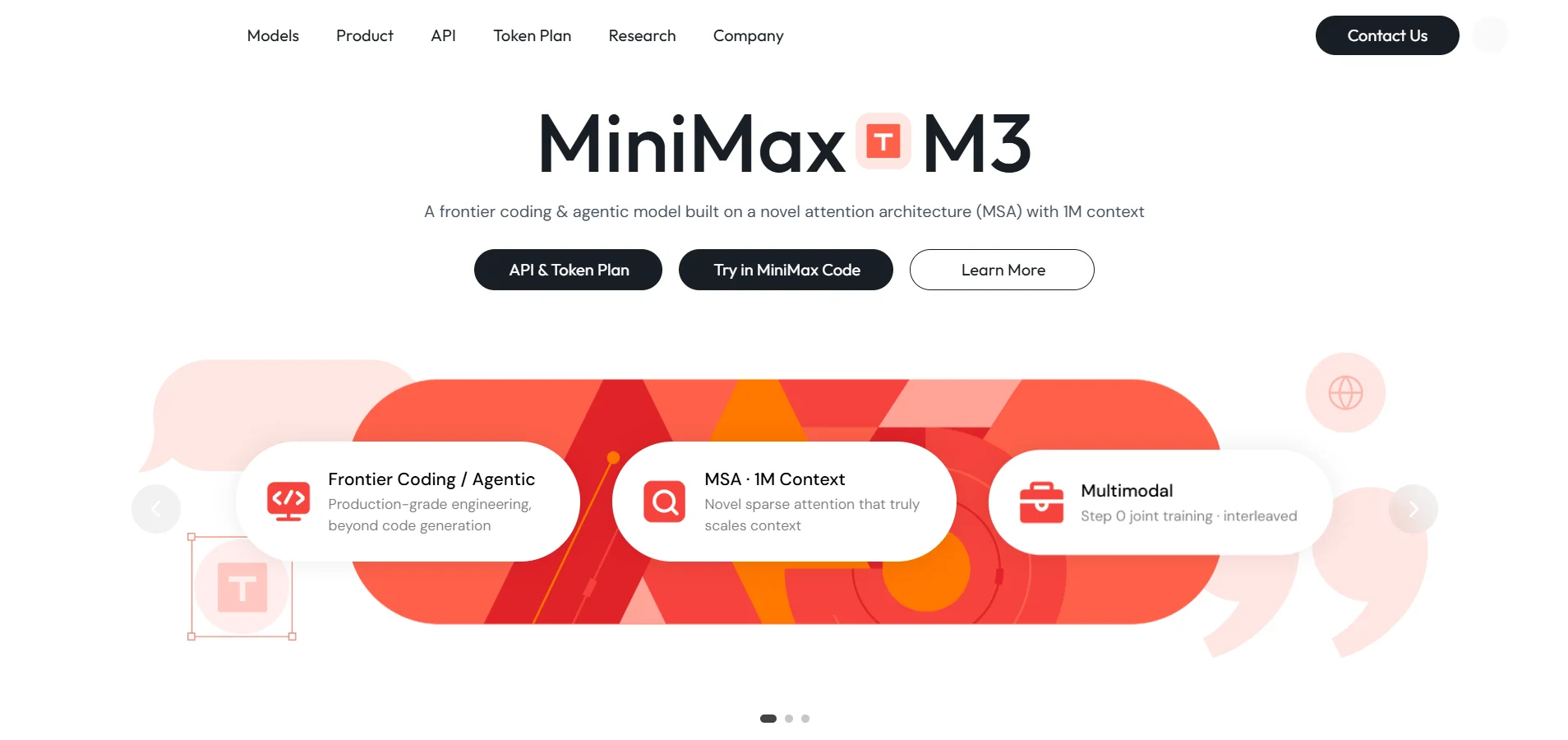
MiniMax Audio is a fast-rising Chinese AI lab’s text-to-speech and voice cloning suite, ranked highly on independent speech-quality benchmarks in 2026. It provides high-quality text-to-speech synthesis, rapid voice cloning, and custom voice design across 17-plus languages, and supports 4,000 free daily login credits for basic usage, making it approachable for hobbyists before committing financially.
💰 MiniMax Pricing (Official Site)
| Free | 4,000 credits/day, basic cloning, API access |
| Starter | $5/mo — 100,000 credits |
| Standard | $30/mo — 1,000,000 credits |
| API (Speech-02 HD) | $100 per million characters |
| API (Speech-02 Turbo) | $60 per million characters |
For developers, MiniMax also offers granular API pricing rather than only subscriptions. Rapid Voice Cloning is priced at $1.50 per voice and Voice Design at $3 per voice, which makes it one of the more affordable options for teams that need many distinct custom voices rather than one flat brand voice.
Pros
- Generous free daily credit allowance
- Very competitive per-character API pricing
- Strong benchmark rankings for voice quality
Cons
- Documentation mixes legacy and current model names
- Dashboard and support geared toward developers
- Free credits expire daily rather than rolling over
5. Noiz.ai
✔ Free-Forever Plan
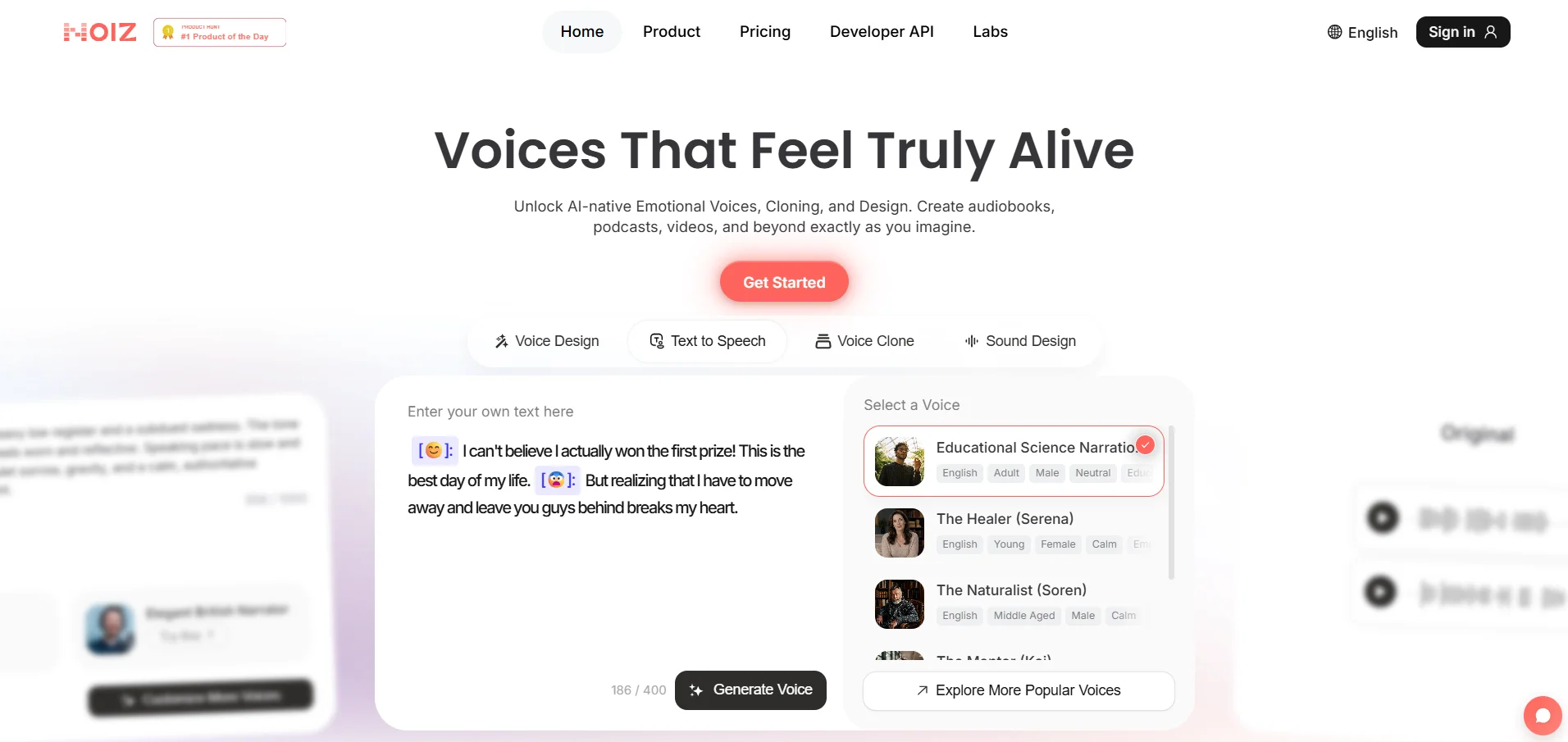
Noiz.ai is a newer entrant combining expressive text-to-speech, voice cloning, and multilingual dubbing into a single streamlined workflow. It offers 150+ voice options and ultra-fast generation with about 1–3 seconds of latency, and is used by over 800,000 people for storytelling, courses, podcasts, marketing, and localization. The platform is designed to feel approachable for creators rather than pure developers.
💰 Noiz.ai Pricing (Official Site)
| Free | Free-forever plan available |
| Starter | $2.90/month |
| Creator | $8.90/month |
With permission-based voice cloning, users can maintain a consistent brand or character voice across projects, while multilingual dubbing preserves timing so translated videos still feel authentic. This positions Noiz.ai as a budget-friendly hybrid between a pure TTS API and a full localization tool.
Pros
- Extremely low entry-level pricing
- Large voice library with emotional range
- Fast generation speed for real-time needs
Cons
- Newer platform with a shorter track record
- Free plan features are limited
- Less enterprise tooling than larger competitors
6. Gradium
✘ Trial Details Not Publicly Listed
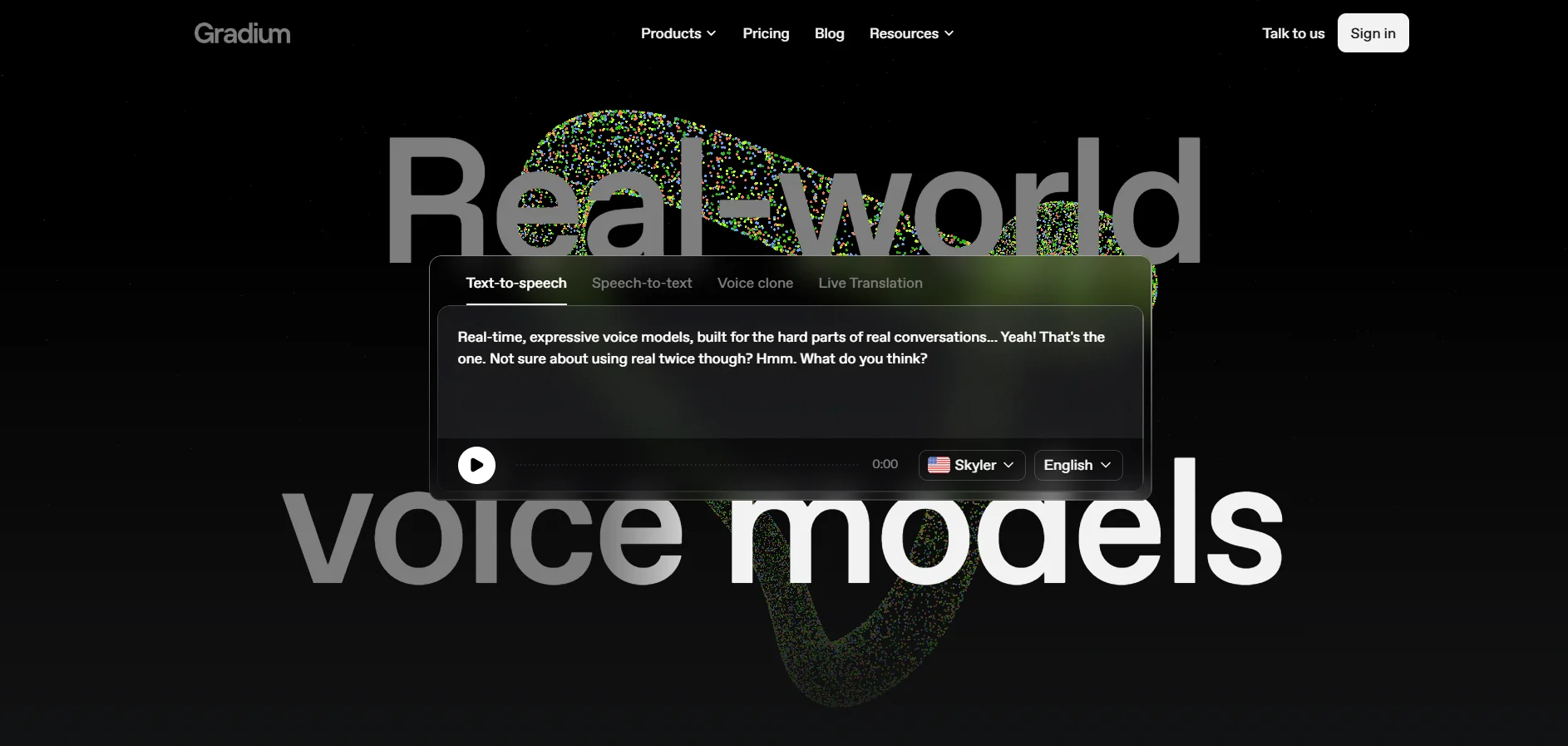
Gradium TTS is a newer speech synthesis model that has begun appearing in independent benchmark comparisons alongside established players like ElevenLabs and Azure. It focuses on natural-sounding prosody and is positioned as a mid-tier option for developers exploring alternatives to larger, pricier voice APIs.
💰 Gradium Pricing (Official Site)
| Model Access | API-based, usage pricing not publicly standardized |
| Benchmarking | Listed on Artificial Analysis TTS comparisons |
| Recommendation | Check official site for current rate card |
Gradium TTS appears among the dozens of text-to-speech models and providers tracked by independent benchmarking sites in 2026, reflecting how crowded and fast-moving this space has become. Because pricing pages for smaller players change frequently, it is worth confirming current rates directly before committing to a production workflow.
Pros
- Actively tracked in independent quality benchmarks
- Positioned as a lower-cost alternative model
- Good option for experimentation and testing
Cons
- Limited public documentation on pricing tiers
- Smaller community and support ecosystem
- Less brand recognition than major competitors
7. Podcastle
✔ 7-Day Free Trial + Free Plan
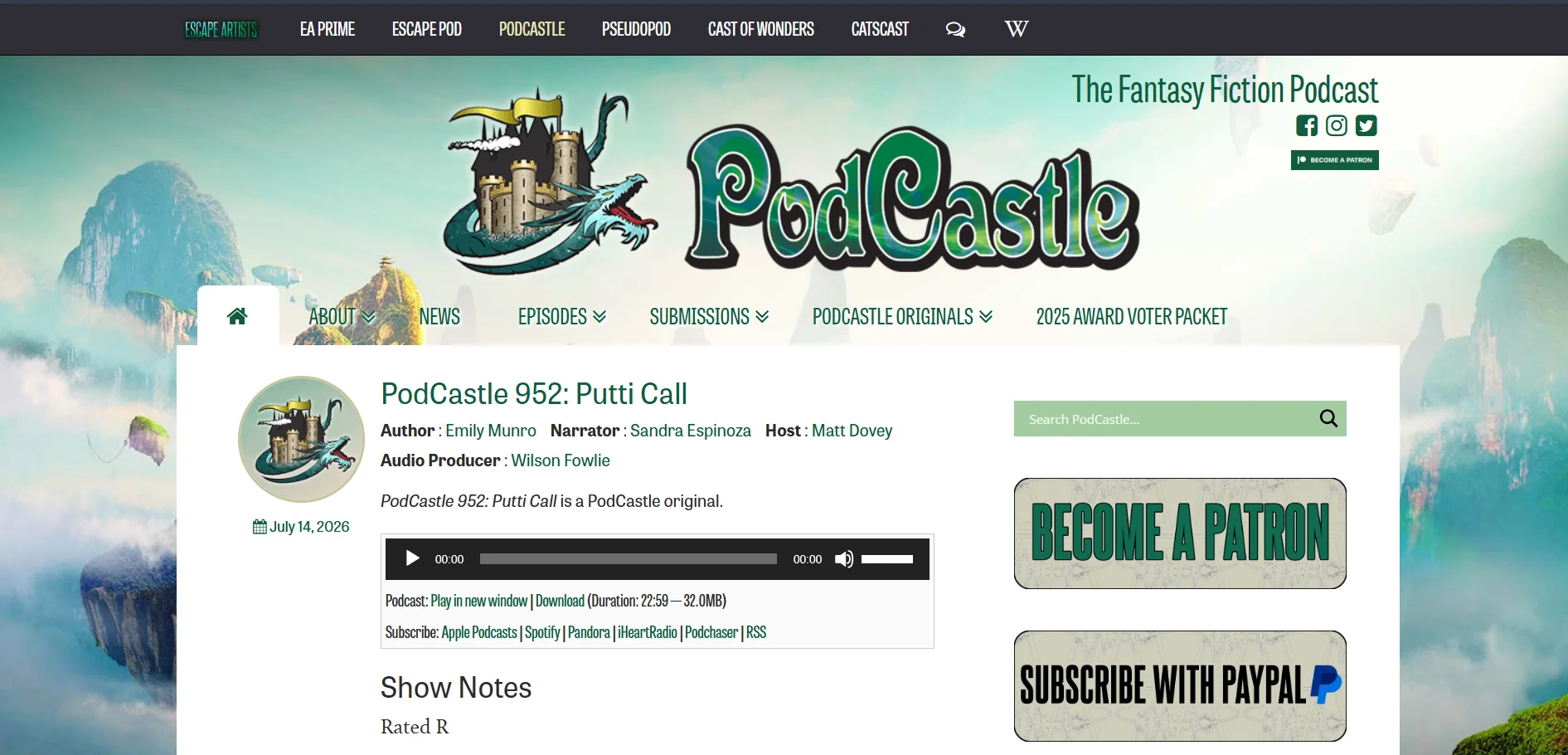
Podcastle (now also operating under the name Async) is an all-in-one platform for recording, editing, and generating AI voiceovers for podcasts and video content. The free plan includes unlimited audio recording, three hours of lifetime video recording, and 2GB of storage, while paid tiers unlock AI voice cloning and higher usage caps.
💰 Podcastle Pricing (Official Site)
| Free | $0/mo — unlimited audio, 3 hrs lifetime video |
| Storyteller | $14.99/mo ($11.99/mo billed annually) |
| Pro | $39.99/mo |
| Business | $64.99/mo |
| Enterprise | Custom pricing |
One important caveat: Revoice, the voice cloning feature that gets heavily marketed, requires the Pro plan, so creators drawn specifically to voice cloning should budget for the higher tier rather than assuming the entry-level plan will cover it.
Pros
- Combines recording, editing, and AI voice in one app
- Generous free plan for unlimited audio
- Affordable entry-level paid tier
Cons
- Voice cloning gated behind the Pro plan
- Video and transcription caps are lifetime, not monthly, on free tier
- Limited customization for podcast websites
8. Fliki
✘ No Separate Trial (Free Plan Serves as Trial)
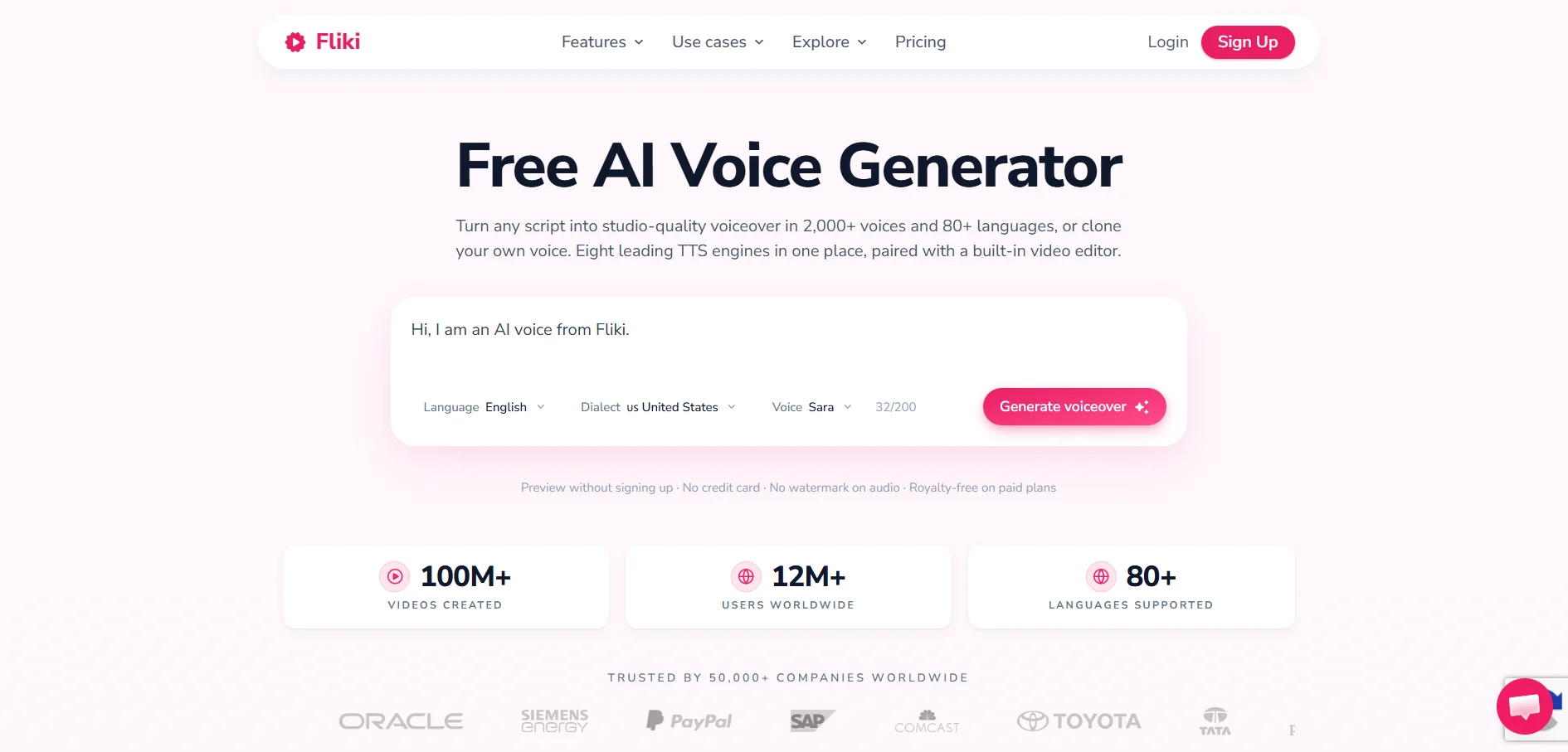
Fliki converts scripts into narrated videos using a large library of AI voices paired with stock footage and captions. As of 2026, Fliki does not offer a separate free trial of its paid plans; the free plan itself functions as the trial, giving users a small monthly allowance to test voice quality before subscribing.
💰 Fliki Pricing (Official Site)
| Free | 5 min/month, HD, watermarked |
| Standard | $28/mo (≈$21/mo billed annually) |
| Premium | $88/mo |
| Teams | From $160/mo |
The free plan gives roughly 36 credits a month, about three minutes of video, 720p export, and access to 300 voices, but every video carries a watermark and offers no commercial rights, so it is best treated purely as a testing ground rather than a production tool.
Pros
- Huge voice library exceeding 1,300 voices
- Combines scripting, voice, and video in one workflow
- Reasonable Standard tier for solo creators
Cons
- Free plan has no commercial usage rights
- Premium tier is expensive relative to competitors
- Some users report visual artifacts in generated scenes
9. KikiVoice
✘ Trial Details Vary by Region
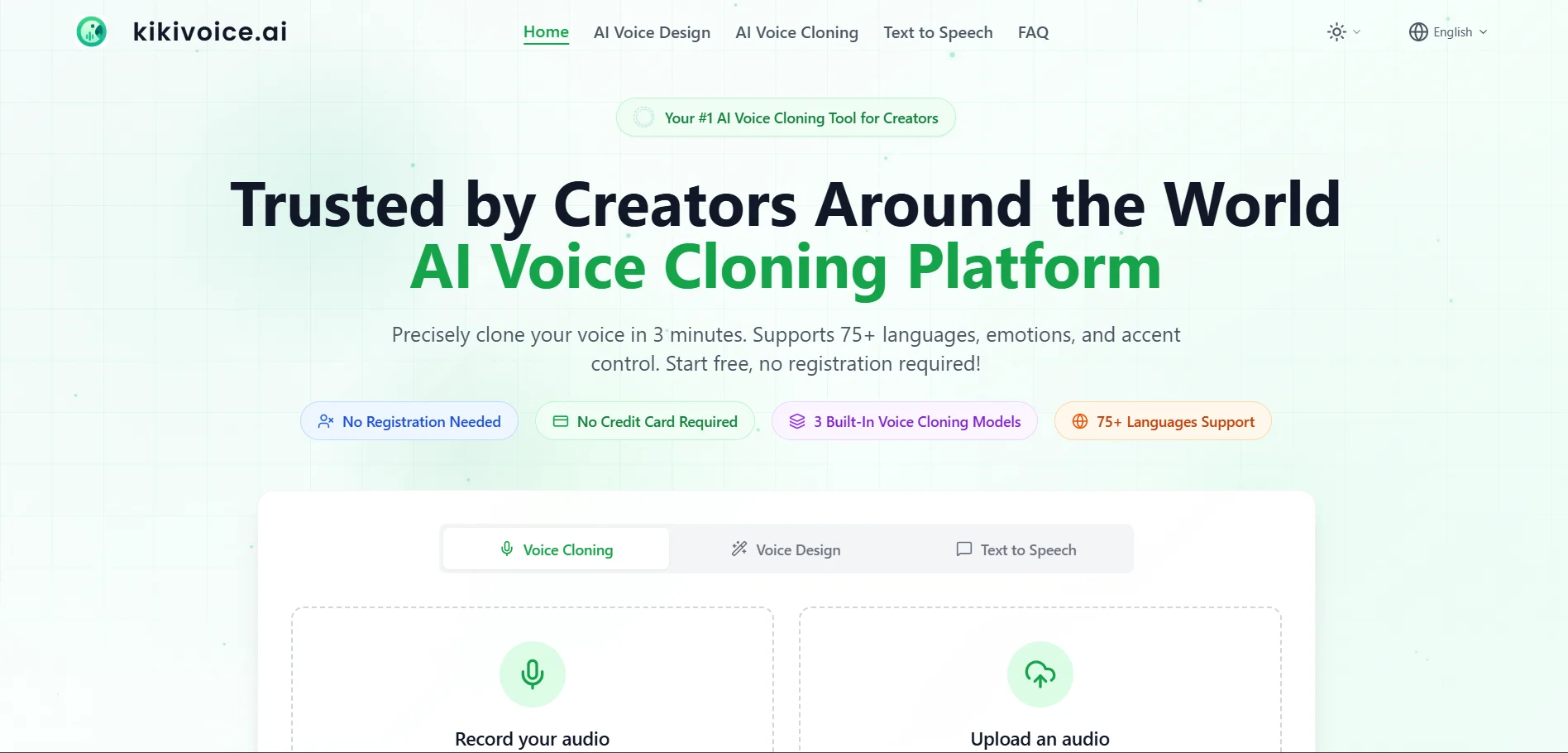
KikiVoice is a text-to-speech and voice-changing tool that has gained traction among mobile creators and short-form video producers looking for quick, expressive narration without a steep learning curve. It emphasizes simplicity and speed over deep API customization, appealing to casual users rather than enterprise developers.
💰 KikiVoice Pricing (Official Site)
| Free Tier | Limited characters/voices per month |
| Paid Plans | Subscription-based, region-dependent |
| Recommendation | Confirm current rates on official app store or site |
Because KikiVoice markets primarily through mobile app stores rather than a fixed global pricing page, exact costs can vary by platform and region. Users considering it for professional or commercial narration should verify current character limits and licensing terms directly through the app before relying on it for paid client work.
Pros
- Simple, mobile-friendly interface
- Fast turnaround for short-form content
- Low barrier to entry for casual creators
Cons
- Pricing not centrally documented
- Fewer advanced customization options
- Less suited to large-scale production workflows
10. Cartesia
✔ Permanent Free Tier (No Card Required)
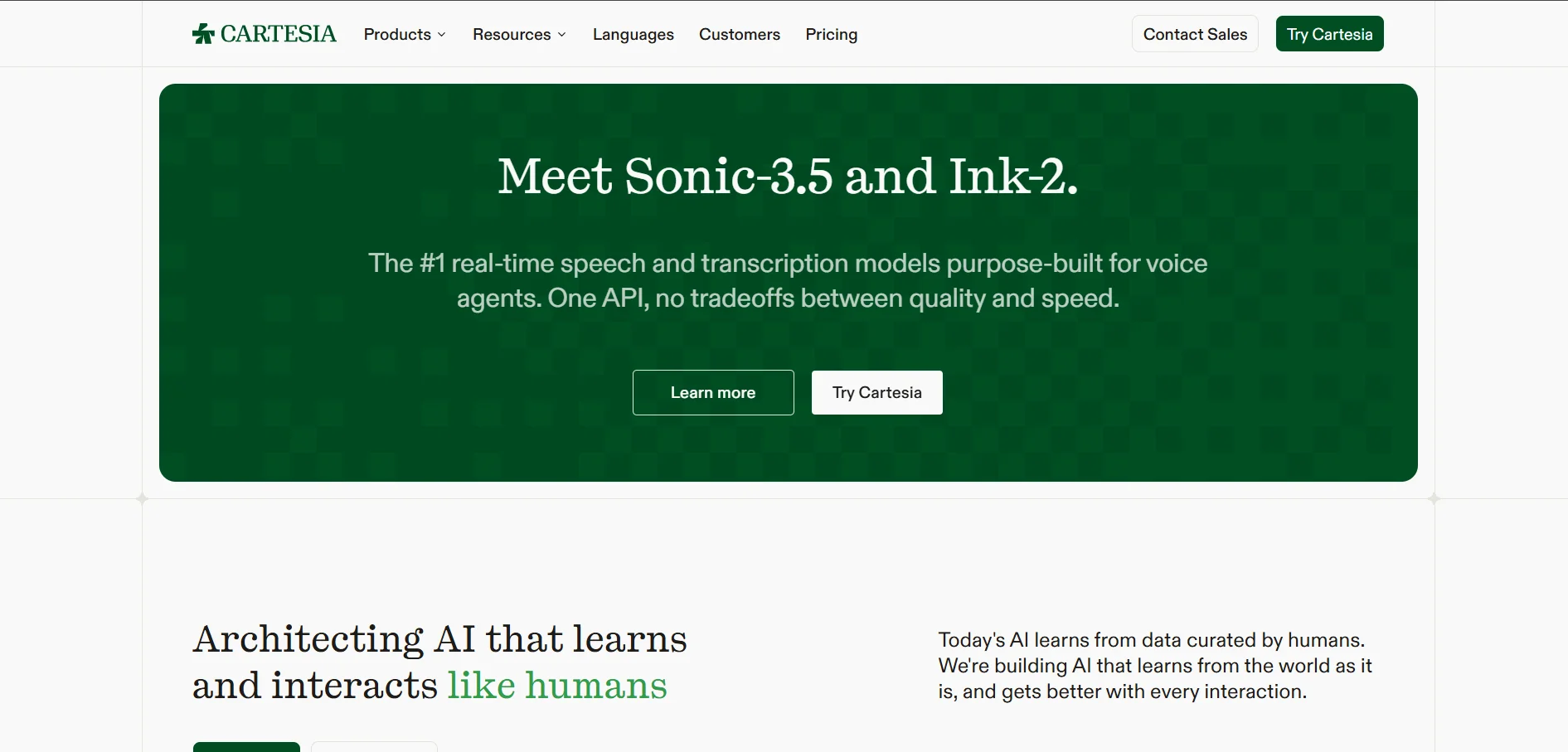
Cartesia is a developer-first, real-time voice AI platform built around three core models: Sonic for text-to-speech, Ink for speech-to-text, and Line for voice agents. It offers five pricing plans Free, Pro, Startup, Scale, and Enterprise all built around the same core models but with increasing credit allocations and concurrency limits.
💰 Cartesia Pricing (Official Site)
| Free | $0/mo — 20,000 model credits, $1 voice agent credit |
| Pro | $4/mo |
| Startup | $39/mo |
| Scale | $239/mo |
| Enterprise | Custom pricing |
Every paid plan comes with a 20% discount on annual billing, and moving up to Scale gives roughly 80 times the model credits of Pro while dropping telephony rates from $0.06 per minute to $0.014 per minute. This makes Cartesia especially attractive for teams building voice agents that need to scale cost-efficiently.
Pros
- Permanent free tier with no credit card required
- Low-latency architecture built for real-time agents
- Telephony rates drop sharply at higher tiers
Cons
- Credit-based system can be confusing for new users
- Best value requires committing to higher-volume plans
- Geared more toward developers than casual creators
11. WellSaid Labs
✔ 7-Day Free Trial
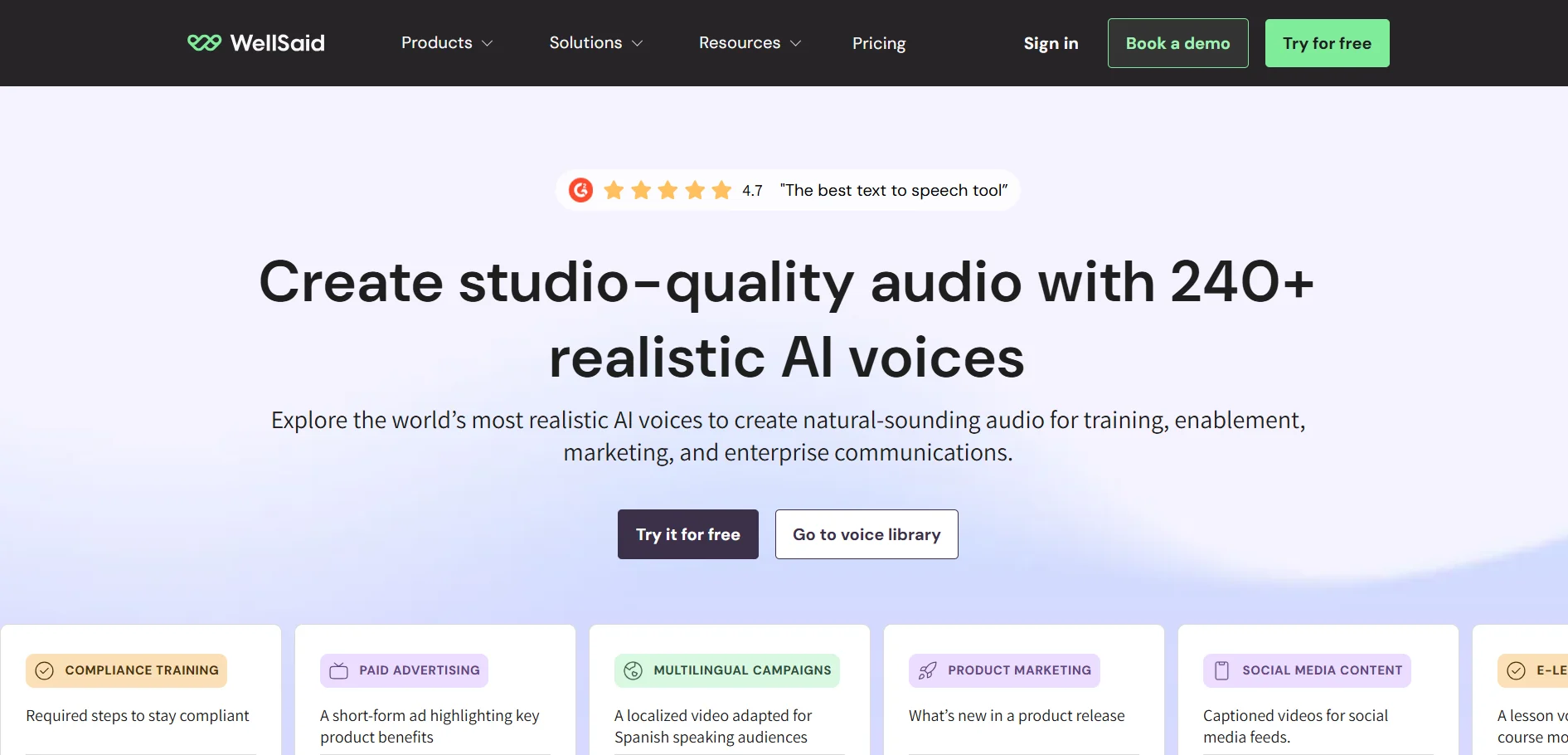
Voice.ai is an enterprise-focused voice AI platform built around studio-quality voice avatars modeled from real, consenting voice actors. Pricing is structured around tiers including Maker, Creative, and Teams, with custom Enterprise pricing for larger deployments, and the platform charges per creator seat on an annual subscription basis.
💰 WellSaid Labs Pricing (Official Site)
| Free Trial | 7-day trial, all voices, no downloads |
| Creative | $50/month — 720 downloads/year |
| Business | $160/month — 1,300 downloads/year, 1–5 seats |
| Enterprise | Custom — 4,300 downloads/year, SSO, SOC 2 |
Pricing is based on the number of seats, available voice avatars, commercial usage rights, and collaboration features rather than a per-word or per-minute charge within tier limits, which makes budgeting predictable for teams producing a steady volume of corporate training or marketing content.
Pros
- Ethically-sourced voices from consenting actors
- Predictable seat-based pricing, not per-word billing
- Strong enterprise security options (SSO, SOC 2)
Cons
- Higher starting price than many competitors
- Download caps can be restrictive on lower tiers
- Less suited to hobbyists or one-off projects
12. Uberduck
✔ Free Plan with Credits
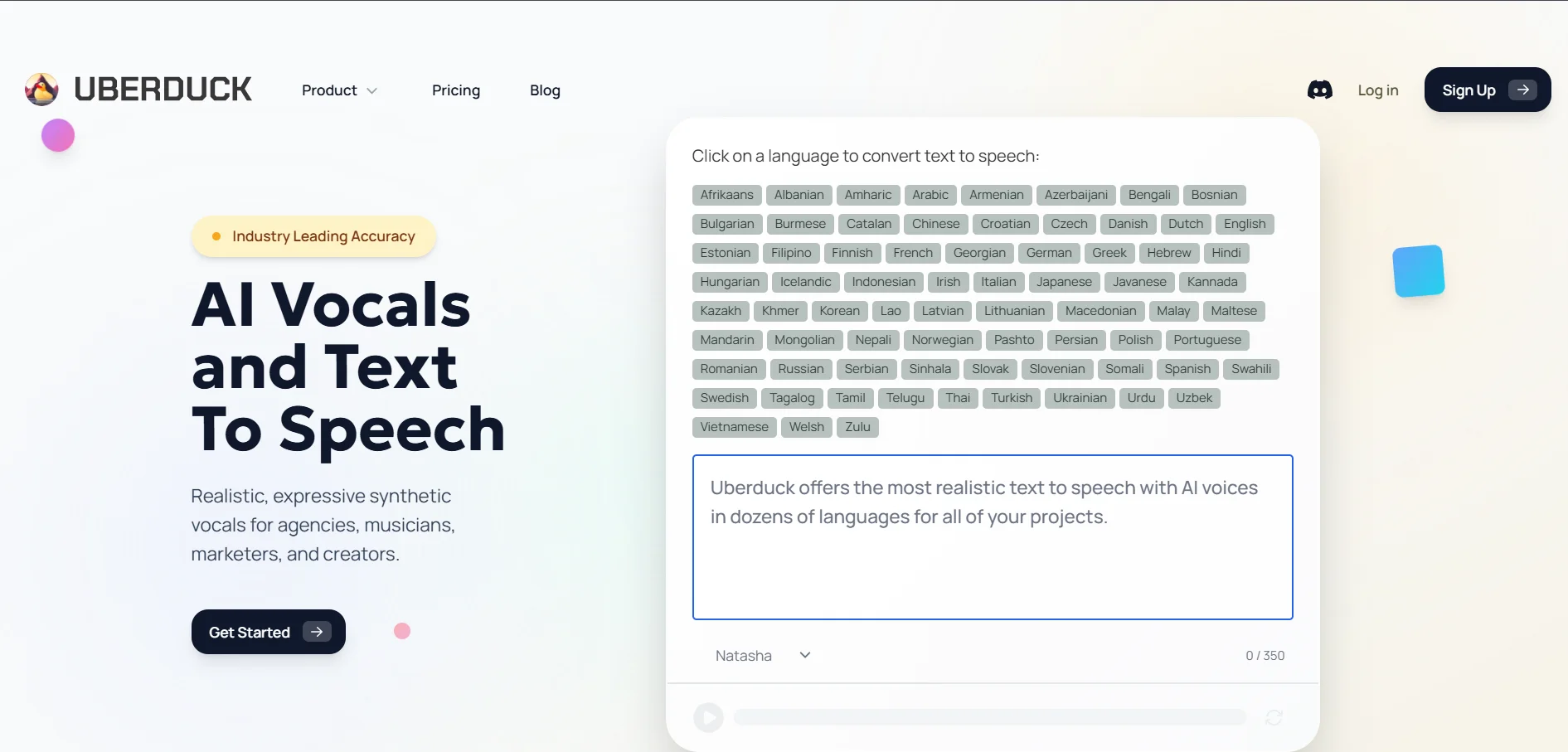
Uberduck built its early reputation on novelty voice synthesis, including its well-known rap generator and character voice packs, before expanding into broader multilingual text-to-speech. It supports more than 100 languages and offers fun, creative features that set it apart from strictly professional-sounding competitors.
💰 Uberduck Pricing (Official Site)
| Free | 300 credits included |
| Paid Plans | Starting around $4/month |
While Uberduck supports a huge range of languages and playful features like rap generation, reviewers note the interface can feel gimmicky and output quality lags behind more polished competitors. It remains a fun, low-cost option for casual and entertainment-focused projects rather than professional broadcast work.
Pros
- Very low-cost entry point
- Wide language coverage
- Fun, creative voice features not found elsewhere
Cons
- Lower output quality compared to premium tools
- Interface can feel less polished/professional
- Less suited to enterprise or broadcast use cases
Quick Comparison Table
| Alternative | Description |
|---|---|
| VEED | Browser-based video editor with AI voiceovers, avatars, and multilingual subtitles built in. |
| Resemble.ai | Developer-focused voice cloning API with pay-per-use pricing and deepfake detection. |
| BookFab | Desktop audiobook converter that turns eBooks and text into narrated MP3/M4B files. |
| MiniMax | High-quality multilingual TTS and voice cloning with generous free daily credits. |
| Noiz.ai | Budget-friendly expressive TTS platform with cloning and multilingual dubbing. |
| Gradium | Emerging TTS model tracked in independent speech-quality benchmarks. |
| Podcastle | All-in-one podcast recording, editing, and AI voice generation platform. |
| Fliki | Script-to-video tool with a massive AI voice library and stock footage matching. |
| KikiVoice | Mobile-friendly TTS and voice-changing app for short-form content creators. |
| Cartesia | Real-time, low-latency voice AI platform built for developers and voice agents. |
| WellSaid Labs | Enterprise voice platform using ethically-sourced avatars from real voice actors. |
| Uberduck | Multilingual TTS with playful, novelty voice features at a low starting cost. |
Conclusion
Developers building real-time voice agents will likely gravitate toward Cartesia or Resemble.ai for their usage-based APIs and low latency, while podcasters and video creators may prefer the all-in-one convenience of Podcastle, VEED, or Fliki. Enterprises that need ethically-sourced, brand-consistent voices should look closely at WellSaid Labs, and budget-conscious creators experimenting with cloning and dubbing will find strong value in Noiz.ai or MiniMax.
Before committing to any paid plan, take advantage of the free trials and free tiers listed above. Testing real content your own scripts, your own book chapters, your own brand voice is the only reliable way to judge whether a platform’s voice quality, pricing structure, and feature set actually fit your workflow long term.


