

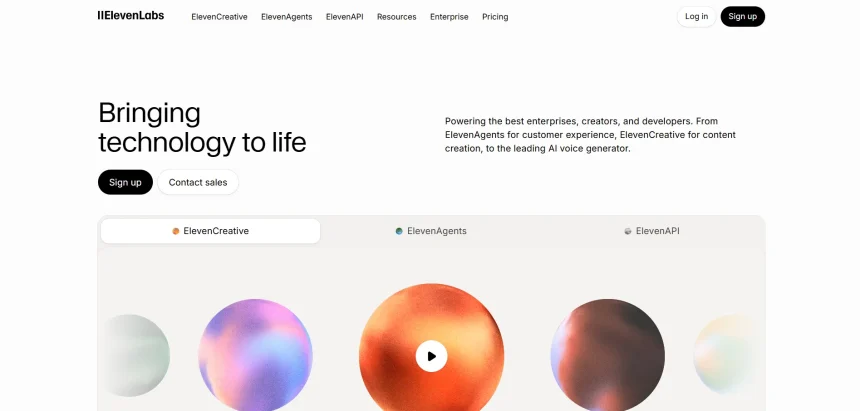
ElevenLabs has become a household name in AI voice generation, but it isn’t the only option on the market. Depending on your budget, use case, and need for features like real-time streaming, voice cloning, or multilingual dubbing, other platforms may serve you better. Whether you’re a podcaster, developer, or enterprise team, this guide breaks down 10 strong ElevenLabs Alternatives worth considering in 2026.
Each tool below has its own strengths, from ultra-low latency APIs built for voice agents to all-in-one studios bundling video and script writing. We’ve covered free trial availability, current pricing plans, and honest pros and cons for each so you can pick the platform that actually fits your workflow and budget.
1. Cartesia
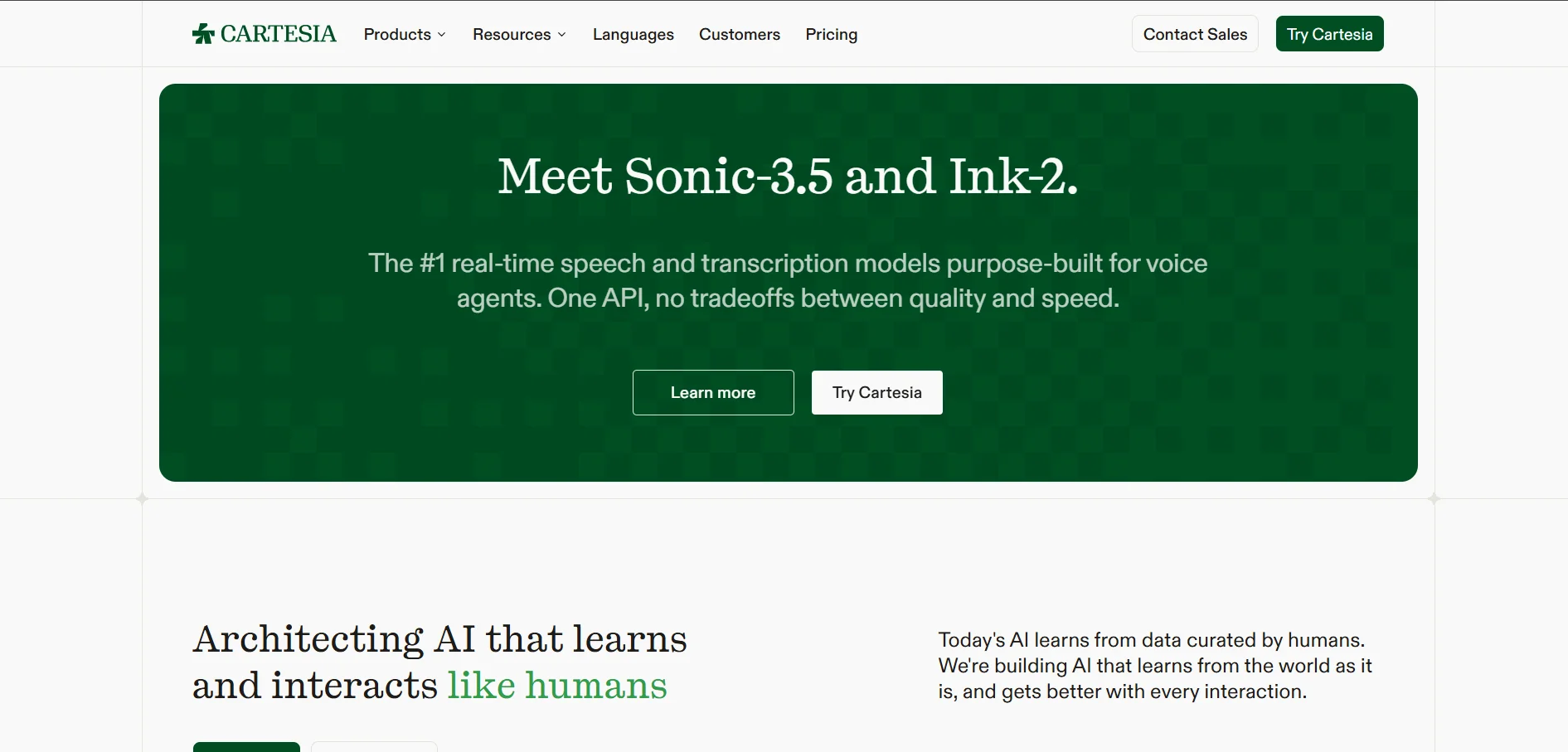
Cartesia offers a free tier with limited credits so you can test its real-time voice API before committing to a paid plan. There’s no traditional “trial” beyond this, but the free plan lets developers experiment with streaming text-to-speech. Paid tiers unlock voice cloning, higher concurrency, and commercial usage rights for production apps.
Pricing Plans:
- Free — $0/month, limited credits for testing
- Pro — around $5/month, commercial use and instant voice cloning
- Startup/Growth — around $49–$99/month, higher credit limits and Pro Voice Cloning
- Scale — around $299/month, high-volume production with priority support
- Enterprise — custom pricing
Cartesia is built for real-time, low-latency voice applications rather than casual content creation. Its Sonic model streams audio with sub-100ms latency, making it a favorite among developers building conversational voice agents. The credit-based billing model, however, can get confusing once you scale past the entry tiers.
Because Cartesia bills per character and per concurrency limit, teams need to model their usage carefully to avoid unexpected overages. It’s less suited to hobbyist audiobook or YouTube narration work and more suited to phone bots, IVR systems, and live interactive voice products where speed matters more than a large voice library.
Pros
- Extremely low latency, ideal for real-time agents
- Free tier available for testing
- Instant voice cloning on paid plans
Cons
- Credit-based pricing can be confusing at scale
- Smaller voice library than ElevenLabs
- Best features locked behind higher tiers
2. PlayHT
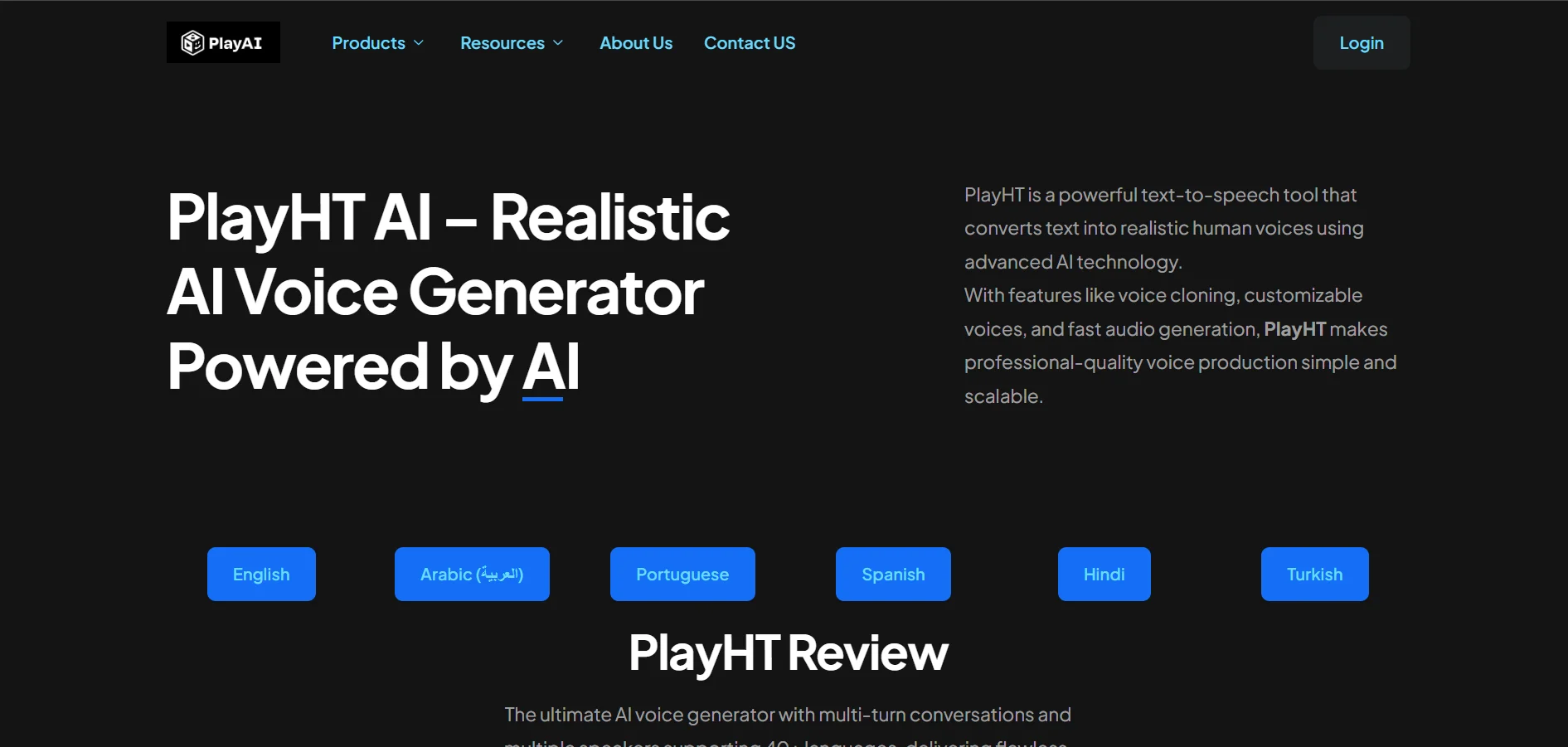
PlayHT offers a free plan that includes a limited monthly character allowance and one instant voice clone, letting new users explore the platform before subscribing. There is no separate time-limited trial beyond this free tier, but it’s generous enough to test voice quality and cloning accuracy before choosing a paid plan.
Pricing Plans:
- Free — $0/month, limited characters, no commercial use
- Creator — around $19–$39/month, commercial rights included
- Unlimited/Growth — around $74–$99/month, expanded usage and voices
- Enterprise/Business — custom pricing for large teams
PlayHT supports over 800 voices across more than 100 languages, making it a solid choice for multilingual content creators. Its API is developer-friendly and includes an IPA-based pronunciation library, which is a rare and useful feature for technical or brand-sensitive scripts requiring precise word emphasis.
The platform is popular for podcasts, e-learning, and video voiceovers because of its large voice catalog and flexible export options. However, some users report that voice realism and emotional range still lag slightly behind top competitors, especially for longer, expressive narration work.
Pros
- Large voice library across 100+ languages
- IPA pronunciation library for precision
- Flexible plans for creators and businesses
Cons
- Free plan restricts commercial use
- Voice emotional range trails top rivals
- Pricing tiers vary across sources, so confirm current rates
3. Lovo.ai
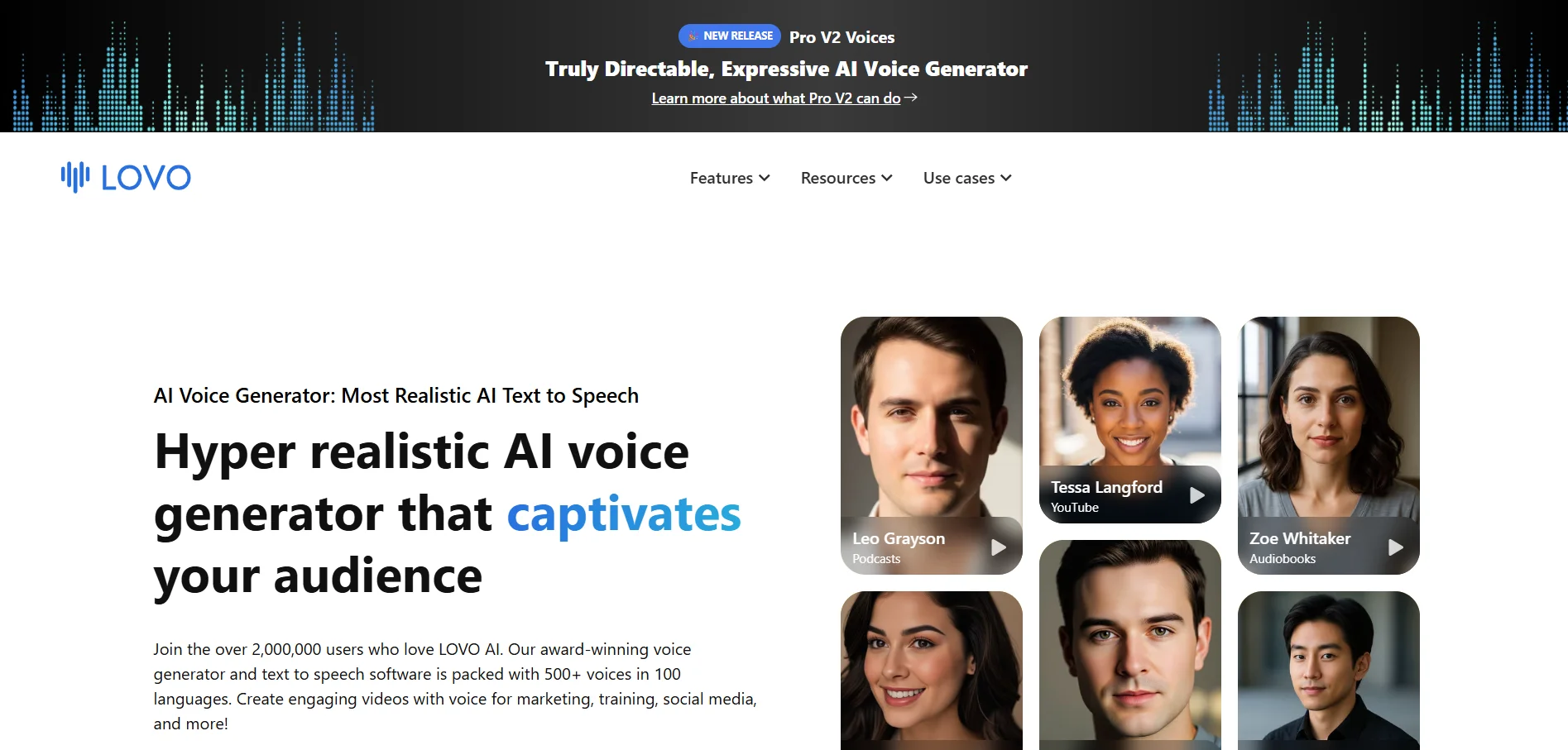
Lovo.ai offers both a free plan and a 14-day free trial on its Pro tier, giving new users ample time to test voice cloning, its video editor, and script-writing tools before paying. This dual approach makes it easier to evaluate the platform’s full feature set rather than just the barebones free version.
Pricing Plans:
- Free — $0/month, limited downloads, personal use only
- Basic — around $24/month, 2 hours of voice, commercial rights
- Pro — around $48/month, 5 hours of voice generation
- Pro+ — around $149/month, 20 hours plus premium features
- Enterprise — custom pricing
Lovo stands out as an all-in-one content studio rather than a pure TTS tool. It bundles 500+ voices, a video editor, AI script writing, subtitle generation, and AI art tools into one subscription, which appeals to YouTubers and e-learning teams wanting to consolidate multiple software subscriptions.
The newer Pro V2 voices let users control emotion and accent using natural-language brackets, a genuinely useful directing feature. That said, Lovo has a notably low Trustpilot rating, with some users reporting billing issues after attempting to cancel, so it’s worth reviewing cancellation terms carefully.
Pros
- All-in-one studio with video editing and subtitles
- 14-day free trial on Pro plan
- Directable voices with emotion control
Cons
- Low Trustpilot rating and billing complaints
- Free plan is very limited
- Voice cloning requires at least 1 minute of audio
4. iSpeech
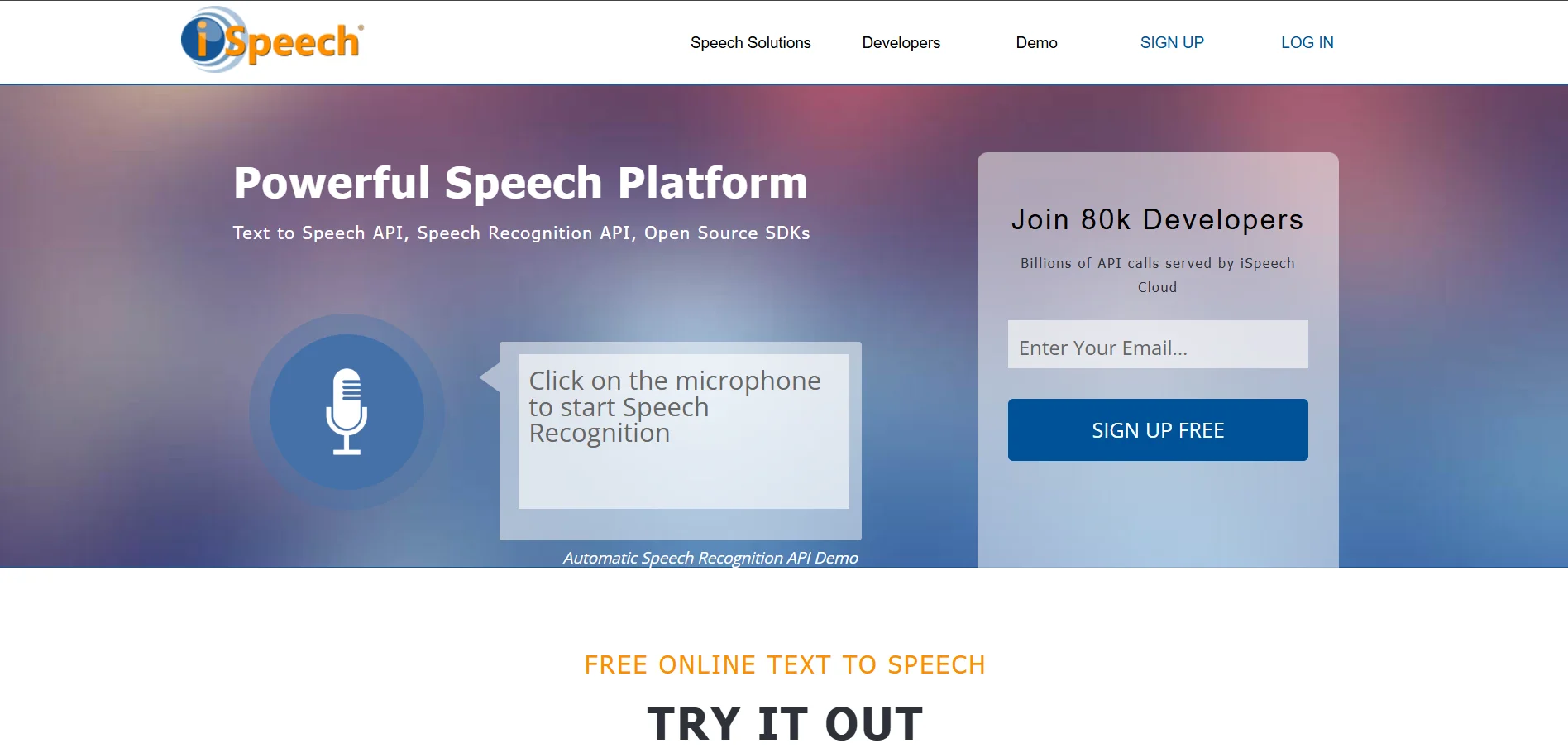
iSpeech offers a free Basic plan that lets users convert text to speech with no upfront payment, functioning as an ongoing trial rather than a time-limited one. This makes it approachable for casual users who want to test voice quality before committing to one of its low-cost paid tiers.
Pricing Plans:
- Basic — Free, limited recording length
- Plus — around $2.95/month or $19.95/year, up to 30-minute recordings
- Premium — around $3.95/month or $29.95/year, up to 12-hour recordings
- Business/API — custom pricing based on volume
iSpeech has been around since the early days of browser-based text-to-speech and remains one of the most budget-friendly options on this list. Its API also supports speech recognition alongside TTS, which appeals to developers building accessibility tools or lightweight voice apps on a tight budget.
Its voice quality, however, doesn’t match newer neural-based competitors like ElevenLabs or Cartesia. iSpeech is best suited to simple use cases such as basic accessibility features, IVR prompts, or short-form content rather than expressive storytelling or professional voiceover production.
Pros
- Very affordable pricing tiers
- Free plan with no time limit
- Combines TTS and speech recognition
Cons
- Voice realism lags behind neural TTS competitors
- Dated interface compared to newer platforms
- Limited voice cloning capabilities
5. Noiz.ai
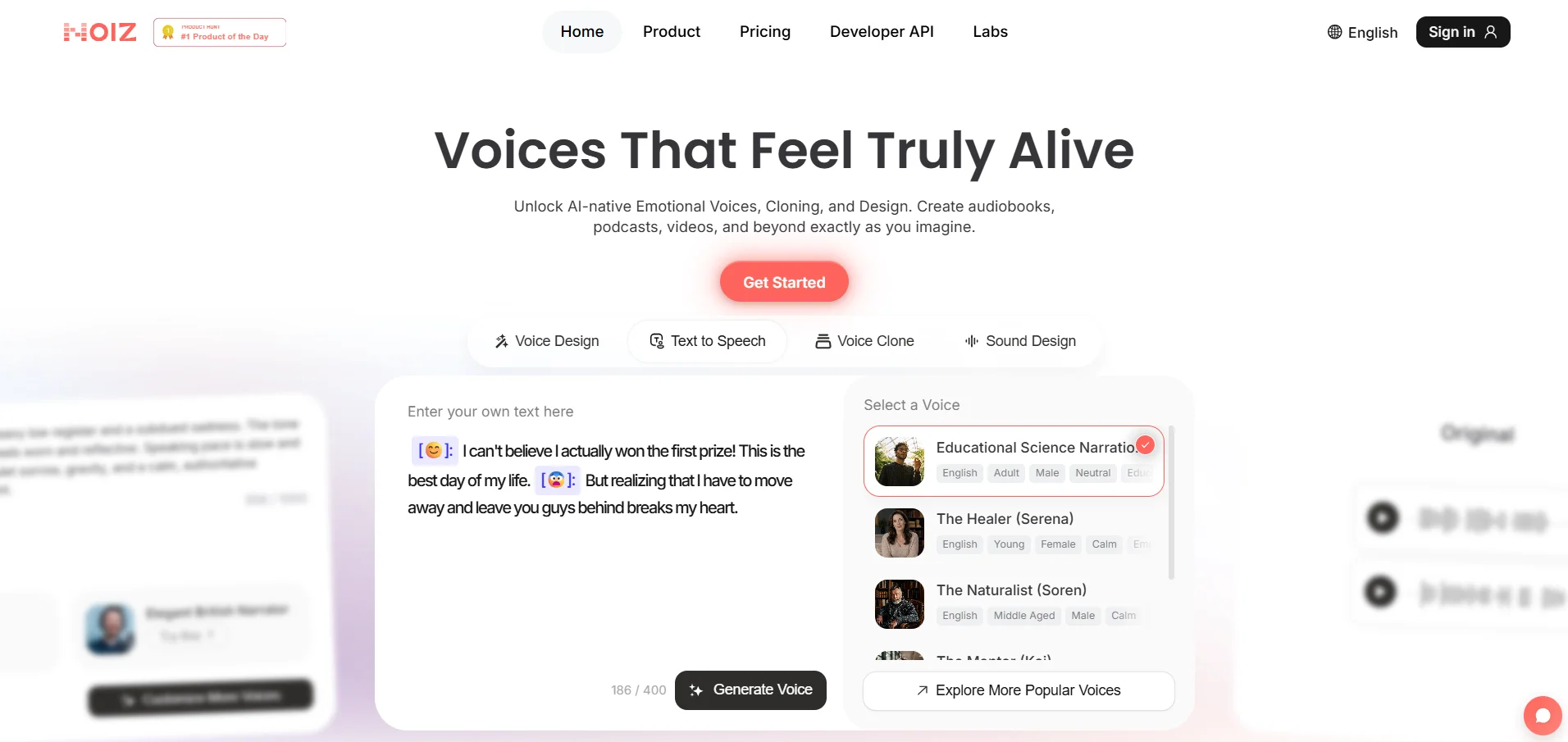
Noiz.ai provides a free-forever plan alongside low-cost paid tiers, allowing users to try its voice and dubbing features without a credit card. This makes it easy to sample its emotional TTS output and multilingual dubbing before deciding whether to upgrade to a paid subscription.
Pricing Plans:
- Free — $0/month, basic features
- Starter — around $2.90/month
- Creator — around $8.90/month, expanded usage and features
- Business/Custom — pricing available on request for higher volume
Noiz.ai has grown quickly, reportedly serving over 800,000 users, largely thanks to its emphasis on emotional tone control. Users can direct voices toward happy, angry, curious, or desperate deliveries, which adds expressiveness that flatter, more robotic TTS tools lack.
Beyond text-to-speech, Noiz.ai includes voice cloning and multilingual video dubbing, positioning it as a lightweight alternative for creators localizing content across languages. It’s a newer platform, though, so its long-term reliability and enterprise-grade support are less proven than more established competitors.
Pros
- Free-forever plan available
- Strong emotional tone control
- Built-in multilingual dubbing
Cons
- Newer platform with less proven track record
- Smaller community and documentation base
- Enterprise features still maturing
6. Resemble.ai
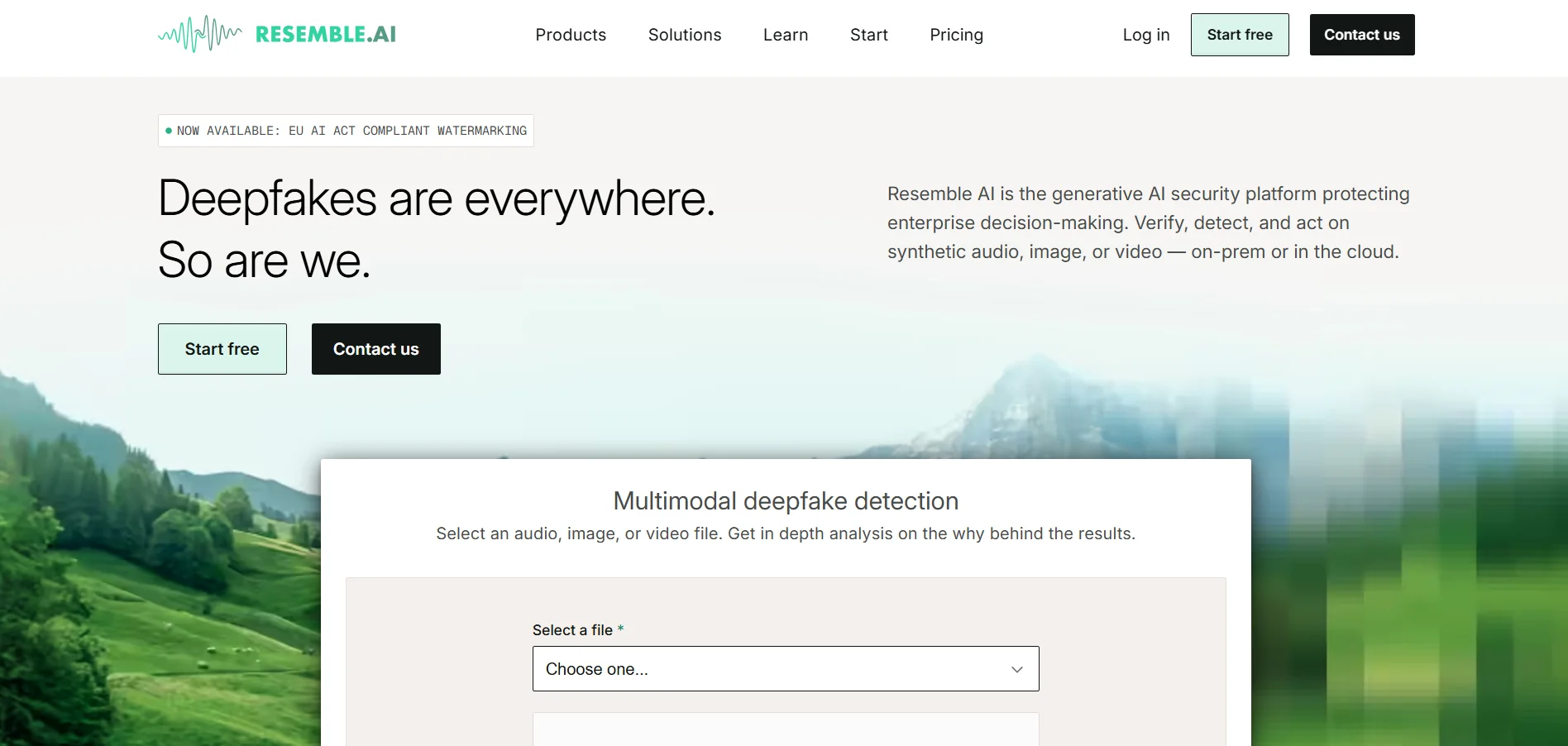
Resemble.ai has moved away from fixed subscription trials toward a pay-per-use “Flex” model, where new users get $0 to start and pay only for what they generate. Credits never expire, and full API access, including voice cloning, is available from day one without needing a separate trial period.
Pricing Plans:
- Flex (Pay-per-use) — from $0 to start, roughly $0.0005 per synthesis second
- Voice clones — around $2–$5/month per cloned voice
- Team seats — around $20/month per user
- Enterprise — custom quote-based pricing with SOC 2 and SSO
Resemble.ai differentiates itself with built-in deepfake detection and PerTh audio watermarking, features aimed at security-conscious enterprises like media companies and government contractors. This focus on authentication sets it apart from purely creative-focused competitors.
The consumption-based pricing model means costs scale directly with usage, which can be cost-effective for moderate volumes but harder to predict for high-throughput applications. Resemble is best suited to teams that value content authentication over a large pre-built voice catalog.
Pros
- Deepfake detection and watermarking built in
- Pay-per-use pricing with no expiring credits
- Full API access from the start
Cons
- No traditional free trial or flat subscription
- Costs can be unpredictable at high volume
- Fewer stock voices than larger competitors
7. Voice.ai
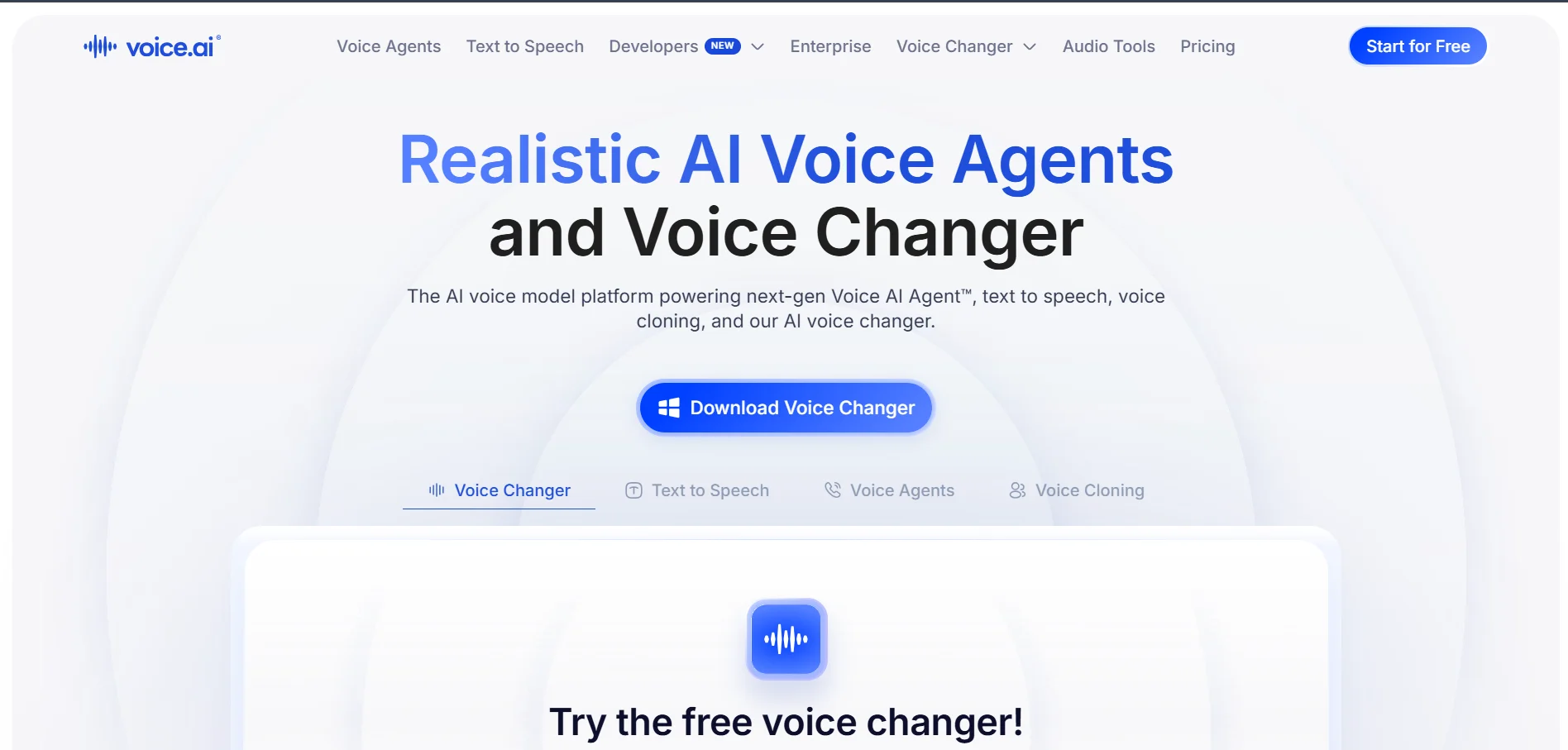
Voice.ai offers a free tier that includes a monthly credit allowance, roughly enough for a few minutes of text-to-speech generation, functioning as a soft trial. Upgrading to the Starter plan unlocks instant voice cloning, downloadable files, and a commercial license for real production use.
Pricing Plans:
- Free — $0/month, limited monthly credits
- Starter — around $5/month, instant voice cloning and commercial license
- Mid-tier plans — scaling up based on credit allowance
- Higher tiers — up to roughly $880/month for heavy usage
Voice.ai is popular among streamers and gamers for real-time voice changing, in addition to standard text-to-speech generation. Its TTS Studio and commercial licensing make it usable for content creators who need downloadable, monetizable audio files rather than just live voice effects.
The credit-to-usage conversion can require some mental math, since credits don’t map cleanly to a fixed number of minutes or characters across all features. It’s a strong pick for creators focused on voice changing and casual content rather than enterprise-scale deployment.
Pros
- Combines real-time voice changing with TTS
- Affordable entry-level paid plan
- Commercial licensing available from Starter tier
Cons
- Credit system can be confusing to estimate
- Less suited to enterprise voice agent deployment
- Higher tiers get expensive quickly
8. KikiVoice
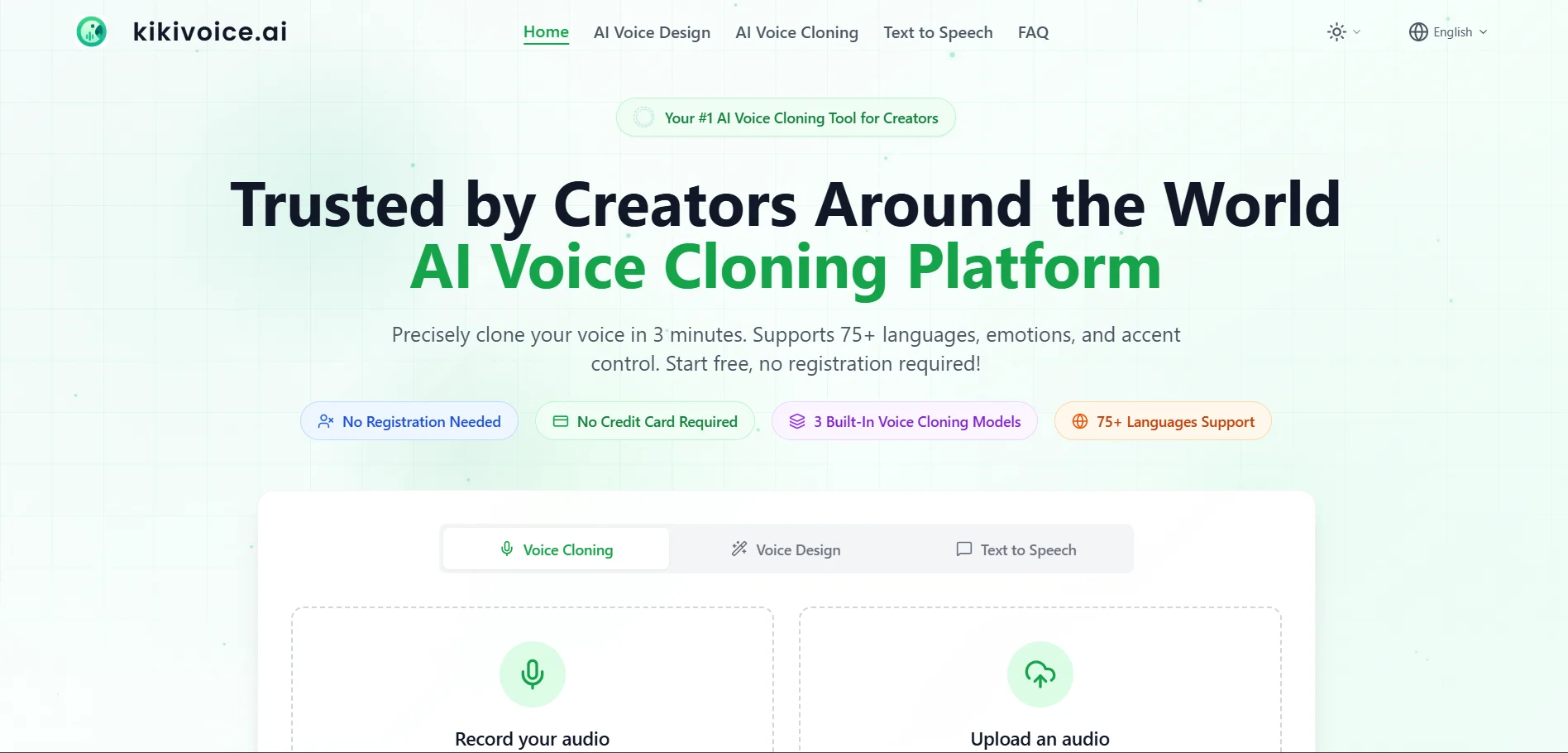
KikiVoice typically offers a free trial period or limited free tier, allowing new users to test voice generation quality before subscribing, similar to other emerging TTS platforms. As a smaller, less mainstream tool, exact trial terms and duration are best confirmed directly on its official pricing page before signing up.
Pricing Plans:
- Free/Trial tier — limited characters or minutes per month
- Starter plan — low monthly cost aimed at individual creators
- Pro/Business plan — higher usage limits and commercial rights
- Custom/Enterprise — available on request for larger needs
KikiVoice positions itself as a lightweight, budget-conscious alternative for creators who don’t need the full feature set of larger platforms. It typically focuses on straightforward text-to-speech conversion with a simple interface, making it approachable for beginners or small projects.
Because it’s a smaller player in the space, KikiVoice generally offers a narrower voice library and fewer advanced features like real-time streaming or deepfake detection compared to established competitors. It’s best suited to simple, low-volume voiceover needs rather than production-scale deployment.
Pros
- Simple, beginner-friendly interface
- Budget-friendly for small projects
- Free tier for initial testing
Cons
- Smaller voice library than major competitors
- Limited advanced features
- Less brand recognition and documentation
9. Gradium
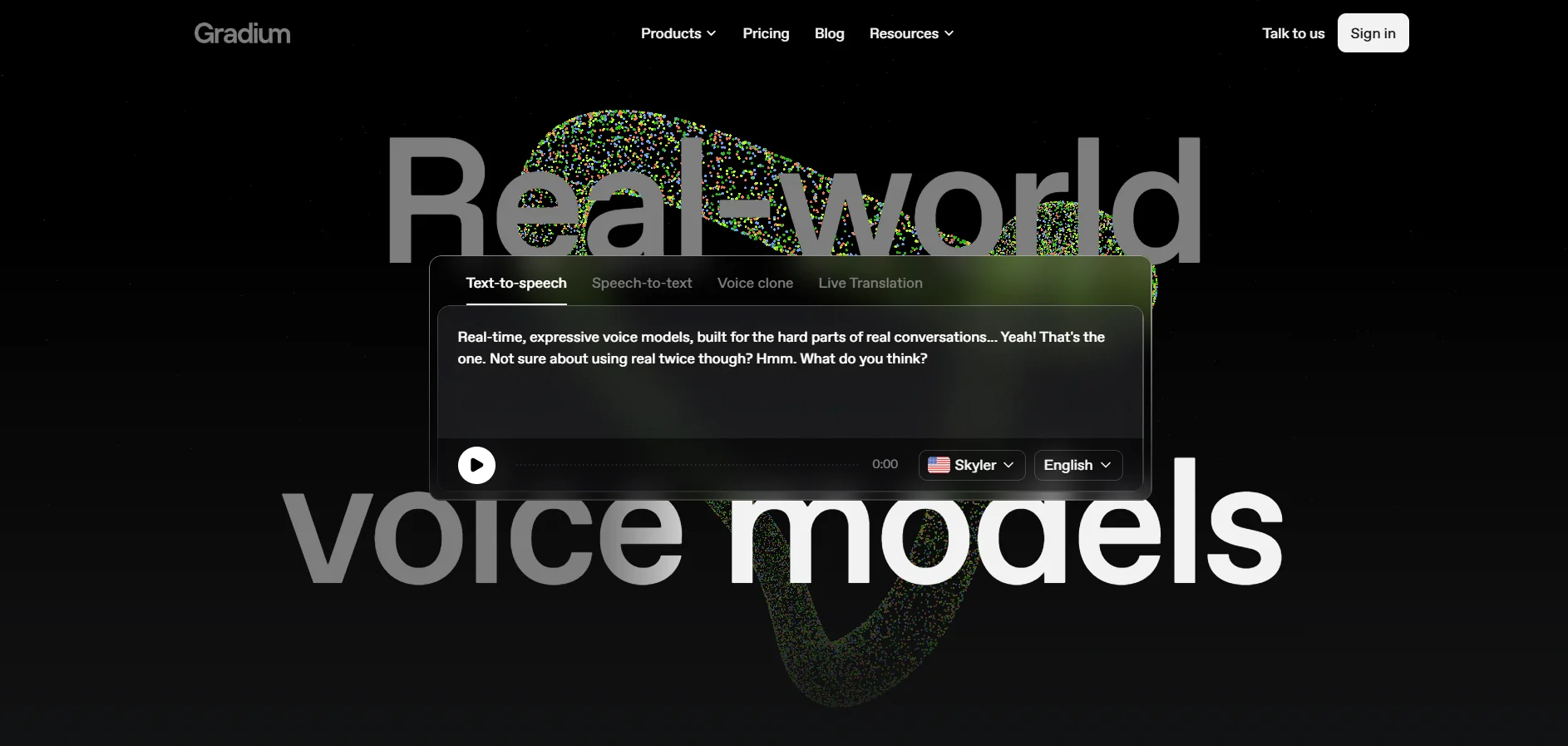
Gradium generally provides a free or trial tier for new users to sample its voice generation capabilities before committing to a paid subscription, in line with common practice among newer AI voice platforms. As details can change, it’s worth checking Gradium’s official website directly to confirm current trial length and included features.
Pricing Plans:
- Free tier — limited monthly usage for testing
- Starter plan — affordable entry point for individual creators
- Growth/Pro plan — expanded character or minute allowances
- Enterprise — custom pricing for larger organizations
Gradium is positioned as a flexible voice generation tool aimed at creators and developers who want straightforward text-to-speech without a steep learning curve. Its feature set typically centers on natural-sounding voices and reasonably priced plans compared to more established, premium-priced competitors.
As a smaller platform, Gradium may not offer the same breadth of language support, voice cloning sophistication, or enterprise integrations found in larger tools like ElevenLabs or Resemble.ai. It fits best as a cost-effective option for smaller projects rather than high-scale commercial deployments.
Pros
- Cost-effective plans for individuals
- Straightforward, easy-to-use interface
- Free tier available for testing
Cons
- Fewer languages and voices than major platforms
- Limited enterprise-grade features
- Less established track record
10. WellSaid Labs
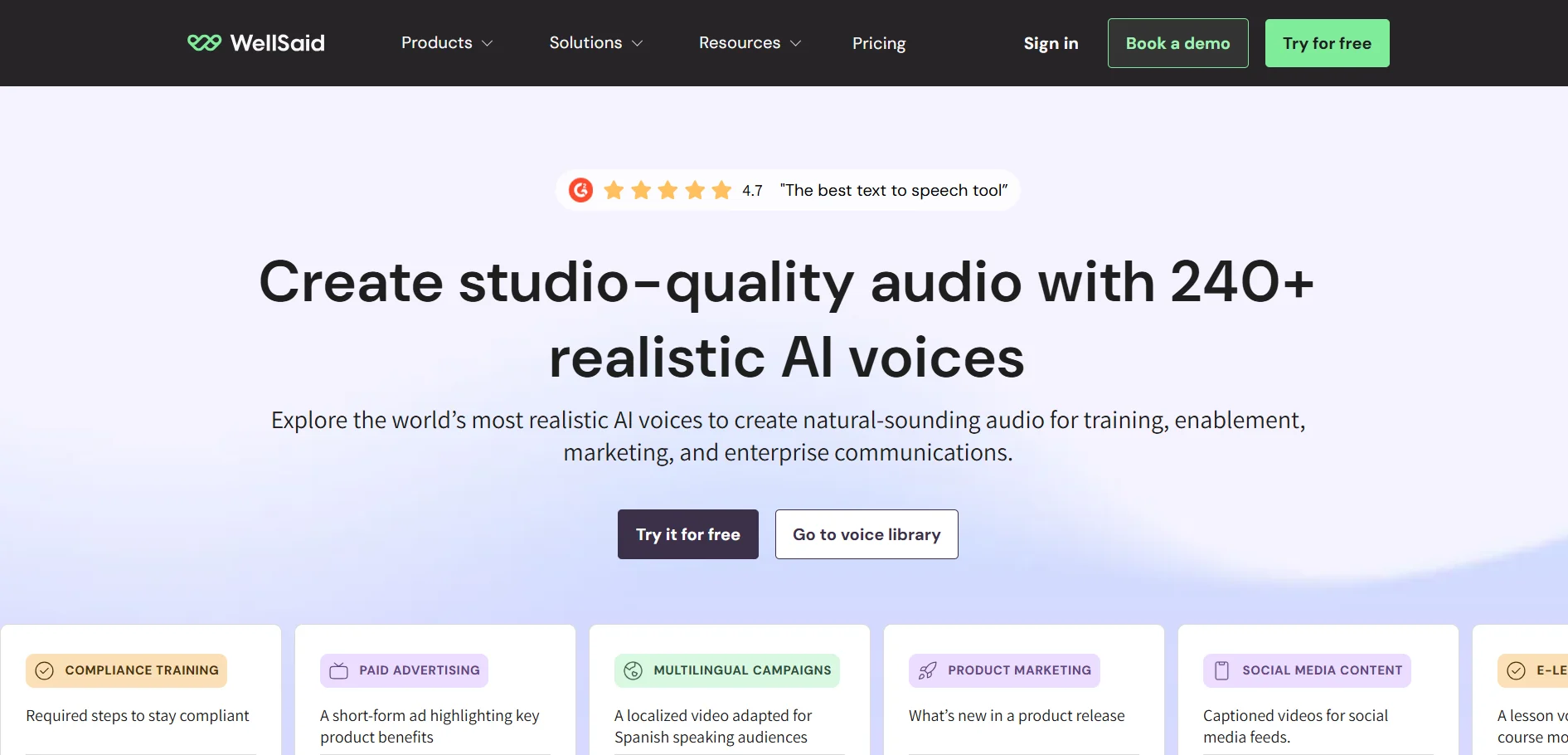
WellSaid Labs typically offers a free trial period, giving new users limited access to explore its voice avatars and pronunciation controls before subscribing. The trial is aimed primarily at business and enterprise evaluators rather than casual users, reflecting WellSaid’s positioning as a premium, professional-grade platform.
Pricing Plans:
- Trial — Free, 1 seat, limited downloads
- Creative — around $49–$55/month, annual billing, 720+ downloads per year
- Business — around $160/month, team workspace and integrations
- Enterprise — custom pricing with SSO, SOC 2, and dedicated support
WellSaid Labs, spun out of the Allen Institute for AI, is known for studio-quality voice avatars modeled from real, consenting voice actors. This ethical sourcing approach appeals to enterprises concerned about voice rights and consent, particularly in corporate learning and development content.
Its pricing sits at the higher end compared to most tools on this list, reflecting its enterprise focus with SSO, SOC 2 compliance, and dedicated customer success managers. Smaller creators may find WellSaid’s per-seat pricing model less economical than flat-rate competitors offering similar voice quality.
Pros
- Ethically sourced, consenting voice actors
- Enterprise-grade security and compliance options
- High studio-quality voice output
Cons
- Higher pricing than most competitors
- Per-seat costs scale quickly for teams
- Free trial is limited in scope
| Alternative | Description |
|---|---|
| Cartesia | Ultra-low-latency real-time voice API built for conversational agents and streaming applications. |
| PlayHT | Large multilingual voice library with pronunciation controls, popular for podcasts and e-learning. |
| Lovo.ai | All-in-one content studio combining TTS, video editing, subtitles, and AI script writing. |
| iSpeech | Budget-friendly TTS and speech recognition platform with simple, low-cost plans. |
| Noiz.ai | Emotion-driven TTS and dubbing platform with a free-forever plan and multilingual support. |
| Resemble.ai | Pay-per-use voice cloning platform with built-in deepfake detection and watermarking. |
| Voice.ai | Combines real-time voice changing with text-to-speech generation for creators and streamers. |
| KikiVoice | Lightweight, beginner-friendly TTS tool aimed at small, budget-conscious projects. |
| Gradium | Flexible, affordable voice generation tool for creators seeking simple text-to-speech. |
| WellSaid Labs | Enterprise-grade voice platform using ethically sourced voice avatars with premium pricing. |
Conclusion
Choosing the right ElevenLabs alternative ultimately depends on your priorities. Developers building real-time voice agents will likely lean toward Cartesia or Resemble.ai, while content creators wanting an all-in-one studio may prefer Lovo.ai or PlayHT. Budget-conscious users have solid options too, with iSpeech, Noiz.ai, KikiVoice, and Gradium offering accessible entry points.
Enterprises prioritizing compliance and voice ethics should strongly consider WellSaid Labs, while creators wanting flexible voice changing alongside TTS might find Voice.ai a better fit. Before committing, take advantage of free trials and free tiers wherever available to test voice quality firsthand, and always verify current pricing directly on each platform’s official website since plans can change over time.


