

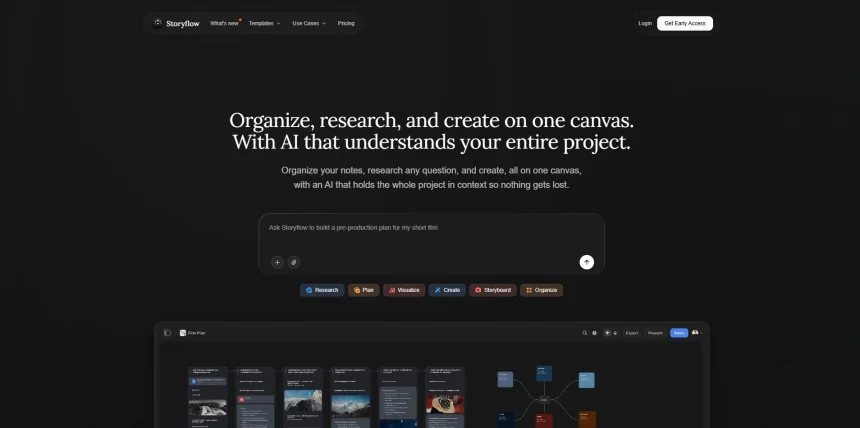
Storyflow has built a name for itself as a canvas-style AI outlining tool for screenwriters, but it is far from the only option on the market. Whether you need a tool for outlining, drafting, screenwriting, or full-length prose generation, this guide breaks down 13 of the strongest Storyflow Alternatives available right now. Each one is reviewed with its trial options, pricing plans, and the pros and cons that matter most to working writers.
1. Sudowrite
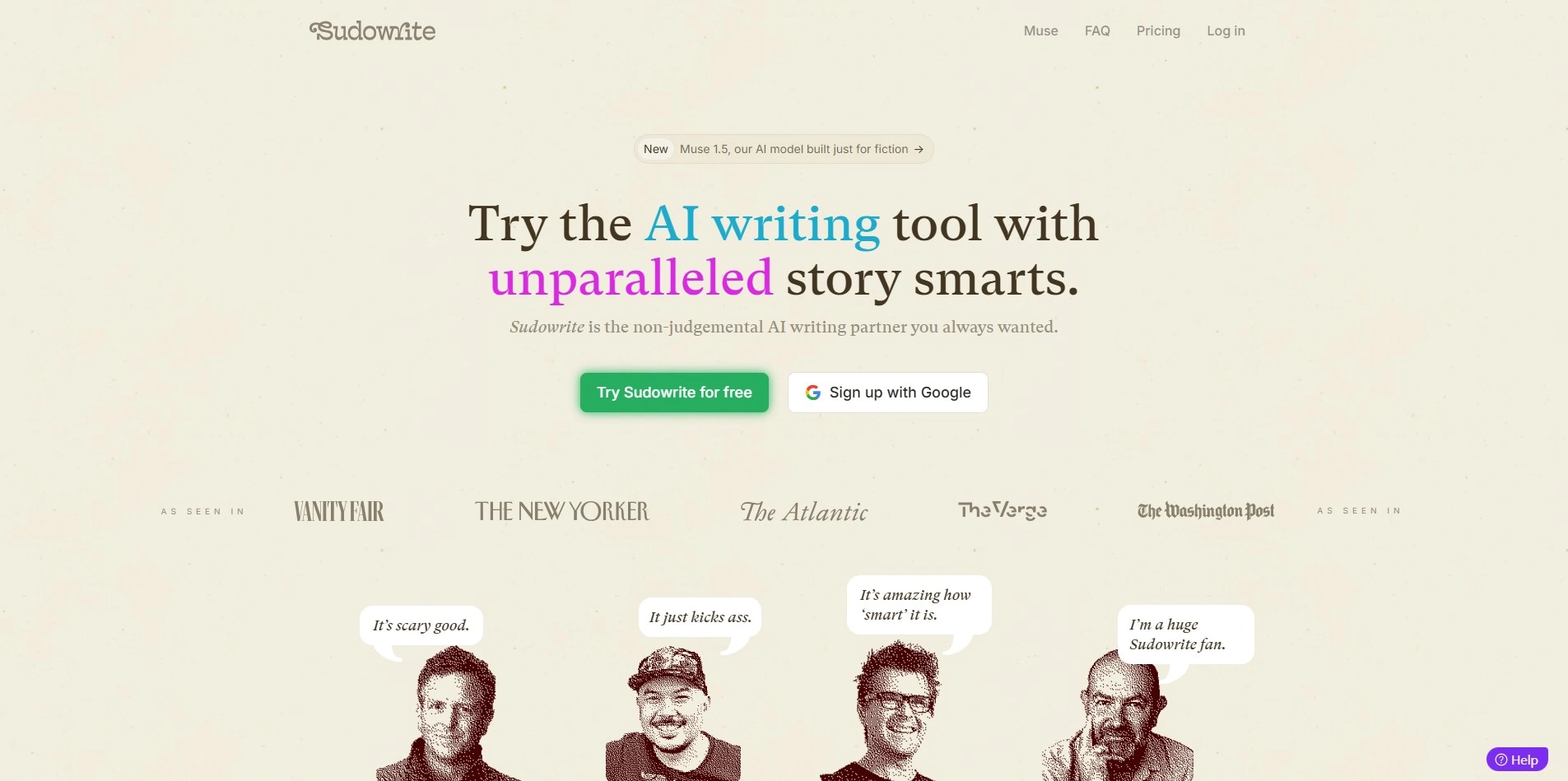
Sudowrite is a fiction-focused AI writing assistant built around its custom Muse language model. It specializes in prose generation, character brainstorming, and plot expansion, making it a favorite among novelists who want fluid, natural-sounding sentences rather than generic AI output.
The credit-based system means every plan unlocks the same features, and the difference lies purely in monthly usage capacity. Writers producing a chapter or two a week often find the Professional tier sufficient, while daily heavy users may need the Max plan to avoid running out of credits before the month ends.
Pros
- Strong, natural fiction-specific prose quality
- Dedicated brainstorming and character tools
- Rollover credits available on the Max tier
Cons
- Credit system can be confusing for new users
- Heavy users burn through credits quickly
- No permanent free plan
2. Studiovity
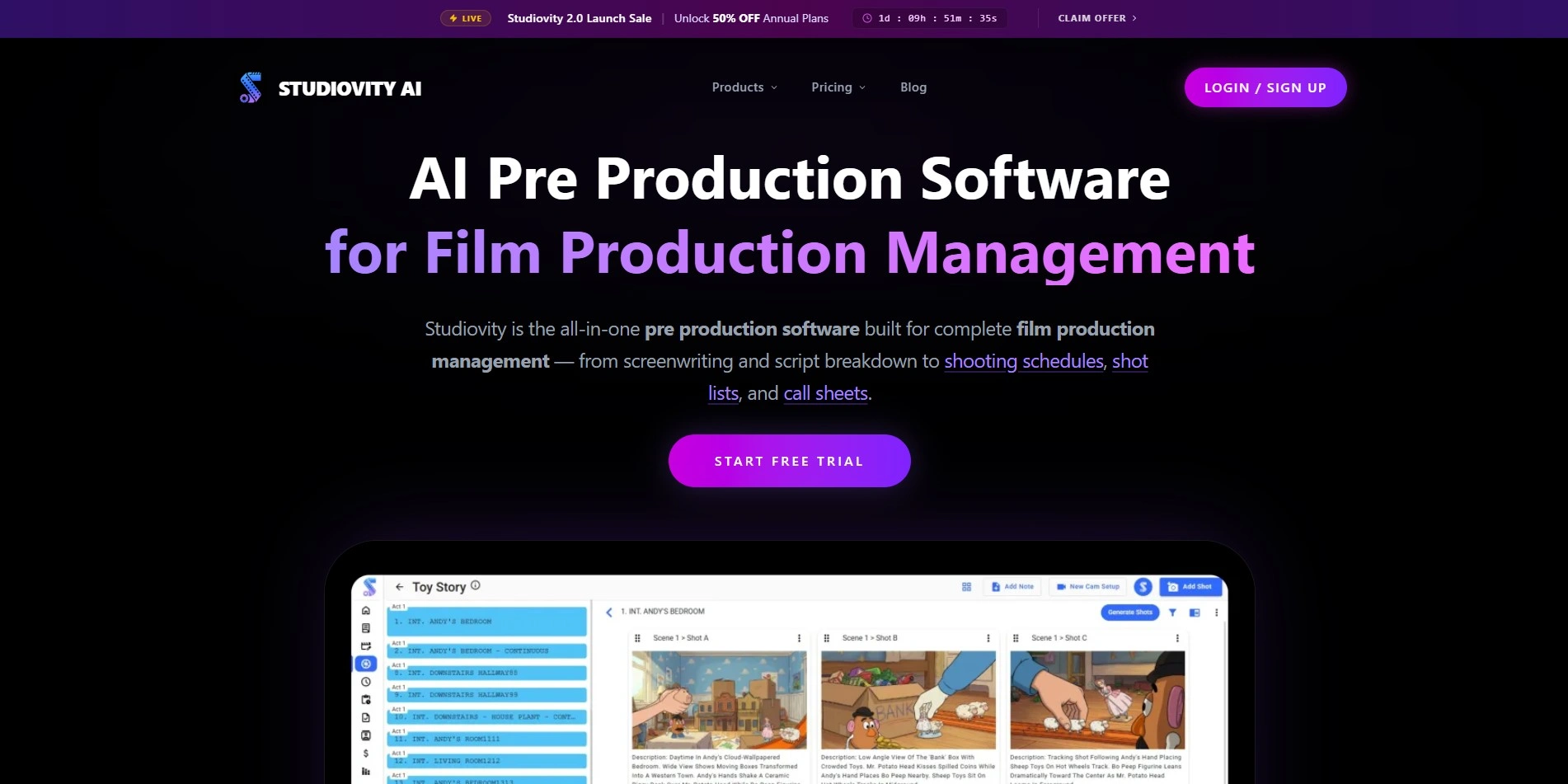
Studiovity is an all-in-one screenwriting and pre-production platform popular in the Indian film and OTT industry. It combines script writing, scheduling, budgeting, and collaboration tools into a single cloud-based dashboard designed for production teams as much as individual writers.
Its strength lies in bridging the gap between script development and physical production planning. Writers who need more than a blank page, such as shot lists, call sheets, or collaborative revisions with a full crew, will find Studiovity more production-oriented than most other tools on this list.
Pros
- Combines writing with production management
- Useful for team-based collaboration
- Popular with OTT and film production houses
Cons
- Less focused on AI prose generation
- Interface can feel complex for solo writers
- Regional pricing inconsistencies
3. Claude
Claude, developed by Anthropic, is a general-purpose AI assistant that has become a go-to tool for writers needing help with outlining, dialogue, editing, and long-form narrative structuring. Unlike niche fiction tools, Claude handles research, analysis, and creative writing within one conversational interface.
Writers appreciate Claude for its ability to hold long context, follow detailed style instructions, and maintain narrative consistency across chapters. It is not a dedicated screenwriting formatter, but its flexibility makes it a strong companion for planning and revising any story project.
Pros
- Excellent at following detailed style instructions
- Strong long-context memory for big projects
- Useful beyond fiction, for research and editing too
Cons
- No built-in screenplay formatting
- Not purpose-built for story outlining
- Higher usage tiers can get expensive
4. Dabble
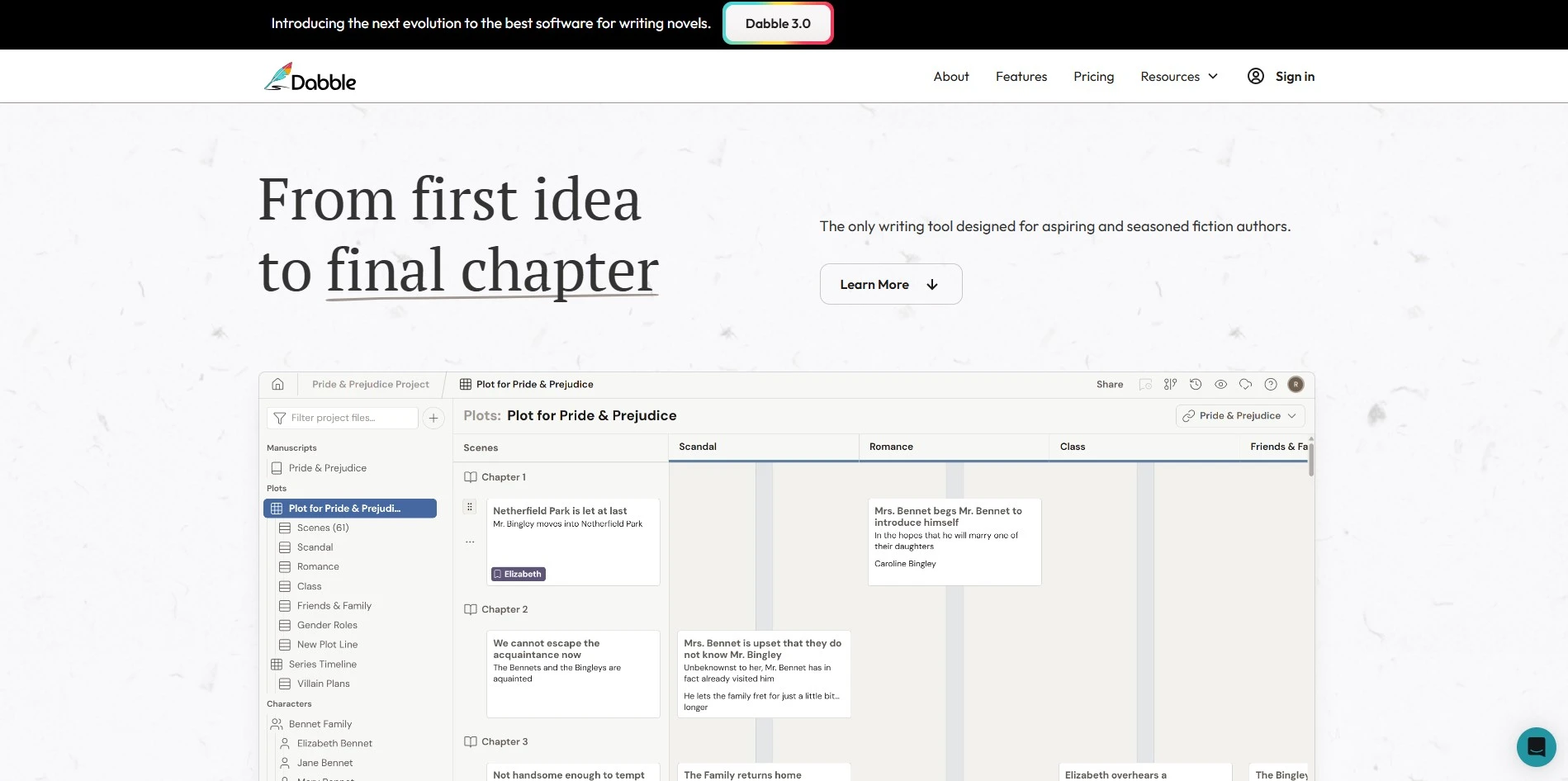
Dabble is a novel-writing software designed to feel like a distraction-free word processor combined with a story bible. It includes plot grids, character profiles, and a focus mode that helps writers stay immersed in drafting without juggling multiple documents or apps.
Unlike AI-heavy competitors, Dabble leans into structure and organization rather than generation. It suits writers who already know their story and simply need a clean, distraction-free space to track subplots, timelines, and character arcs while drafting a full manuscript.
Pros
- Clean, distraction-free writing interface
- Built-in plot grid and story organization tools
- Generous 14-day trial with full features
Cons
- Minimal AI generation features
- No screenplay-specific formatting
- Subscription required after trial ends
5. DialogueGenie

DialogueGenie is a niche AI tool built specifically to generate realistic, character-consistent dialogue for scripts, games, and novels. It focuses on voice differentiation, helping writers avoid the common problem of every character sounding the same on the page.
This tool works best as a supplement rather than a full writing suite. Screenwriters and game narrative designers use it to quickly draft dialogue exchanges, then refine tone and pacing manually, which speeds up first-draft dialogue writing considerably.
Pros
- Specialized in natural, distinct dialogue
- Useful for scripts, games, and novels alike
- Speeds up first-draft dialogue writing
Cons
- Not a full outlining or drafting suite
- Limited brand recognition and reviews
- Best used alongside another writing tool
6. StoryCraft AI

StoryCraft AI is designed to help writers move from a loose idea to a structured story outline using AI-guided prompts. It walks users through premise development, plot beats, and character arcs in a guided, step-by-step format.
This structured approach appeals to beginner and intermediate writers who want guidance rather than a blank canvas. Experienced writers may find the guided format restrictive, but for those who struggle with outlining, it offers a clear path from concept to finished structure.
Pros
- Step-by-step guided outlining process
- Beginner-friendly structure
- Helps overcome outlining writer’s block
Cons
- Can feel restrictive for advanced writers
- Less flexibility than open-canvas tools
- Limited independent reviews available
7. ChatGPT

ChatGPT, built by OpenAI, is one of the most widely used AI assistants for writers because of its versatility. It handles brainstorming, outlining, dialogue polishing, and even full scene drafts, making it a flexible substitute for dedicated story software.
Writers often use ChatGPT alongside a formatting tool, feeding it story beats and refining generated prose manually. Its constantly updated models and plugin ecosystem make it a moving target that keeps improving, though it lacks dedicated screenplay formatting out of the box.
Pros
- Free tier with strong general capability
- Extremely versatile for many writing tasks
- Frequent updates and improvements
Cons
- No native screenplay formatting
- Not story-specific out of the box
- Higher tiers can be costly for heavy use
8. Beemgee
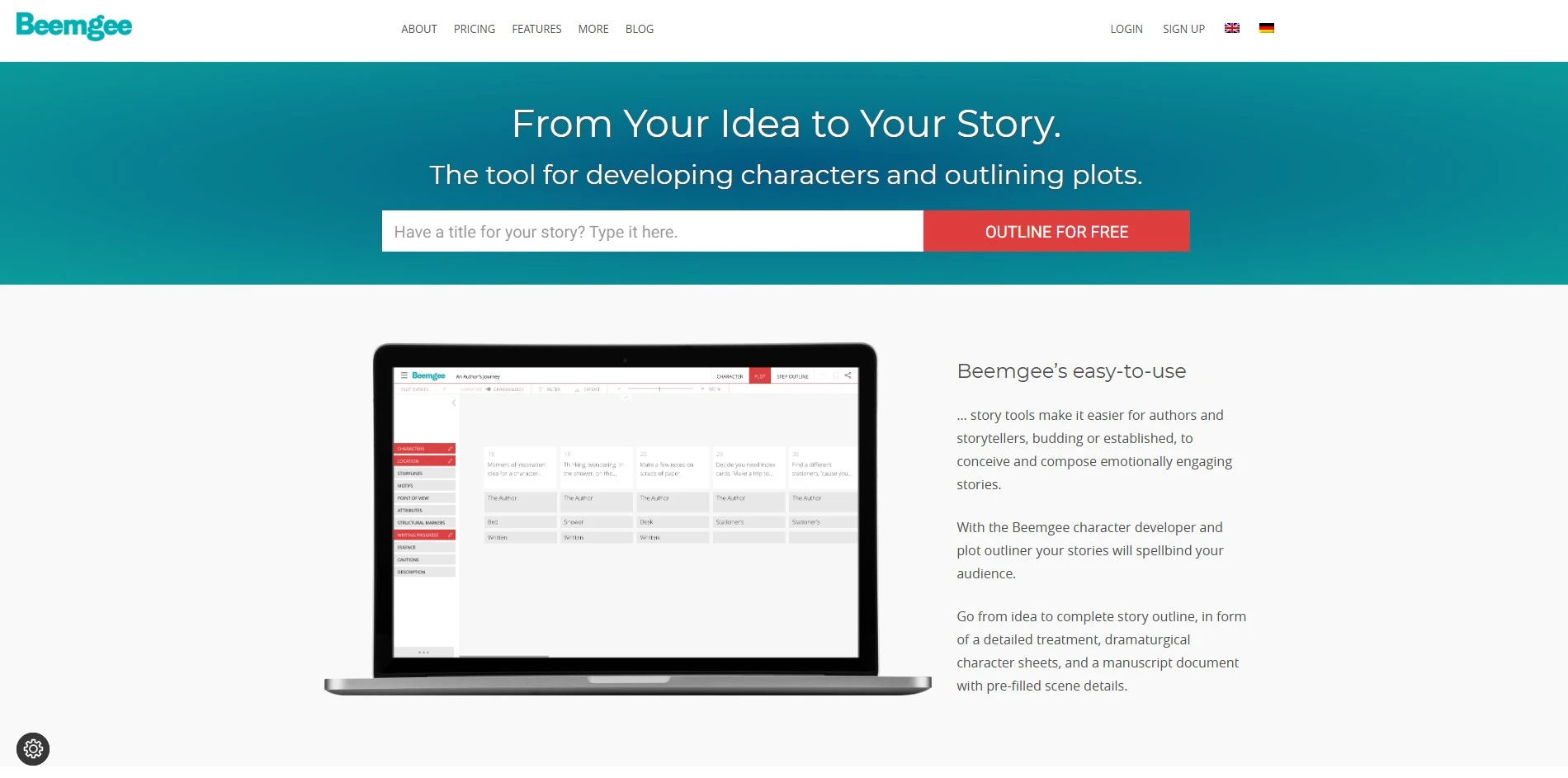
Beemgee is a character-driven story development tool that centers its entire workflow around character cards, plot points, and a dramatic question framework. It is designed for writers who build stories outward from character psychology rather than plot structure first.
Its scope is narrower than full-featured writing suites, which makes it ideal as a companion tool rather than a complete solution. Writers who think in character arcs first will find Beemgee’s approach refreshingly focused compared to more generalized outlining software.
Pros
- Strong character-first development framework
- Affordable annual Premium pricing
- Free tier covers core features
Cons
- Narrower scope than full writing suites
- No full screenplay formatting output
- Best as a complement, not a standalone tool
9. Mugafi
Mugafi is an AI-assisted screenwriting platform based in India that combines writing tools with human feedback services. It supports research, rewriting, dialogue expansion, and script formatting, alongside quality checks powered by its own algorithms.
What sets Mugafi apart is its built-in access to feedback from experienced writers, bridging AI assistance with human mentorship. This hybrid model appeals to emerging screenwriters who want both automated tools and professional script evaluation in one platform.
Pros
- Combines AI tools with human writer feedback
- Covers research, rewriting, and formatting
- Strong presence in the Indian screenwriting market
Cons
- Less globally recognized than Western tools
- Pricing details can be inconsistent across sources
- Interface may feel less polished than competitors
10. Squibler
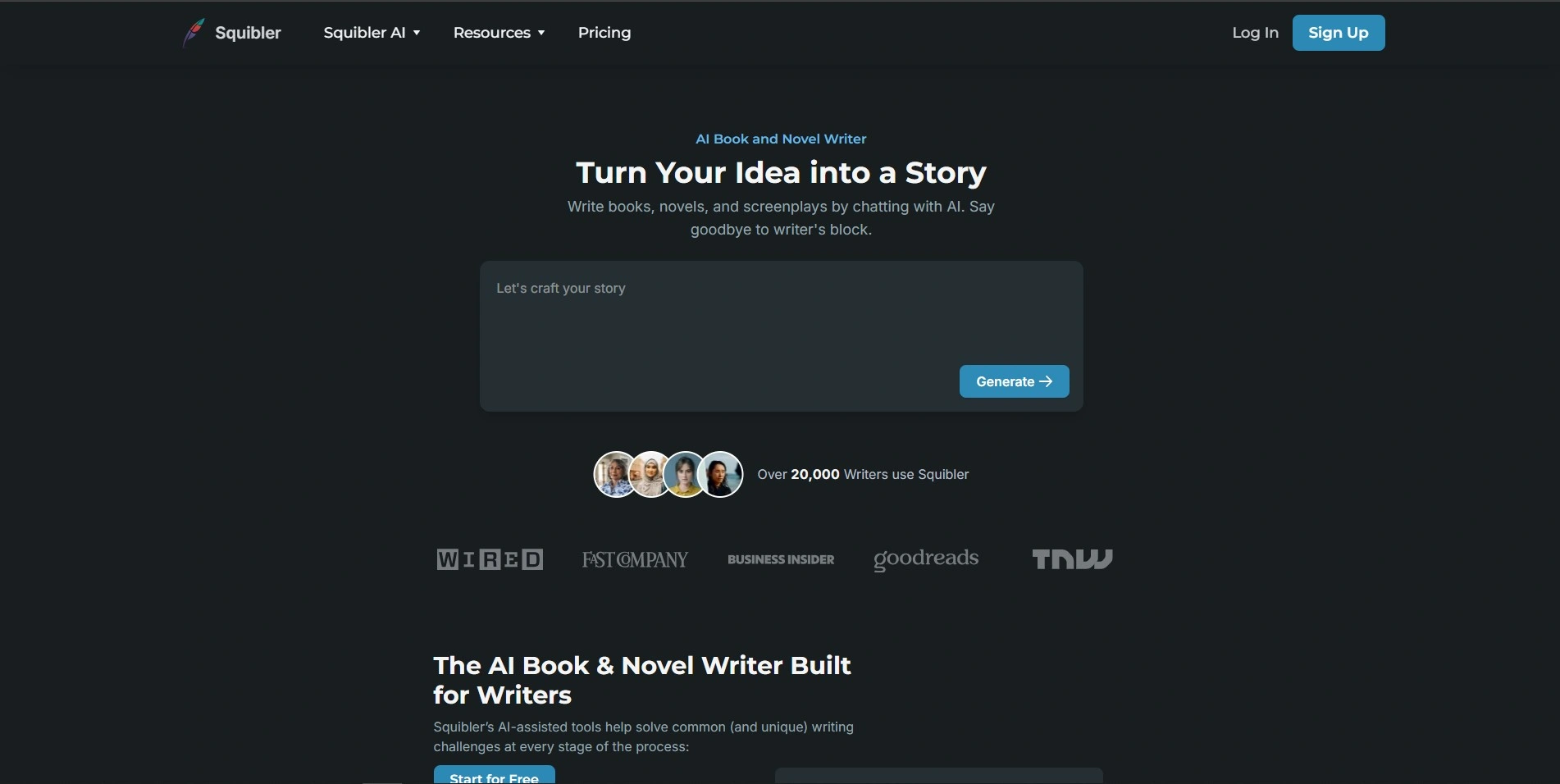
Squibler is an AI-powered writing platform that supports novels, screenplays, and self-help books through structured templates and a built-in story bible called Elements. It blends AI drafting with organizational tools like chapter tracking and character notes.
Its standout feature is the Pro tier’s unlimited AI credits, which appeals to prolific writers who don’t want to worry about running out of generation capacity. However, the pricing jump from Plus to Pro is steep, making it worth testing the free tier first.
Pros
- Unlimited AI credits on the Pro plan
- Combines drafting with story bible organization
- Free tier available to test the platform
Cons
- Steep price jump between Plus and Pro tiers
- Free tier’s word limits are restrictive
- Credit-based system can be confusing
11. Highland 2
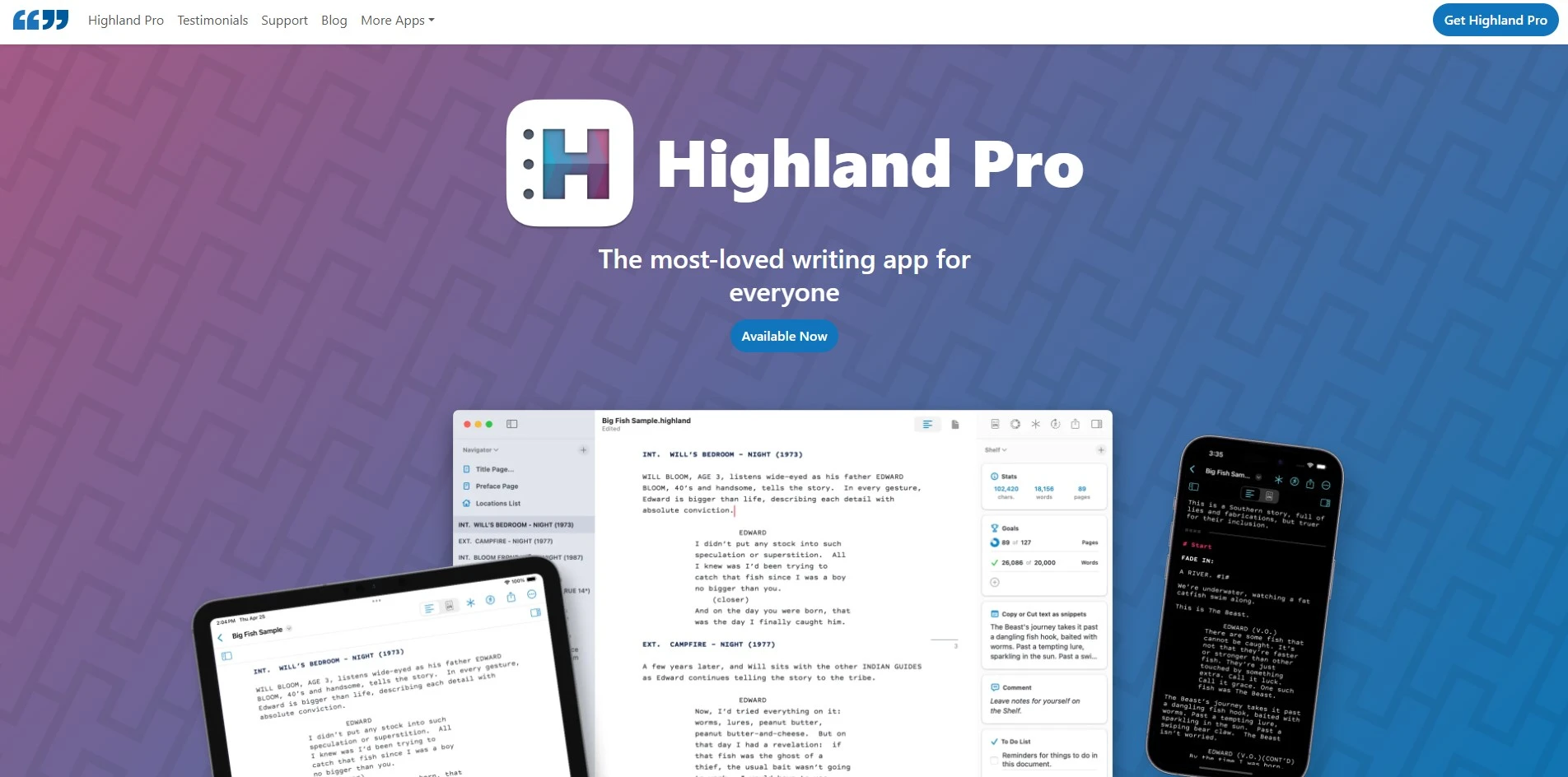
Highland 2, created by screenwriter John August, is a minimalist screenwriting app that auto-formats text as you type using plain text markup. It strips away distractions and focuses purely on getting words onto the page in industry-standard screenplay format.
Its simplicity is its biggest selling point. Writers who dislike heavy software with excessive features gravitate toward Highland 2 for its clean interface, revision mode, and word-count analytics, though it is limited to Apple devices only.
Pros
- Minimalist, distraction-free writing environment
- Automatic industry-standard screenplay formatting
- Created by an experienced working screenwriter
Cons
- Apple-only, no Windows or Android support
- Fewer collaboration features than cloud tools
- Limited AI-powered writing assistance
12. Final Draft

Final Draft is widely regarded as the industry-standard screenwriting software, used by the vast majority of working film and television professionals. It offers precise formatting, collaboration tools, and compatibility with major production workflows across the entertainment industry.
Its one-time pricing model appeals to writers who prefer ownership over subscriptions, though periodic paid version upgrades can add up over time. For screenwriters aiming to work professionally in Hollywood, Final Draft remains close to a mandatory tool.
Pros
- Industry-standard formatting recognized everywhere
- One-time purchase instead of ongoing subscription
- Trusted by professional studios and writers
Cons
- High upfront cost compared to competitors
- Paid version upgrades required periodically
- Steeper learning curve for new users
13. WriterDuet
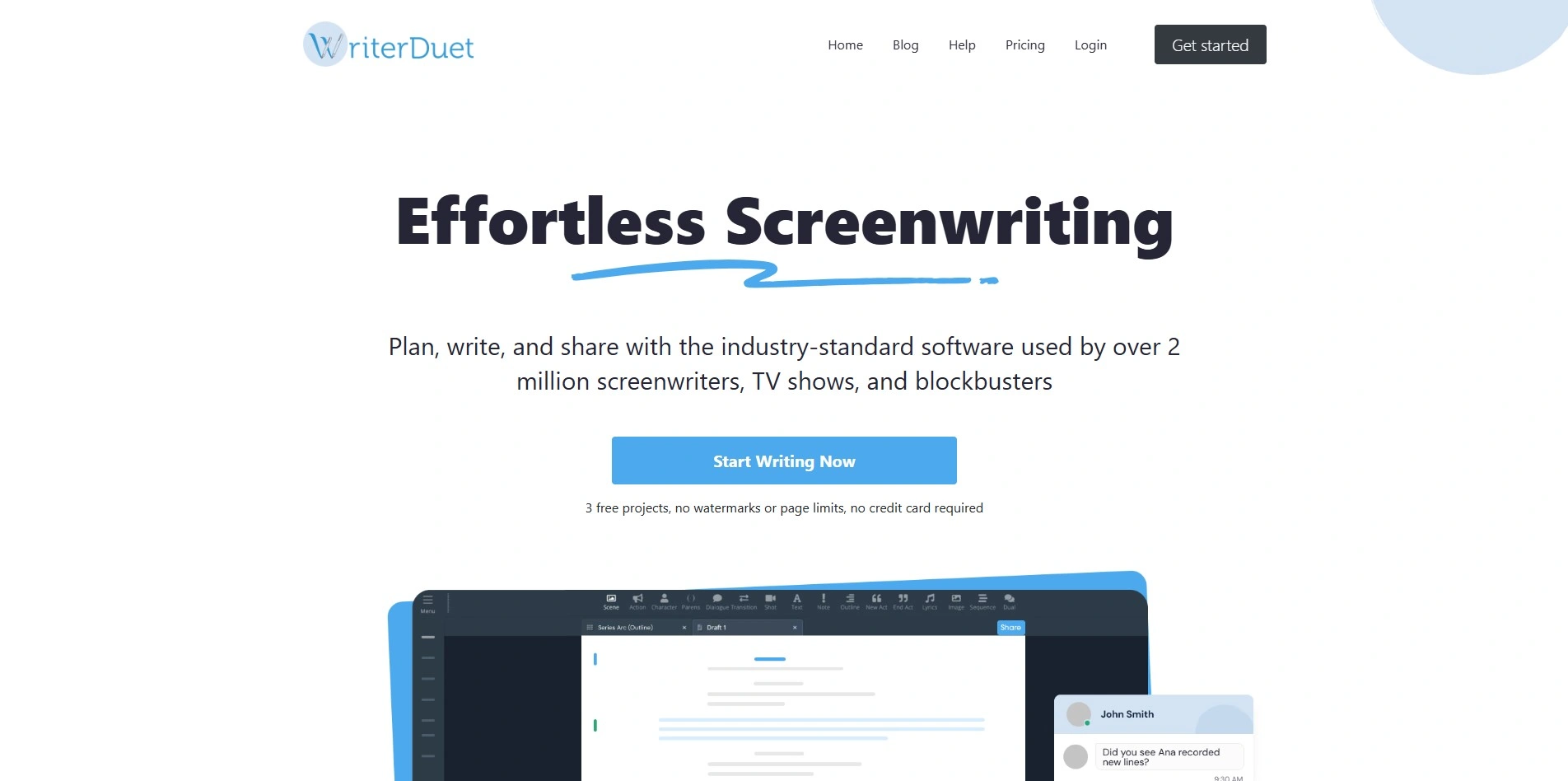
WriterDuet is a cloud-based screenwriting platform built around real-time collaboration, letting multiple writers work on the same script simultaneously from any device. It supports industry-standard formatting, revision tracking, and offline desktop access.
Its pricing sits comfortably below Final Draft, making it a popular budget-friendly alternative for writing teams and solo screenwriters alike. The main trade-off is that its desktop application can feel less polished compared to its smooth cloud-based interface.
Pros
- Real-time multi-writer collaboration
- More affordable than Final Draft
- Cloud-based access from any device
Cons
- Desktop app can feel clunky at times
- Free plan limited to just 3 projects
- Fewer advanced features than premium tools
Comparison Table
| Alternative | Description |
|---|---|
| Sudowrite | Fiction-focused AI writing assistant known for natural prose generation, brainstorming, and a credit-based subscription system. |
| Studiovity | All-in-one screenwriting and pre-production platform popular with film and OTT production teams. |
| Claude | General-purpose AI assistant strong in outlining, editing, and long-form narrative consistency across projects. |
| Dabble | Distraction-free novel-writing software with plot grids, character profiles, and story organization tools. |
| DialogueGenie | Niche AI tool specialized in generating realistic, character-consistent dialogue for scripts and novels. |
| StoryCraft AI | Guided AI outlining tool that walks writers step-by-step from premise to structured plot. |
| ChatGPT | Versatile AI assistant widely used for brainstorming, drafting, and refining any type of writing project. |
| Beemgee | Character-first story development tool built around character cards and dramatic question frameworks. |
| Mugafi | AI-assisted screenwriting platform combining automated tools with human writer feedback services. |
| Squibler | AI writing platform for novels and screenplays with a built-in story bible and unlimited-credit Pro tier. |
| Highland 2 | Minimalist Apple-only screenwriting app with automatic industry-standard formatting and plain text markup. |
| Final Draft | Industry-standard screenwriting software used by most professional film and television writers worldwide. |
| WriterDuet | Cloud-based collaborative screenwriting tool offering real-time editing at a lower price than Final Draft. |
Conclusion
Choosing the right Storyflow alternative ultimately depends on what stage of the writing process you need the most support with. Novelists chasing fluid prose may prefer Sudowrite or Dabble, while screenwriters focused on formatting and industry compatibility will lean toward Final Draft or WriterDuet.
General-purpose tools like ChatGPT and Claude offer flexibility across brainstorming and editing, while niche platforms like Beemgee, DialogueGenie, and StoryCraft AI serve specific parts of the creative process well. Testing free trials before committing to a paid plan remains the smartest way to find your best fit.


