


Mugafi has long been a popular choice for screenwriters and storytellers, offering AI-assisted writing tools, script formatting, and structured story development features. However, as the market for creative writing software grows, many writers are looking for alternatives that better match their budget, genre, or workflow style. Whether you are writing a screenplay, a novel, or dialogue-heavy content, there is a wide range of tools available today that rival or even surpass what Mugafi offers. In this article, we explore 10 strong Mugafi alternatives, covering everything from dedicated screenwriting platforms to general-purpose AI writing assistants. For each tool, we look at free trial availability, pricing plans, and the pros and cons that matter most to writers making a switch.
1. Studiovity
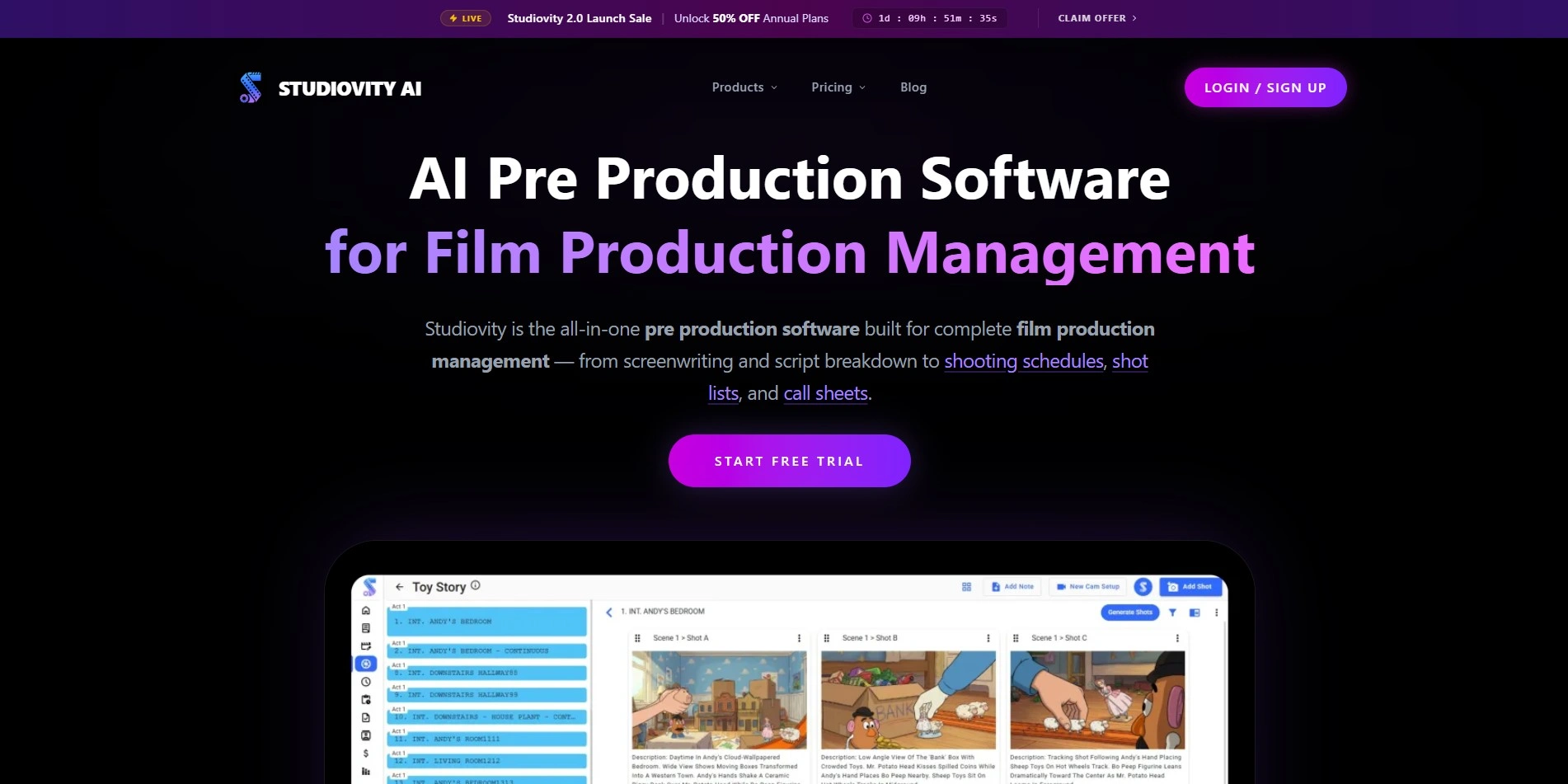
Studiovity offers a free trial (commonly cited as a 7-day trial with no credit card required) so writers can test its screenwriting and pre-production tools before subscribing. Pricing: Starter ~$2–2.5/user/month Studio plans scale by team size Exact tiers are listed on studiovity.com/pricing, with separate persona-based plans for writers and full productions.
Studiovity is built specifically for filmmakers and screenwriters, covering the entire pre-production pipeline from AI screenwriting to script breakdown, scheduling, call sheets, and storyboarding. It’s used by major studios, which gives it credibility for professional-grade collaboration. Its all-in-one approach makes it a strong Mugafi alternative for teams who need more than just a writing tool.
Pros
- Covers full pre-production, not just writing
- Real-time team collaboration
- Affordable entry-level pricing
- Used by major studios and networks
Cons
- Trial period can feel short for full evaluation
- Learning curve for non-production users
- Limited tutorials for beginners
2. Beemgee
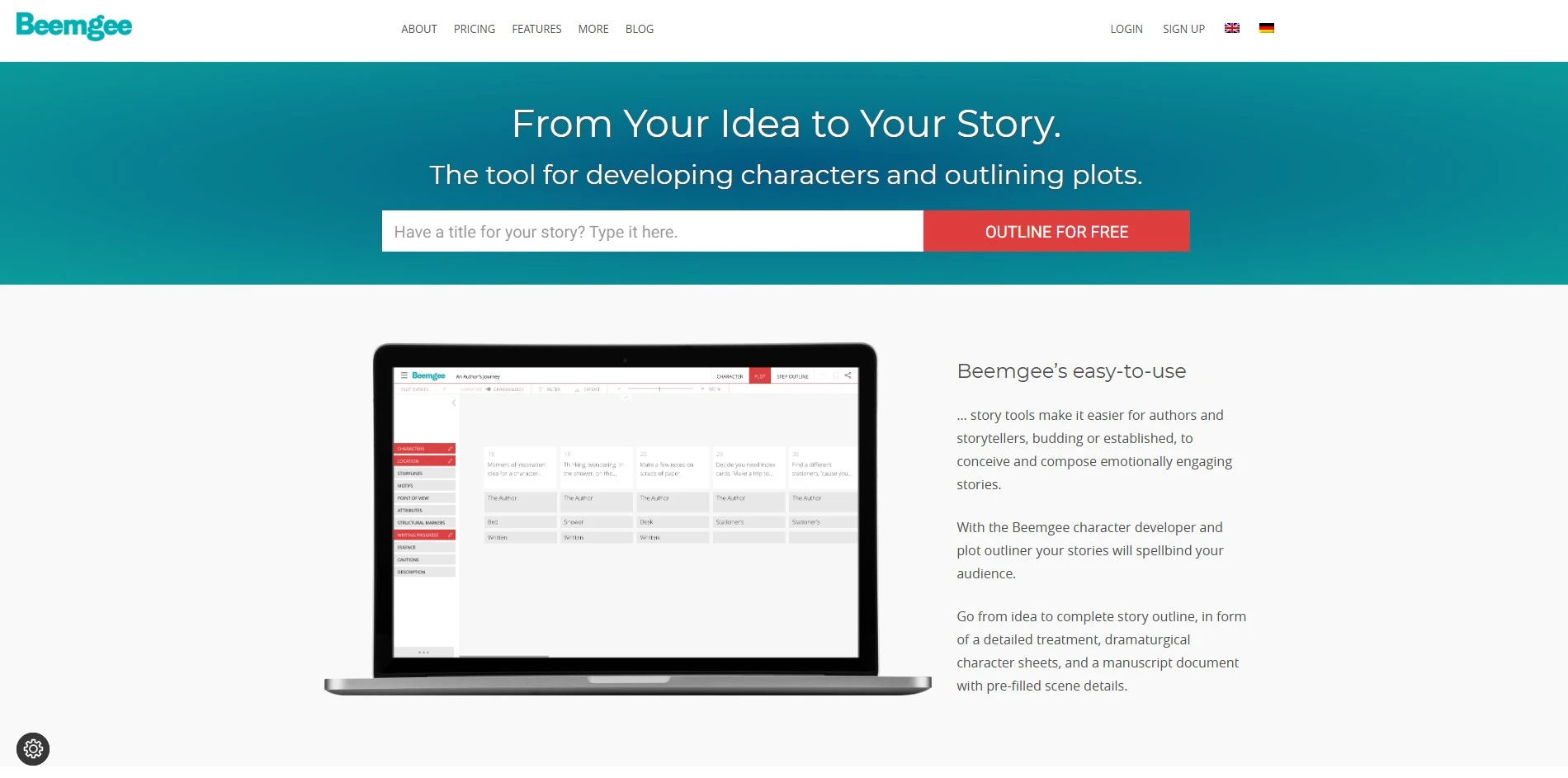
Beemgee lets writers try the tool for free without registration, though free test projects are not saved unless you create an account. Pricing: Free plan available Premium: €8/month (billed €96/year) The premium tier unlocks exports, detail views, and project permissions.
Beemgee is a story development tool focused on plotting and character architecture rather than prose generation. It uses dramaturgy frameworks like the Hero’s Journey to help writers structure narratives before drafting. This makes it a great companion for outlining-focused writers who see Mugafi’s AI drafting as secondary to planning.
Pros
- Strong story structure and plotting frameworks
- Very affordable premium tier
- No installation, works in-browser
- Good for both novelists and filmmakers
Cons
- Not focused on AI text generation
- Free test projects aren’t saved
- Interface feels dated compared to newer tools
3. Claude
Claude offers a free tier with daily usage limits, letting new users test its writing and reasoning capabilities before upgrading. Pricing: Free: $0 Pro: $20/month Max 5x: $100/month Max 20x: $200/month Team plans start at $25/seat/month, with Enterprise available on request.
Claude, made by Anthropic, is a general-purpose AI assistant that excels at long-form writing, editing, and nuanced dialogue generation. While it isn’t built exclusively for screenwriting, its strong language understanding and large context window make it capable of handling scripts, story bibles, and revisions. Writers often use it alongside dedicated formatting tools.
Pros
- Excellent at nuanced, natural dialogue
- Large context window for long scripts
- Flexible free tier to start
- Strong reasoning for plot consistency
Cons
- No dedicated screenplay formatting
- Free tier has rolling usage limits
- Higher tiers can be costly for casual writers
4. Sudowrite
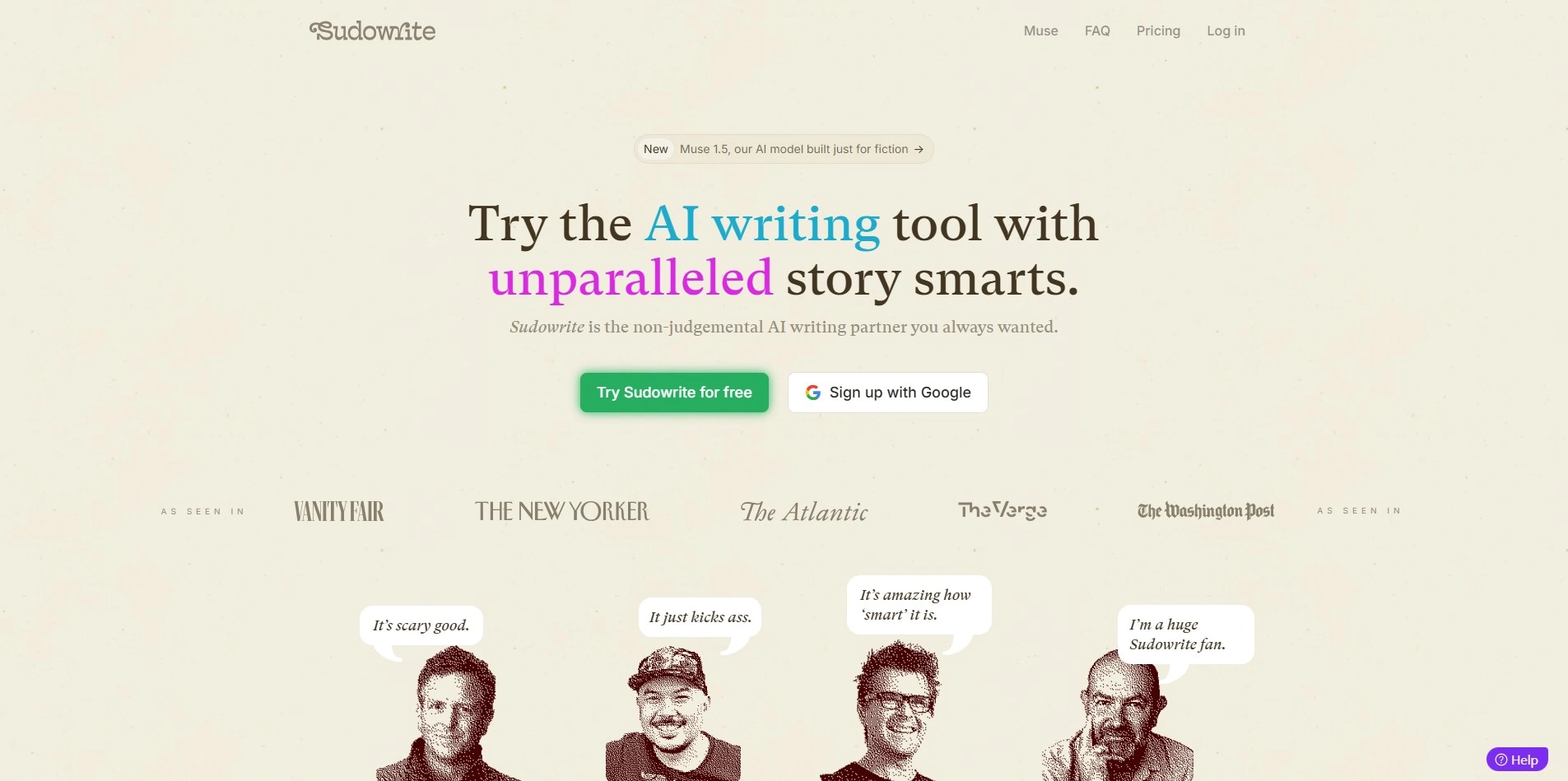
Sudowrite provides a free trial of roughly 10,000 credits with no credit card required, enough to test features like Rewrite, Describe, and Story Bible. Pricing: Hobby & Student: $10–19/month Professional: $22–29/month Max: $44–59/month Annual billing saves roughly 45-50% compared to monthly plans.
Sudowrite is designed specifically for fiction writers, offering specialized tools for brainstorming, describing scenes, and rewriting passages in a chosen style. Its Story Bible feature helps maintain character and plot consistency across long manuscripts. It is a popular Mugafi alternative for novelists rather than screenwriters.
Pros
- Purpose-built fiction writing tools
- Story Bible keeps details consistent
- Generous no-card-required trial
- Multiple AI model options
Cons
- Credit-based system can run out quickly
- No ongoing free plan after trial
- Not designed for screenplay formatting
5. Highland 2
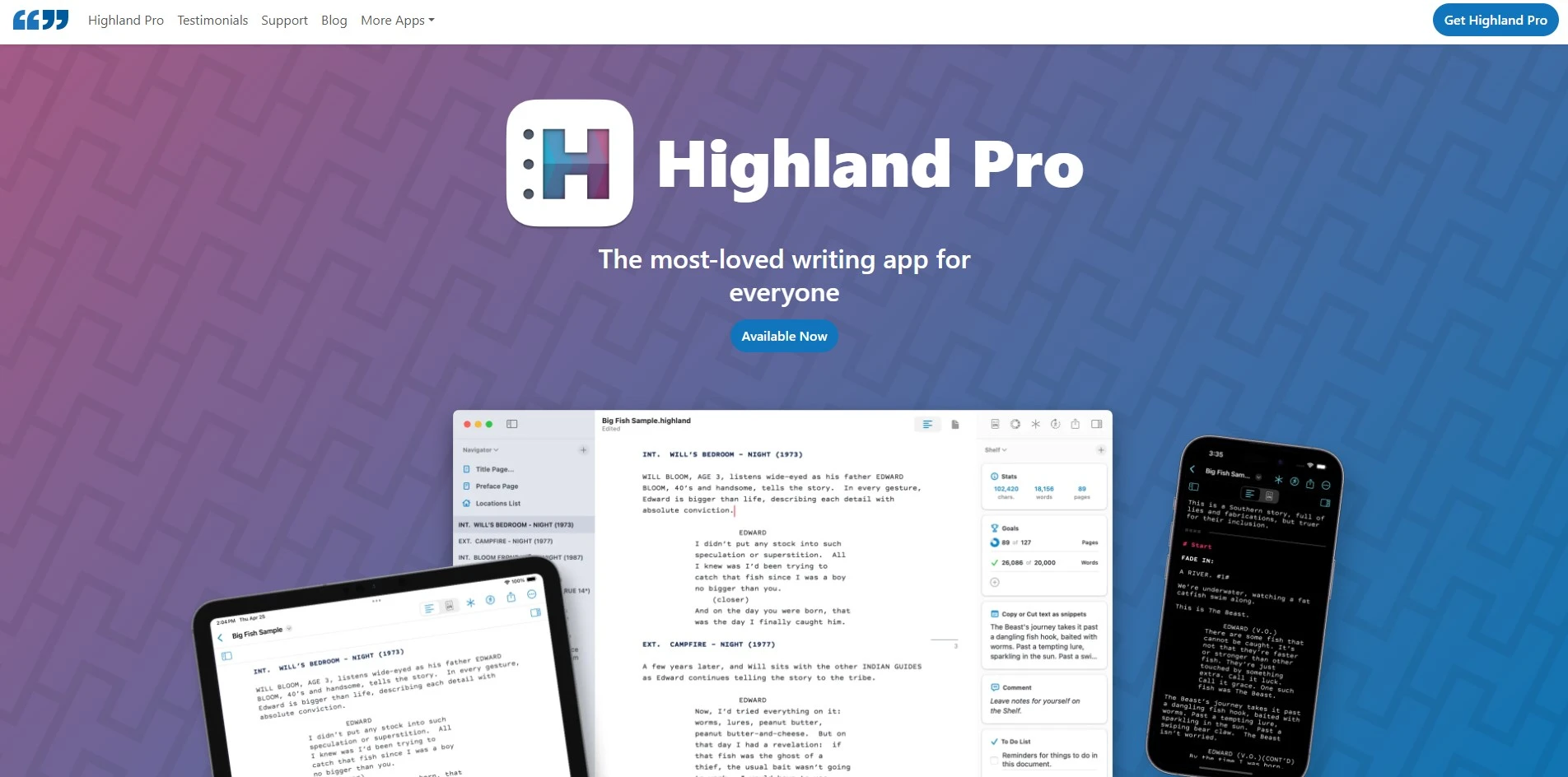
Highland 2 is essentially a free, unlimited trial — you can write full screenplays without paying, though PDF exports carry a watermark until upgrading. Pricing: Free to download and write Pro upgrade: one-time $39–49.99 No subscription is required; the Pro unlock is a single in-app purchase.
Highland 2 is a Mac-only screenwriting app created by screenwriter John August, built around the Fountain plain-text format. It focuses on distraction-free writing, automatic formatting, and features like gender analysis of dialogue. For writers who want simplicity without ongoing subscription costs, it’s a refreshing alternative to Mugafi.
Pros
- One-time payment, no subscription
- Clean, distraction-free interface
- Scripts stored as portable plain text
- Unique gender analysis feature
Cons
- Mac only, no Windows or web version
- No AI writing assistance
- Limited collaboration features
6. Google Gemini

Gemini has a generous free tier accessible at gemini.google.com with no payment required, though advanced models have usage caps. Pricing: Free: $0 AI Plus: $7.99/month AI Pro: $19.99/month AI Ultra: $99.99–$249.99/month Business pricing is bundled into Google Workspace plans starting at $14/user/month.
Google Gemini is a multimodal AI assistant capable of long-form writing, brainstorming, and research alongside text, image, and voice input. While not a screenwriting-specific tool, its Deep Research and Canvas features can support outlining and revision work. It appeals to writers who already use Google Workspace and want AI baked into their existing tools.
Pros
- Strong free tier for casual use
- Integrates with Google Docs and Workspace
- Multimodal input including images and voice
- Large 1M token context on Pro tier
Cons
- No dedicated screenplay tools
- Pricing tiers can be confusing due to renaming
- Higher tiers priced steeply for solo writers
7. Squibler
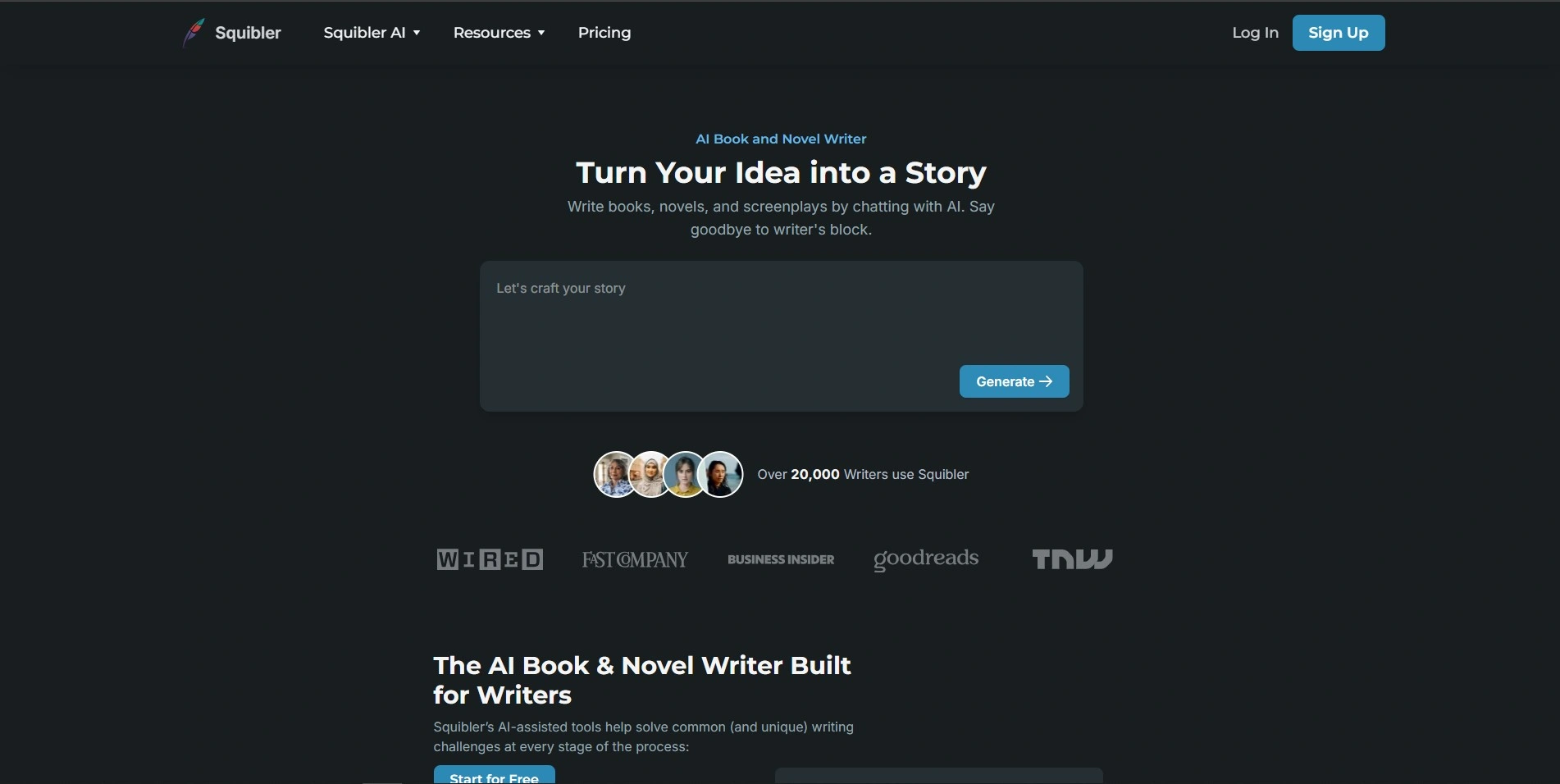
Squibler offers a free plan with limited AI credits, letting writers test its chapter and scene organization before upgrading. Pricing: Free: 1,000 credits/month Plus: $15.83–29.99/month Pro: $49.17–89.99/month Pro billed annually reduces the monthly cost and unlocks unlimited AI credits.
Squibler combines a distraction-free writing editor with AI-assisted drafting for both books and screenplays. It supports drag-and-drop chapter organization, note cards, and export options for platforms like Kindle. Its credit-based AI system is worth understanding closely, since heavy users on lower tiers can burn through credits fast.
Pros
- Works for both books and screenplays
- Drag-and-drop scene and chapter organization
- Free plan with no credit card needed
- Multiple export formats supported
Cons
- Credit limits can restrict heavy AI use
- Pro plan is pricey compared to competitors
- Free and Plus tiers may not last a full month
8. DialogueGenie
DialogueGenie typically provides a limited free trial or free credits for new users to test its AI dialogue generation before committing to a paid tier. Pricing: Entry-level plans typically start under $20/month Higher tiers scale with usage volume Exact pricing should be confirmed on the official DialogueGenie website, as plans are subject to change.
DialogueGenie is a niche AI tool focused specifically on generating natural, character-driven dialogue for scripts, games, and interactive fiction. It’s especially useful for writers who struggle with making conversations sound authentic and distinct between characters. This narrow focus makes it a good supplementary tool alongside broader writing platforms.
Pros
- Specialized in natural dialogue generation
- Useful for games and interactive fiction
- Helps differentiate character voices
- Lightweight, focused feature set
Cons
- Limited to dialogue, not full scripts
- Smaller user base and community support
- Less brand transparency on pricing
9. Plottr

Plottr offers a 30-day free trial with full feature access and no credit card required, giving writers plenty of time to test its visual outlining system. Pricing: Monthly: ~$15/month Annual: from $39/year Lifetime license: $199 one-time The lifetime option appeals to writers who prefer a single payment over ongoing subscriptions.
Plottr is a visual story-plotting tool that lets novelists and screenwriters map out scenes, timelines, and character arcs using templates and boards. It integrates with Scrivener and Microsoft Word, making it easy to slot into an existing workflow. Writers who plan extensively before drafting often find Plottr indispensable alongside or instead of Mugafi.
Pros
- Excellent visual plotting and timeline tools
- One-time lifetime license option
- Integrates with Scrivener and Word
- Long, generous free trial
Cons
- Learning curve for new users
- No built-in AI drafting
- Export options are somewhat limited
10. Copy.ai
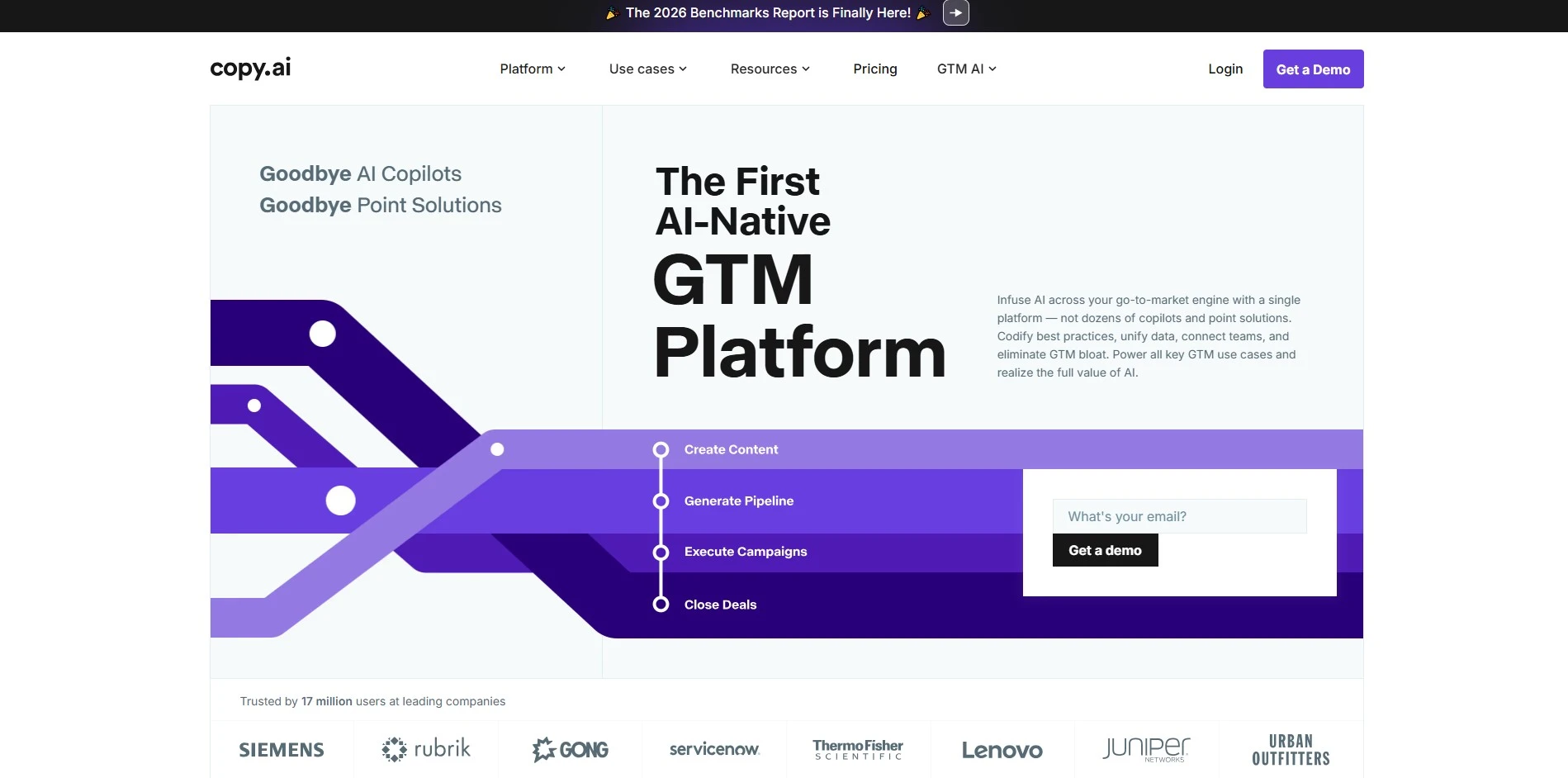
Copy.ai offers a permanent free plan (not just a trial) with 2,000 words per month and access to 90+ templates, no credit card required. Pricing: Free: $0 Pro/Starter: $36–49/month Advanced: $249/month Higher Growth, Expansion, and Enterprise tiers use custom, usage-based pricing.
Copy.ai has evolved from a short-form copywriting tool into a broader AI-native content and workflow platform. While it isn’t built for screenwriting, its unlimited words, brand voice customization, and multi-model AI access make it useful for writers who also handle marketing copy, show bibles, or promotional content around their creative projects.
Pros
- Real permanent free plan available
- Unlimited words on paid tiers
- Access to multiple AI models
- Useful beyond fiction for marketing content
Cons
- Not designed for screenplay formatting
- Higher tiers priced for teams, not solo writers
- Limited creative-writing-specific features
| Alternative | Description |
|---|---|
| Studiovity | Full pre-production and screenwriting platform used by studios, covering scripts, scheduling, and storyboards. |
| Beemgee | Story structure and character development tool for plotting narratives before drafting. |
| Claude | General-purpose AI assistant strong at natural dialogue, editing, and long-form writing. |
| Sudowrite | Fiction-focused AI writing tool with brainstorming, rewriting, and story bible features. |
| Highland 2 | Mac-only, distraction-free screenwriting app with a one-time payment model. |
| Google Gemini | Multimodal AI assistant with strong free access and Workspace integration. |
| Squibler | AI-assisted book and screenplay editor with chapter organization and export tools. |
| DialogueGenie | Niche AI tool specialized in generating natural, character-driven dialogue. |
| Plottr | Visual outlining and plotting software with timeline and character arc boards. |
| Copy.ai | AI content platform with unlimited word generation and multi-model workflow support. |
Conclusion
Choosing the right Mugafi alternative ultimately depends on what kind of writing you do and how you like to work. Screenwriters focused on formatting and production may prefer Studiovity or Highland 2, while novelists leaning on AI assistance might find Sudowrite or Claude more suitable. Writers who prioritize outlining and structure before drafting will benefit most from tools like Beemgee or Plottr.


