

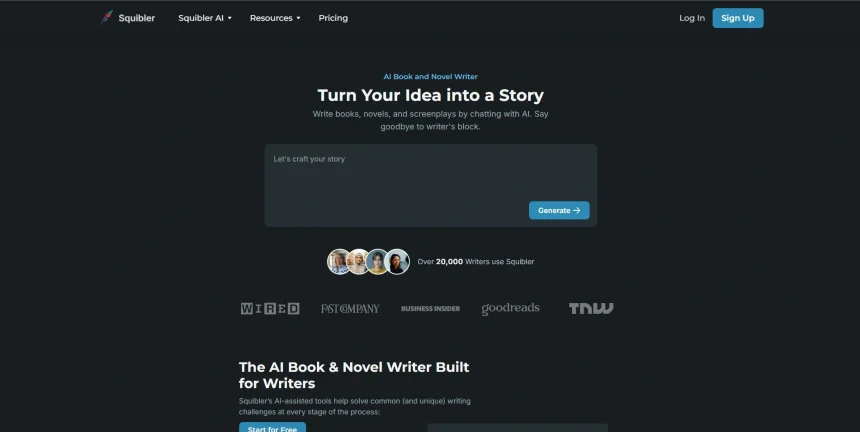
Squibler has built a solid reputation among novelists and screenwriters as an AI-assisted writing tool, but it isn’t the only option on the market in 2026. Whether you need better plotting tools, stronger AI copywriting, industry-standard screenplay formatting, or a more affordable subscription, there’s likely a better fit for your specific workflow. Below, we break down 10 Squibler Alternatives, covering their trials, pricing, and honest pros and cons, so you can pick the right tool for your writing goals.
1. ChatGPT

Free – $0/month · Go – $8/month · Plus – $20/month · Pro – $100–$200/month · Business – $20–$25/seat/month · Enterprise – custom pricing.
ChatGPT remains one of the most versatile AI writing companions available, useful for brainstorming plots, drafting dialogue, and refining prose across genres. Its conversational interface makes it easy to iterate on scenes or ask for structural feedback instantly. Unlike Squibler, it isn’t purpose-built for novel formatting, but its raw language generation power is hard to match at this price point.
Writers frequently use ChatGPT alongside dedicated writing software, treating it as a brainstorming partner rather than a full manuscript manager. It lacks built-in chapter organization, character bibles, or export formatting tailored to publishing houses. Still, for idea generation, outlining help, and quick editing suggestions, it’s an extremely capable and affordable alternative to Squibler’s built-in AI assistant.
Pros
- Extremely affordable entry point
- Fast, flexible AI brainstorming
- Huge community and integrations
- Regularly updated models
Cons
- No dedicated manuscript organization
- No novel-specific templates
- Usage caps on paid tiers
- Not built for long-form formatting
2. Copy.ai
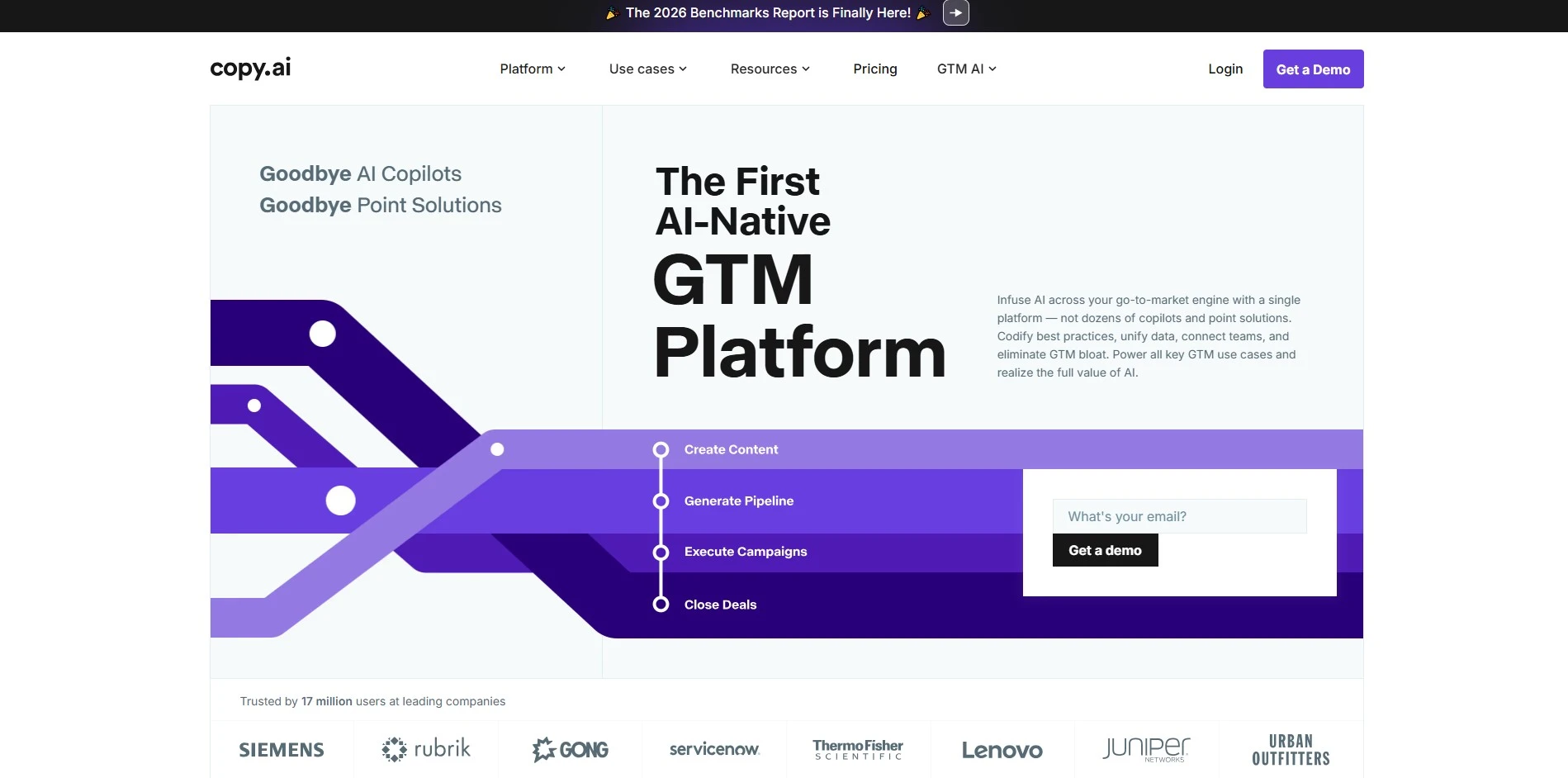
Free – $0/month · Chat – $29/month ($24/month annual) · Growth – $1,000/month · Expansion – $2,000/month · Scale – $3,000/month · Enterprise – custom.
Copy.ai was originally built for marketing copy, but many writers use it for outlining, brainstorming taglines, and generating short-form creative snippets. It supports over 90 templates and connects to multiple AI models including OpenAI, Anthropic, and Gemini. This flexibility makes it useful for authors who also handle their own book marketing and blurbs.
However, Copy.ai has shifted heavily toward go-to-market workflows for sales and marketing teams, leaving a steep pricing gap between its $29 Chat plan and its $1,000 Growth tier. For pure novel writing, it lacks Squibler’s story structuring tools. It’s best suited to writers who need marketing copy support more than manuscript drafting features.
Pros
- Multiple AI models in one dashboard
- Useful for book marketing copy
- Free tier available
- Large template library
Cons
- Steep price jump after Chat tier
- Not designed for novel-length writing
- No manuscript organization tools
- Positioned toward GTM teams, not authors
3. Google Gemini

Free – $0/month · Google AI Plus – $4.99/month · Google AI Pro – $19.99/month · Google AI Ultra – $99.99–$199.99/month.
Google Gemini is a strong general-purpose alternative to Squibler’s AI writing assistant, offering long-context understanding that helps with tracking large manuscripts and complex character arcs. Its integration with Google Docs and Drive makes it convenient for writers already working inside Google’s ecosystem, allowing seamless drafting and editing without switching platforms.
Gemini doesn’t offer built-in plot boards, character trackers, or genre templates the way Squibler does, so it functions more as a writing assistant than a complete authoring suite. Still, its recent price cuts make the Ultra tier more accessible, and its research and summarization abilities are genuinely useful for outlining dense storylines or worldbuilding notes.
Pros
- Strong long-context comprehension
- Google Docs/Drive integration
- Affordable entry-level plan
- Frequent model upgrades
Cons
- No novel-specific formatting tools
- No plot or character organization features
- Higher tiers can get pricey
- Less writer-focused than Squibler
4. Storyflow
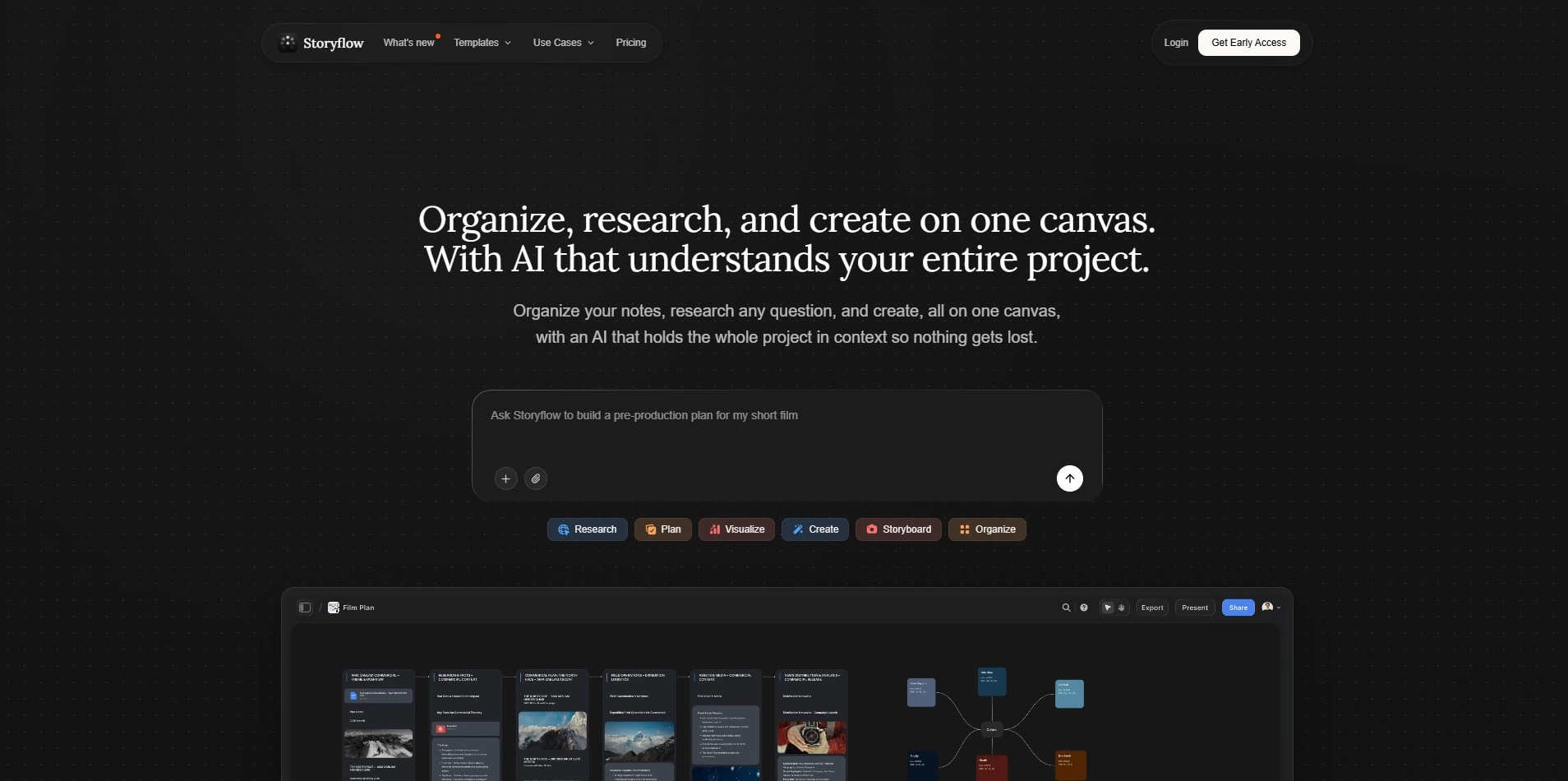
Storyflow focuses on AI-assisted story generation, helping writers quickly produce plot outlines, character ideas, and scene drafts. It’s designed to speed up the earliest stages of the writing process, making it appealing to writers who struggle with blank-page paralysis or need rapid ideation support before committing to a full manuscript.
Compared to Squibler, Storyflow leans more heavily into automated generation rather than manual structuring tools like corkboards or timelines. This makes it faster for first drafts but potentially less suited to writers who prefer granular control over plotting. It works best as a supplementary ideation tool rather than a full replacement for a dedicated manuscript editor.
Pros
- Fast AI-generated story outlines
- Good for overcoming writer’s block
- Simple, approachable interface
- Useful for early ideation stages
Cons
- Less manual structuring control
- Smaller user community than major tools
- Pricing details vary and change often
- Not ideal for detailed manuscript management
5. Dabble
Basic – $9/month · Standard – $19/month · Premium – $29/month · Lifetime license – $699 one-time. Annual billing saves roughly 20%.
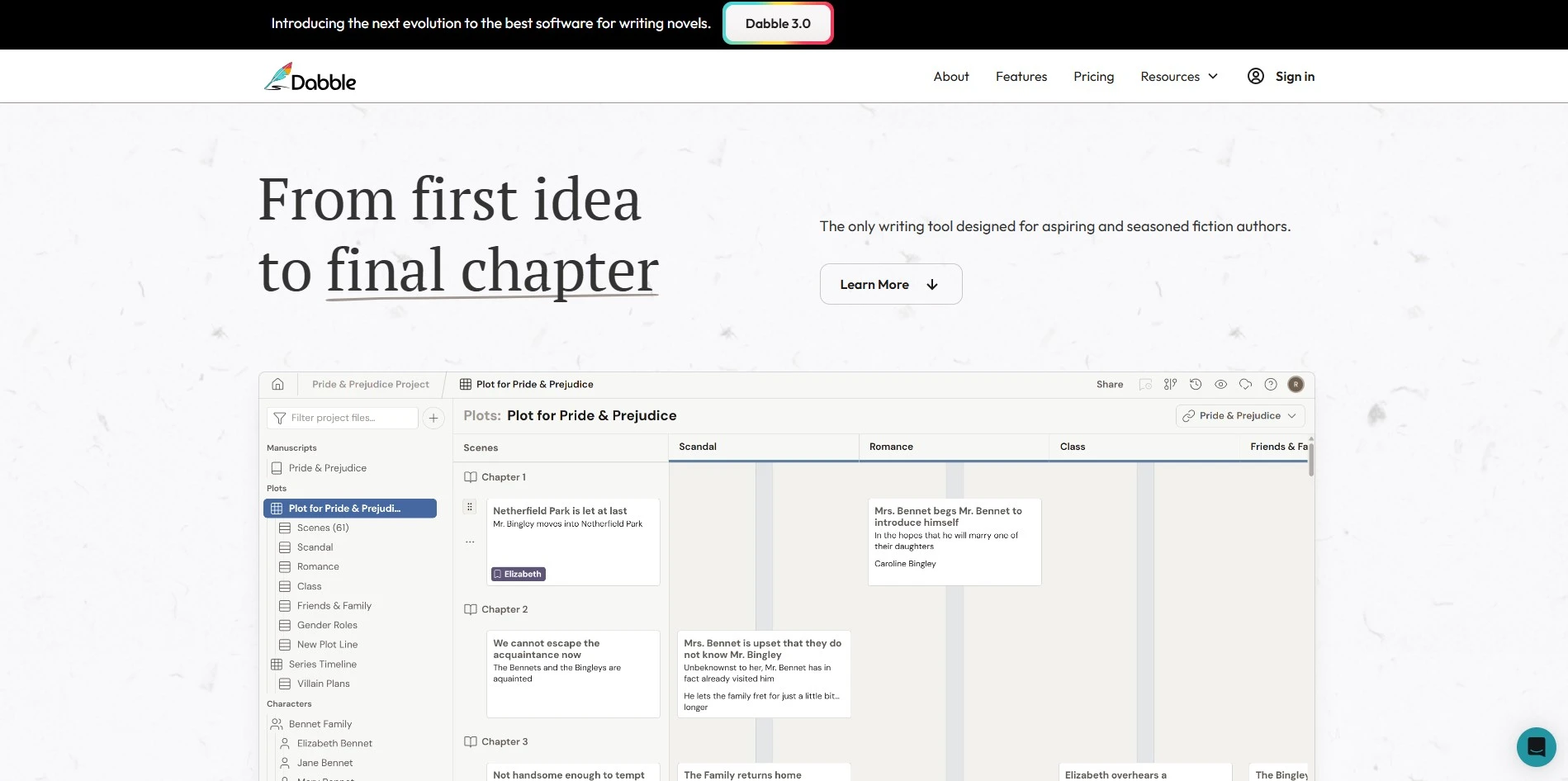
Dabble is a cloud-based novel writing platform built specifically for plotting and drafting long-form fiction. Its Plot Grid feature, available from the Standard tier upward, gives writers a visual way to organize scenes, chapters, and story threads. It syncs automatically across devices, making it a genuinely strong alternative to Squibler for planning-heavy writers.
Dabble doesn’t include the AI writing assistance that Squibler offers, focusing instead on manual organization and clean drafting tools. Writers who want AI-generated content will need to pair Dabble with a separate assistant like ChatGPT. Even so, its distraction-free interface and reliable cloud sync make it a favorite among plotters and NaNoWriMo participants.
Pros
- Excellent visual plotting tools
- Reliable cross-device cloud sync
- Clean, distraction-free interface
- Lifetime license option available
Cons
- No built-in AI writing assistant
- Subscription costs add up over time
- No permanent free plan
- Fewer advanced formatting tools
6. StoryCraft AI

StoryCraft AI is designed to help writers generate structured story arcs, character profiles, and world-building details using AI prompts. It’s particularly useful for genre fiction writers who want quick scaffolding for fantasy, sci-fi, or mystery plots without manually building every story beat from scratch.
While convenient for ideation, StoryCraft AI generally lacks the manuscript management depth Squibler provides, such as detailed formatting for publishing or advanced revision tracking. It works best as a creative jumpstart tool. Writers serious about long-term manuscript organization may still need a dedicated writing platform alongside it.
Pros
- Quick AI-generated story scaffolding
- Good for genre fiction ideation
- Helpful character and world-building prompts
- Beginner-friendly interface
Cons
- Limited manuscript formatting tools
- Pricing and features vary by provider
- Less suited for professional publishing prep
- Smaller feature set than established tools
7. Vimeo AI Script Writer
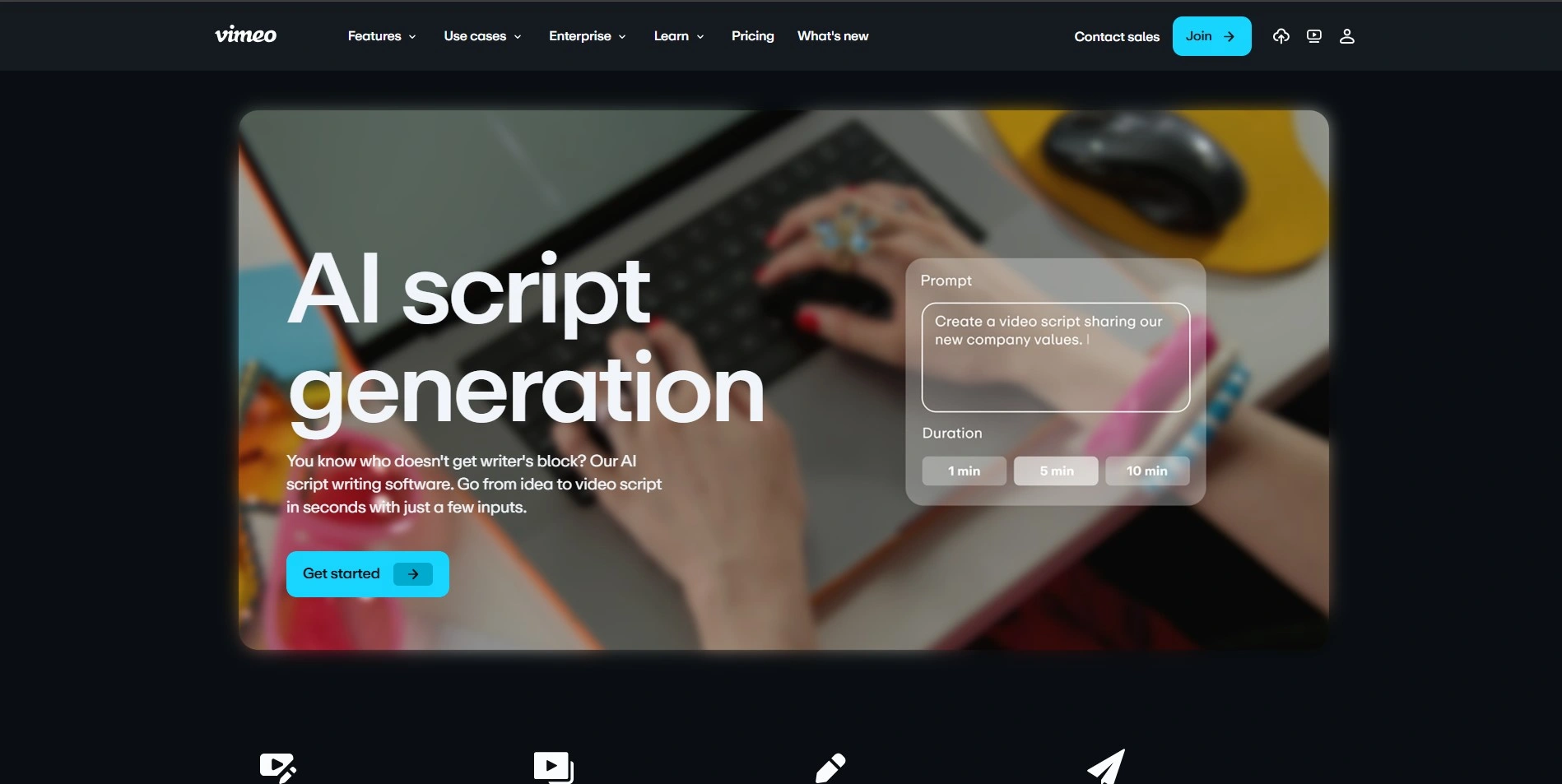
Vimeo’s AI Script Writer is tailored toward video creators who need quick scripts for YouTube videos, ads, or short-form content rather than novels or screenplays. It generates structured talking points and script drafts based on a topic or outline, which can be useful for authors branching into video content or book trailers.
For traditional manuscript writing, Vimeo’s tool isn’t a direct substitute for Squibler, since it’s built around video production workflows rather than long-form fiction. Screenwriters producing content for online video platforms may find it handy as a companion tool, but novelists will likely need a separate dedicated writing platform for their core manuscript work.
Pros
- Great for video script drafts
- Bundled with Vimeo’s video tools
- Fast turnaround for short content
- Useful for book trailers/promo videos
Cons
- Not built for novels or long scripts
- Requires a Vimeo subscription
- Limited standalone availability
- Not a manuscript management tool
8. Final Draft
One-time purchase, approximately $199.99–$249.99 for a full license (varies by version and retailer), with two activations included per purchase.
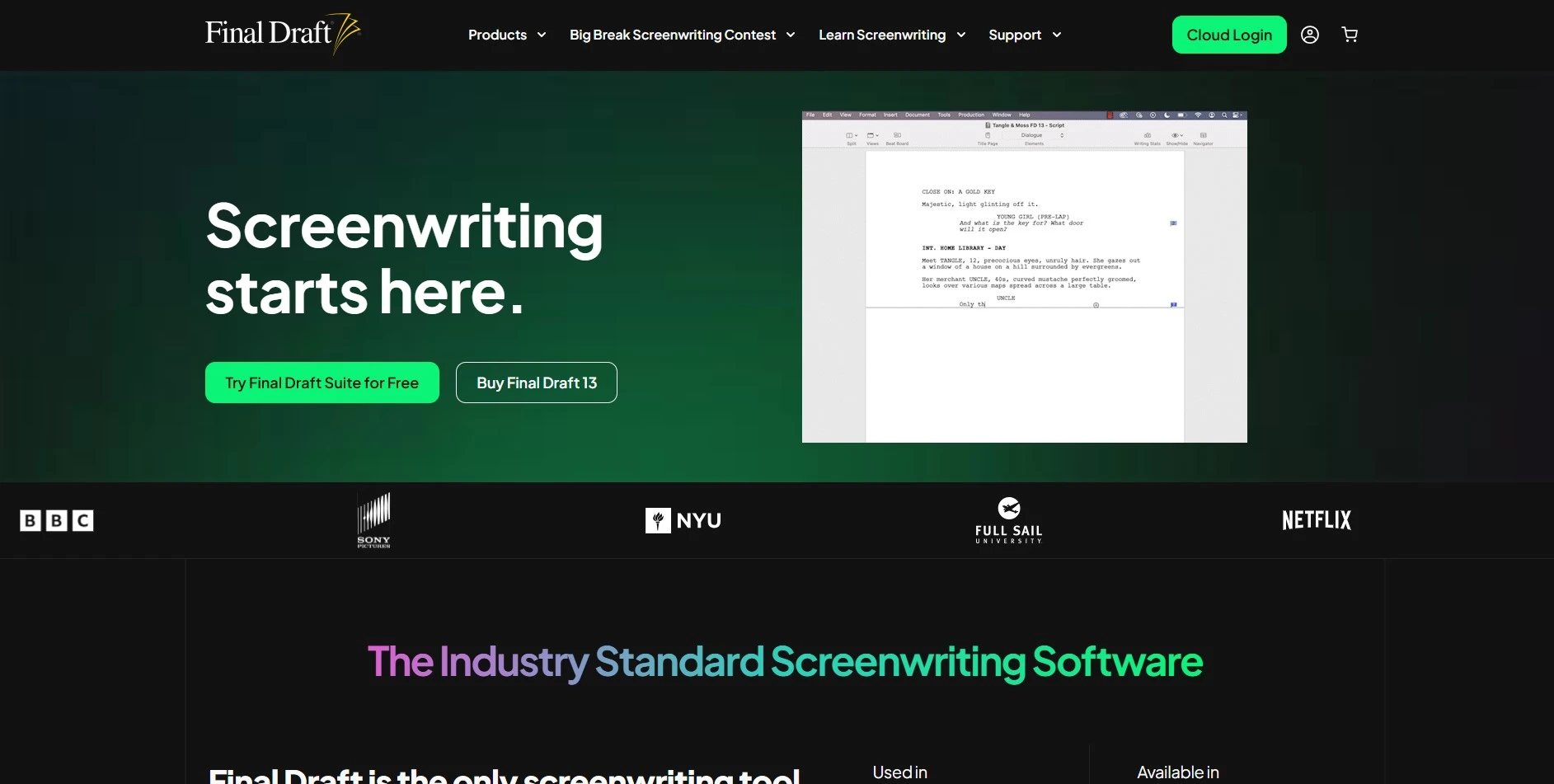
Final Draft is the industry-standard screenwriting software, trusted by professionals across film, television, and theater for over three decades. It automates formatting to entertainment industry standards, so writers can focus purely on story rather than manually adjusting margins and dialogue blocks. Its Beat Board and Outline Editor support structural planning too.
Compared to Squibler, Final Draft charges a much higher one-time fee and lacks integrated AI writing assistance, focusing instead on formatting precision and industry compatibility. It’s the safer choice for writers submitting to studios or agents who expect Final Draft-compatible files, but its cost and lack of AI tools make it a heavier investment for casual writers.
Pros
- Industry-standard formatting
- Trusted by 95% of entertainment professionals
- One-time purchase, no subscription
- Strong revision and collaboration tools
Cons
- High upfront cost
- No built-in AI writing assistant
- Steeper learning curve for beginners
- Paid upgrades for major new versions
9. Plottr

Pro Monthly – around $15/month · Annual plans reduce the effective monthly cost · Lifetime license – around $199 one-time.
Plottr is a visual book-planning tool built for writers who think in timelines, scene cards, and story bibles rather than linear text. It includes over 30 proven plotting templates, such as the hero’s journey, and lets authors track characters, locations, and plotlines visually across single books or entire series.
Unlike Squibler, Plottr focuses almost entirely on outlining and planning rather than full manuscript drafting, so writers typically export their outline to Word or Scrivener to actually write the book. It’s an excellent companion tool for heavy plotters and series authors, but solo drafting features are more limited than in an all-in-one platform.
Pros
- Excellent visual plotting and timelines
- Great for managing book series
- Lifetime license option available
- Exports cleanly to Word/Scrivener
Cons
- Not a full drafting/writing environment
- No AI writing assistance
- Requires pairing with another writing tool
- Monthly cost adds up without lifetime plan
10. WriterDuet
Free – $0/month · Plus – $9.99/month · Pro – $11.99/month · Premium – $13.99/month.
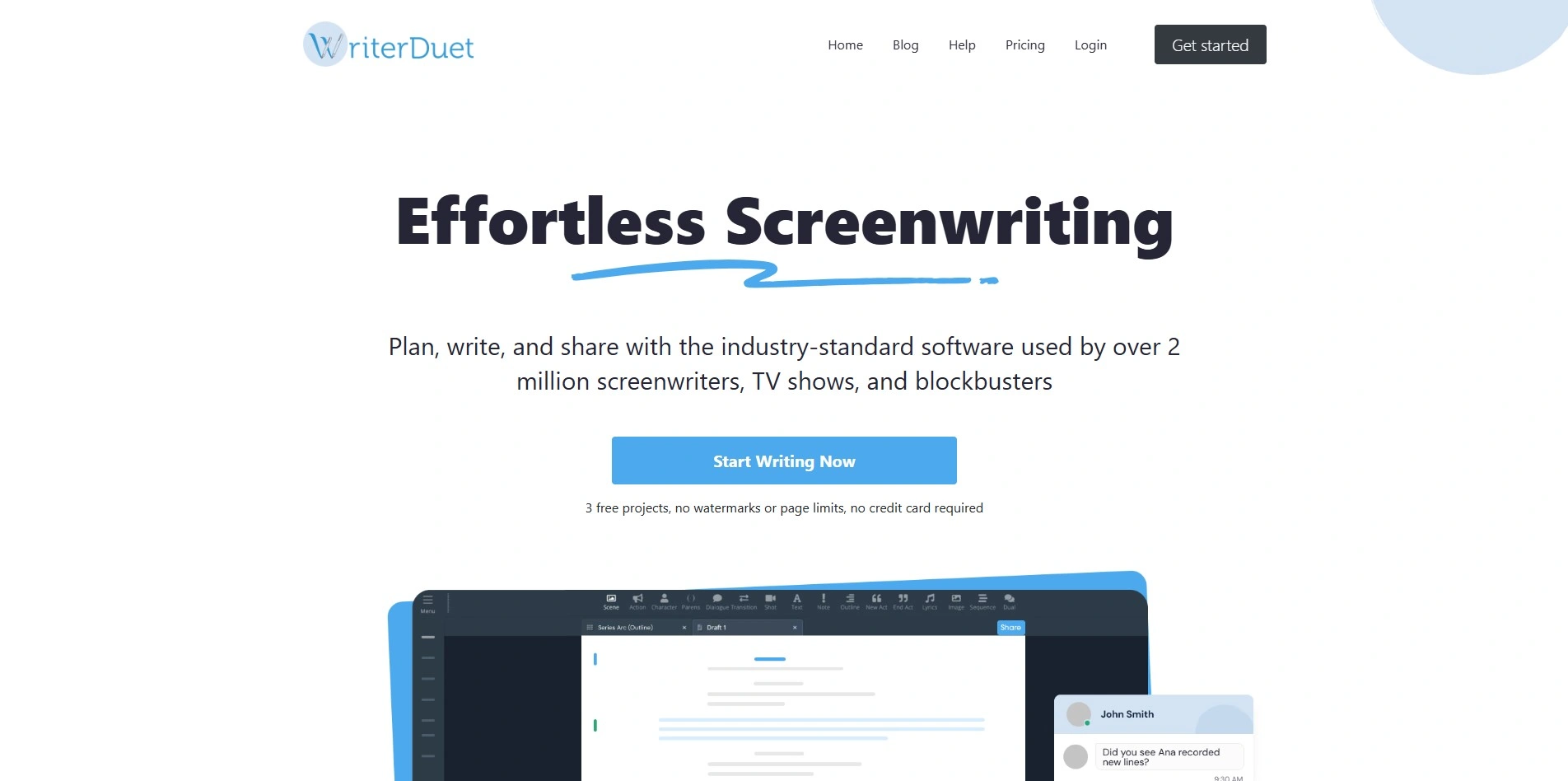
WriterDuet is a cloud-based screenwriting tool built around real-time collaboration, making it a strong alternative for writing teams and co-writers. It supports industry-standard screenplay formatting, offline access, and features like video chat and script dictation, all at a fraction of Final Draft’s one-time cost.
While WriterDuet handles scripts well, it isn’t designed for novel-length manuscripts the way Squibler is, so fiction writers may find its feature set narrower for long-form prose. Its biggest strength is affordability combined with genuinely useful collaboration tools, making it ideal for co-writing teams working on screenplays, sitcoms, or podcasts together.
Pros
- Strong real-time collaboration features
- Much cheaper than Final Draft
- Free plan available
- Cross-device cloud access
Cons
- Not built for novel-length writing
- Desktop version can feel clunky
- Free tier limited to 3 projects
- Fewer production-planning features
| Alternative | Description |
|---|---|
| ChatGPT | Versatile AI chat assistant useful for brainstorming, drafting, and editing, though not built for manuscript organization. |
| Copy.ai | AI copywriting platform aimed at marketing teams, useful for book blurbs and promotional content. |
| Google Gemini | Google’s AI assistant with strong long-context understanding and Docs integration for writers. |
| Storyflow | AI-driven story generation tool for quick outlines, character ideas, and scene drafts. |
| Dabble | Cloud-based novel writing app with strong visual plotting tools and cross-device sync. |
| StoryCraft AI | AI tool for generating structured story arcs and world-building scaffolding for genre fiction. |
| Vimeo AI Script Writer | AI scripting tool built for video creators, ideal for book trailers and promotional videos. |
| Final Draft | Industry-standard screenwriting software with automatic formatting, trusted by professionals. |
| Plottr | Visual outlining and story-bible tool for plotting books and series before drafting. |
| WriterDuet | Affordable, cloud-based screenwriting tool built around real-time team collaboration. |
Conclusion
Squibler remains a solid all-in-one option, but as this list shows, writers have plenty of alternatives depending on what they value most. If you need powerful AI brainstorming, ChatGPT or Gemini are excellent choices. If plotting and organization matter more, Dabble and Plottr stand out. Screenwriters are better served by Final Draft or WriterDuet, while video-focused creators might lean on Vimeo’s AI Script Writer. Ultimately, the best tool depends on your genre, budget, and whether you prioritize AI assistance or manual structuring control.


