

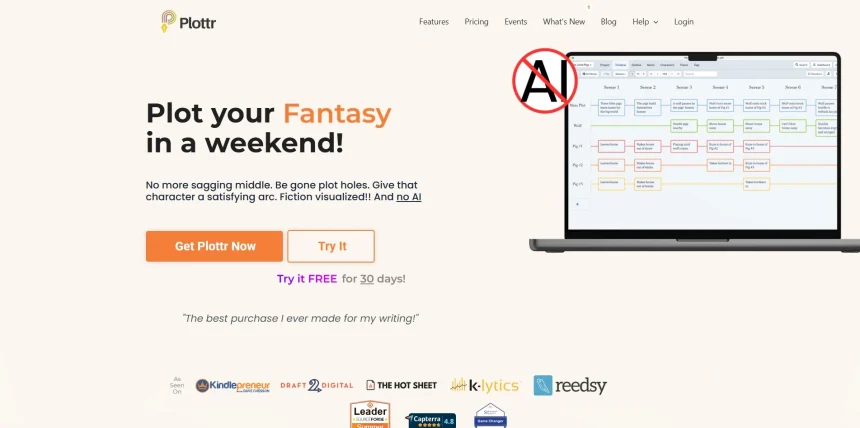
Plottr has long been a favorite for visual story outlining, but it isn’t the only option for writers who want to plan characters, plots, and scripts more efficiently. Whether you’re writing a novel, screenplay, or marketing copy, dozens of tools now offer plotting boards, AI-assisted drafting, and dialogue generation. This guide covers 11 Plottr Alternatives, their trial options, pricing, and the strengths and weaknesses of each so you can pick the right fit for your writing workflow.
1. Beemgee
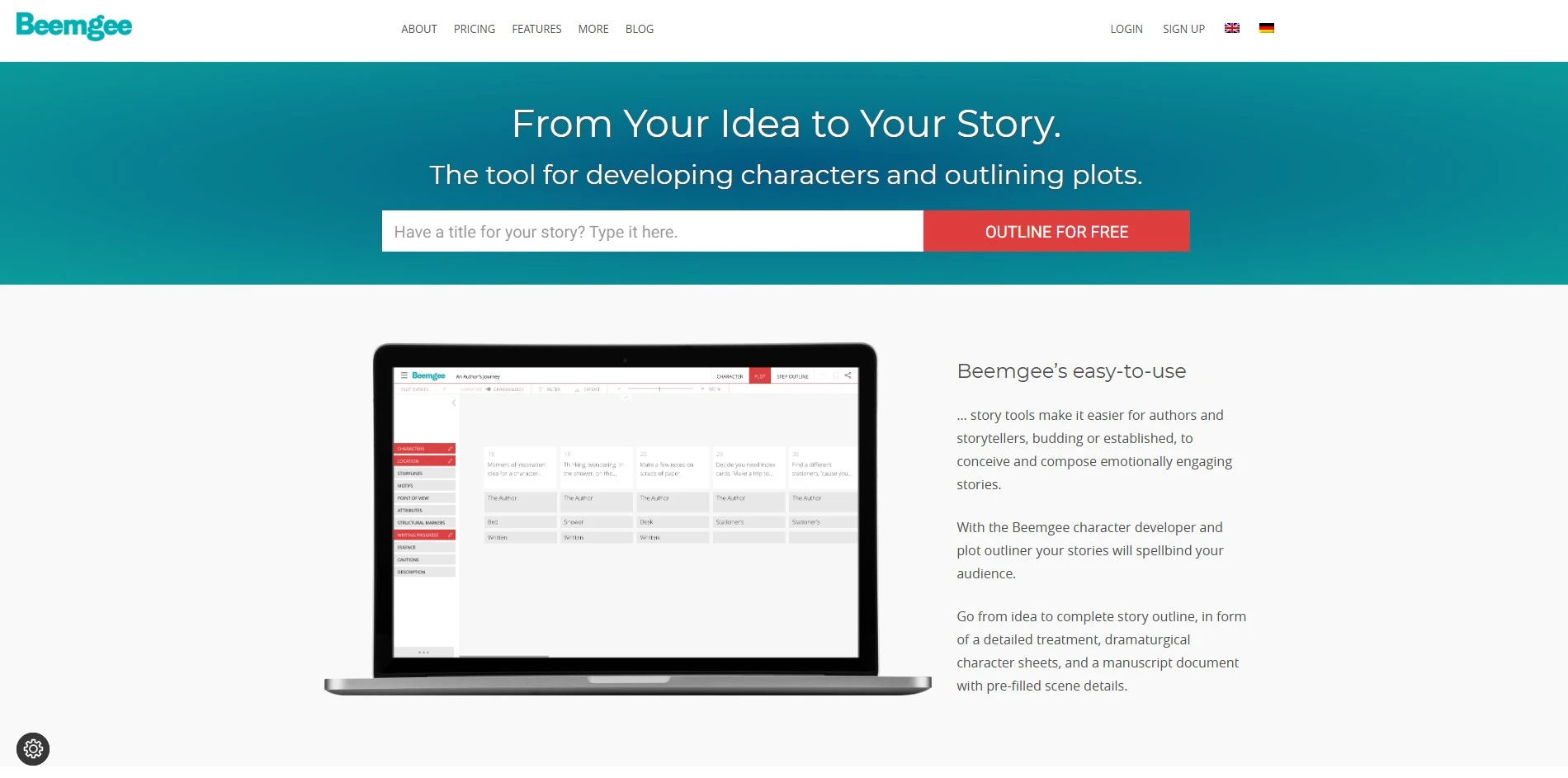
Beemgee is a German-based story development tool built around character-driven plotting rather than a simple timeline. It offers a genuinely free tier with no credit card required, so you can try the full workflow before committing. The paid Premium tier is priced at roughly €8 per month (billed annually at about €96/year), unlocking motif tracking, Hero’s Journey templates, and detailed plot-beat tagging.
Premium: ~€8/month (€96/year)
Beemgee stands out because it treats characters as the engine of plot rather than an afterthought, letting writers link motivations, story beats, and dramaturgy categories together. It supports collaborative projects with permission settings, which is handy for co-writers or editors. The interface leans more academic than flashy, so newcomers may need a short adjustment period, but the underlying structure rewards writers who enjoy deep, deliberate planning.
Pros
- Free plan available indefinitely
- Strong character-to-plot linking system
- Built-in Hero’s Journey and beat sheet templates
Cons
- Less visually polished than competitors
- Learning curve for structural terminology
- No native mobile app
2. Dabble
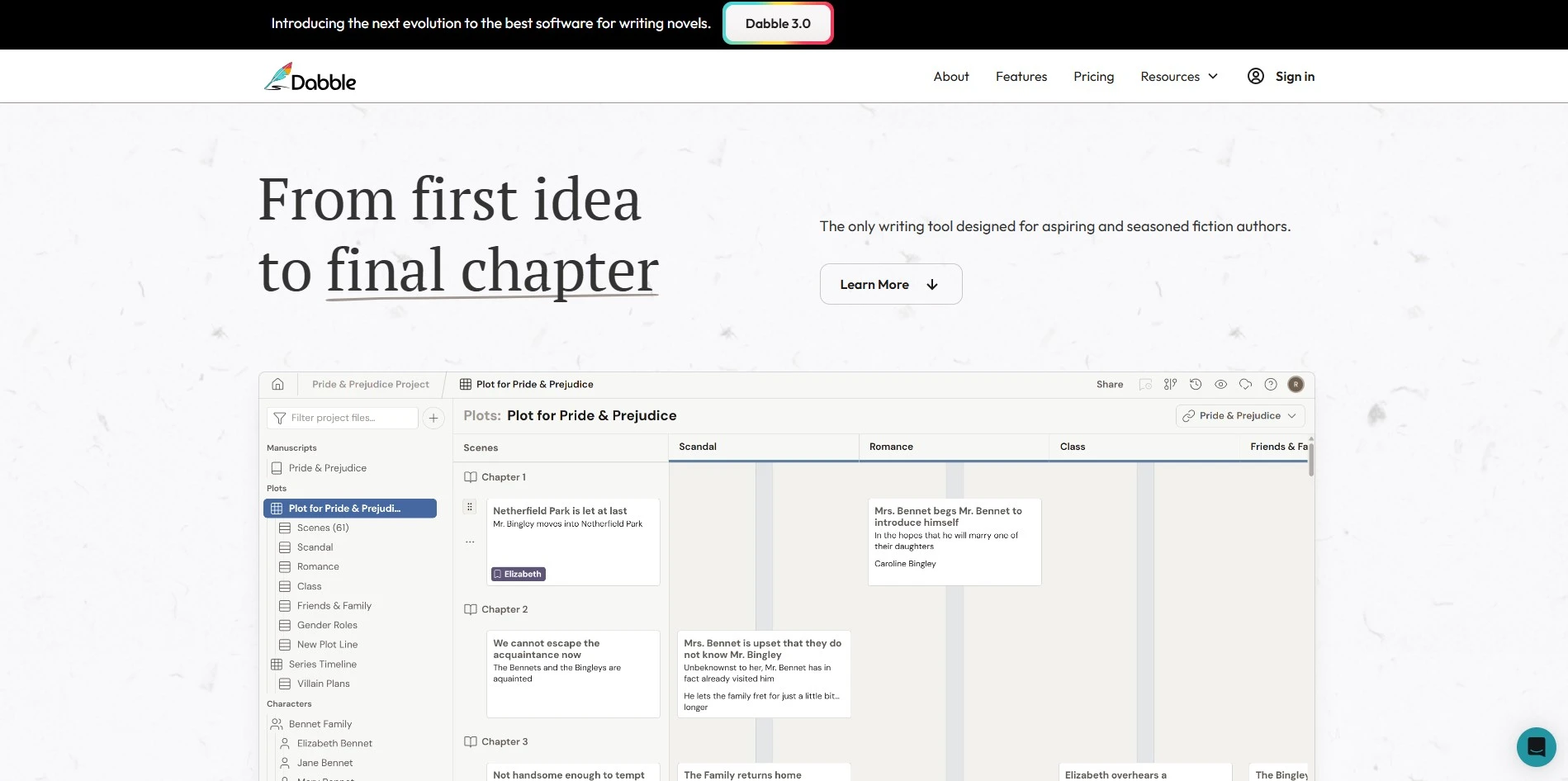
Dabble is a cloud-based novel writing platform offering a 14-day free trial with no credit card required. Current official pricing runs Writer at $19/month, Author at $29/month, and Bestseller at $49/month, with a one-time Lifetime Author option at $699. Annual billing saves 20%, and students get an additional 30% off through their partner program.
Writer: $19/mo
Author: $29/mo
Bestseller: $49/mo
Dabble’s Plot Grid gives writers a card-based visual outline that sits directly beside the manuscript editor, making it easy to plan and draft in the same window. Cloud sync means your work follows you across devices without manual saving. Co-authoring, focus mode, and grammar checks round out the higher tiers. The subscription model can feel pricier over time compared to one-time-purchase tools, but the ongoing updates and cloud backup justify it for many.
Pros
- Clean, distraction-free writing environment
- Plot Grid integrates directly with the editor
- Reliable cloud sync across devices
Cons
- No permanent free plan
- Subscription cost adds up over years
- Limited offline-first functionality
3. StoryCraft AI

StoryCraft AI is a newer entrant in the AI story-planning space, positioned as a lightweight assistant for outlining plots and generating scene ideas. Most platforms in this category offer a short free trial or limited free-usage tier before requiring a subscription, typically in the $10–$25/month range for individual writers, though exact figures vary by promotion and region.
Typical Range: $10–$25/month
The tool focuses on quick idea generation rather than deep structural planning, making it useful for writers who get stuck mid-draft and need a nudge forward. It’s less suited to writers who want granular timeline or character-relationship mapping, since its strength lies in fast text suggestions rather than visual boards. Always confirm current pricing directly on the provider’s site before subscribing, since AI tool pricing shifts frequently.
Pros
- Fast AI-generated scene and plot suggestions
- Simple, beginner-friendly interface
- Useful for breaking through writer’s block
Cons
- Limited visual plotting tools
- Less brand recognition and support history
- Pricing and features change often
4. Google Gemini

Google Gemini isn’t a dedicated plotting tool, but many writers use its chat interface for brainstorming outlines, character arcs, and dialogue. Gemini offers a solid free tier with generous daily usage, and a paid Google AI Pro plan through Google One at $19.99/month, which includes higher usage limits and access to more advanced Gemini models.
Google AI Pro: $19.99/month
Because Gemini is a general-purpose AI assistant, it adapts well to almost any writing task, from plot brainstorming to dialogue polishing to research summaries. It lacks dedicated plot boards, character databases, or timeline views that specialized tools provide, so writers typically pair it with a separate outlining app. Its conversational format makes it approachable, though staying organized across long projects requires manual effort on the writer’s part.
Pros
- Free tier with strong daily limits
- Extremely flexible for any writing task
- Integrates with other Google Workspace tools
Cons
- No dedicated plotting or timeline interface
- Requires manual organization across sessions
- Not built specifically for long-form fiction structure
5. Final Draft
Final Draft is the industry-standard screenwriting software used across film and television production. It offers a free trial before purchase, and rather than a subscription, Final Draft 13 is sold as a one-time license priced at $249.99, with education and military discounts bringing it down to around $129.99 depending on eligibility.
One-Time License: $249.99
EDU/Military: ~$129.99
Final Draft handles industry-standard formatting automatically, which is a major reason 95% of film and TV professionals rely on it for scripts. Its outlining and story-mapping tools let writers plot beats visually alongside the script itself. The steep upfront cost and frequent paid version upgrades are common complaints, and the learning curve can feel heavy for writers coming from simpler tools, but its formatting precision remains unmatched for professional submissions.
Pros
- Industry-standard script formatting
- One-time purchase, no recurring fee
- Trusted by major studios and professionals
Cons
- High upfront cost
- Paid version upgrades required periodically
- Steeper learning curve for beginners
6. Squibler
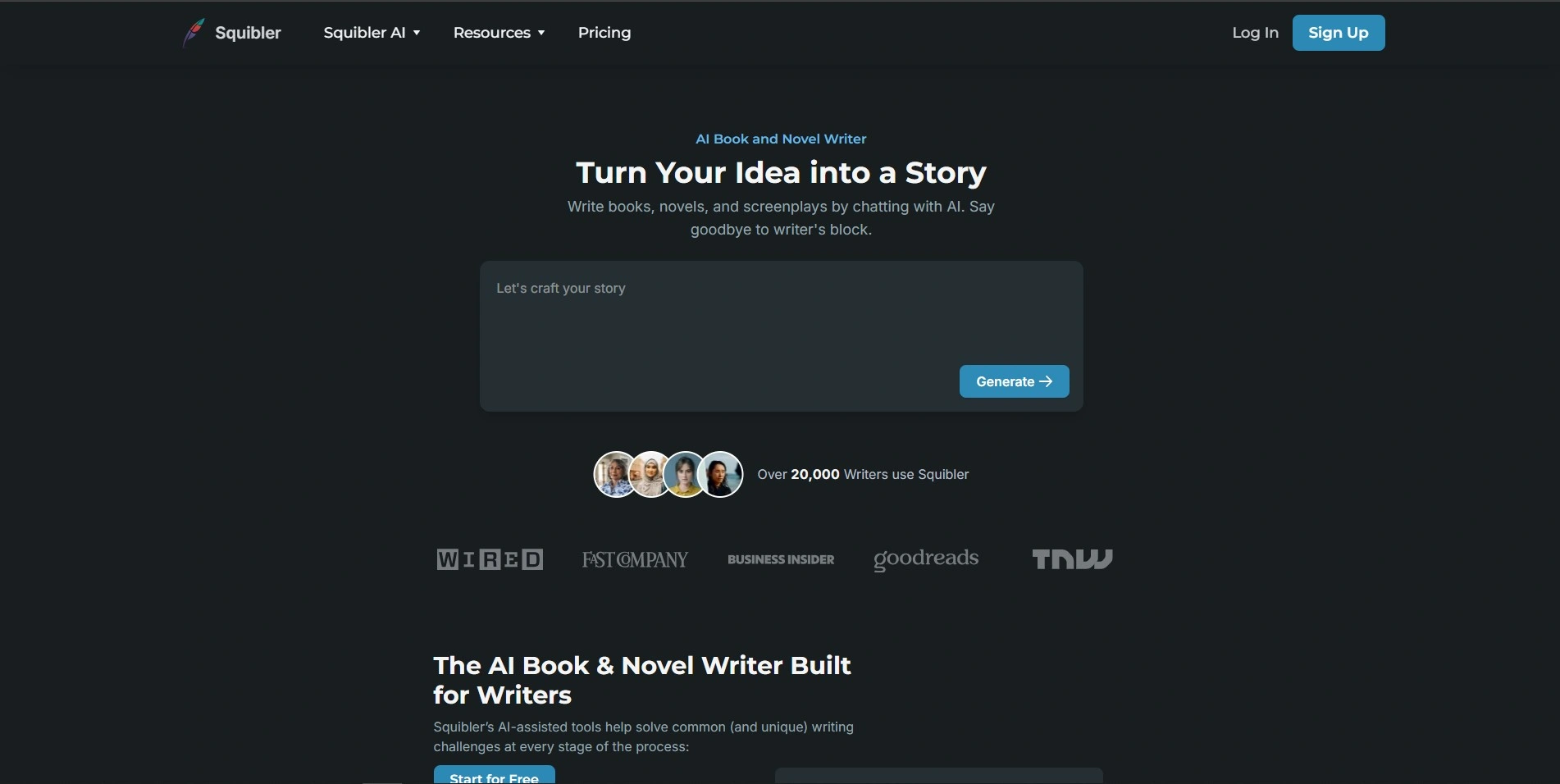
Squibler is an AI-assisted writing platform for novels, screenplays, and books, offering a free Limited Tier with no credit card needed to get started. Official current pricing lists Squibler Plus around $16–$29/month and Squibler Pro around $49–$89/month depending on billing cycle and active promotions, with unlimited AI credits on the top tier.
Plus: ~$16–$29/month
Pro: ~$49–$89/month
Squibler combines drag-and-drop note cards with AI-generated outlines, dialogue help, and even text-to-image cover generation on higher tiers. It supports novels, self-help books, and scripts within one adaptable workspace, making it versatile for hybrid creators. The pricing structure has shifted multiple times and can be confusing to compare against competitors, and heavy AI users may find the credit-based system limits value on lower tiers.
Pros
- Free tier with no time limit
- Flexible across novels, scripts, and non-fiction
- AI outline and image generation included
Cons
- Pricing structure changes frequently
- Higher tiers needed for unlimited AI use
- Less established than legacy competitors
7. Sudowrite
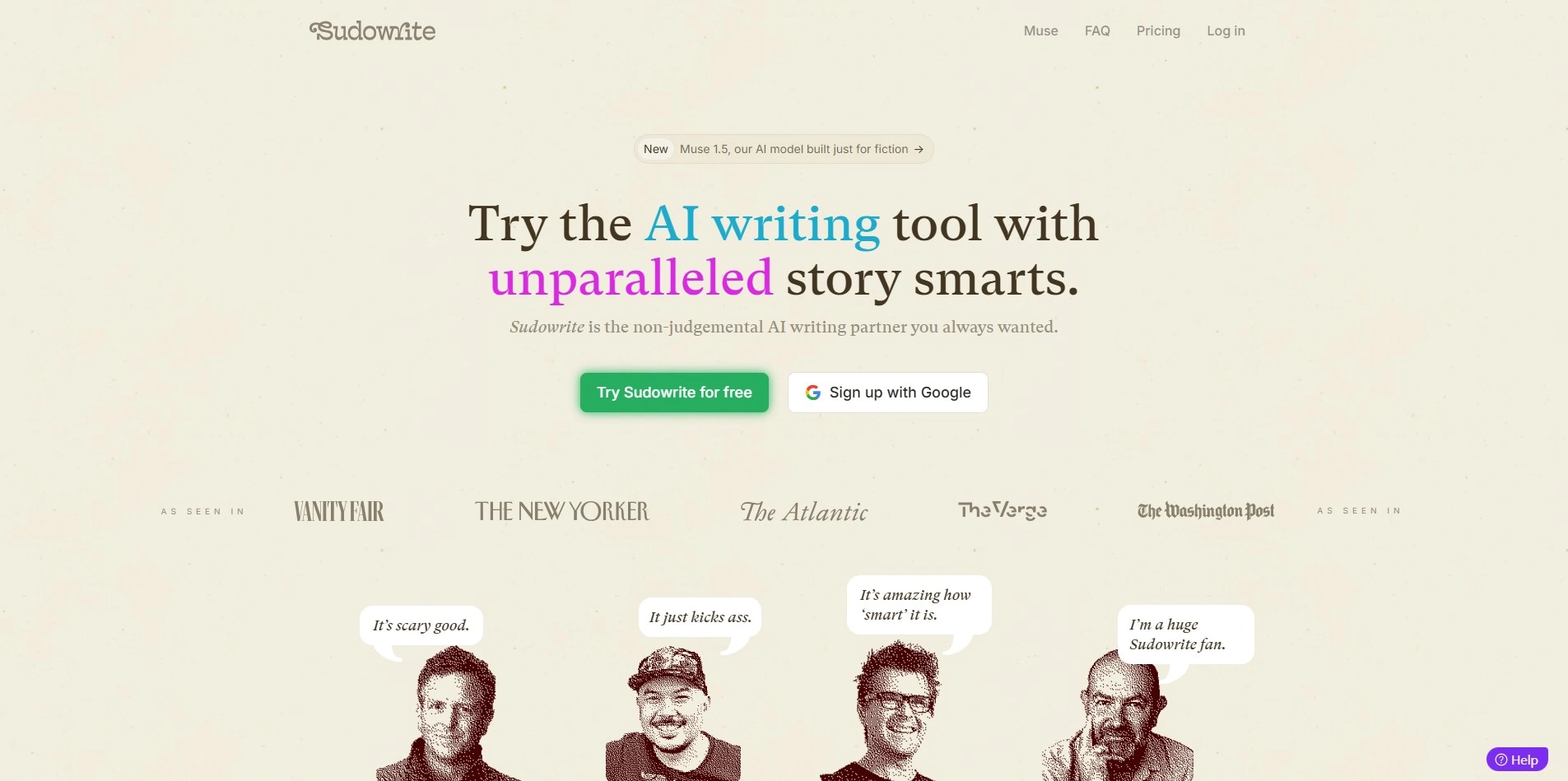
Sudowrite is an AI writing partner built specifically for fiction authors, and it offers a one-time free trial with roughly 10,000 credits and no credit card required. Official pricing includes Hobby & Student at $10/month (annual) or $19/month (monthly), Professional at $22/month (annual) or $29/month (monthly), and Max at $44/month (annual) or $59/month (monthly).
Hobby: $10–$19/mo
Professional: $22–$29/mo
Max: $44–$59/mo
Sudowrite’s Story Engine, Describe, and Brainstorm tools are tailored precisely for fiction, offering suggestions that fit narrative tone rather than generic marketing copy. All tiers unlock every feature, with only credit allowance changing between plans, which keeps the feature set consistent regardless of budget. Credits on lower tiers don’t roll over and consumption varies unpredictably by feature and model choice, making cost prediction tricky for heavy users.
Pros
- Purpose-built for fiction writing
- All features available on every paid tier
- Free trial requires no credit card
Cons
- Credit consumption is hard to predict
- Credits expire monthly on lower tiers
- No permanent free plan
8. ScriptAI Pro
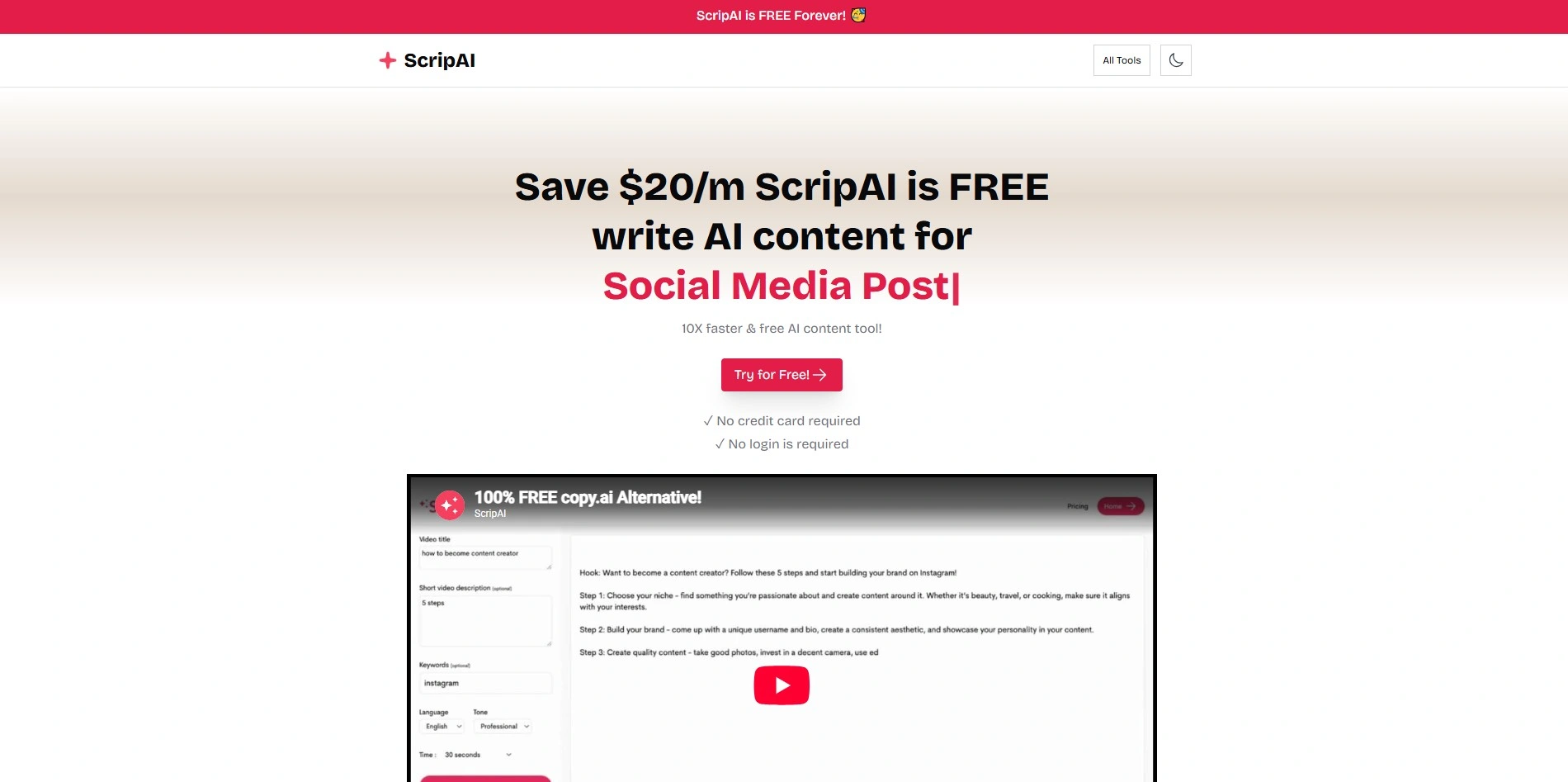
ScriptAI Pro belongs to a growing category of AI-driven scriptwriting assistants aimed at screenwriters who want automated formatting and dialogue suggestions. Tools in this niche commonly offer short free trials of 7–14 days, with subscription pricing generally sitting between $15 and $40 per month for individual creators, though official published pricing can vary by version and region.
Estimated Range: $15–$40/month
ScriptAI Pro-style tools generally emphasize speed, offering auto-formatted scene headings, character dialogue balancing, and quick outline generation for screenplays. They tend to lack the deep industry adoption and support infrastructure of tools like Final Draft, making them better suited to early drafts than final production-ready scripts. Writers should verify current features and pricing directly on the official site, since smaller AI tools update plans often.
Pros
- Fast automated script formatting
- AI-assisted dialogue suggestions
- Lower cost than legacy screenwriting software
Cons
- Limited industry-wide adoption
- Fewer collaboration and production features
- Pricing details can be inconsistent across sources
9. DialogueGenie
DialogueGenie is an AI tool focused narrowly on generating and refining character dialogue for novels, scripts, and games. As with similar niche AI writing tools, a free trial or limited free tier is commonly offered, with paid plans typically priced in the $10–$30/month range depending on usage volume and export options.
Estimated Range: $10–$30/month
The tool’s narrow focus makes it genuinely strong at one thing: producing natural-sounding, character-consistent dialogue exchanges quickly. It won’t help with full plot structuring, timelines, or scene planning, so it works best as a companion to a broader outlining tool rather than a standalone writing suite. Writers should check the vendor’s current pricing page directly, since specialized AI dialogue tools update their tiers frequently as the underlying models improve.
Pros
- Strong at natural, character-specific dialogue
- Simple, focused feature set
- Useful as a companion tool alongside outliners
Cons
- No plot or timeline planning features
- Narrow scope compared to full writing suites
- Smaller user base and support community
10. Jasper AI
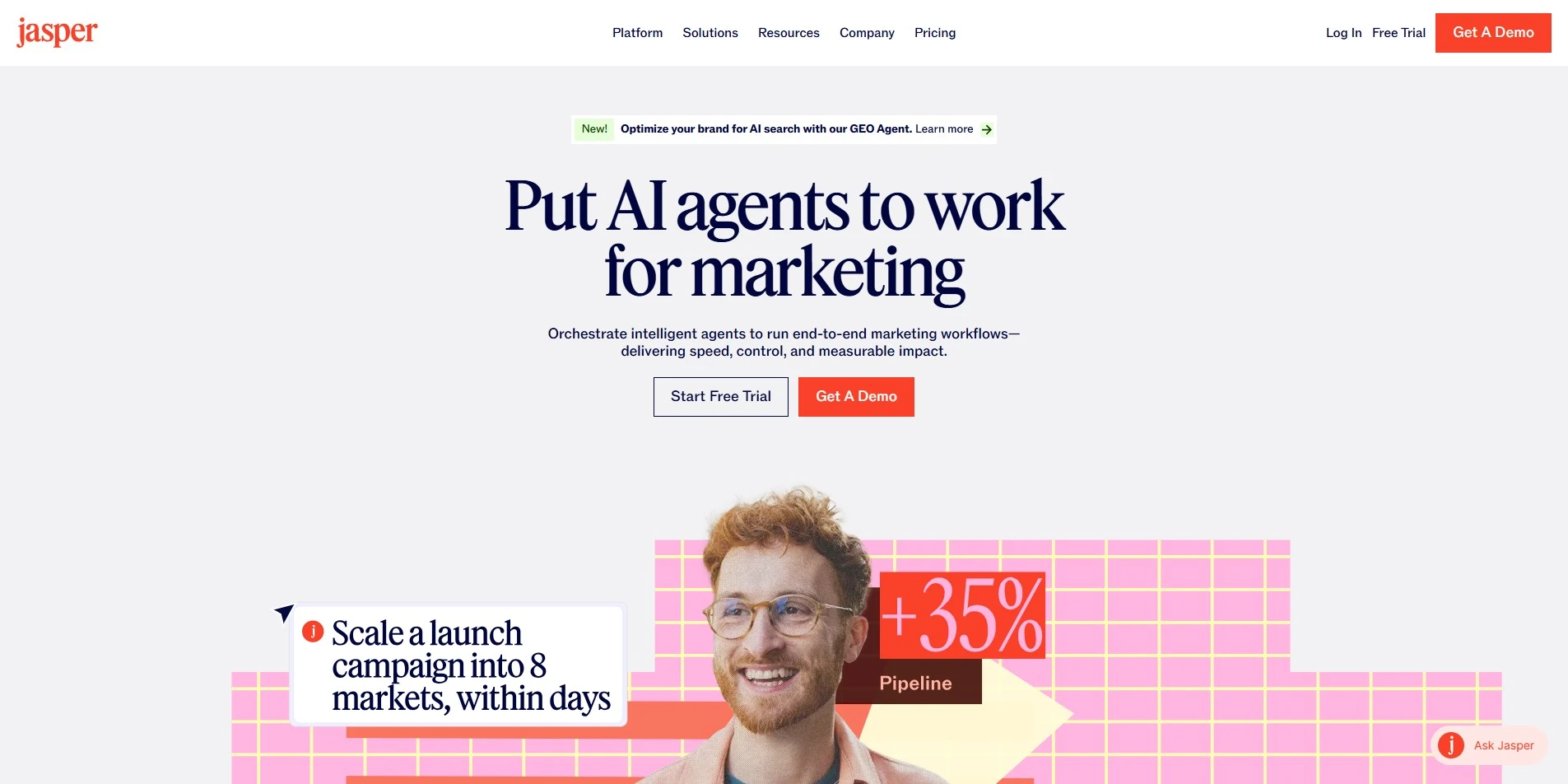
Jasper AI is primarily a marketing content platform, but many writers use it for brainstorming outlines, blog-style story summaries, and promotional copy for their books. Offering a 7-day free trial, and official pricing centers on the Pro plan at $59/month (annual) or $69/month (monthly), with a custom-priced Business plan for teams needing collaboration and API access.
Pro: $59–$69/month
Business: Custom Pricing
Jasper’s Brand Voice and Knowledge features make it strong for authors managing their own marketing, newsletters, and social promotion around a book launch. It’s not designed for long-form fiction plotting or character development, so it functions better as a marketing companion than a core writing tool. The seat-based pricing model can get expensive quickly for teams, and casual writers with light usage may find the cost hard to justify.
Pros
- Excellent for marketing and promotional copy
- Brand Voice keeps content consistent
- Useful for authors handling their own launches
Cons
- Not built for fiction plotting or outlining
- Relatively expensive for solo writers
- Seat-based costs scale quickly for teams
11. Mugafi

Mugafi is an AI-powered writing and screenwriting platform popular in India and Southeast Asia, centered on its flagship tool VED. Frequently offers free access periods through contests and promotions, such as 3-month VED trials for contest participants, though standard subscription pricing is best confirmed directly on Mugafi’s official site since it varies by plan and region.
Check Official Site for Current Plans
VED functions as a coaching-style co-writer rather than a full auto-generator, helping with research, rewriting scenes, expanding dialogue, and formatting scripts to regional and international standards. Mugafi’s cultural specialization in Indian storytelling formats makes it distinct from Western-focused tools, appealing to Bollywood, Tollywood, and OTT creators. It’s less internationally recognized outside South Asian and Middle Eastern markets, and writers targeting purely Western scripts may find other tools more tailored to their format needs.
Pros
- Tailored to Indian and regional storytelling formats
- Coaching-style AI rather than blunt auto-generation
- Contest programs offer free access opportunities
Cons
- Less recognized outside South Asian markets
- Standard pricing less transparent globally
- Smaller support ecosystem than Western competitors
| Alternative | Description |
|---|---|
| Beemgee | Character-driven story development tool with free and low-cost premium tiers, ideal for deep structural planning. |
| Dabble | Cloud-based novel writing app with a visual Plot Grid, distraction-free editor, and tiered monthly subscriptions. |
| StoryCraft AI | Lightweight AI assistant for quick plot and scene idea generation, best for overcoming writer’s block. |
| Google Gemini | General-purpose AI assistant usable for brainstorming, with a strong free tier and an affordable paid upgrade. |
| Final Draft | Industry-standard screenwriting software with automatic formatting, sold as a one-time professional license. |
| Squibler | AI writing platform for novels and scripts with drag-and-drop notes, free tier, and flexible AI credit plans. |
| Sudowrite | Fiction-focused AI writing partner with Story Engine and Brainstorm tools across credit-based subscription tiers. |
| ScriptAI Pro | AI scriptwriting assistant offering automated formatting and dialogue help at a lower cost than legacy tools. |
| DialogueGenie | Niche AI tool focused solely on generating natural, character-consistent dialogue for fiction and scripts. |
| Jasper AI | Marketing-focused AI content platform useful for author promotion, newsletters, and book launch copy. |
| Mugafi | AI screenwriting platform specialized in Indian and regional storytelling formats, built around the VED co-writer. |
Conclusion
Choosing the right Plottr alternative comes down to what kind of writer you are. If you want deep character-driven structure, Beemgee or Dabble fit naturally. Screenwriters chasing industry-standard formatting should look at Final Draft, while those wanting AI-assisted drafting have strong options in Sudowrite, Squibler, and Jasper AI. Niche tools like DialogueGenie, ScriptAI Pro, StoryCraft AI, and Mugafi serve specific needs, from dialogue polishing to regional script formats. Test the free trials where available, compare the pricing against your budget, and pick the tool that matches how you actually plan and write your stories.


